
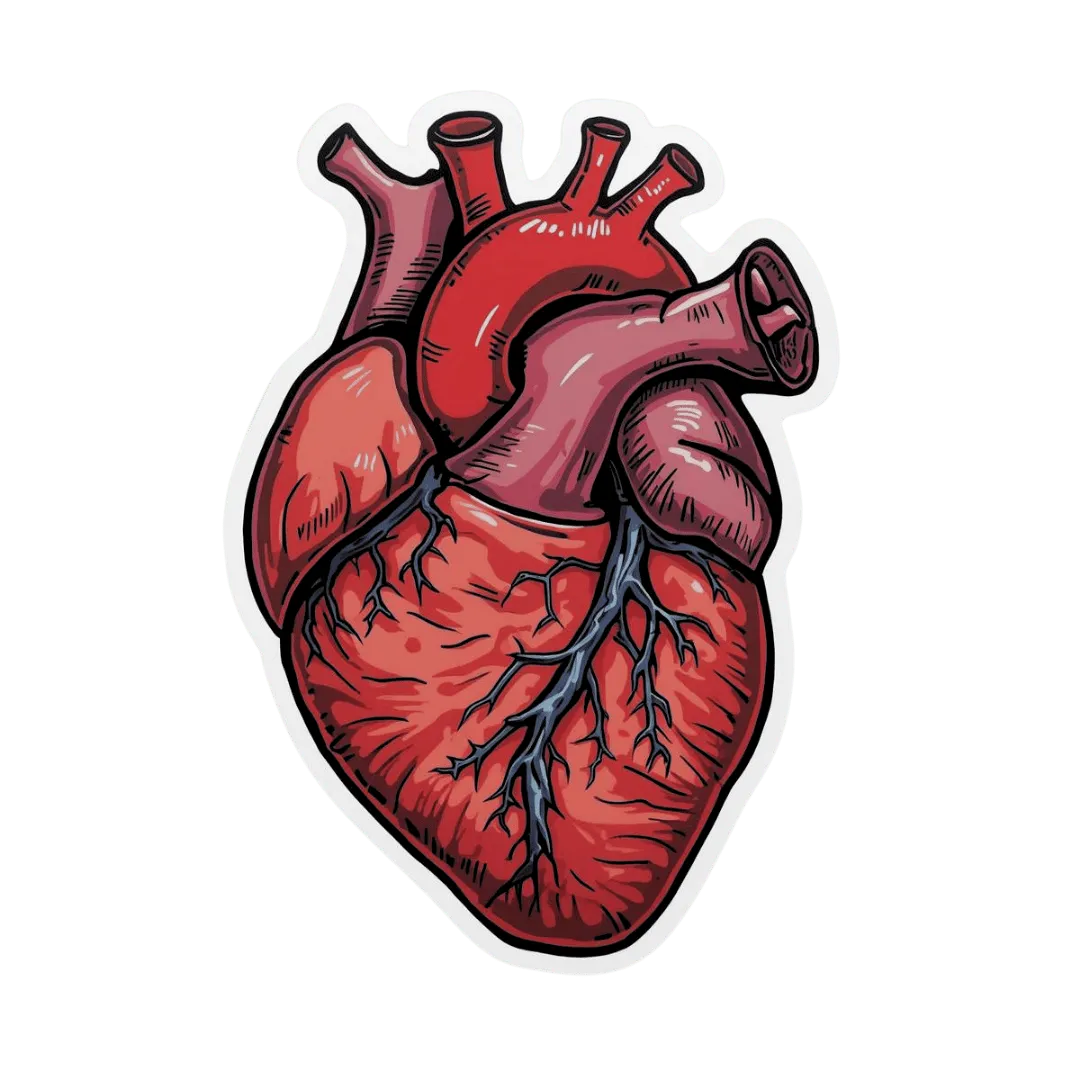
What COVID Does To Your Heart
10almonds is reader-supported. We may, at no cost to you, receive a portion of sales if you purchase a product through a link in this article.

“COVID is bad for the health” may not be breaking news, but this specific damage is, and it may be another axis by which Long COVID does us harm and wears down our organs on an ongoing basis, something that really is still an emerging science
One of our earlier articles about it, for example: Support For Long COVID & Chronic Fatigue
…which, while interesting and hopefully useful for those it affects, did not touch on the organ damage aspect at all, as it wasn’t known yet, beyond the obvious damage to the respiratory organs.
So, what’s new?
At the heart of things
Researchers (Dr. Carmine Gentile et al.) investigated whether the COVID virus can directly infect heart tissue, rather than “merely” damaging it only indirectly through inflammation.
As well as finding out that the answer is “yes”, the study also showed that the organization and interaction between different heart cell types are important for viral infection, meaning standard flat lab cell models may be missing important effects, that studies like this one can pick up.
Which is important, because here in real life, our hearts are indeed 3-dimensional, and are not a single layer of cells in a petri dish.
Thus, the virus was able to infect and replicate inside the intact 3D heart tissue model, but it did not infect individual heart cell types grown separately (as would normally be done).
You may be wondering: what did the virus do there, beyond just “exist”?
And the answer is manifold: the infection triggered gene changes linked to inflammation, interferon and antiviral responses, apoptosis, chemotaxis, fibrosis, and impaired contractile function.
Translating from sciencese: it messed everything up, including the heart cells’ ability to clean up the mess, and the damage done stops the heart from functioning correctly.
You may now be wondering: if that’s the case, why doesn’t everyone who gets COVID die?
And the answer to that one is: it’s just a matter of severity. Sometimes the immune system wins out, especially if it’s been vaccinated. And sometimes, it’s a matter of survivorship bias—a heart that’s still keeping someone alive today, might not tomorrow.
Notably, these findings do help explain why some people—including those with no prior heart disease—develop myocarditis, arrhythmias, or longer-term cardiac symptoms after getting COVID.
See for example:
- Viruses can trigger a heart attack or stroke, our study shows. It’s another good reason to get a flu or COVID shot
- Infections, Heart Failure, & More
- What you need to know about FLiRT, an emerging group of COVID-19 variants
As for the study we’ve been talking about today, you can read it in full, here: SARS-CoV-2 infection of 3D in vitro cardiac spheroids models the activation of antiviral, inflammatory, fibrotic, and contractile responses in a dose-dependent manner
Want to learn more?
Check out:
What Can Be Done About Long COVID? ← scientists have found a possible cure, a procedure known as epipharyngeal abrasive therapy, which as enjoyable as it sounds, and is not yet proven to cure it completely (although to give it its due, the science so far really is promising)
Take care!
Don’t Forget…
Did you arrive here from our newsletter? Don’t forget to return to the email to continue learning!
Learn to Age Gracefully
Join the 98k+ American women taking control of their health & aging with our 100% free (and fun!) daily emails: