
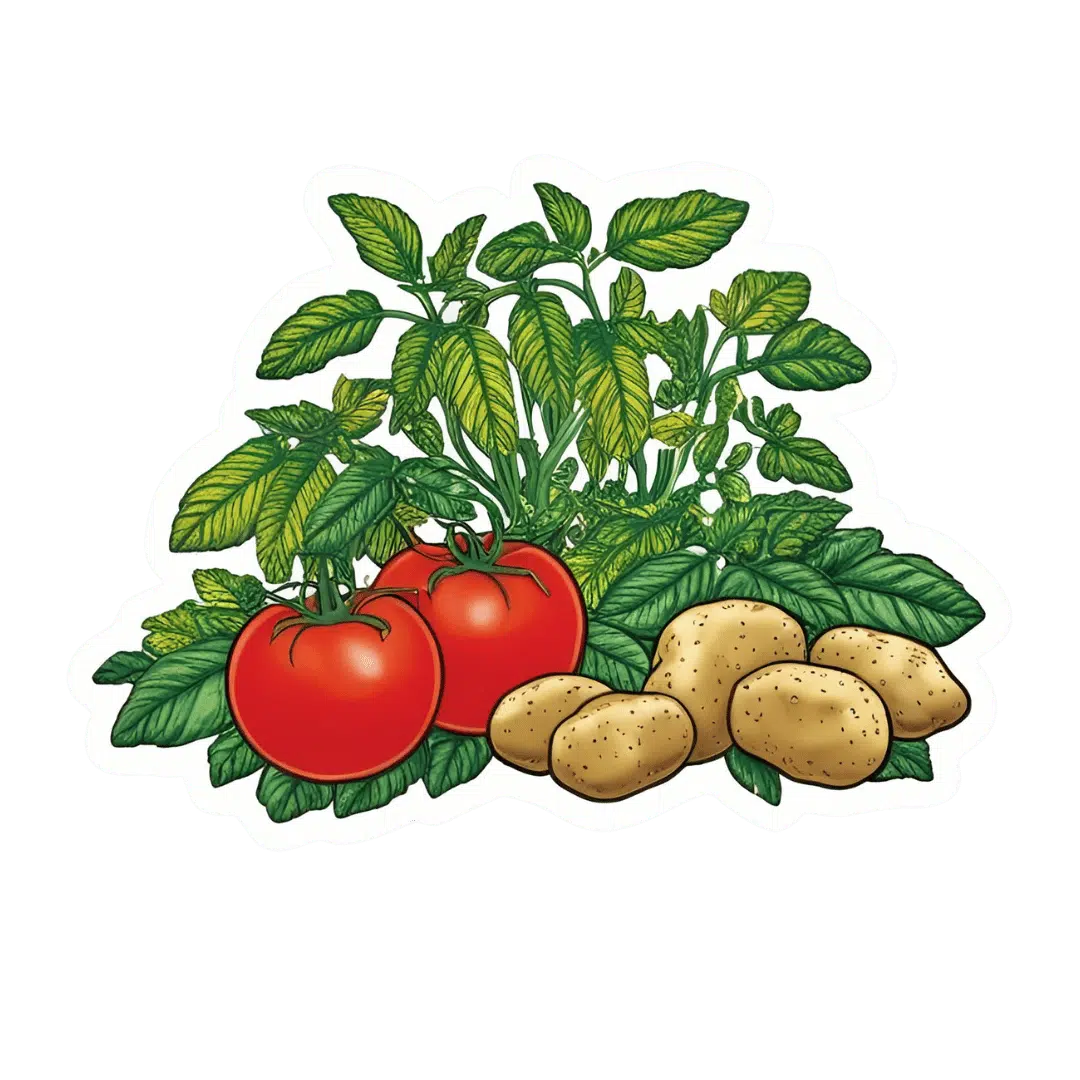
Do Tomatoes & Other Nightshades Cause Inflammation & Worsen Arthritis?
10almonds is reader-supported. We may, at no cost to you, receive a portion of sales if you purchase a product through a link in this article.

It’s Q&A Day at 10almonds!
Have a question or a request? We love to hear from you!
In cases where we’ve already covered something, we might link to what we wrote before, but will always be happy to revisit any of our topics again in the future too—there’s always more to say!
As ever: if the question/request can be answered briefly, we’ll do it here in our Q&A Thursday edition. If not, we’ll make a main feature of it shortly afterwards!
So, no question/request too big or small 😎
❝What is the science behind nightshades, especially tomatoes, causing inflammation and arthritis?❞
Good news: the science is not behind nightshades, including tomatoes, causing inflammation and arthritis. In fact, tomatoes are generally considered anti-inflammatory (not something their fellow nightshades, potatoes, can boast) due to their lycopene content and polyphenols.
See for example: Lycopene’s Benefits For The Gut, Heart, Brain, & More
Some nightshades are indeed dangerous
For example, is its first name “Deadly”? Because deadly nightshade, also called belladonna, amongst other names, is indeed one of the most toxic plants known to science, and ingesting even a tiny amount can be enough to kill. They contain a cocktail of toxins, with atropine probably the one most responsible for death, due to how it slows (and directly or indirectly, often ultimately stops) the heart.
“Nightshades” is the common name that we give to what botanists would call the taxonomic family of Solanaceae. Because taxonomy is not well-understood by most non-scientists, is easy to misunderstand the relevance of these, by orders of magnitude. You know how sometimes we mention that many vegetables are in fact all Brassica oleracea, and merely different cultivars of that species (cabbage, kale, broccoli, cauliflower, Brussels sprouts, etc)? While cultivars come below species in the taxonomic tree, the family comes above even the genus (the genus is the first part of the two-part scientific names we usually see, the latter part being the species).
Which means… If we are to ask “are nightshades (Solanaceae) dangerous?” it’s a bit like asking “are animals of the family Artiodactyla dangerous?” and well, that depends, are we talking about a mouse-deer (they mostly eat small leaves) or a killer whale (they often eat great white sharks)? Both are the same taxonomic family (Artiodactyla), so let’s appreciate that “nightshades” (Solanaceae) is an equally broad umbrella term too.
Nightshades that you can find in a supermarket are not dangerous
Well, ok, a potato can be dangerous if you throw it hard enough, and potentially you could choke on a tomato, just like any food. But the point is, their toxicity is low enough to make them safe and (depending on preparation) even very healthy foods.
You may be wondering: what is this toxicity that is “low enough”? Isn’t the right amount of toxicity zero?
And the answer is: everything is toxic in sufficient quantities, even things like water, and oxygen.
And as for foodstuffs, consider for example that capsaicin (the phytochemical that gives hot peppers their hot taste—peppers are also nightshades, by the way) is technically a neurotoxin. However, humans being what we are, we decided to eat them for fun, cultivated them to increase their spiciness, and (in moderation) can enjoy health benefits from them including, counterintuitively, anti-inflammatory powers:
Capsaicin For Weight Loss And Against Inflammation ← it’s very beneficial to the metabolism also
When it comes to potatoes and tomatoes, the “villain of the hour” that critics cite is solanine.
Solanine is toxic to the extent that symptoms of toxicity can arise at 2–5mg/kg (as in, mg of solanine per kg of body weight).
Given that solanine levels in potatoes are controlled by farmers, and that the average potato has around 0.075 mg solanine per gram of potato, then if you weigh about the same as this writer (currently around 72kg, or 163 lbs), then to hit even the low end of that distribution curve, you’d need to eat nearly 2kg (4.4 lbs) of potatoes at a time.
For chronic effects, you’d need to be doing that chronically, e.g. every day. And remember, that’s the low end of the distribution curve, meaning that for most people, toxicity still won’t be an issue yet until higher levels.
Source: Naturally occurring toxic alkaloids in foods: Solanum (potato) glycoalkaloids (solanine is a glycoalkaloid, hence its discussion there)
As for tomatoes? They don’t even contain solanine; their glycoalkaloid is lycopercisin, also called tomatine.
And they don’t contain much of that, unless you count one obscure kind of tomato grown in the Andes, if you eat it when it’s ripe, at which point its tomatine content causes the tomatoes to have a bitter flavor (that’s it, no more serious effects have been observed). But here it is, the tomato with the highest glycoalkaloid content in the world:
High alpha-tomatine content in ripe fruit of Andean Lycopersicon esculentum var. cerasiforme: developmental and genetic aspects (tl;dr = it’s tasty if you are accustomed to bitter flavors, otherwise you might not enjoy it so much, but that’s about the limit of any observed issues)
Any risks at all that we should be aware of?
Yes, a few things:
If potatoes are stored in sunlight and/or for extended periods of time (1–3 months), they may increase their solanine content. You can tell if this has happened, because they’ll have turned green. Even so, when researchers tested this,
❝Initially and after 1 and 3 months of storage, tubers were analyzed for their α-chaconine, α-solanine and total glycoalkaloid (TGA) contents. Mean α-chaconine, α-solanine and total glycoalkaloid contents of the tubers ranged from 0.41 to 3.45, 0.35 to 1.51 and 0.75 to 6.16 mg/100 g of tuber (wet weight), respectively. Statistical analysis of the results indicated that the interaction of location and storage time had a significant (P<0.05) effect on concentration of the individual and total glycoalkaloids in the tubers. The results also demonstrated that storage under these suboptimum conditions did not cause an increase of glycoalkaloids to a toxic level.❞
Note: in case you, like this writer, were momentarily confused by those numbers, realise that the researchers represented the numbers as mg/100g, instead of the mg/g norm we were using above.
Also, the skins of potatoes contain more solanine than the flesh, and the leaves of tomatoes contain more tomatine than the fruits.
So for example, you could get sick from eating about a pound of raw tomato leaves at a time. So don’t do that.
One other thing to bear in mind is that it’s always possible to have an allergy or a sensitivity, to anything. So if unsure about that, consider working with an allergist to see if it’s a problem in your case.
Beyond that, in the category of “are potatoes bad for the health?” the only other real issue is metabolic, and that depends on how you prepare them; for example mashed potato has a very high glycemic index, while baked potatoes are much healthier, and deep-frying is not good for anything’s health.
See also: Glycemic Index vs Glycemic Load vs Insulin Index
And: Carb-Strong or Carb-Wrong: Should You Go Light Or Heavy On Carbs?
Enjoy!
Don’t Forget…
Did you arrive here from our newsletter? Don’t forget to return to the email to continue learning!
Recommended
Learn to Age Gracefully
Join the 98k+ American women taking control of their health & aging with our 100% free (and fun!) daily emails: