
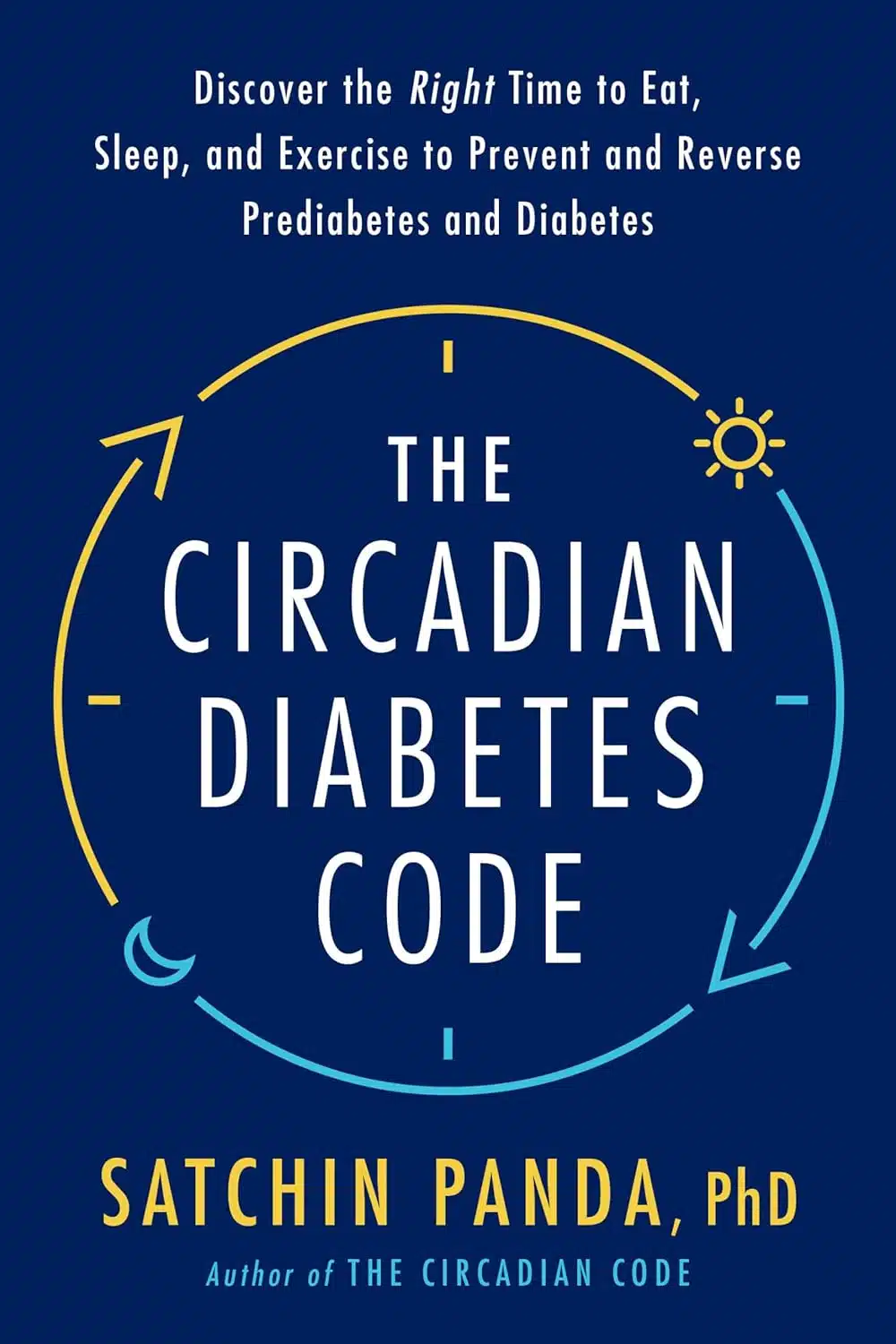
The Circadian Diabetes Code – by Dr. Satchin Panda
10almonds is reader-supported. We may, at no cost to you, receive a portion of sales if you purchase a product through a link in this article.

We have previously reviewed Dr. Panda’s “The Circadian Code” which pertains to the circadian rhythms (yes, plural) in general; this one uses much of the same research, but with a strong focus on the implications for blood sugar management.
It’s first a primer in diabetes (and prediabetes, and, in contrast, what things should look like if healthy). You’ll understand about glucose metabolism and glycogen and insulin and more; you’ll understand what blood sugar readings mean, and you’ll know what an Hb1AC count actually is and what it should look like too, things like that.
After that, it’s indeed about what the subtitle promises: the right times to eat (and what to eat), when to exercise (and how, at which time), and how to optimize your sleep in the context of circadian rhythm and blood sugar management.
You may be wondering: why does circadian rhythm matter for blood sugars? And the answer is explained at some length in the first part of the book, but to oversimplify greatly: your body needs energy all the time, no matter when it was that you last ate. Thus, it has to organize its energy reserves to that at all times you can 1) function, on a cellular level 2) maintain a steady balance of sugar in your blood despite using it at slightly higher or lower levels at different times of day. Because the basal metabolic rate accounts for most of our energy use, the body has to plan for a base rate of so much energy per day, and to do that, it needs to know what a day is. Dr. Panda explains this in detail (the marvels of PER proteins and all that), but basically, that’s the relevance of circadian rhythm.
However, it’s not all theory and biochemistry; there is also a 12-week program to reverse prediabetes and type 2 diabetes (it will not, of course, reverse Type 1 Diabetes, sorry—but the program will still be beneficial even in that case, since more even blood sugars means fewer woes).
They style is friendly and clear, explaining the science simply, yet without patronizing the reader. References are given, with claims sourced in an extensive bibliography.
Bottom line: if you or a loved one have diabetes or prediabetes, or just have a strong desire to avoid getting such and generally keep your metabolic health in good order, this book will definitely help.
Click here to check out The Diabetes Code, and enjoy better blood sugar health than ever!
Don’t Forget…
Did you arrive here from our newsletter? Don’t forget to return to the email to continue learning!

Learn to Age Gracefully
Join the 98k+ American women taking control of their health & aging with our 100% free (and fun!) daily emails: