
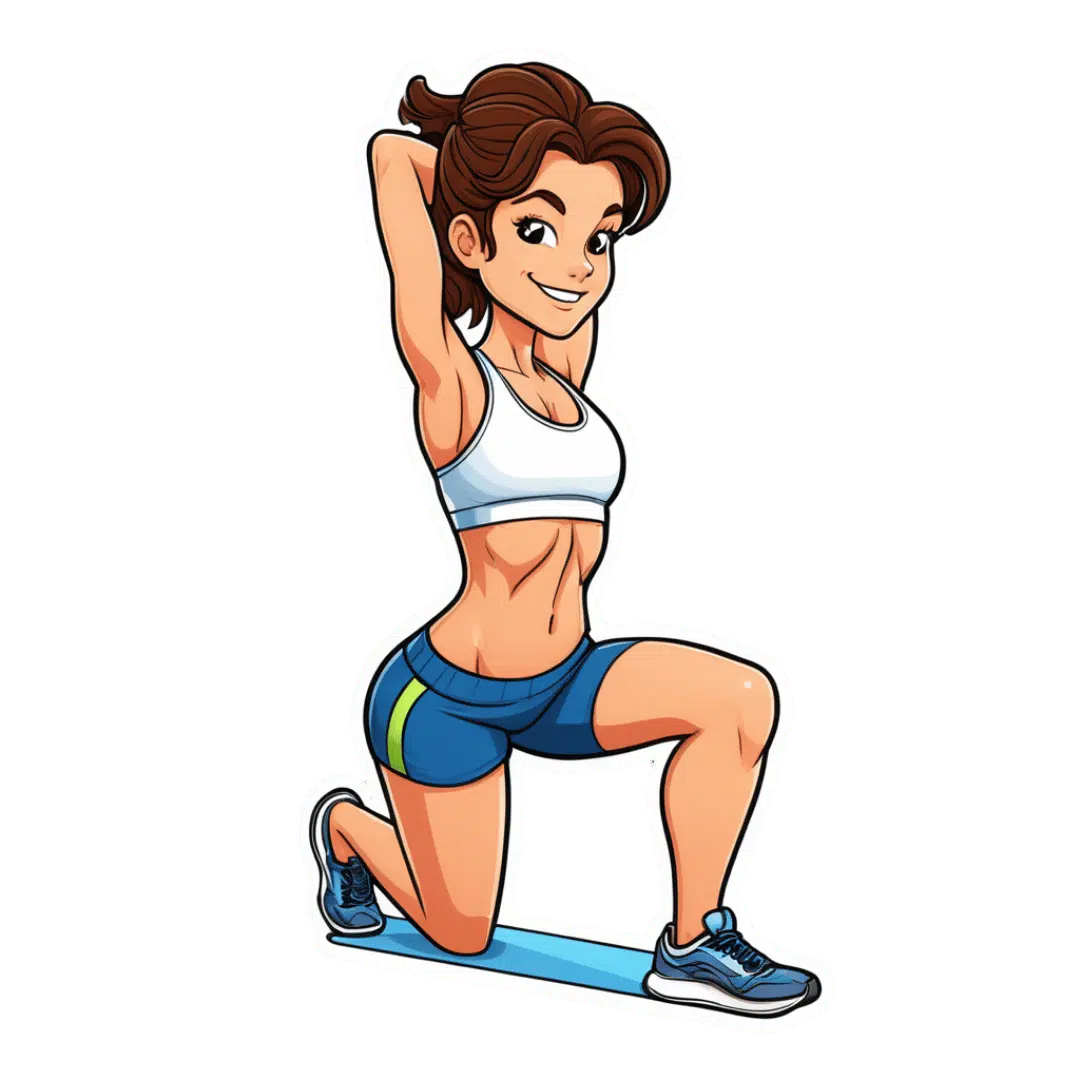
7 Tips To Start Back In The Gym After A Break
10almonds is reader-supported. We may, at no cost to you, receive a portion of sales if you purchase a product through a link in this article.
Whether we had an injury or illness, or life just got in the way, we’ve all had breaks from dedicated exercise sometimes. So, how to restart best?
Slow and steady
The way to do it is easier than you might think:
- Work up to everything: don’t jump back in at your previous level—rebuild from the basics, reestablish form, and focus on gradual progression.
- Do less than you think you need: avoid doing too much too soon; start small so that you don’t overdo it in your optimism and then need to take another break to recover.
- Don’t add weights first: progress through other methods like range of motion, tempo, or reps before increasing resistance; this allows your body time to adapt safely.
- Focus on what you feel working: prioritize mind-muscle connection to activate the correct muscles and improve movement quality; this is more important than external factors like how much weight you used.
- Prioritize your warm-up: include foam rolling, dynamic stretching, and activation exercises; they really do help improve the quality of the rest of your workout.
- Move in every direction: incorporate exercises across multiple planes of motion to improve mobility, stability, and functional strength, without leaving gaps in development (which invite injury).
- Stay consistent: follow a focused plan and avoid jumping between programs; repetition and routine are the keys to progress.
For more on each of these, enjoy:
Click Here If The Embedded Video Doesn’t Load Automatically!
Want to learn more?
You might also like:
Take care!
Don’t Forget…
Did you arrive here from our newsletter? Don’t forget to return to the email to continue learning!
Recommended
Learn to Age Gracefully
Join the 98k+ American women taking control of their health & aging with our 100% free (and fun!) daily emails:
-
The Best 4 Pool Exercises to Strengthen Your Core & Tone Up
10almonds is reader-supported. We may, at no cost to you, receive a portion of sales if you purchase a product through a link in this article.
A lot of people don’t love working on their core strength, but exercising in the pool can make it a lot more enjoyable, as well as minimizing risk of injury.
Dr Alyssa Kuhn, arthritis specialist, also advises “being in the water also helps to control for balance and can offload the joints so they aren’t as painful”:
The gentlest exercise
The specific exercises she recommends are:
Wood Chops
Stagger your feet, clasp your hands, and submerge them in the water. Now, move your hands diagonally from one side to the other. This engages your core and balance using water resistance. Perform 10–20 reps per side, exhaling on the hardest part.
Front Kick with Opposite Arm Press
Kick one leg forward while pushing the opposite arm out or overhead—higher kicks increase difficulty by requiring more balance. If balance isn’t sufficient for you yet, hold onto the pool wall if needed. Either way, engage the core to lift the leg. Do 20–30 reps alternating sides.
Wall Push-Ups
Place your hands on the pool wall, shoulder-width apart. Keep feet together and hips slightly tucked for core engagement. Next, move your chest toward the wall and push back while maintaining a straight body—avoid arching your back. Do 10–20 reps.
Arm Circles
Stand with your feet wider than shoulder-width. Clasp your hands, extend your arms, and submerge them in the water. Make large circular motions for resistance training. This can be done with straight or bent arms for different difficulty levels. Do 10–20 circles in each direction.
For more on each of these plus visual demonstrations, enjoy:
Click Here If The Embedded Video Doesn’t Load Automatically!
Want to learn more?
You might also like to read:
Osteoporosis & Exercises: Which To Do (And Which To Avoid)
Take care!
Share This Post
-
No-Exercise Exercise!
10almonds is reader-supported. We may, at no cost to you, receive a portion of sales if you purchase a product through a link in this article.
Do you love to go to the gym?
If so, today’s article might not be for you so much. Or maybe it will, because let’s face it, exercise is fun!
At least… It can be, and should be 😎
So without further ado, here’s a slew of no-exercise exercise ideas; we’re willing to bet that somewhere in the list there’s at least some you haven’t tried before, and probably some you haven’t done in a while but might enjoy making a reprise!
Walking
No surprises here: walking is great. Hopefully you have some green spaces near you, but if you don’t, [almost] any walking is better than no walking. So unless there’s some sort of environmental disaster going on outside, lace up and get stepping.
If you struggle to “walk for walking’s sake” give yourself a little mission. Walk to the shop to buy one item. Walk to the park and find a flower to photograph. Walk to the library and take out a book. Whatever works for you!
See also: The Doctor Who Wants Us To Exercise Less, And Move More
Take the stairs
This one doesn’t need many words, just: make it a habit.
Treat the elevators as though they aren’t there!
See also: How To Really Pick Up (And Keep!) Those Habits
Dance
Dance is amazing! Any kind of dance, whatever suits your tastes. This writer loves salsa and tango, but no matter whether for you it’s zouk or zumba, breakdancing or line dancing, whatever gets you moving is going to be great for you.
If you don’t know how, online tutorials abound, and best of all is to attend local classes if you can, because they’re always a fun social experience too.
Make music
Not something often thought of as an exercise, but it is! Most instruments require that we be standing or siting with good posture, focusing intently on our movements, and often as not, breathing very mindfully too. And yes, it’s great for the brain as well!
Check out: This Is Your Brain on Music: The Science of a Human Obsession – by Dr. Daniel Levitin
Take a stand
If you spend a lot of time at a desk, please consider investing in a standing desk; they can be truly life-changing. Not only is it so much better for your back, hips, neck, and internal organs, but also it burns hundreds more calories than sitting, due to the no-exercise exercise that is keeping your body constantly stabilized while on your feet.
(or, if you’re like this writer: on your foot. I do have two feet, I just spend an inordinate amount of time at my desk standing on one leg at a time; I’m a bit of a flamingo like that)
See also: Deskbound: Standing Up to a Sitting World – by Kelly Starrett and Glen Cordoza
Sit, but…
Sit in a sitting squat! Sometimes called a Slav squat, or an Asian squat, or a resting squat, or various other names:
Click Here If The Embedded Video Doesn’t Load Automatically!
Alternatively, sitting in seiza (the traditional Japanese sitting position) is also excellent, but watch out! While it’s great once your body is accustomed to it, if you haven’t previously sat this way much, you may cut off your own circulation, hurt your knees, and (temporarily) lose feeling in your feet. So if you don’t already sit in seiza often, gradually work up the time period you spend sitting in seiza, so that your vasculature can adapt and improve, which honestly, is a very good thing for your legs and feet to have.
Breathe
Perhaps the absolute most “no-exercise exercise” there is. And yes, of course you are (hopefully) breathing all the time, but how you are breathing matters a lot:
The Inside Job Of Fixing Our Breathing: Exercises That Can Fix Sinus Problems (And More)
Clean
This doesn’t have to mean scrubbing floors like a sailor—even merely giving your house the Marie Kondo treatment counts, because while you’re distracted with all the objects, you’re going to be going back and forth, getting up and down, etc, clocking up lots of exercise that you barely even notice!
PS, check out: The Life-Changing Manga Of Tidying Up – by Marie Kondo
Garden
As with the above, it’s lots of activity that doesn’t necessarily feel like it (assuming you’re doing more pruning and weeding etc, and less digging ditches etc), and as a bonus, there are a stack of mental health benefits to being in a green natural environment and interacting with soil:
Read more: The Antidepressant In Your Garden
Climb
Depending on where you live, this might mean an indoor climbing wall, but give it a go! They have color-coded climbs from beginner to advanced, so don’t worry about being out of your depth.
And the best thing is, the beginner climbs will be as much a workout to a beginner as the advanced climbs will be to an advanced climber, because at the end of the day, you’re still clinging on for dear life, no matter whether it’s a sizeable handhold not far from the ground, or the impression of a fingernail crack in an overhang 100ft in the air.
Video games (but…)
Less in the category of Stardew Valley, and more in the category of Wii Fit.
So, dust off that old controller (or treat yourself to one if you didn’t have one already), and get doing a hundred sports and other physical activities in the comfort of your living room, with a surprisingly addictive gaming system!
Sex!
You probably don’t need instructions here, and if you do, well honestly, we’re running out of space today. But the answer to “does xyz count?” is “did it get your heart racing?” because if so, it counts
Take care!
Share This Post
-
Brown Rice vs Russet Potatoes – Which is Healthier?
10almonds is reader-supported. We may, at no cost to you, receive a portion of sales if you purchase a product through a link in this article.
Our Verdict
When comparing brown rice to russet potatoes, we picked the rice.
Why?
First we’ll note: for brevity and to avoid undue repetitiveness, we’re henceforth going to just say “rice” and “potato”, respectively, but values and conclusions are still for brown rice and russet potatoes. Also, we are including the flesh and skin into the metrics for the potato (without the skin, many nutrients are no longer present).
In terms of macros, the rice has more fiber, carbs, and protein. It’s difficult to compare glycemic indices in this case, because they both need cooking before eating, and how one cooks them (and whether one cools them) along with other preparatory methods will change the GI considerably. Thus, we’ll simply go with the more nutritionally dense option, and that’s the rice.
In the category of vitamins, the rice has much more of vitamins B1, B2, B3, B5, B6, B7, B9, E, and choline, while the potato has more of vitamins C and K. A clear win for rice (and by the way, that’s 60x the vitamin E, but as potatoes don’t have much vitamin E, in practical terms, it’s actually the B-vitamins where rice’s strengths really show, as potatoes aren’t a bad source but rice is amazing).
When it comes to minerals, rice has a lot more copper, iron, magnesium, manganese, phosphorus, selenium, and zinc, while potato has more calcium and potassium. Another easy win for rice.
You may be wondering about phytic acid: brown rice contains this by default, and it is something of an antinutrient (i.e., if left as-is, it reduces the bioavailability of other nutrients), and/but the phytic acid content is reduced to negligible by two things: soaking and heating (especially if those two things are combined) ← doing this the way described results in bioavailability of nutrients that’s even better than if there were just no phytic acid, albeit it requires you having the time to soak, and do so at temperature.
All in all, adding up the sections makes for an overall win for brown rice, but by all means enjoy either or both; diversity is good!
Want to learn more?
You might like:
Carb-Strong or Carb-Wrong? Should You Go Light Or Heavy On Carbs?
Enjoy!
Share This Post
Related Posts
-
Oscar contender Poor Things is a film about disability. Why won’t more people say so?
10almonds is reader-supported. We may, at no cost to you, receive a portion of sales if you purchase a product through a link in this article.
Readers are advised this article includes an offensive and outdated disability term in a quote from the film.
Poor Things is a spectacular film that has garnered critical praise, scooped up awards and has 11 Oscar nominations. That might be the problem. Audiences become absorbed in another world, so much so our usual frames of reference disappear.
There has been much discussion about the film’s feminist potential (or betrayal). What’s not being talked about in mainstream reviews is disability. This seems strange when two of the film’s main characters are disabled.
Set in a fantasy version of Victorian London, unorthodox Dr Godwin Baxter (William Dafoe) finds the just-dead body of a heavily pregnant woman in the Thames River. In keeping with his menagerie of hybrid animals, Godwin removes the unborn baby’s brain and puts it into the skull of its mother, who becomes Bella Baxter (Emma Stone).
Is Bella really disabled?
Stone has been praised for her ability to embody a small child who rapidly matures into a hypersexual person – one who has not had time to absorb the restrictive rules of gender or patriarchy.
But we also see a woman using her behaviour to express herself because she has complex communication barriers. We see a woman who is highly sensitive and responsive to the sensory world around her. A woman moving through and seeing the world differently – just like the fish-eye lens used in many scenes.
Women like this exist and they have historically been confined, studied and monitored like Bella. When medical student Max McCandless (Ramy Youssef) first meets Bella, he offensively exclaims “what a very pretty retard!” before being told the truth and promptly declared her future husband.
Even if Bella is not coded as disabled through her movements, speech and behaviour, her onscreen creator and guardian is. Godwin Baxter has facial differences and other impairments which require assistive technology.
So ignoring disability as a theme of the film seems determined and overt. The absurd humour for which the film is being lauded is often at Bella’s “primitive”, “monstrous” or “damaged” actions: words which aren’t usually used to describe children, but have been used to describe disabled people throughout history.
In reviews, Bella’s walk and speech are compared to characters like the Scarecrow in The Wizard of Oz, rather than a disabled woman. So why the resistance?
Freak shows and displays
Disability studies scholar Rosemarie Gardland-Thomson writes “the history of disabled people in the Western world is in part the history of being on display”.
In the 19th century, when Poor Things is set, “freak shows” featuring disabled people, Indigenous people and others with bodily differences were extremely popular.
Doctors used freak shows to find specimens – like Joseph Merrick (also known as the Elephant Man and later depicted on screen) who was used for entertainment before he was exhibited in lecture halls. In the mid-1800s, as medicine became a profession, observing the disabled body shifted from a public spectacle to a private medical gaze that labelled disability as “sick” and pathologised it.
Poor Things doesn’t just circle around these discourses of disability. Bella’s body is a medical experiment, kept locked away for the private viewing of male doctors who take notes about her every move in small pads. While there is something glorious, intimate and familiar about Bella’s discovery of her own sexual pleasure, she immediately recognises it as worth recording in the third person:
I’ve discovered something that I must share […] Bella discover happy when she want!
The film’s narrative arc ends with Bella herself training to be a doctor but one whose more visible disabilities have disappeared.
Framing charity and sexual abuse
Even the film’s title is an expression often used to describe disabled people. The charity model of disability sees disabled people as needing pity and support from others. Financial poverty is briefly shown at a far-off port in the film and Bella initially becomes a sex worker in Paris for money – but her more pressing concern is sexual pleasure.
Disabled women’s sexuality is usually seen as something that needs to be controlled. It is frequently assumed disabled women are either hypersexual or de-gendered and sexually innocent.
In the real world disabled people experience much higher rates of abuse, including sexual assault, than others. Last year’s Royal Commission into Violence, Abuse, Neglect and Exploitation of People with Disability found women with disability are nearly twice as likely as women without disability to have been assaulted. Almost a third of women with disability have experienced sexual assault by the age of 15. Bella’s hypersexual curiosity appears to give her some layer of protection – but that portrayal denies the lived experience of many.
Watch but don’t ignore
Poor Things is a stunning film. But ignoring disability in the production ignores the ways in which the representation of disabled bodies play into deep and historical stereotypes about disabled people.
These representations continue to shape lives.
Louisa Smith, Senior lecturer, Deakin University; Gemma Digby, Lecturer – Health & Social Development, Deakin University, and Shane Clifton, Associate Professor of Practice, School of Health Sciences and the Centre for Disability Research and Policy, University of Sydney
This article is republished from The Conversation under a Creative Commons license. Read the original article.
Don’t Forget…
Did you arrive here from our newsletter? Don’t forget to return to the email to continue learning!
Learn to Age Gracefully
Join the 98k+ American women taking control of their health & aging with our 100% free (and fun!) daily emails:
-
90% Of People Skip This Essential Exercise—Are You One Of Them?
10almonds is reader-supported. We may, at no cost to you, receive a portion of sales if you purchase a product through a link in this article.
Single-leg strengthening is essential for joint health at any age (unless you want to bunny-hop up and down the stairs with both feet at once, for example), yet many people overlook it. This neglect often leads to pain, stiffness, and a higher risk of injury.
Dr. Alyssa Kuhn, arthritis specialist, explains how to do it:
On the rise
In this video, different exercise variations—beginner, intermediate, and advanced—are presented to help you build strength at your own pace:
Beginner: start by using a chair, adding a cushion for support if needed. Sit at the edge and position one foot slightly in front of the other in a staggered stance. Stand up and sit down in a controlled manner, allowing the back leg to bear more weight and work harder than the front leg. Do 8–10 repetitions per side and pay attention to whether one side feels weaker. To build strength, incorporate this movement into daily activities, such as standing up from the couch. Master this variation before progressing, to avoid knee injury.
Intermediate: to make the exercise more challenging, you can either use a lower chair, or extend your front foot further out, shifting more weight to your back leg. Only modify one variable at a time to maintain control. Do 8–10 repetitions per side, ensuring proper form. A common mistake is allowing the back knee to move inward, which can cause knee stress. To prevent this, use a mirror to check your form and keep the knee and ankle aligned during movement.
Advanced: when you’re ready, extend your front leg completely with the heel on the ground and toes up, removing its stability and forcing the back leg to work even harder. Maintain controlled movement while keeping your knee and ankle aligned. Repeat the exercise on both sides, focusing extra effort on the weaker leg to build balanced strength.
For more on each of these, plus visual demonstrations, enjoy:
Click Here If The Embedded Video Doesn’t Load Automatically!
Want to learn more?
You might also like:
The Secret To Better Squats: Foot, Knee, & Ankle Mobility
Take care!
Don’t Forget…
Did you arrive here from our newsletter? Don’t forget to return to the email to continue learning!
Learn to Age Gracefully
Join the 98k+ American women taking control of their health & aging with our 100% free (and fun!) daily emails:
-
I lost weight and my period stopped. How are weight and menstruation linked?
10almonds is reader-supported. We may, at no cost to you, receive a portion of sales if you purchase a product through a link in this article.
You may have noticed that changes in weight are sometimes accompanied by changes in your period.
But what does one really have to do with the other?
Maintaining a healthy weight is key to regular menstruation. Here’s why – and when to talk to your doctor.
The role of hormones
The menstrual cycle – including when you bleed and ovulate – is regulated by a balance of hormones, particularly oestrogen.
The ovaries are connected to the brain through a hormonal signalling system. This acts as a kind of “chain of command” of hormones controlling the menstrual cycle.
The brain produces a key hormone, called the gonadotropin-releasing hormone, in the hypothalamus. It stimulates the release of other hormones which tell the ovaries to produce oestrogen and release a mature egg (ovulation).
But the release of the gonadotropin-releasing hormone depends on oestrogen levels and how much energy is available to the body. Both of these are closely related to body weight.
Oestrogen is primarily produced in the ovaries, but fat cells also produce oestrogen. This is why weight – and more specifically body fat – can affect menstruation.
Fat cells produce oestrogen, a hormone with a key role in the menstrual cycle. Halfpoint/Shutterstock Can being underweight affect my period?
The body prioritises conserving energy. When reserves are low it stops anything non-essential, such as reproduction.
This can happen when you are underweight, or suddenly lose weight. It can also happen to people who undertake intense exercise or have inadequate nutrition.
The stress sends the hypothalamus into survival mode. As a result, the body lowers its production of the hormones important to ovulation, including oestrogen, and stops menstruation.
Being chronically underweight means not having enough energy available to support reproduction, which can lead to menstrual irregularities including amenorrhea (no periods at all).
This results in very low oestrogen levels and can cause potentially serious health risks, including infertility and bone loss.
Missing periods is not always a cause for concern. But a chronic lack of energy availability can be, if not addressed. The two are linked, meaning understanding your period and being aware of any prolonged changes is important.
How about being overweight?
Higher body fat can elevate oestrogen levels.
When you’re overweight your body stores extra energy in fat cells, which produce oestrogen and other hormones and can cause inflammation in the body. So, if you have a lot of fat cells, your body produces an excess of these hormones. This can affect normal functioning of the uterus lining (endometrium).
Excess oestrogen and inflammation can interfere in the feedback system to the brain and stop ovulation. As a result, you may have irregular or missed periods.
It can also lead to pain (dysmenorrhea) and heavier bleeding (menorrhagia).
Being overweight can sometimes worsen premenstrual syndrome as well. One study found for every 1 kg increase in height (m²) in body mass index (BMI), the risk of premenstrual syndrome went up by 3%. Women with a BMI over 27.5 kg/m² had a much higher risk than those with a BMI under 20 kg/m².
What else might be going on?
Sometimes weight changes are linked to hormonal balances that indicate an underlying condition.
For example, people with polycystic ovary syndrome may gain weight or find it hard to lose weight because they have a hormonal imbalance, including higher levels of testosterone.
The syndrome is also associated with irregular periods and heavy bleeding. So, if you notice these symptoms, it’s a good idea to talk to your doctor.
Similarly, weight changes and irregular periods in midlife might signal the start of perimenopause, the period before menopause (when your periods stop altogether).
Changes in weight and your period could be a sign of menopause approaching. Sabrina Bracher/Shutterstock When should I worry?
Small changes in when your period comes or how long it lasts are usually harmless.
Similarly, slight fluctuations in weight won’t usually have a significant impact on your period – or the changes may be so subtle you don’t notice them.
But regular menstruation is an important marker of female health. Sometimes changes in flow, regularity or the pain you experience can indicate there’s something else going on.
If you notice changes and they don’t feel right to you, speak to a health care provider.
Mia Schaumberg, Associate Professor in Physiology, School of Health, University of the Sunshine Coast and Laura Pernoud, PhD Candidate in Women’s Health, School of Health, University of the Sunshine Coast
This article is republished from The Conversation under a Creative Commons license. Read the original article.
Don’t Forget…
Did you arrive here from our newsletter? Don’t forget to return to the email to continue learning!
Learn to Age Gracefully
Join the 98k+ American women taking control of their health & aging with our 100% free (and fun!) daily emails:


