
5 Reasons Why You Can’t Squat Deep
10almonds is reader-supported. We may, at no cost to you, receive a portion of sales if you purchase a product through a link in this article.
If you’re struggling, these are the likely stumbling blocks and how to get past them:
Drop it like it’s squat
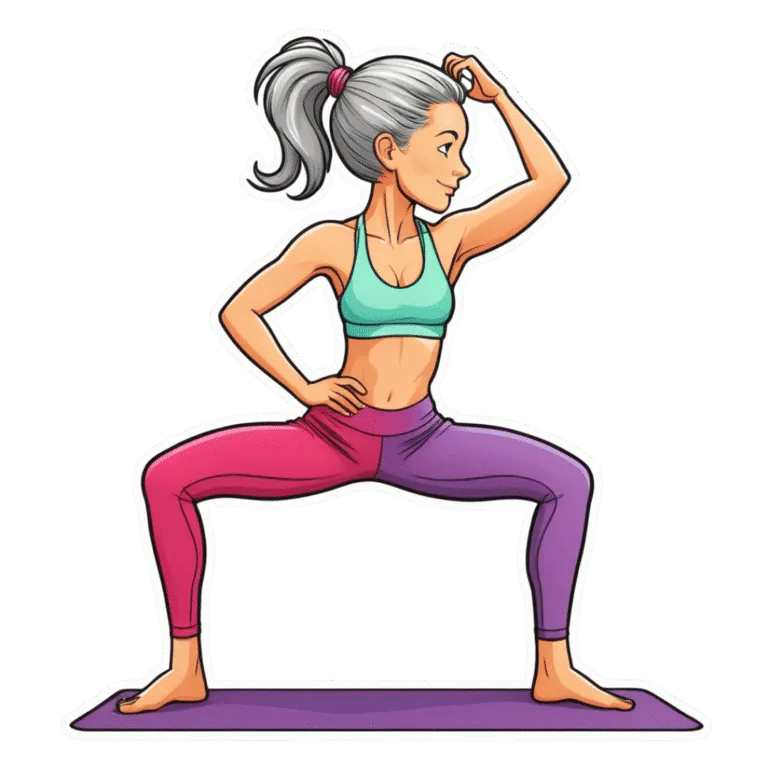
The deep squat (also called resting squat, sitting squat, Slav squat, Asian squat, and more) is a natural resting position that most Western adults lose due to lack of regular use, leading to reduced mobility in associated areas too. And because of how the body works in terms of musculoskeletal system and fascia, “associated areas” ends up being pretty much the whole body.
So, with that in mind, here are the 5 things, and what to do about them:
- Ankle mobility: this becomes a problem when limited ankle dorsiflexion stops your shin from moving forward, causing your heel to lift and your weight to shift forwards
- ankle test: stand about 10cm from a wall, and move your knee forwards while keeping your heel flat; if your knee can touch the wall without your heel lifting, your ankle dorsiflexion is sufficient; if not, then work is needed on it
- ankle fix: do elevated heel raises, by lowering your body from a step and rising onto your toes (and repeat), to build strength and mobility through full range
- Knee flexion: insufficient knee bend beyond 120° stops depth early, usually due to tight quads, joint stiffness, or prior injury
- knee fix: do the “couch stretch” by elevating your back foot, putting your back knee down, squeezing your glutes, and driving your hip forwards, to restore knee and hip mobility
- Hip mobility, general: limited hip flexion or tight adductors prevent your pelvis from dropping between your thighs, often causing lower back rounding or hip compression
- hip fix (CARs): do controlled articular rotations (CARs) by lifting your knee, rotating it out, and moving it through a full circular range, to train active control
- hip fix (sumo squat): hold a weight, take a wide stance with toes turned out, sink deep, and push your knees outwards to build strength and mobility at the end of your range of motion
- Hip external rotation: weak or tight external rotators cause your knees to collapse inwards, and your squat to feel unstable
- stance adjustment: turn your toes outwards until your knees track naturally over your feet, to match your individual hip structure
- external rotation fix: do side-lying banded clamshells, by opening your top knee while keeping your feet together, to strengthen your glutes
- Thoracic mobility: a stiff upper back causes your chest to collapse forwards, even if your lower body mobility is sufficient
- thoracic fix (foam roller): extend your upper back over a foam roller, segment by segment, to improve extension
- thoracic fix (counterbalance squat): hold a light weight in front of your chest while squatting, to keep your center of mass forwards and maintain an upright torso
For more on all of this plus visual demonstrations, enjoy:
Click Here If The Embedded Video Doesn’t Load Automatically!
Want to learn more?
You might also like:
Take care!
Don’t Forget…
Did you arrive here from our newsletter? Don’t forget to return to the email to continue learning!
Recommended
Learn to Age Gracefully
Join the 98k+ American women taking control of their health & aging with our 100% free (and fun!) daily emails:
-
The Vitamin Solution – by Dr. Romy Block & Dr. Arielle Levitan
10almonds is reader-supported. We may, at no cost to you, receive a portion of sales if you purchase a product through a link in this article.
A quick note: it would be remiss of us not to mention that the authors of this book are also the founders of a vitamin company, thus presenting a potential conflict of interest.
That said… In this reviewer’s opinion, the book does seem balanced and objective, regardless.
We talk a lot about supplements here at 10almonds, especially in our Monday Research Review editions. And yesterday, we featured a book by a doctor who hates supplements. Today, we feature a book by two doctors who have made them their business.
The authors cover all the most common vitamins and minerals popularly enjoyed as supplements, and examine:
- why people take them
- factors affecting whether they help
- problems that can arise
- complicating factors
The “complicating factors” include, for example, the way many vitamins and/or minerals interplay with each other, either by requiring the presence of another, or else competing for resources for absorption, or needing to be delicately balanced on pain of diverse woes.
This is the greatest value of the book, perhaps; it’s where most people go wrong with supplementation, if they go wrong.
While both authors are medical doctors, Dr. Romy Block is an endocrinologist specifically, and she clearly brought a lot of extra attention to relevant metabolic/thyroid issues, and how vitamins and minerals (such as thiamin and iron) can improve or sabotage such, depending on various factors that she explains. Informative, and so far as this reviewer could see, objective and well-balanced.
Bottom line: supplementation is a vast and complex topic, but this book does a fine job of demystifying and simplifying it in a clear and objective fashion, without resorting to either scaremongering or hype.
Click here to check out The Vitamin Solution, and upgrade your knowledge!
Share This Post
-
Fig vs Plum – Which is Healthier?
10almonds is reader-supported. We may, at no cost to you, receive a portion of sales if you purchase a product through a link in this article.
Our Verdict
When comparing figs to plums, we picked the figs.
Why?
Both have their merits! But…
In terms of macros, figs have more protein, carbs, and fiber; the glycemic index is about equal so that makes this round a win for figs (as the “more food per food” option).
In the category of vitamins, figs have more of vitamins B1, B2, B3, B5, B6, B7, and B9, while plums have more of vitamins A, C, E, and K, making this is a 7:4 victory for figs.
Looking at minerals, figs have more calcium, copper, iron, magnesium, manganese, phosphorus, potassium, selenium, and zinc, while plums are not higher in any minerals. Another easy win for figs here.
In other considerations, plums do have some anticancer properties beyond what figs can boast, so that’s a point in plums’ favor.
Adding up the sections nevertheless makes for a clear overall win for figs, but by all means do enjoy either or both, as diversity is best!
Want to learn more?
You might like to read:
- Top 8 Fruits That Prevent & Kill Cancer ← plums are high on the list here
- From Apples to Bees, and High Fructose Cs: Which Sugars Are Healthier, And Which Are Just The Same?
Take care!
Share This Post
-
Why Not To Be A Night Owl After 40
10almonds is reader-supported. We may, at no cost to you, receive a portion of sales if you purchase a product through a link in this article.
It’s often assumed that being an “early bird” or a “night owl” is purely a matter of genetic predisposition, and… There is indeed a genetic influence, but as it is said, “genes predispose; they don’t predetermine“.
We discussed this in detail, here: Early Bird Or Night Owl? Genes vs Environment
With that in mind, being a night owl is, for most of us, largely a modifiable thing. Some people, of course, will have things going on in their life that preclude getting an early night’s sleep, but if that’s not the case for you, then we do recommend considering shifting your chronotype to being an “early bird”, if it’s not already there.
For more about chronotypes in general, see: 5 Sleep Phenotypes, By Actual Science (Sleep Tracking, For Five Million Nights)
Why does it matter?
A team of researchers (Dr. Ana Wenzler et al.) did a large (n=23,798) study and found that night owls face a higher risk of cognitive decline compared to morning people.
As to why “after 40”, there are two reasons:
- Biological clocks shift throughout life: people tend to be morning types in childhood, shift to evening types in adolescence, and most, but far from all, return to morning preference by around age 40.
- Cognitive decline naturally begins most commonly after age 40, and lifestyle factors influence this process.
For this reason, the study used data from people over the age of 40, to analyze people’s chronotypes (natural sleep patterns) and their behavior over a 10-year period.
As to how much being a night owl affects the risk of cognitive decline; it was broken down by demographics, but for example in the group with the highest education level:
❝each one-hour increase in chronotype corresponded to a 0.80-point decline in cognition per decade (95 % CI: -1.34, -0.26)❞
The “night owl” chronotype was also associated with greater decline in non-verbal fluency and executive functioning among higher educated participants, highlighting the importance of targeted prevention strategies.
In terms of potentially confounding (although also relevant) factors, night owls tend to engage more in unhealthy behaviors such as smoking, drinking, poor diet, and lack of exercise—especially in the evening.
You may be thinking: “I don’t do those things”, in which case, great! But the researchers also calculated that those behaviors explain only about 25% of the cognitive decline risk among night owls.
You can read the paper in full, here: Chronotype as a potential risk factor for cognitive decline: The mediating role of sleep quality and health behaviours in a 10-year follow-up study
How should we fix it?
If you’re currently a night owl, chances are you physically cannot currently sleep earlier than you do—your brain just isn’t ready to sleep yet at the earlier hour.
What you can control, however, is your getting-up time. So, shift that earlier—gently! 15 minutes earlier per day is great—and your “getting sleepy time” in the evening will naturally shift commensurately earlier.
For reference, see also: Calculate (And Enjoy) The Perfect Night’s Sleep
Take care!
Share This Post
Related Posts
-
Reverse Inflammation Naturally – by Dr. Michelle Honda
10almonds is reader-supported. We may, at no cost to you, receive a portion of sales if you purchase a product through a link in this article.
This book is in some ways not as marketable as some; it doesn’t have lots of colorful healthy food on the cover; it doesn’t even have a “woman laughing alone with salad” (you know the stock photo trope), let alone someone looking glamorous in a labcoat with a stethoscope draped over their shoulder despite listening to hearts not being a regular part of their job as an immunologist or such.
What it does have, instead, is a lot of very useful information, and much more than you’ll usually find in a book for laypeople.
For example, you probably know that for fighting inflammation, a green salad is better than a cheeseburger, say, and a black coffee is better than a glass of wine.
But do you know about the roles, for good or ill, of prostaglandins and linoleic fats vs dietary fats? How about delta-6-desaturase? Neu5Gc and arachidonic acid?
Dr. Honda demystifies all of these and more, as well as talking about the impacts of very many foods and related habits on various different inflammation-based disease. And of course, almost all disease involves some kind of inflammation (making fighting inflammation one of the best things you can do for your overall disease-avoidance strategy!), but she singles out some of the most relevant, as per the list on the front cover.
She also talks a lot of “pharmacy in your kitchen”, in other words, what herbs, spices, and plant extracts we can enjoy for (evidence-based!) benefits on top of our default healthy diet free (or at least mostly free, for surely none of us are perfect) from inflammatory agents.
Not content with merely giving a huge amount of information, she also gives recipes and a meal plan, but honestly, it’s the informational chapters that are the real value of the book.
Bottom line: if you’d like to reduce your body’s inflammation levels (and/or perhaps those of a loved one for whom you cook), then this book will be an invaluable resource.
Click here to check out Reverse Inflammation Naturally, and reverse inflammation naturally!
Don’t Forget…
Did you arrive here from our newsletter? Don’t forget to return to the email to continue learning!
Learn to Age Gracefully
Join the 98k+ American women taking control of their health & aging with our 100% free (and fun!) daily emails:
-
Don’t Train Harder (Yet); Fix Your Form First
10almonds is reader-supported. We may, at no cost to you, receive a portion of sales if you purchase a product through a link in this article.
Cori Lefkowitz, of Strong at Every Age, shows us how to make it count:
You might want to sit up and pay attention to this
Prioritizing “training harder” can cause more problems than you might expect, because progressing too quickly causes your hips and lower back to compensate. Instead, it’s best to work up very gradually. For example, build up from a pelvic tilt hold to a march, a double knee tuck, a single leg lower, and finally a double leg lower to properly train a posterior pelvic tilt, and protect your lower back.
Some other mistakes to avoid:
- Avoiding or misusing spinal flexion: include crunches and sit-ups since your abs are meant to flex your spine, and control the curl one vertebra at a time—round forwards as you reach towards your toes and lower with control—so you don’t rely on momentum or your hip flexors.
- Not focusing on true muscle engagement: prioritize curling your pelvis towards your ribs in reverse crunches and leg raises, monitor what you feel working, and regress or adjust if your hip flexors dominate instead of your abs.
- Prioritizing fatigue and quantity over quality and intensity: spread your ab work across three to four sessions per week, maintain controlled reps, and create full-body tension in movements like a plank by bracing your core, slightly tucking your pelvis, engaging your glutes and quads, and driving back through your heels so shorter, high-effort sets replace longer, relaxed holds.
In fewer words, the advice here is to avoid forcing advanced variations before mastering fundamentals, and instead focus on the controlled, intentional reps that actually build strong abs.
For more on all of this, enjoy:
Click Here If The Embedded Video Doesn’t Load Automatically!
Want to learn more?
You might also like:
Is A Visible Six-Pack Obtainable Regardless Of Genetic Predisposition?
Take care!
Don’t Forget…
Did you arrive here from our newsletter? Don’t forget to return to the email to continue learning!
Learn to Age Gracefully
Join the 98k+ American women taking control of their health & aging with our 100% free (and fun!) daily emails:
-
Outsmart Your Pain – by Dr. Christiane Wolf
10almonds is reader-supported. We may, at no cost to you, receive a portion of sales if you purchase a product through a link in this article.
Dr. Wolf is a physician turned mindfulness teacher. As such, and holding an MD as well as a PhD in psychosomatic medicine, she knows her stuff.
A lot of what she teaches is mindfulness-based stress reduction (MBSR), but this book is much more specific than that. It doesn’t promise you won’t continue to experience pain—in all likelihood you will—but it does change the relationship with pain, and this greatly lessens the suffering and misery that comes with it.
For many, the most distressing thing about pain is not the sensation itself, but how crippling it can be—getting in the way of life, preventing enjoyment of other things, and making every day a constant ongoing exhausting battle… And every night, a “how much rest am I actually going to be able to get, and in what condition will I wake up, and how will I get through tomorrow?” stress-fest.
Dr. Wolf helps the reader to navigate through all these challenges and more; minimize the stress, maximize the moments of respite, and keep pain’s interference with life to a minimum. Each chapter addresses different psychological aspects of chronic pain management, and each comes with specific mindfulness meditations to explore the new ideas learned.
The style is personal and profound, while coming from a place of deep professional understanding as well as compassion.
Bottom line: if you’ve been looking for a life-ring to help you reclaim your life, this one could be it; we wholeheartedly recommend it.
Click here to check out Outsmart Your Pain, and recover the beauty and joy of life!
Don’t Forget…
Did you arrive here from our newsletter? Don’t forget to return to the email to continue learning!
Learn to Age Gracefully
Join the 98k+ American women taking control of their health & aging with our 100% free (and fun!) daily emails:


