

Women don’t have a ‘surge’ in fertility before menopause – but surprise pregnancies can happen, even after 45

10almonds is reader-supported. We may, at no cost to you, receive a portion of sales if you purchase a product through a link in this article.

Every now and then we see media reports about celebrities in their mid 40s having surprise pregnancies. Or you might hear stories like these from friends or relatives, or see them on TV.

Menopause signals the end of a woman’s reproductive years and happens naturally between age 45 and 55 (the average is 51). After 12 months with no periods, a woman is considered postmenopausal.

While the chance of pregnancy is very low in the years leading up to menopause – the so called menopausal transition or perimenopause – the chance is not zero.

So, what do we know about the chance of conceiving naturally after age 45? And what are the risks?
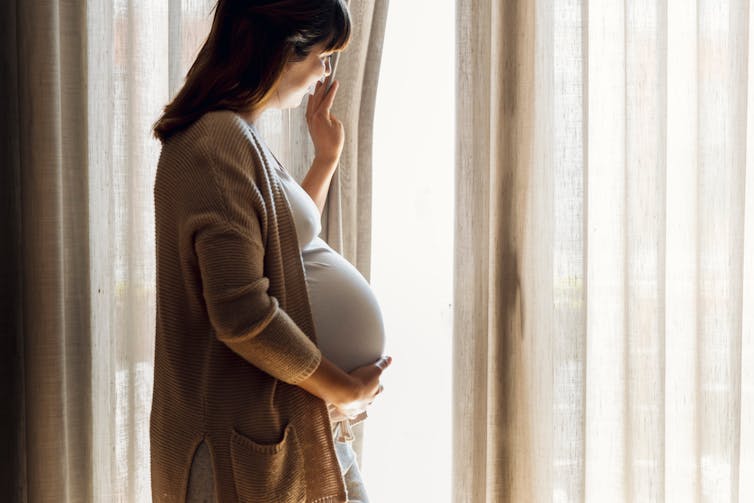
IKO-studio/Shutterstock

Is there a spike in fertility before menopause?

The hormonal changes that accompany perimenopause cause changes to the menstrual cycle pattern, and some have suggested there can be a “surge” in fertility at perimenopause. But there’s no evidence this exists.

In the years leading up to menopause, a woman’s periods often become irregular, and she might have some of the common symptoms of menopause such as hot flushes and night sweats.

This might lead women to think they have hit menopause and can’t get pregnant anymore. But while pregnancy in a woman in her mid 40s is significantly less likely compared to a woman in her 20s or 30s, it’s still possible.

The stats for natural pregnancies after age 45

Although women in their mid- to late 40s sometimes have “miracle babies”, the chance of pregnancy is minimal in the five to ten years leading up to menopause.

The monthly chance of pregnancy in a woman aged 30 is about 20%. By age 40 it’s less than 5% and by age 45 the chance is negligible.

We don’t know exactly how many women become pregnant in their mid to late 40s, as many pregnancies at this age miscarry. The risk of miscarriage increases from 10% in women in their 20s to more than 50% in women aged 45 years or older. Also, for personal or medical reasons some pregnancies are terminated.

According to a review of demographic data on age when women had their final birth across several countries, the median age was 38.6 years. But the range of ages reported for last birth in the reviewed studies showed a small proportion of women give birth after age 45.

Having had many children before seems to increase the odds of giving birth after age 45. A study of 209 women in Israel who had conceived spontaneously and given birth after age 45 found 81% had already had six or more deliveries and almost half had had 11 or more previous deliveries.

A couple outdoors smiling. The woman is pregnant.
Conceiving naturally at age 45 plus is not unheard of. pixelheadphoto digitalskillet/Shutterstock

There’s no reliable data on how common births after age 45 are in Australia. The most recent report on births in Australia show that about 5% of babies are born to women aged 40 years or older.

However, most of those were likely born to women aged between 40 and 45. Also, the data includes women who conceive with assisted reproductive technologies, including with the use of donor eggs. For women in their 40s, using eggs donated by a younger woman significantly increases their chance of having a baby with IVF.

What to be aware of if you experience a late unexpected pregnancy

A surprise pregnancy late in life often comes as a shock and deciding what to do can be difficult.

Depending on their personal circumstances, some women decide to terminate the pregnancy. Contrary to the stereotype that abortions are most common among very young women, women aged 40–44 are more likely to have an abortion than women aged 15–19.

This may in part be explained by the fact older women are up to ten times more likely to have a fetus with chromosomal abnormalities.

There are some extra risks involved in pregnancy when the mother is older. More than half of pregnancies in women aged 45 and older end in miscarriage and some are terminated if prenatal testing shows the fetus has the wrong number of chromosomes.

This is because at that age, most eggs have chromosomal abnormalities. For example, the risk of having a pregnancy affected by Down syndrome is one in 86 at age 40 compared to one in 1,250 at age 20.
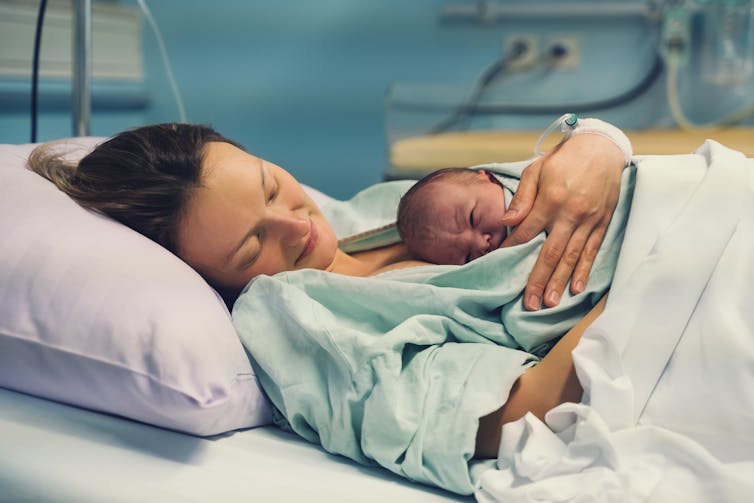
A woman in hospital holding a newborn baby.
There are some added risks associated with pregnancy when the mother is older. Natalia Deriabina/Shutterstock

Apart from the increased risk of chromosomal abnormalities, advanced maternal age also increases the risk of stillbirth, fetal growth restriction (when the unborn baby doesn’t grow properly), preterm birth, pre-eclampsia, gestational diabetes and caesarean section.

However, it’s important to remember that since the overall risk of all these things is small, even with an increase, the risk is still small and most babies born to older mothers are born healthy.

Multiple births are also more common in older women than in younger women. This is because older women are more likely to release more than one egg if and when they ovulate.

A study of all births in England and Wales found women aged 45 and over were the most likely to have a multiple birth.

The risks of babies being born prematurely and having health complications are higher in twin than singleton pregnancies, and the risks are highest in women of advanced maternal age.

What if you want to become pregnant in your 40s?

If you’re keen to avoid pregnancy during perimenopause, it’s recommended you use contraception.

But if you want to get pregnant in your 40s, there are some things you can do to boost your chance of conceiving and having a healthy baby.

These include preparing for pregnancy by seeing a GP for a preconception health check, taking folic acid and iodine supplements, not smoking, limiting alcohol consumption, maintaining a healthy weight, exercising regularly and having a nutritious diet.

If you get good news, talking to a doctor about what to expect and how to best manage a pregnancy in your 40s can help you be prepared and will allow you to get personalised advice based on your health and circumstances.

Karin Hammarberg, Adjunct Senior Research Fellow, Global and Women’s Health, School of Public Health & Preventive Medicine, Monash University

This article is republished from The Conversation under a Creative Commons license. Read the original article.

Don’t Forget…

Did you arrive here from our newsletter? Don’t forget to return to the email to continue learning!
Learn to Age Gracefully

Join the 98k+ American women taking control of their health & aging with our 100% free (and fun!) daily emails:

  • Sleep Tracking, For Five Million Nights

    10almonds is reader-supported. We may, at no cost to you, receive a portion of sales if you purchase a product through a link in this article.

    5 Sleep Phenotypes, By Actual Science

    You probably know people can be broadly divided into “early birds” and “night owls”:

    Early Bird Or Night Owl? Genes vs Environment

    …and then the term “hummingbird” gets used for a person who flits between the two.

    That’s three animals so far. If you read a book we reviewed recently, specifically this one:

    The Power of When – by Dr. Michael Breus

    …then you may have used the guide within to self-diagnose your circadian rhythm type (chronotype) according to Dr. Breus’s system, which divides people into bears, lions, wolves, and dolphins.

    That’s another four animals. If you have a FitBit, it can “diagnose” you with being those and/or a menagerie of others, such as giraffe, hedgehog, parrot, and tortoise:

    How Fitbit Developed the Sleep Profile Experience (Part 2 – Sleep Animals)

    Five million nights

    A team of researchers recently took a step away from this veritable zoo of 11 different animals and counting, and used a sophisticated modelling system to create a spatial-temporal map of people’s sleep habits, and this map created five main “islands” that people’s sleep habits could settle on, or sometimes move from island to island.

    Those “five million nights” by the way? It was actually 5,095,798 nights! You might notice that would take from the 2020s to the 15970s to complete, so this was rather a matter of monitoring 33,152 individuals between January and October of the same year. Between them, they got those 5,095,798 nights of sleep (or in some cases, nights of little or no sleep, but still, they were there for the nights).

    The five main phenotypes that the researchers found were:

    1. What we think of as “normal” sleep. In this phenotype, people get about eight hours of uninterrupted sleep for at least six days in a row.
    2. As above for half the nights, but they only sleep for short periods of time in bouts of less than three hours the other half.
    3. As per normal sleep, but with one interrupted night per week, consisting of a 5 hour sleep period and then broken sleep for a few more hours.
    4. As per normal sleep generally, but with occasional nights in which long bouts of sleep are separated by a mid-sleep waking.
    5. Sleeping for very short periods of time every night. This phenotype was the rarest the researchers found, and represents extremely disrupted sleep.

    As you might suspect, phenotype 1 is healthier than phenotype 5. But that’s not hugely informational, as the correlation between getting good sleep and having good health is well-established. So, what did the study teach us?

    ❝We found that little changes in sleep quality helped us identify health risks. Those little changes wouldn’t show up on an average night, or on a questionnaire, so it really shows how wearables help us detect risks that would otherwise be missed.❞

    ~ Dr. Benjamin Smarr

    More specifically,

    ❝We found that the little differences in how sleep disruptions occur can tell us a lot. Even if these instances are rare, their frequency is also telling. So it’s not just whether you sleep well or not – it’s the patterns of sleep over time where the key info hides❞

    ~ Dr. Edward Wang

    …and, which gets to the absolute point,

    ❝If you imagine there’s a landscape of sleep types, then it’s less about where you tend to live on that landscape, and more about how often you leave that area❞

    ~ Dr. Varun Viswanath

    In other words: if your sleep pattern is not ideal, that’s one thing and it’d probably be good to address it, by improving your sleep. However, if your sleep pattern changes phenotype without an obvious known reason why, this may be considered an alarm bell warning of something else that needs addressing, which may be an underlying illness or condition—meaning it can be worthwhile being a little extra vigilant when it comes to regular health screenings, in case something new has appeared.

    Want to read more?

    You can read the paper in full here:

    Five million nights: temporal dynamics in human sleep phenotypes

    Take care!

    Share This Post

  • Vodka vs Beer – Which is Healthier?

    10almonds is reader-supported. We may, at no cost to you, receive a portion of sales if you purchase a product through a link in this article.

    Our Verdict

    When comparing vodka to beer, we picked the vodka.

    Why?

    As you might have guessed, neither are exactly healthy. But one of them is relatively, and we stress relatively, less bad than the other.

    In the category of nutrients, vodka is devoid of nutrients, and beer has small amounts of some vitamins and minerals—but the amounts are so small, that you would need to drink yourself to death before benefiting from them meaningfully. And while beer gets touted as “liquid bread”, it really isn’t. A thousand years ago it will have been a lot less alcoholic and more carby, but even then, it wasn’t a health product aside from that it provided a way of making potentially contaminated water safer to drink.

    In the category of carbohydrates, vodka nominally has none, due to the distillation process, and beer has some. Glycemic index websites often advise that the GI of beers, wines, and spirits can’t be measured as their carb content is not sufficient to get a meaningful sample, but diabetes research tells a more useful story:

    Any alcoholic drink will generally cause a brief drop in blood sugars, followed by a spike. This happens because the liver prioritises metabolizing alcohol over producing glycogen, so it hits pause on the sugar metabolism and then has a backlog to catch up on. In the case of alcoholic drinks that have alcohol and carbs, this will be more pronounced—so this means that the functional glycemic load of beer is higher.

    That’s a point in favor of vodka.

    Additionally, in terms of the alcohol content, correctly-distilled vodka’s alcohol is pure ethanol, while beer will contain an amount of methanol that will vary per beer, but an illustrative nominal figure could be about 16mg/L. Methanol is more harmful than ethanol.

    So that’s another point in favor of vodka.

    Once again, neither drink is healthy; both are distinctly unhealthy. But unit for unit, beer is the least healthy of the two, making vodka the lesser of two evils.

    Want to learn more?

    You might like to read:

    Take care!

    Share This Post

  • Humid heat may increase the risk of premature birth. But aspirin could help

    10almonds is reader-supported. We may, at no cost to you, receive a portion of sales if you purchase a product through a link in this article.

    Pregnancy can be a time of joy and anticipation. But it can also be a nerve-wracking experience, with many factors affecting when and how a baby arrives.

    A new study, published today, suggests when pregnant women are exposed to high levels of humid heat during pregnancy, they are more likely to have a preterm birth.

    However, this study also found taking aspirin at low doses during pregnancy could help reduce this risk. But pregnant women should speak to a doctor before taking aspirin or other medications.

    Felipe Salgado/Unsplash

    What is a preterm birth?

    Preterm birth is when a baby is born prematurely, before 37 weeks of pregnancy. Globally, roughly 10% of babies – or about 13 million infants – are born preterm each year.

    Tragically, about one million of these babies do not survive. That makes preterm birth the leading cause of death in children under five.

    There are three different types of preterm births:

    • extremely preterm, referring to a live birth before 28 weeks
    • very preterm, when a baby is born between 28 and 32 weeks
    • moderate to late preterm, meaning delivery between 32 and 37 weeks.

    What causes it?

    It’s unclear what exactly causes preterm birth. And many cases happen spontaneously, meaning there are no signs a baby will be born early.

    However, certain factors may increase a woman’s risk of giving birth prematurely. These include genetics, various infections and chronic conditions such as diabetes and high blood pressure. These risk factors all cause inflammation in the body, which current evidence suggests significantly increases preterm birth risk.

    Pregnant women who are exposed to environmental pollutants – such as bushfire smoke and pesticides – may also be more likely to give birth prematurely. This is because these pollutants can contribute to inflammation.

    The effect of humidity

    A growing body of evidence suggests exposure to extreme heat may be another environmental factor that increases preterm birth risk.

    Extreme heat can increase levels of specific proteins – known as shock proteins – in the blood of pregnant women. These proteins can trigger inflammation by activating the body’s immune response.

    High temperatures may also reduce blood flow to the placenta, limiting the oxygen and nutrients the baby receives.

    Humidity adds to this risk. When the air is humid, sweat doesn’t evaporate as easily, making it harder for the body to cool down. This can place extra strain on pregnant women and has been linked to a higher risk of preterm birth.

    This may help to explain the high rates of preterm birth in regions that are also most affected by climate change, such as South Asia and sub-Saharan Africa. In these places, where temperatures are high and heatwaves are common, even small increases in heat can impact the health of mothers and newborns.

    What this new study involved

    A newly published study examined how humid heat exposure during pregnancy affects the risk of preterm birth. It also investigated whether low-dose aspirin might help reduce this risk, possibly because aspirin can improve blood flow and reduce inflammation.

    This research was carried out across several countries with hot climates, including the Democratic Republic of Congo, Zambia, Kenya, Guatemala, Pakistan and parts of India.

    More than 11,500 pregnant women participated in this trial. About half of them were given a low daily dose of aspirin (81mg) from when they joined the study through to when they were 36 weeks pregnant. The other half received a placebo – a pill with no active ingredients – over the same period. The researchers then compared the birth outcomes of the two groups, and came up with three main findings.

    1. Overall, the rate of preterm birth was lower in women who took low-dose aspirin (11.6%) compared with those who took a placebo (13.1%).
    2. Among women who were not taking aspirin, each 1°C increase in temperature translated to a noticeable increase (5%) in the risk of preterm birth. This pattern was not seen in women taking low-dose aspirin.
    3. Exposure to more heat later in pregnancy was linked to a greater chance of preterm birth in the placebo group, but not in the low-dose aspirin group.

    Limitations of this study

    This study has two main limitations.

    First, it generalised data about temperatures in different cities that may not fully reflect what each woman experienced day-to-day – for example, if their house was hotter or cooler than average. It may also underestimate the length and/or severity of heatwaves. This is because scientists measure temperature in various ways, and may not have access to accurate data from certain locations.

    Second, the researchers were not able to determine the exact reasons why some women gave birth early, or whether these differed between the low-dose aspirin and placebo groups.

    Overall, this study adds to growing evidence that high temperatures and humidity may increase the risk of preterm birth. It also suggests low-dose aspirin, taken early in pregnancy, may help reduce the risk of heat-related preterm birth.

    However, more and larger studies are needed to replicate these findings. And if you’re a pregnant woman who is concerned about preterm birth risk, visit your doctor before taking any aspirin or other medications.

    Where to next?

    Unfortunately, heatwaves will only become more frequent and intense. So future work should focus on identifying which population groups are most at risk, and how heat affects different stages of pregnancy. Researchers must also test other simple, low-cost strategies that could protect pregnant women from the effects of heat.

    Stacey Savin, Postdoctoral researcher, Vascular Immunology of Pregnancy Group, University of Adelaide, University of Adelaide

    This article is republished from The Conversation under a Creative Commons license. Read the original article.

    Share This Post

  • How many vegetables influence brain waves and control brain states?

    Is it OK if my child eats lots of fruit but no vegetables?

    10almonds is reader-supported. We may, at no cost to you, receive a portion of sales if you purchase a product through a link in this article.

    Does it seem like most vegetables you serve your children end up left on the plate, or worse, strewn across the floor? But mention dessert, and your fruit skewers are polished off in an instant.

    Or maybe the carrot and cucumber sticks keep coming home in your child’s lunchbox untouched, yet the orange slices are nowhere to be seen.

    If you’re facing these struggles with your child, you’re not alone. Many children prefer fruit to vegetables.

    So if your child eats lots of fruit but minimal or no vegetables, is that OK? And how can you get them to eat more veggies?

    Children have an innate preference for fruit

    The Australian Dietary Guidelines’ recommended daily intakes for vegetables and fruit depend on a child’s age.

    A chart showing the serving amounts of fruit and veg for ages 4-18.
    Fruit and vegetable serving sizes by age. The Conversation.
    National Health and Medical Research Council, CC BY-SA

    Consumption among Australian children falls well below recommendations. Around 62.6% of children aged over two meet the recommended daily fruit intake, but only 9% meet the recommended vegetable intake.

    This is not surprising given children have a natural preference for fruit. At least in part, this is due to its sweetness and texture, whether crispy, crunchy or juicy. The texture of fruit has been linked to a positive sensory experience among children.

    Vegetables, on the other hand, are more of an acquired taste, and certain types, such as cruciferous vegetables, can be perceived by children as bitter.

    The reason children often prefer fruit over vegetables could also be related to the parents’ preferences. Some research has even suggested we develop food preferences before birth based on what our mother consumes during pregnancy.

    Balance is key

    So, a preference for fruit is common. But is it OK if your child eats lots of fruit but little to no vegetables? This is a question we, as dietitians, get asked regularly.

    You might be thinking, at least my child is eating fruit. They could be eating no veggies and no fruit. This is true. But while it’s great your child loves fruit, vegetables are just as important as part of a balanced eating pattern.

    Vegetables provide us with energy, essential vitamins and minerals, as well as water and fibre, which help keep our bowels regular. They also support a strong immune system.

    If your child is only eating fruit, they are missing some essential nutrients. But the same is true if they are eating only veggies.

    Fruit likewise provides the body with a variety of essential vitamins and minerals, as well as phytochemicals, which can help reduce inflammation.

    Evidence shows healthy consumption of fruit and vegetables protects against chronic diseases including high blood pressure, heart disease and stroke.

    Consumed together, fruit and vegetables in a variety of colours provide different nutrients we need, some of which we can’t get from other foods. We should encourage kids to eat a “rainbow” of fruit and vegetables each day to support their growth and development.

    What if my child eats too much fruit?

    If your child is eating slightly more fruit than what’s recommended each day, it’s not usually a problem.

    Fruit contains natural sugar which is good for you. But too much of a good thing, even if it’s natural, can create problems. Fruit also contains virtually no fat and very little to no protein, both essential for a growing child.

    When overindulging in fruit starts to displace other food groups such as vegetables, dairy products and meat, that’s when things can get tricky.

    6 tips to get your kids to love vegetables

    1. Get them involved

    Take your child with you when you go shopping. Let them choose new vegetables. See if you can find vegetables even you haven’t tried, so you’re both having a new experience. Then ask them to help you with preparing or cooking the vegetables using a recipe you have chosen together. This will expose your child to veggies in a positive way and encourage them to eat more.

    2. Sensory learning

    Try to expose your child to vegetables rather than hiding them. Kids are more likely to eat veggies when they see, smell and feel them. This is called sensory learning.

    3. Have fun with food

    Use colourful vegetables of different sizes and textures. Make them fun by creating scenes or faces on your child’s plate. Add edible flowers or mint for decoration. You can even serve this with a side of veggie-based dip such as hummus or guacamole for some bonus healthy fats.

    4. Teach them to grow their own

    Teach your child how to grow their own vegetables. Evidence shows kids are more inclined to try the food they have helped and watched grow. You don’t need to have a big backyard to do this. A windowsill with a pot plant is a perfect start.

    5. Lead by example

    Your child learns from you, and your eating habits will influence theirs. Ensure they see you eating and enjoying veggies, whether in meals or as snacks.

    6. Practise persistence

    If your child refuses a particular vegetable once, don’t give up. It can take many attempts to encourage children to try a new food.The Conversation

    Yasmine Probst, Associate Professor, School of Medical, Indigenous and Health Sciences, University of Wollongong; Olivia Wills, Accredited Practising Dietitian, PhD candidate, University of Wollongong, and Shoroog Allogmanny, Accredited Practising Dietitian, PhD candidate, University of Wollongong

    This article is republished from The Conversation under a Creative Commons license. Read the original article.

    Don’t Forget…

    Did you arrive here from our newsletter? Don’t forget to return to the email to continue learning!

    Learn to Age Gracefully

    Join the 98k+ American women taking control of their health & aging with our 100% free (and fun!) daily emails:

  • The Real Way To Shrink Your Waist & Train Your Core

    10almonds is reader-supported. We may, at no cost to you, receive a portion of sales if you purchase a product through a link in this article.

    This video is unusually good, because it very clearly shows (and explains) some important biomechanical differences that a lot of people miss (resulting, for them, in making things worse rather than better):

    Working the right muscles

    Crunches are ineffective for flattening the stomach and can worsen posture by shortening abs and pulling the pelvis forward. So, what to do instead?

    Before continuing, let’s just mention that nutrition is crucial—no workout will help if your gut is inflamed or diet is poor. But this video is about exercise technique, so let’s press on to that.

    The transverse abdominis (TVA) is your natural core stabilizer, keeping your organs in place and holding you upright. If it’s weak, your gut will sink down and outwards, no matter how many crunches you did (which usually train only the rectus abdominis). You can check on the current state of your TVA by doing the “string test”; tie a string around your waist, and then bend to pick something up. If it tightens when lifting something, your TVA isn’t activating. The goal is for the string to loosen as you bend.

    With that in mind, here’s how to train the TVA:

    Stomach vacuums:

    • Breathe deeply in tabletop position.
    • Exhale slowly through pursed lips with your tongue on the roof of your mouth.
    • Draw your belly button toward your spine (without sucking in).
    • Do 3 sets of 10 reps.

    Pelvic tilt activation:

    • Lie on your back, knees bent, hand under your lower back.
    • Tilt your pelvis so that your back presses into your hand. Hold 10 secs, repeat 10 times.

    Range of motion test:

    • Lift your legs while maintaining back contact with the floor.
    • Find your TVA-controlled range. If your back lifts, reduce the range.
    • Do 3 sets of 10 reps.

    Stabilization training:

    • Bird-dog (horse stack): alternate extending each opposite arm and leg, in the tabletop position. Hold 10–20 seconds per side.
    • Swiss ball/rings plank: train your stabilizing muscles by maintaining your posture on unstable surface. Hold 10–30 seconds with good control.

    Swiss ball crunches:

    • Full spinal extension over the ball.
    • Crunch up and squeeze your abs.
    • Do 2 sets of 10 reps.

    For more on all of this, plus visual demonstrations, enjoy:

    Click Here If The Embedded Video Doesn’t Load Automatically!

    Want to learn more?

    You might also like:

    Visceral Belly Fat & How To Lose It ← if you have an undue amount of visceral fat, it’ll result in a larger belly despite not having squishable (subcutaneous) fat over your muscles. This visceral (i.e. of the viscera; i.e. surrounding your internal organs) fat is much more of a health problem than anything on the other side of your abs, and is important to take care of. But fear not, because here’s how 🙂

    Take care!

    Don’t Forget…

    Did you arrive here from our newsletter? Don’t forget to return to the email to continue learning!

    Learn to Age Gracefully

    Join the 98k+ American women taking control of their health & aging with our 100% free (and fun!) daily emails:

  • What Does Hypermobile Posture Look Like?

    10almonds is reader-supported. We may, at no cost to you, receive a portion of sales if you purchase a product through a link in this article.

    Is this how you stand and/or walk?

    Every which way and loose

    Posture, with hypermobility, can be quite paradoxical—for example, it can be either overly stiff for protection, or overly loose with poor control, often alternating between bracing and collapsing.

    Some things to watch out for:

    • Standing posture: favoring one leg over both, locking your knees backwards or keeping a slight constant bend, your pelvis tucked under and/or shifted forwards.
    • Walking pattern: feet turned out, glute clenching, and/or excessive leg rotation where your leg rolls in then your knee swings out as weight transfers.
    • Joint behaviour: frequent hyperextension, especially in your knees, elbows, fingers, or spine, plus excessive fidgeting or moving into end-range positions even while standing still.
    • Upper body signs: exaggerated hand gestures, frequent neck movement, shoulder tension, and a tendency to overextend your neck or back beyond neutral.

    Confession: your writer here is currently writing this while standing on one leg, hip cocked, as she types with her very spidery fingers, and proofreading with a tilted head like a dog that thinks things might make more sense at 45°. This video is taking no prisoners today, it seems.

    In the video, we also learn about unusual flexibility positions like curling our toes, sitting in extreme folded postures, “W-sitting,” or “frog-leg” positions that feel natural but may stress our joints.

    Notably, the main visual clue isn’t just flexibility, but rather also instability, where our body uses compensations like muscle gripping, locking joints, or shifting alignment to create support.

    For once, there’s no real call-to-action here; we cannot re-posture our way out of having hypermobility. If our body’s built this way, it’s built this way, and that’s that (per current science anyway; who knows what future developments may be discovered).

    However, it can be good to recognize the signs and symptoms, such that we can better understand what’s going on.

    For more on all of this plus visual demonstrations, enjoy:

    Click Here If The Embedded Video Doesn’t Load Automatically!

    Want to learn more?

    You might also like:

    What Your Hands Can Tell You About Your Health ← about some hypermobility signs that can show up in our hands

    Take care!

    Don’t Forget…

    Did you arrive here from our newsletter? Don’t forget to return to the email to continue learning!

    Learn to Age Gracefully

    Join the 98k+ American women taking control of their health & aging with our 100% free (and fun!) daily emails: