
What’s the difference between osteoarthritis and rheumatoid arthritis?

10almonds is reader-supported. We may, at no cost to you, receive a portion of sales if you purchase a product through a link in this article.

Arthritis – an umbrella term for around 100 conditions that damage the joints – affects 4.1 million Australians. This is expected to rise by 31% to 5.4 million by 2040 and cost the Australian health-care system an estimated $12 billion each year.

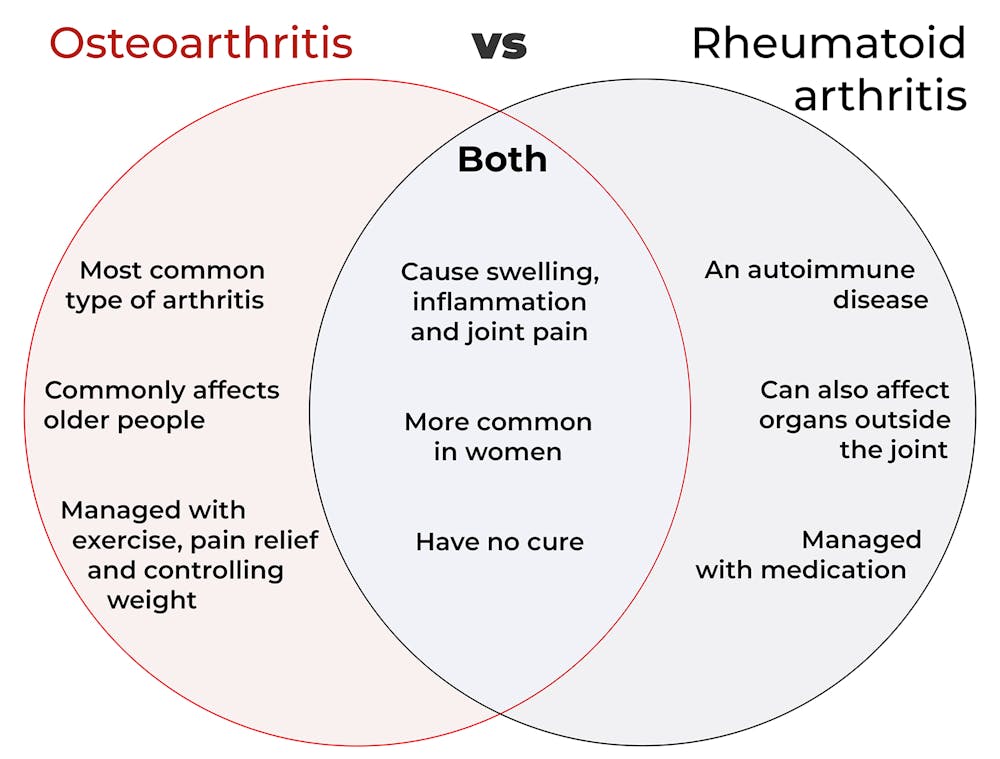
The two most common types, osteoarthritis and rheumatoid arthritis, can both cause joint pain, swelling and stiffness. Both are more common in women. Neither can be cured.

But their causes, risk factors and treatments are different – here’s what you need to know.
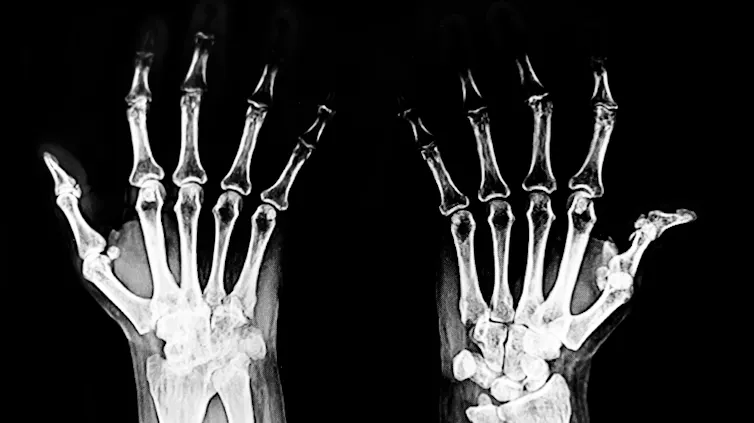
Douglas Olivares/Shutterstock.

What is osteoarthritis?

Osteoarthritis is the most common form of arthritis. It affects 2.1 million Australians, mostly older people. About a third of Australians aged 75 and older have the condition.

It can affect any joint but is most common in the knees, hips, fingers, thumbs and big toes.

The main symptom is pain, especially during movement. Other symptoms may include swelling, stiffness and changes to the shape of joints.

The main risk factors are ageing and obesity, as well as previous injuries or surgery. For osteoarthritis in the hands, genetics also play a big role.

Signs of osteoarthritis can appear on knee scans from around age 45 and become more common with age.

However, this type of arthritis not simply the “wear and tear” of ageing. Osteoarthritis is a complex disease that affects the whole joint. This includes the cartilage (“shock-absorbing” connective tissue protecting your bones), bones, ligaments (connective tissue holding bones and body parts in place) and joint lining.
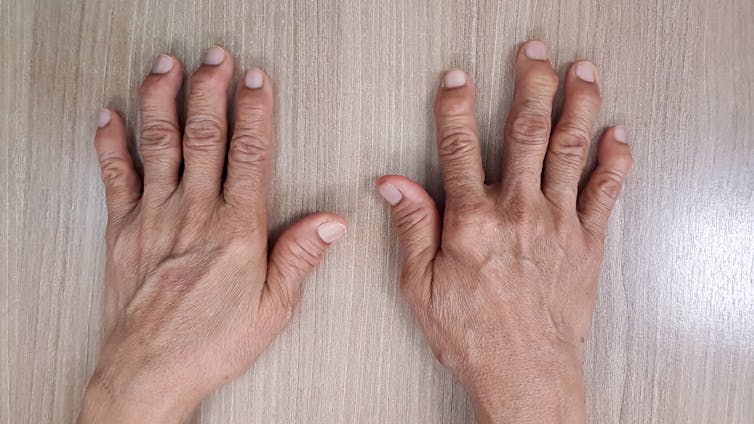
Pair of hands laying flat with bent joints in the fingers.
Osteoarthritis can change the shape of joints such as knuckles. joel bubble ben/Shutterstock

How is it diagnosed?

Diagnosis is based on symptoms (such as pain and restricted movement) and a physical exam.

The disease generally worsens over time and cannot be reversed. But the severity of damage does not always correlate with pain levels.

For this reason, x-rays and MRI scans are usually unhelpful. Some people with early osteoarthritis experience severe pain, but the damage won’t show up on a scan. Others with advanced and visible osteoarthritis may have few symptoms or none at all.

What about rheumatoid arthritis?

Unlike osteoarthritis, rheumatoid arthritis is an autoimmune disease. This means the immune system attacks the joint lining, causing inflammation and damage.

Common symptoms include pain, joint swelling and stiffness, especially in the morning.

Rheumatoid arthritis is less common than osteoarthritis, affecting around 514,000 Australians. It mostly impacts the wrists and small joints in the hands and feet, though larger joints such as the elbows, shoulders, knees and ankles can also be involved.

It can also affect other organs, including the skin, lungs, eyes, heart and blood vessels. Fortunately, disease outside the joint has become less common in recent years, likely due to better and earlier treatment.

Rheumatoid arthritis often develops earlier than osteoarthritis but can occur at any age. Onset is most frequent in those aged 35–64. Smoking increases your risk.

How is it diagnosed?

As with osteoarthritis, your doctor will diagnose rheumatoid arthritis based on your symptoms and a physical exam.

Some other tests can be useful. Blood tests may pick up specific antibodies that indicate rheumatoid arthritis, although you can still have the condition with negative results.

X-rays may also reveal joint damage if the disease is advanced. If there is uncertainty, an ultrasound or MRI can help detect inflammation.
The Conversation, CC BY-SA

How is osteoarthritis treated?

No treatment can stop osteoarthritis progressing. However many people manage their symptoms well with advice from their doctor and self-care. Exercise, weight management and pain medicines can help.

Exercise has been shown to be safe for osteoarthritis of the knee, hip and hand. Many types of exercise are effective at reducing pain, so you can choose what suits you best.

For knee osteoarthritis, managing weight through diet and/or exercise is strongly recommended. This may be because it reduces pressure on the joint or because losing weight can reduce inflammation. Anti-obesity medicines may also reduce pain.
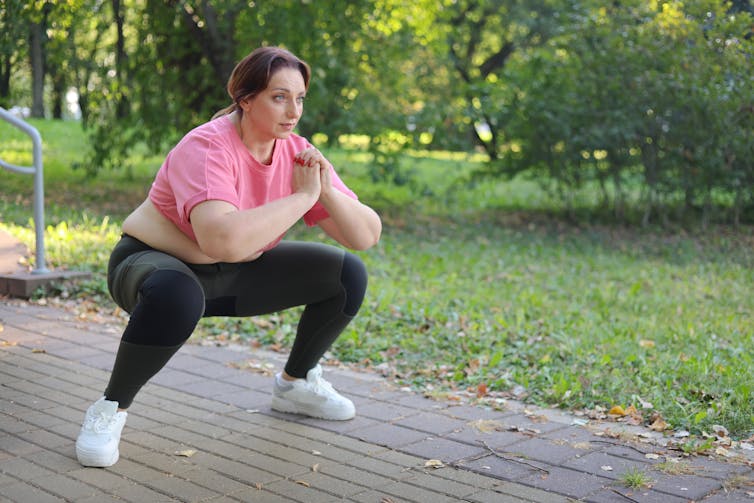
A woman in exercise gear does squats outside.
Exercise can help manage weight and is safe and effective at managing joint pain. gelog67/Shutterstock

Topical and oral anti-inflammatories are usually recommended to manage pain. However, opioids (such as tramadol or oxycodone) are not, due to their risks and limited evidence they help.

In some cases antidepressants such as duloxetine may also be considered as a treatment for pain though, again, evidence they help is limited.

What about rheumatoid arthritis?

Treatments for rheumatoid arthritis focus on preventing joint damage and reducing inflammation.

It’s essential to get an early referral to a rheumatologist, so that treatment with medication – called “disease-modifying anti-rheumatic drugs” – can begin quickly.

These medicines suppress the immune system to stop inflammation and prevent damage to the joint.

With no cure, the overall goal is to achieve remission (where the disease is inactive) or get symptoms under control.

Advances in treatment

There is an increasing interest in prevention for both types of arthritis.

A large international clinical trial is currently investigating whether a diet and exercise program can prevent knee osteoarthritis in those with higher risk – in this case, women who are overweight and obese.

For those already affected, new medicines in early-stage clinical trials show promise in reducing pain and improving function.

There is also hope for rheumatoid arthritis with Australian researchers developing a new immunotherapy. This treatment aims to reprogram the immune system, similar to a vaccine, to help people achieve long-term remission without lifelong treatment.

Giovanni E. Ferreira, NHMRC Emerging Leader Research Fellow, Institute of Musculoskeletal Health, University of Sydney and Rachelle Buchbinder, Professor of Clinical Epidemiology and Rheumatologist, Monash University

This article is republished from The Conversation under a Creative Commons license. Read the original article.

Don’t Forget…

Did you arrive here from our newsletter? Don’t forget to return to the email to continue learning!

Learn to Age Gracefully

Join the 98k+ American women taking control of their health & aging with our 100% free (and fun!) daily emails:

  • The Blood Sugar Freedom Formula − by Matt Vande Vegte

    10almonds is reader-supported. We may, at no cost to you, receive a portion of sales if you purchase a product through a link in this article.

    It’s often the case that well-educated person who has lived with a chronic disease for many years ends up knowing more about it than general practice doctors, and sometimes more than some specialists, depending on the disease.

    This author is such a person. He’s a physiotherapist by profession, an endurance athlete by passion, and a Type 1 Diabetic by chance.

    Most books about diabetes out there are for the much more common type 2 diabetes, and while much of the advice carries over (things improve/reduce insulin sensitivity are still going to be good/bad, respectively), a lot does not, because unlike in type 2 diabetes, your pancreas is not making meaningful amounts of insulin (and that’s always going to be a limitation that no dietary change is going to get around), and you have an active autoimmune disease, which as such, has a lot of impact on other aspects of health.

    This book details all these things and more, and also discusses what he has found works, based on a foundation of research and thereafter, on personal trial-and-improvement (or sometimes just plain trial-and-error).

    The style is a bit hypey, and he does try earnestly to persuade the reader to sign up for his special course and things like that, but there’s more than enough practical information in the book already to make it worthwhile reading.

    Bottom line: if you and/or a loved one has Type 1 Diabetes, this is a great book to read!

    Click here to check out The Blood Sugar Freedom Formula, and live more easily!

    Share This Post

  • Here’s the latest you need to know about bird flu

    10almonds is reader-supported. We may, at no cost to you, receive a portion of sales if you purchase a product through a link in this article.

    What you need to know

    • Although bird flu continues to spread in wild birds, livestock, and humans, the risk to the public remains low.
    • The majority of U.S. bird flu cases have been reported in farm workers who had direct contact with infected birds and cattle. Health officials are working to monitor the spread of the virus and improve protections for those most at risk.
    • Recent data suggests that mutations in bird flu viruses could make them more dangerous to humans and potentially increase the risk of a pandemic.
    • On January 6, Louisiana health officials confirmed the first U.S. death from bird flu.

    Throughout 2024, dozens of human cases of H5N1 bird flu were detected as the virus spreads rapidly in livestock. The current risk to humans is low but not nonexistent. Here’s everything you need to know about the current status and future outlook of H5 bird flu in the United States.

    Current U.S. bird flu status (as of January 6, 2025)

    As of January 6, 66 human bird flu cases have been reported in eight states. Over half of all cases are in California. The state’s governor declared a state of emergency as a “proactive” action against bird flu on December 18. 

    On January 6, the Louisiana Department of Health reported the first U.S. bird flu death. The patient, a man over age 65, was previously confirmed to be the first severe bird flu case in the U.S. and the first case linked to backyard flocks. The department emphasized that the risk to the public is low and that no new cases or evidence of human transmission have been detected in the state.

    All but two human bird flu cases this year were in farm workers who were exposed to infected livestock. The exposure source of the remaining cases—one in California and one in Missouri—is unknown. 

    The CDC reported on November 22 that a child in California tested positive for bird flu, the first known pediatric bird flu case in the U.S. However, it is unclear how the child contracted the virus, as they had no known contact with infected animals. 

    To date, there have been no reports of human transmission of bird flu during the current outbreak. Additionally, most human cases have not been severe, and no deaths have been reported. For these reasons, experts are confident that the bird flu risk to humans remains low. 

    “In the short term, there is very little threat,” Dr. Scott Roberts, an infectious diseases specialist with Yale Medicine said. “The risk for the general public is so low,” he emphasized to Yale Medicine.

    How the U.S. is monitoring bird flu 

    The CDC continues to monitor the circulation of bird flu in humans as part of its year-round flu monitoring. The agency is also working to improve protections for farm workers, who are at the highest risk of contracting bird flu.

    In November 2024, the CDC also announced expanded actions and updated guidance for farm workers, including improved access to and training for using personal protective equipment (such as N95 face masks), more rigorous testing procedures, and increased outreach. These updates followed a CDC report finding that 7 percent of participating dairy workers had signs of a recent bird flu infection. A second CDC study, also released in November, found inadequate use of personal protective equipment among dairy workers on farms with bird flu outbreaks. 

    After the H5N1 virus was found in raw milk being sold in California, the U.S. Department of Agriculture announced on December 6 that unpasteurized milk must be tested for bird flu. The USDA order also requires dairy farms with positive bird flu cases to cooperate with health officials in disease surveillance. 

    Is a bird flu pandemic possible?

    In early November, a Canadian teen was hospitalized with bird flu caused by a virus that’s closely related to the H5N1 virus circulating in the U.S. The case has troubled experts for a few reasons. 

    First, it is Canada’s first human bird flu case where the patient was not infected while traveling, and the source of exposure is unknown. Second, the teen experienced severe symptoms and developed a lung infection requiring critical care, raising concern that bird flu infections may be more severe in younger people. 

    The final and biggest concern about the case is that genetic analysis revealed several changes in the virus’s DNA sequence, called mutations, that could potentially make the virus better able to infect humans. Researchers say that two of those mutations could make it easier for the virus to infect humans, and another one may make it easier for the virus to replicate after infecting a human. However, it’s unclear if the changes occurred before or after the teen was infected.

    Scott Hensley, a professor of microbiology at the University of Pennsylvania, told Nature that “this should serve as a warning: this virus has the capacity to switch very quickly into a form that can cause severe disease.”

    Notably, even in this more severe case, there is still no evidence of human transmission, which is necessary for a potential bird flu pandemic. However, the case underscores the risk of new and potentially dangerous mutations emerging as the H5N1 virus continues to spread and multiply. 

    A study published in Science on December 5 found that a genetic change on a protein on the surface of the virus could make it easier for the virus to attach to and infect human cells. But none of the mutations observed in the Canadian case are those identified in the study. 

    Importantly, the researchers stressed that the ability of the virus to attach to a specific part of human cells “is not the only [factor] required for human-to-human transmission of influenza viruses.” 

    How to stay safe

    Most people are not at high risk of being exposed to bird flu. The virus is spreading between animals and from animals to humans through direct contact. The CDC recommends avoiding the consumption of raw milk products and direct contact with wild birds and potentially infected livestock. 

    “Pasteurization kills the bird flu virus and other harmful germs that can be found in raw milk,” says a November 24 California Department of Public Health press release. “CDPH advises consumers not to drink raw milk or eat raw milk products due to the risk of foodborne illnesses.”

    Additionally, although the annual flu shot does not protect against bird flu, getting vaccinated helps prevent infection with seasonal flu and bird flu at the same time. In very rare instances, getting infected by two influenza viruses at the same time can result in a combination of genetic material that produces a new virus. 

    This phenomenon, known as antigenic shift, triggered the 2009 swine flu pandemic.

    Learn more about how to protect yourself and your loved ones against bird flu.

    For more information, talk to your health care provider.

    This article first appeared on Public Good News and is republished here under a Creative Commons license.

    Share This Post

  • Is It Possible To Lose Weight Quickly?

    10almonds is reader-supported. We may, at no cost to you, receive a portion of sales if you purchase a product through a link in this article.

    In Victorian England, weight-loss trends like the dangerous tapeworm diet were popular. While modern fad diets can seem less extreme, they often promise similarly fast results. However, these quick fixes can have similarly harmful consequences:

    Not so fast

    To illustrate the difference between gradual and extreme dieting, the video bids us consider two identical twins, Sam and Felix:

    • Sam adopts a gradual approach, slowly reducing calorie intake and exercising regularly. This causes his body to burn glycogen stores before transitioning to fat as an energy source. Regular exercise helps Sam maintain muscle mass, which boosts his metabolism and supports sustained weight loss.
    • Felix drastically cuts calories, forcing his body into starvation mode. He quickly depletes glycogen stores, loses muscle mass, and burns fewer calories, making long-term weight loss more difficult. Although Felix might initially lose water weight, this is temporary and unsustainable.


    You cannot “just lose it quickly now, and then worry about healthiness once the weight’s gone”, because you will lose health much more quickly than you will lose fat, and that will sabotage, rather than help, your fat loss journey.

    Healthy weight loss requires gradual, balanced changes in diet and exercise tailored to individual needs. Extreme diets, whether through calorie restriction or things like elimination of carbs or fats, are unsustainable and shock the body. It’s important to prioritize long-term health over societal pressures for quick weight loss and focus on developing a sustainable, healthy lifestyle.

    In short, the quickest way to lose weight and keep it off (without dying), is to lose it slowly.

    For more on all of this, enjoy:

    Click Here If The Embedded Video Doesn’t Load Automatically!

    Want to learn more?

    You might also like to read:

    How To Lose Weight (Healthily)

    Take care!

    Share This Post

  • 6 Ways To Look After Your Back

    10almonds is reader-supported. We may, at no cost to you, receive a portion of sales if you purchase a product through a link in this article.

    Back To Back

    When people think about looking after their back, often thought does not go much further than sitting with good posture, and perhaps even standing with good posture. And those things are important, but:

    1) People’s efforts to have good posture often result in overcorrecting creating an anterior pelvic tilt that causes lower back problems.

    Quick tip: if you’re sticking your butt out, you’re doing it wrong (no matter how great your butt is). Instead, to find the correct posture, go up on your tip-toes for a moment, then imagine a plumb-line down the center of your body, thus perpendicular to the floor, going all the way down to the ground. Now, slowly return your heels to the ground, but as you do so, keep your spine aligned to the plumb-line, so you’re not moving backwards as you drop, just directly down. This will land you in perfect posture.

    Unless you have scoliosis. In which case, it’ll get you as close to good posture as is likely attainable from any quick tip.

    2) There’s a lot more to looking after our back than just good posture!

    Here are 5 other important things to do:

    Be strong

    Do strength-training for your back. How to do that is beyond the scope of today’s feature, but there are many good guides and also personal trainers that can be found.

    Start off easy and work up, but do start. The stronger your back is, the less likely a momentary lapse in concentration is to throw out your back because you picked something up with imperfect form.

    See also: Resistance Is Useful! (Especially As We Get Older)

    Stretch intentionally

    Many back injuries occur as a result of stretching and/or twisting awkwardly, so if you ensure your basic mobility and range of motion is good, the less likely it is that unthinkingly twisting around 270° to see where that wasp was going will slip a disk.

    The more you stretch intentionally (carefully, please), the more you will be able to stretch unintentionally without injury.

    See also: Building & Maintaining Mobility

    Stand when you can, walk when you can

    We humans have outrun our evolution in a lot of ways, and/but one thing our bodies are definitely not well-adapted for is sitting. Unless we are sitting in a low squat the way you might often see an orang-utan sitting, sitting is not a good way of being for us. Even sitting seiza-style or cross-legged is passable for a short while, not for too long.

    So, while there sure are times we need to sit (especially if you’re driving!) minimizing those times is ideal. There are a lot of activities that are traditionally done sitting, where there’s no need for it to be so. For example, your writer here sits for the day’s main meal, but takes any smaller meal standing (and when guests visit for a coffee or such, I’ll offer them the couch while I myself prop up the fireplace). Standing desks are also great if you spend a lot of time at the computer for any reason.

    See also: The Doctor Who Wants Us To Exercise Less & Move More

    Rest when you need to

    You can’t stand all the time! But know this: if you want to rest your legs, lying down is a lot better for your back (and internal organs) than sitting.

    Taking a 5 minute break lying on your couch, or bed, or floor, is a perfectly good option and only social convention says otherwise.

    If you want a compromise option, though? A recliner chair, in the reclined position, is a better for your back than being scrunched up in the Economy Class Flight position.

    PS: About that bed situation…

    What Mattress Is Best, By Science?

    Kill pain before it kills you

    Painkillers aren’t great for the health per se, but pain (or rather, our bodily responses to such) can be worse. Half the time, when it comes to musculoskeletal problems, things get a lot worse a lot more quickly because of how we overcompensate due to the pain. So, take your pain seriously, and remember, the right amount of pain is zero.

    If you’re thinking “but pain relief option xyz isn’t good for me”, we strongly recommend checking out:

    The 7 Approaches To Pain Management

    Take care!

    Don’t Forget…

    Did you arrive here from our newsletter? Don’t forget to return to the email to continue learning!

    Learn to Age Gracefully

    Join the 98k+ American women taking control of their health & aging with our 100% free (and fun!) daily emails:

  • Blood biomarkers could detect earliest signs of Alzheimer’s disease, and slow its progression

    10almonds is reader-supported. We may, at no cost to you, receive a portion of sales if you purchase a product through a link in this article.

    Alzheimer’s disease, a progressive neurodegenerative disorder that affects millions worldwide, has a long preclinical stage. It potentially begins decades before clinical symptoms become apparent.

    But as our new research suggests, blood biomarkers in combination with self-reported memory concerns could offer an early clue to how Alzheimer’s disease develops across the life course.

    This means midlife could be a critical window for promoting brain health.

    For our study, we used data from the world-leading Dunedin Study at the University of Otago, which has been following a cohort of people for more than 50 years.

    We found a certain protein known as pTau181 was associated with self-reported concerns about memory and thinking skills.

    Notably, study participants were only 45 years old at the time of assessment. People typically aren’t diagnosed with dementia until their 70s or older.

    In recent years, we’ve seen advances in pharmaceutical treatments for Alzheimer’s disease. However, these are not cures. At best, they slow disease progression but they don’t preserve or restore cognitive function lost during more advanced stages.

    It is likely these treatments work best when taken early, which makes it more important to identify the earliest signs of Alzheimer’s disease.

    Getty Images

    Preventing dementia

    Different types of dementia can look similar during the early stages of disease, but the treatment and course of progression differ significantly for each type of dementia.

    In the past, Alzheimer’s disease could only be definitively diagnosed postmortem, or more recently with invasive testing such as a lumbar puncture. But researchers are now working on identifying blood biomarkers that could offer a minimally invasive way to identify people at higher risk of developing Alzheimer’s disease.

    Detecting Alzheimer’s disease in its earliest stages could provide an opportunity for prevention and offer the greatest benefits for brain health and ageing.

    This may involve lifestyle changes, such as supporting people to be physically active and continuing to engage in social activities, and addressing modifiable risk factors such as hypertension or hearing loss.

    Preventive approaches work more effectively the earlier they are implemented. Studying middle-aged populations is therefore important for identifying early risk profiles for Alzheimer’s, long before the disease would be diagnosed.

    When forgetfulness becomes a sign of disease

    As people get older, they often notice their memory isn’t as good as it used to be.

    Forgetfulness is common and usually benign as people age. But in some people, these memory issues may indicate something else is going on.

    Recent research shows subtle subjective changes in cognition often occur long before diagnosis and might be the first moment the disease is felt.

    Screening for biological markers, in combination with subjective reports of memory function, could help distinguish the earliest signs of Alzheimer’s disease pathology from normal ageing.

    Proteins such as pTau181 are much higher in people with Alzheimer’s disease, but we don’t know yet when this protein begins to accumulate.

    Our findings add to the growing evidence that the earliest signs of dementia may show up long before diagnosis. They also show that self-reported cognitive concerns may be an early warning sign for Alzheimer’s, even in midlife.

    Interestingly, we didn’t find that the pTau181 biomarker was associated with MRI brain scan measures or cognitive test performance at age 45.

    There are at least two possible explanations for this.

    Perhaps pTau181 increases during the earliest stages of Alzheimer’s disease, when people first start to notice their memory worsening but no changes are shown yet in MRI scans. Or it could be that elevated pTau181 is not related to Alzheimer’s disease risk in midlife, and the protein is only useful for detecting Alzheimer’s in older adults.

    We don’t know enough yet, but will be following the same group of people as they get older to continue this research.

    Ashleigh Barrett-Young, Research Fellow in Brain Health, University of Otago

    This article is republished from The Conversation under a Creative Commons license. Read the original article.

    Don’t Forget…

    Did you arrive here from our newsletter? Don’t forget to return to the email to continue learning!

    Learn to Age Gracefully

    Join the 98k+ American women taking control of their health & aging with our 100% free (and fun!) daily emails:

  • The Diabetes Drugs That Can Cut Asthma Attacks By 70%

    10almonds is reader-supported. We may, at no cost to you, receive a portion of sales if you purchase a product through a link in this article.

    Asthma, obesity, and type 2 diabetes are closely linked, with the latter two greatly increasing asthma attack risk.

    While bronchodilators / corticosteroids can have immediate adverse effects due to sympathetic nervous system activation, and lasting adverse effects due to the damage it does to metabolic health, diabetes drugs, on the other hand, can improve things with (for most people) fewer unwanted side effects.

    Great! Which drugs?

    Metformin, and glucagon-like peptide-1 receptor agonists (GLP-1RAs).

    Specifically, researchers have found:

    • Metformin is associated with a 30% reduction in asthma attacks
    • GLP-1RAs are associated with a 40% reduction in asthma attacks

    …and yes, they stack, making for a 70% reduction in the case of people taking both. Furthermore, the results are independent of weight, glycemic control, or asthma phenotype.

    In terms of what was counted, the primary outcome was asthma attacks at 12-month follow-up, defined by oral corticosteroid use, emergency visits, hospitalizations, or death.

    The effect of metformin on asthma attacks was not affected by BMI, HbA1c levels, eosinophil count, asthma severity, or sex.

    Of the various extra antidiabetic drugs trialled in this study, only GLP-1 receptor agonists showed a further and sustained reduction in asthma attacks.

    Here’s the study itself, hot off the press, published on Monday:

    JAMA Int. Med. | Antidiabetic Medication and Asthma Attacks

    “But what if I’m not diabetic?”

    Good news:

    More than half of all US adults are eligible for semaglutide therapy ← this is because they’ve expanded the things that semaglutide (the widely-used GLP-1 receptor agonist drug) can be prescribed for, now going beyond just diabetes and/or weight loss 😎

    And metformin, of course, is more readily available than semaglutide, so by all means speak with your doctor/pharmacist about that, if it’s of interest to you.

    Take care!

    Don’t Forget…

    Did you arrive here from our newsletter? Don’t forget to return to the email to continue learning!

    Learn to Age Gracefully

    Join the 98k+ American women taking control of their health & aging with our 100% free (and fun!) daily emails: