
How worried should I be about cryptosporidiosis? Am I safe at the pool?

10almonds is reader-supported. We may, at no cost to you, receive a portion of sales if you purchase a product through a link in this article.

You might have heard of something called “cryptosporidiosis” recently, closely followed by warnings to stay away from your local swimming pool if you’ve had diarrhoea.

More than 700 cases of this gastrointestinal disease were reported in Queensland in January, which is 13 times more than in January last year. Just under 500 cases have been recorded in New South Wales this year to-date, while other states have similarly reported an increase in the number of cryptosporidiosis infections in recent months.

Cryptosporidiosis has been listed as a national notifiable disease in Australia since 2001.
But what exactly is it, and should we be worried?

What causes cryptosporidiosis, and who is affected?

Cryptosporidiosis is the disease caused by the parasite Cryptosporidium, of which there are two types that can make us sick. Cryptosporidum hominis only affects humans and is the major cause of recent outbreaks in Australia, while Cryptosporidium parvum can also affect animals.

The infection is spread by spores called oocysts in the stools of humans and animals. When ingested, these oocysts migrate and mature in the small bowel. They damage the small bowel lining and can lead to diarrhoea, nausea, vomiting, fever and abdominal discomfort.

Most people develop symptoms anywhere from one to 12 days after becoming infected. Usually these symptoms resolve within two weeks, but the illness may last longer and can be severe in those with a weakened immune system.

Children and the elderly tend to be the most commonly affected. Cryptosporidiosis is more prevalent in young children, particularly those under five, but the disease can affect people of any age.
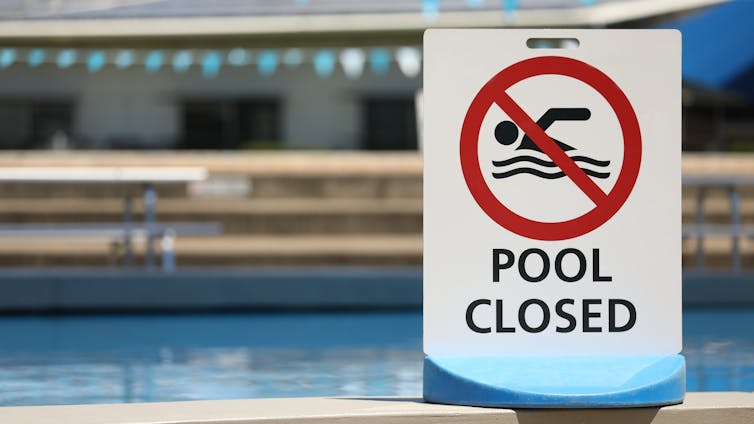
A 'pool closed' sign in front of a swimming pool.
A number of public pools have been closed lately due to cryptosporidiosis outbreaks.
LBeddoe/Shutterstock

So how do we catch it?

Most major outbreaks of cryptosporidiosis have been due to people drinking contaminated water. The largest recorded outbreak occurred in Milwaukee in 1993 where 403,000 people were believed to have been infected.

Cryptosporidium oocysts are very small in size and in Milwaukee they passed through the filtration system of one of the water treatment plants undetected, infecting the city’s water supply. As few as ten oocysts can cause infection, making it possible for contaminated drinking water to affect a very large number of people.

Four days after infection a person with cryptosporidiosis can shed up to ten billion oocysts into their stool a day, with the shedding persisting for about two weeks. This is why one infected person in a swimming pool can infect the entire pool in a single visit.

Cryptosporidium oocysts excreted in the faeces of infected humans and animals can also reach natural bodies of water such as beaches, rivers and lakes directly through sewer pipes or indirectly such as in manure transported with surface runoff after heavy rain.

One study which modelled Cryptosporidium concentrations in rivers around the world estimated there are anywhere from 100 to one million oocysts in a litre of river water.

In Australia, cryptosporidiosis outbreaks tend to occur during the late spring and early summer periods when there’s an increase in recreational water activities such as swimming in natural water holes, water catchments and public pools. We don’t know exactly why cases have seen such a surge this summer compared to other years, but we know Cryptosporidium is very infectious.

Oocysts have been found in foods such as fresh vegetables and seafood but these are not common sources of infection in Australia.

What about chlorine?

Contrary to popular belief, chlorine doesn’t kill off all infectious microbes in a swimming pool. Cryptosporidium oocysts are hardy, thick-walled and resistant to chlorine and acid. They are not destroyed by chlorine at the normal concentrations found in swimming pools.

We also know oocysts can be significantly protected from the effects of chlorine in swimming pools by faecal material, so the presence of even small amounts of faecal matter contaminated with Cryptosporidium in a swimming pool would necessitate closure and a thorough decontamination.

Young children and in particular children in nappies are known to increase the potential for disease transmission in recreational water. Proper nappy changing, frequent bathroom breaks and showering before swimming to remove faecal residue are helpful ways to reduce the risk.

Two children playing in a body of water.
Cryptosporidium can spread in other bodies of water, not just swimming pools.
Yulia Simonova/Shutterstock

Some sensible precautions

Other measures you can take to reduce yours and others’ risk of cryptosporidiosis include:

  • avoid swimming in natural waters such as rivers and creeks during and for at least three days after heavy rain
  • avoid swimming in beaches for at least one day after heavy rain
  • avoid drinking untreated water such as water from rivers or springs. If you need to drink untreated water, boiling it first will kill the Cryptosporidium
  • avoid swallowing water when swimming if you can
  • if you’ve had diarrhoea, avoid swimming for at least two weeks after it has resolved
  • avoid sharing towels or linen for at least two weeks after diarrhoea has resolved
  • avoid sharing, touching or preparing food that other people may eat for at least 48 hours after diarrhoea has resolved
  • wash your hands with soap and water after going to the bathroom or before preparing food (Cryptosporidium is not killed by alcohol gels and sanitisers).

Not all cases of diarrhoea are due to cryptosporidiosis. There are many other causes of infectious gastroenteritis and because the vast majority of the time recovery is uneventful you don’t need to see a doctor unless very unwell. If you do suspect you may have cryptosporidiosis you can ask your doctor to refer you for a stool test.The Conversation

Vincent Ho, Associate Professor and clinical academic gastroenterologist, Western Sydney University

This article is republished from The Conversation under a Creative Commons license. Read the original article.

Don’t Forget…

Did you arrive here from our newsletter? Don’t forget to return to the email to continue learning!

Learn to Age Gracefully

Join the 98k+ American women taking control of their health & aging with our 100% free (and fun!) daily emails:

  • You May Have More Air Pollution In Your Home Than In The Street

    10almonds is reader-supported. We may, at no cost to you, receive a portion of sales if you purchase a product through a link in this article.

    Certainly, gas stoves and heaters can cause indoor air pollution, with carbon monoxide (CO) being the main risk. Even if you have a CO alarm, the level at which it will go off is usually the “this will kill you tonight if you don’t do something about it soon” level, rather than the “this will slowly kill your brain cells but you’ll keep functioning otherwise, until one day you don’t” levels of CO.

    Still, do by all means have a CO alarm if you have anything in your house that can release CO!

    See also: Association Between Carbon Monoxide Intoxication and Incidence of Ischemic Stroke: A Retrospective Nested Case-Control Study in South Korea

    Fun fact about those stoves:

    ❝Just 1 kilogram of cooking fuel emits 10 quadrillion particles smaller than 3 nanometers, which matches or exceeds what’s emitted from cars with internal combustion engines.

    At that rate, you might be inhaling 10-100 times more of these sub-3 nanometer particles from cooking on a gas stove indoors than you would from car exhaust while standing on a busy street.❞

    ~ Ka‌yla Alb‌ert

    But today, we’re not here about that

    Rather, we are looking at some more innocent-seeming things, such as scented cleaning products and air fresheners. Notably, the biggest problem is often not even the cleaning chemicals themselves. Of course: please don’t breathe bleach fumes, etc.

    But that’s an obvious risk, and today we’re about the less obvious risks.

    So… What is the less obvious risk here?

    It’s the fragrances. The terpenes used to hold them react with ozone in the air, to create new nanoparticles. And, just like the nanoparticles from the stove, these can reach very high concentrations indoors, and suffice it to say, if you can smell the fragrance then you have the pollutants inside you.

    You can read about how badly different products score, here:

    Rapid Nucleation and Growth of Indoor Atmospheric Nanocluster Aerosol during the Use of Scented Volatile Chemical Products in Residential Buildings ← you’ll need to scroll down to the table with different cleaning products and air fresheners

    Further, the seemingly-harmless scented candle is, as it turns out, quite a menace too:

    ❝Full-scale emission experiments were conducted in the Purdue zEDGE Test House using a variety of scented candles (n = 5) and wax warmers/melts (n = 14) under different outdoor air exchange rates (AERs). Terpene concentrations were measured in real-time using a proton transfer reaction time-of-flight mass spectrometer (PTR-TOF-MS). PTR-TOF-MS measurements revealed that scented candle and wax warmer/melt products emit a variety of monoterpenes (C10H16) and oxygen-containing monoterpenoids (C10H14O, C10H16O, C10H18O, C10H20O), with peak concentrations in the range of 10−1 to 102 ppb. Monoterpene EFs were much greater for scented wax warmers/melts (C10H16 EFs ∼ 102 mg per g wax consumed) compared to scented candles (C10H16 EFs ∼ 10−1 to 100 mg per g wax consumed). Significant emissions of reactive terpenes from both products, along with nitrogen oxides (NO, NO2) from candles, depleted indoor ozone (O3) concentrations. Terpene iFs were similar between the two products (iFs ∼ 103 ppm) and increased with decreasing outdoor AER. Terpene iFs during concentration decay periods were similar to, or greater than, iFs during active emission periods for outdoor AERs ≤ 3.0 h−1.

    Overall, scented wax warmers/melts were found to release greater quantities of monoterpenes compared to other fragranced consumer products used in the home, including botanical disinfectants, hair care products, air fresheners, and scented sprays.❞

    ~ Dr. Emily Reidy et al.

    Read in full: Rapid Nucleation and Growth of Indoor Atmospheric Nanocluster Aerosol during the Use of Scented Volatile Chemical Products in Residential Buildings

    Put in fewer words: scented candles are bad, and wax melts (the kind with no flame, that one might easily expect to thus produce fewer emissions) are at least as bad if not worse, and both are even worse than cleaning products.

    Some of the same research team conducted further studies, because of this this, finding:

    ❝We performed field measurements in a residential test house to investigate atmospheric nanoparticle formation from scented wax melt use. We employed a high-resolution particle size magnifier-scanning mobility particle sizer (PSMPS) and a proton transfer reaction time-of-flight mass spectrometer (PTR-TOF-MS) for real-time monitoring of indoor atmospheric nanoparticle size distributions and terpene mixing ratios, respectively.

    Our findings reveal that terpenes released from scented wax melts react with indoor atmospheric ozone (O3) to initiate new particle formation (NPF) events, resulting in significant indoor atmospheric nanoparticle concentrations (>106 cm–3) comparable to those emitted by combustion-based scented candles, gas stoves, diesel engines, and natural gas engines.

    We show that scented wax melt-initiated NPF events can result in significant respiratory exposures, with nanoparticle respiratory tract deposited dose rates similar to those determined for combustion-based sources.

    Our results challenge the perception of scented wax melts as a safer alternative to combustion-based aromatherapy

    ~ Dr. Satya Patra et al.

    Read in full: Flame-Free Candles Are Not Pollution-Free: Scented Wax Melts as a Significant Source of Atmospheric Nanoparticles

    In short: you might want to ditch the fragranced products!

    Want to do more?

    Give your household hair a makeover with this multi-vector approach to deal with different risks:

    What’s Lurking In Your Household Air?

    For that matter, the air is a very important factor for the health of your lungs (and thus, for the health of everything that’s fed oxygen by your lungs), and there are more things we can do in that regard as well:

    Seven Things To Do For Good Lung Health!

    Take care!

    Share This Post

  • Bromelain vs Inflammation & Much More

    10almonds is reader-supported. We may, at no cost to you, receive a portion of sales if you purchase a product through a link in this article.

    Let’s Get Fruity

    Bromelain is an enzyme* found in pineapple (and only in pineapple), that has many very healthful properties, some of them unique to bromelain.

    *actually a combination of enzymes, but most often referred to collectively in the singular. But when you do see it referred to as “they”, that’s what that means.

    What does it do?

    It does a lot of things, for starters:

    ❝Various in vivo and in vitro studies have shown that they are anti-edematous, anti-inflammatory, anti-cancerous, anti-thrombotic, fibrinolytic, and facilitate the death of apoptotic cells. The pharmacological properties of bromelain are, in part, related to its arachidonate cascade modulation, inhibition of platelet aggregation, such as interference with malignant cell growth; anti-inflammatory action; fibrinolytic activity; skin debridement properties, and reduction of the severe effects of SARS-Cov-2

    ~ Dr. Carolina Varilla et al.

    Some quick notes:

    • “facilitate the death of apoptotic cells” may sound alarming, but it’s actually good; those cells need to be killed quickly; see for example: Fisetin: The Anti-Aging Assassin
    • If you’re wondering what arachidonate cascade modulation means, that’s the modulation of the cascade reaction of arachidonic acid, which plays a part in providing energy for body functions, and has a role in cell structure formation, and is the precursor of assorted inflammatory mediators and cell-signalling chemicals.
    • Its skin debridement properties (getting rid of dead skin) are most clearly seen when using bromelain topically (one can literally just make a pineapple poultice), but do occur from ingestion also (because of what it can do from the inside).
    • As for being anti-thrombotic and fibrinolytic, let’s touch on that before we get to the main item, its anti-inflammatory properties.

    If you want to read more of the above before moving on, though, here’s the full text:

    Bromelain, a Group of Pineapple Proteolytic Complex Enzymes (Ananas comosus) and Their Possible Therapeutic and Clinical Effects. A Summary

    Anti-thrombotic and fibrinolytic

    While it does have anti-thrombotic effects, largely by its fibrinolytic action (i.e., it dissolves the fibrin mesh holding clots together), it can have a paradoxically beneficial effect on wound healing, too:

    Stem Bromelain Proteolytic Machinery: Study of the Effects of its Components on Fibrin (ogen) and Blood Coagulation

    For more specifically on its wound-healing benefits:

    In Vitro Effect of Bromelain on the Regenerative Properties of Mesenchymal Stem Cells

    Anti-inflammatory

    Bromelain is perhaps most well-known for its anti-inflammatory powers, which are so diverse that it can be a challenge to pin them all down, as it has many mechanisms of action, and there’s a large heterogeneity of studies because it’s often studied in the context of specific diseases. But, for example:

    ❝Bromelain reduced IL-1β, IL-6 and TNF-α secretion when immune cells were already stimulated in an overproduction condition by proinflammatory cytokines, generating a modulation in the inflammatory response through prostaglandins reduction and activation of cascade reactions that trigger neutrophils and macrophages, in addition to accelerating the healing process

    ~ Dr. Taline Alves Nobre et al.

    Read in full:

    Bromelain as a natural anti-inflammatory drug: a systematic review

    Or if you want a more specific example, here’s how it stacks up against arthritis:

    ❝The results demonstrated the chondroprotective effects of bromelain on cartilage degradation and the downregulation of inflammatory cytokine (tumor necrosis factor (TNF)-α, IL-1β, IL-6, IL-8) expression in TNF-α–induced synovial fibroblasts by suppressing NF-κB and MAPK signaling❞

    ~ Dr. Perephan Pothacharoen et al.

    Read in full:

    Bromelain Extract Exerts Antiarthritic Effects via Chondroprotection and the Suppression of TNF-α–Induced NF-κB and MAPK Signaling

    More?

    Yes more! You’ll remember from the first paper we quoted today, that it has a long laundry list of benefits. However, there’s only so much we can cover in one edition, so that’s it for today

    Is it safe?

    It is generally recognized as safe. However, its blood-thinning effect means it should be avoided if you’re already on blood-thinners, have some sort of bleeding disorder, or are about to have a surgery.

    Additionally, if you have a pineapple allergy, this one may not be for you.

    Aside from that, anything can have drug interactions, so do check with your doctor/pharmacist to be sure (with the pharmacist usually being the more knowledgeable of the two, when it comes to drug interactions).

    Want to try some?

    You can just eat pineapples, but if you don’t enjoy that and/or wouldn’t want it every day, bromelain is available in supplement form too.

    We don’t sell it, but here for your convenience is an example product on Amazon

    Enjoy!

    Share This Post

  • Stiff Hips? This Is What Will Change That

    10almonds is reader-supported. We may, at no cost to you, receive a portion of sales if you purchase a product through a link in this article.

    Dr. Alyssa Lu shows us how:

    It’s in your hips

    Most adults lose up to half of their hip mobility, which makes everyday movements like squatting, standing, and walking feel harder.

    If that’s you, then the bad news is that stretching alone won’t fix it, because your your hips need controlled movement and strength in multiple directions, not just passive stretching.

    Self-test for hip mobility: sit and place your ankle over your opposite knee—if this feels stiff or uncomfortable, your hip external rotation is dangerously limited.

    This is a problem, because your hips need both external rotation for positions like crossing your legs and internal rotation for walking, running, and squatting.

    So, with that in mind, here are some exercises that cover those:

    • External rotation incline drill: put the outside of your knee on a raised surface, and hinge your hips forwards while keeping your back tall, then press your knee down, and return to the start position using your glutes.
    • Internal rotation band PNF drill: lie on your stomach with a band around your foot, pull your hip into internal rotation, hold, gently resist, relax, and repeat.
    • Long lunge hip flexor drill: step into a long lunge, squeeze your back glute to open the front of your hip; you can lift your back knee slightly or leave it on the floor, per your preference.
    • Wide-stance deep squat hold: take a wide stance with your toes slightly outward, sit down between your hips while keeping your torso tall; you can use support if you need to.

    For more on all of this plus visual demonstrations, enjoy:

    Click Here If The Embedded Video Doesn’t Load Automatically!

    Want to learn more?

    You might also like:

    Zero Experience Needed: The Beginner Hip Mobility Reset

    Take care!

    Share This Post

  • Artichoke vs Broccoli – Which is Healthier?

    10almonds is reader-supported. We may, at no cost to you, receive a portion of sales if you purchase a product through a link in this article.

    Our Verdict

    When comparing artichoke to broccoli, we picked the artichoke.

    Why?

    Both have their strengths, and it was close! But…

    In terms of macros, artichoke has about 2x the fiber (which is lots, because broccoli is already good for this) and more protein, for only slightly more carbs, making it the nutrient dense choice in all respects, and especially in the case of fiber.

    In the category of vitamins, artichoke has more of vitamins B3, B9, and choline, while broccoli has more of vitamins A, B2, B5, B6, C, E, and K, thus winning this round.

    When it comes to minerals, artichoke has more copper, iron, magnesium, manganese, phosphorus, potassium, and zinc, while broccoli has more calcium and selenium, handing artichoke the win again here.

    Looking at polyphenols, both have an abundance; artichoke has more by total mass (in terms of mg/100g) and is especially rich in luteolin and phenolic acids, but broccoli has some that artichoke doesn’t have (such as quercetin and kaempferol). We could reasonably call this a tie or a win for artichoke on strength of numbers; either way, it doesn’t change the end result:

    Adding up the sections makes for an overall win for artichoke, but of course, by all means enjoy either or both; diversity is good!

    Want to learn more?

    You might like:

    What’s Your Plant Diversity Score?

    Enjoy!

    Don’t Forget…

    Did you arrive here from our newsletter? Don’t forget to return to the email to continue learning!

    Learn to Age Gracefully

    Join the 98k+ American women taking control of their health & aging with our 100% free (and fun!) daily emails:

  • Brazil Nuts vs Pecans – Which is Healthier?

    10almonds is reader-supported. We may, at no cost to you, receive a portion of sales if you purchase a product through a link in this article.

    Our Verdict

    When comparing Brazil nuts to pecans, we picked the pecans.

    Why?

    In terms of macros, Brazil nuts have more protein while pecans have more fiber. Both of these nuts are equally fatty, though Brazil nuts have much more saturated fat per 100g, which still isn’t terrible, but it does make pecans’ profile (mostly monounsaturated with some polyunsaturated) the healthier. They’re about equal in carbs. All in all, a win for pecans here.

    In the category of vitamins, Brazil nuts have more vitamin E, while pecans have more of vitamins A, B1, B2, B3, B5, B6, B7, B9, C, K, and choline. An easy win for pecans.

    The category of minerals is an interesting one. Brazil nuts have more calcium, copper, magnesium, phosphorus, potassium, and selenium, while pecans have more iron, manganese, and zinc. Before we crown Brazil nuts with the win in this category, though, let’s take a closer look at those selenium levels:

    • A cup of pecans contains 21% of the RDA of selenium. Your hair will be luscious and shiny.
    • A cup of Brazil nuts contains 10,456% of the RDA of selenium. This is way past the point of selenium toxicity, and your (luscious, shiny) hair will fall out.

    For this reason, it’s recommended to eat no more than 3–4 Brazil nuts per day.

    We consider that a point against Brazil nuts.

    Adding up the sections makes for an overall win for pecans; of course, enjoy either or both, just be sure to practise moderation when it comes to the Brazil nuts!

    Want to learn more?

    You might like:

    Why You Should Diversify Your Nuts

    Enjoy!

    Don’t Forget…

    Did you arrive here from our newsletter? Don’t forget to return to the email to continue learning!

    Learn to Age Gracefully

    Join the 98k+ American women taking control of their health & aging with our 100% free (and fun!) daily emails:

  • Avocado vs Kiwi – Which is Healthier?

    10almonds is reader-supported. We may, at no cost to you, receive a portion of sales if you purchase a product through a link in this article.

    Our Verdict

    When comparing avocado to kiwi, we picked the avocado.

    Why?

    Both are great, and indeed, each normally wins most comparisons we put them into! But…

    In terms of macros, avocado has more than 2x the fiber, nearly 2x the protein, and many times more (famously healthy) fats, while kiwi has more carbs, so this round’s an easy win for avocado.

    In the category of vitamins, avocado has more of vitamins A, B1, B2, B3, 5, B6, B7, B9, and E, while kiwi has more of vitamins C and K, so this one’s another win for avocados.

    Looking at minerals, avocados have more copper, iron, magnesium, manganese, phosphorus, potassium, selenium, and zinc, while kiwi has more calcium, so it’s a third win a row for avocado.

    In other considerations, kiwi does have some specific cancer-killing properties that avocado can’t boast, so that is a point in kiwi’s favor.

    Adding up the sections makes for an overwhelming overall win for avocado, but still, do enjoy either or both, as kiwi is excellent too, and diversity is best!

    Want to learn more?

    You might like:

    Top 8 Fruits That Prevent & Kill Cancer

    Enjoy!

    Don’t Forget…

    Did you arrive here from our newsletter? Don’t forget to return to the email to continue learning!

    Learn to Age Gracefully

    Join the 98k+ American women taking control of their health & aging with our 100% free (and fun!) daily emails: