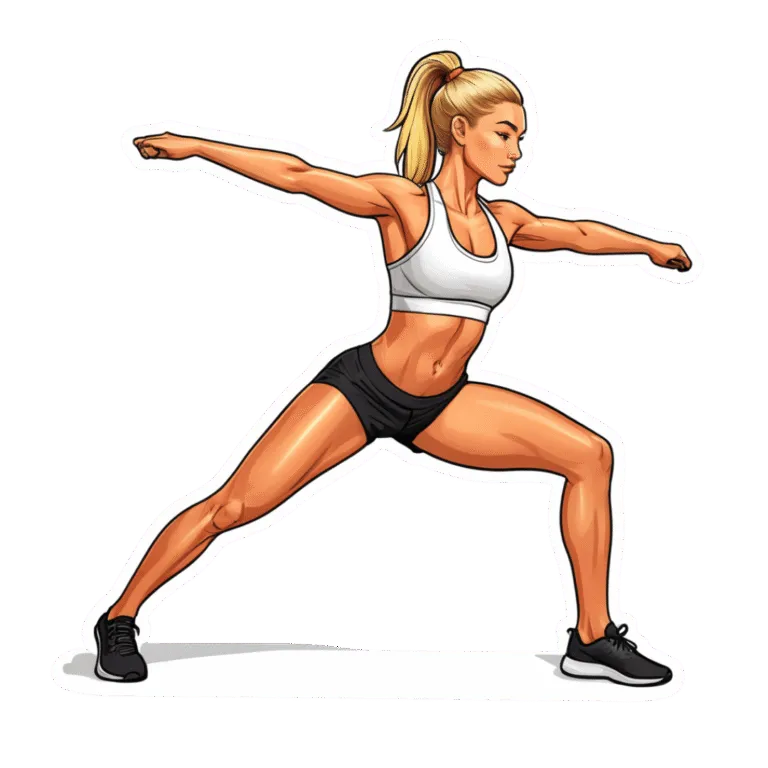
Exercises That Help You Walk Farther Without Pain

10almonds is reader-supported. We may, at no cost to you, receive a portion of sales if you purchase a product through a link in this article.

Dr. Alyssa Kuhn shows us how:

At the seat of the problem

Glutes are critical to walking, because they not only help push your body push forwards, but also stabilize your pelvis to prevent limping or a waddling gait.

For this reason, weak glutes can (and often do) lead to joint pain, poor balance, quicker fatigue, due to increased stress on your hips, knees, and back—which in turn can lead to osteoarthritis, usually of the knee(s), in the first instance.

So, how to avoid that:

  • Step-ups: step onto a step with one leg and step back down with the same leg to strengthen the glutes that drive you forwards. You can increase the height of a step or add weight to make the movement more challenging.
  • Banded lateral steps: place a resistance band around your shins and step one leg out to the side while the other stabilizes your pelvis. Keep the tension on, and avoid letting your body sway side to side. You can also anchor a band to a stable object and move one leg against resistance, if maintaining balance is difficult at first. But if you do that, do try to progress to the main version when you can, because you need that balance too!
  • Single-leg balance taps: a great one for training that balance, as well as training glute stability; simply stand on one leg and tap the other foot heel-toe on the floor. Keep your body upright, while your glutes stabilize your pelvis during movement.

For more on all of this plus visual demonstrations, enjoy:

Click Here If The Embedded Video Doesn’t Load Automatically!

Want to learn more?

You might also like:

5 Proven Tips To Walk Longer Without Pain Or Discomfort

Take care!

Don’t Forget…

Did you arrive here from our newsletter? Don’t forget to return to the email to continue learning!

  • What is lipoprotein(a) cholesterol, or Lp(a)? And can you lower yours?
    Most people know about “good” and “bad” cholesterol. But few realise there is another type called lipoprotein(a). It can raise the risk of heart attacks and strokes, even in people who do everything right. This lesser-known cholesterol particle, often written as Lp(a), is gaining increasing attention from researchers and drug companies. Lp(a) isn’t included in…

Learn to Age Gracefully

Join the 98k+ American women taking control of their health & aging with our 100% free (and fun!) daily emails:

  • Do Breathe – by Michael Williams

    10almonds is reader-supported. We may, at no cost to you, receive a portion of sales if you purchase a product through a link in this article.

    Have you ever felt you could get everything in your life in order, if you could just get a little breathing room first?

    Notwithstanding the title, this is mostly not a book about breathing exercises. It does cover that too, but there’s a lot more.

    The author’s advices draw from a variety of high quality sources. Well-read readers will certainly recognise sections that are straight from David Allen’s “Getting Things Done”, and Mihaly Czikszentmihalyi’s “Flow”, for example, as well as Francesco Cirillo’s “Pomodoro Technique”, and James Clear’s “Atomic Habits”.

    We also learn about how even simple yoga can help us, and good sleep, and a healthy diet.

    In short, if you’ve been reading 10almonds for a while, you might not actually learn much new! But it’s very nice to have all these things in one book, for sure, and it’s a pleasant, easy read too.

    Bottom line: if you’d like to streamline your life and not have to buy a whole stack of different books to do it, this book is a great composite that will enable you to get the job done efficiently.

    Click here to check out Do Breathe, and simplify your life!

    Share This Post

  • Chickpeas vs Fava Beans – Which is Healthier?

    10almonds is reader-supported. We may, at no cost to you, receive a portion of sales if you purchase a product through a link in this article.

    Our Verdict

    When comparing chickpeas to fava beans, we picked the chickpeas.

    Why?

    Although both are great, it still wasn’t even close. It’s one of those instances of “a very nutritious food looks bad standing next to a truly top-tier superfood”:

    In terms of macros, chickpeas have more fiber, carbs, and protein, thus winning in this category.

    In the category of vitamins, chickpeas have more of vitamins A, B1, B5, B6, B7, B9, C, E, and K, while fava beans have more of vitamins B2 and B3, giving chickpeas a 9:2 victory in this round.

    Looking at minerals, chickpeas have more calcium, copper, iron, magnesium, manganese, phosphorus, potassium, selenium, and zinc, while fava beans are not higher in any minerals, giving chickpeas a total win here.

    To spare fava beans’ blushes at this point, we should mention that fava beans were hot on chickpeas’ heels for all of those minerals, except perhaps manganese, so really: fava beans do have plenty to offer, just, chickpeas have even more.

    Adding up the sections makes for a very clear overall win for chickpeas, but do enjoy either or both, since as we say, they’re both great, and diversity is good!

    Want to learn more?

    You might like:

    The High-Protein, High-Fiber Superfood Salad You’ll Want To Enjoy Daily

    Enjoy!

    Share This Post

  • Loving Life at 50+ – by Maria Sabando

    10almonds is reader-supported. We may, at no cost to you, receive a portion of sales if you purchase a product through a link in this article.

    What a pleasant mix of a book! Sabando writes about aging with a great blend of light-heartedness and seriousness, and gives extra attention to the important balancing act of:

    1. Indulging sufficiently to enjoy life
    2. Staying well enough to enjoy life

    …because one without the other will not generally result in an enjoyable life! An American proud of her Italian heritage, she blends (as many immigrant families do) cultures and perspectives, aiming where she can for “the best of both” in that regard, too.

    Nor is this just a philosophical book—there’s yoga to be learned here, chapter by chapter, and recipes peppered throughout. The recipes, by the way, are simple and… Honestly, not as healthy as the recipes we share here at 10almonds, but they are good and when it comes to those indulgences we mentioned, her philosophy is that strategic mindful indulgence keeps mindless binge-eating at bay. Which is generally speaking not a bad approach, and is one we’ve written about before as well.

    When it comes to health advice, the author is no doctor or scientist, but her husband (a doctor) had input throughout, keeping things on track and medically sound.

    The style is very casual, like talking to a friend, which makes for a very easy and enjoyable read. Absolutely a book that one could read casually in the garden, put down when interrupted, pick up again, and continue happily where one left off.

    Bottom line: whatever your age (no matter whether your 50th birthday is in your shrinkingly near future or your increasingly distant past), there’s wisdom to be gained here—it’s not a manual (unless you want to treat it as one), it’s more… Thought-provoking, from cover to cover. Highly recommendable.

    Click here to check out Loving Life at 50+, and love life at 50+!

    Share This Post

  • Hack Your Hunger

    10almonds is reader-supported. We may, at no cost to you, receive a portion of sales if you purchase a product through a link in this article.

    When it comes to dealing with hunger, a common-sense way of dealing with it is “eat something”. However, many people find that they then eat the wrong things, in the wrong quantities, and end up in a cycle of overeating and being hungry.

    If this gets to the extreme, it can turn into a full-blown eating disorder:

    Eating Disorders: More Varied (And Prevalent) Than People Think

    …and even in more moderate presentations, the cycle of hunger and overeating is not great for the health. So, how to avoid that?

    Listen to your body (but: actually listen)

    Your body says: we’re running a little low on glycogen reserves so our energy’s going to start suffering in a few hours if we don’t eat some fruit, kill something and eat its fatty organs, or perhaps find some oily nuts.

    You hear: eat something bright and sugary, shout at the dog, eat some fried food, got it!

    Your body says: our water balance is a little off, we could do with some sodium, potassium, and perhaps some phosphorus to correct it.

    You hear: eat something salty, got it, potato chips coming right up!

    …and so on. Now, we know 10almonds readers are quite a health-conscious readership, so perhaps your responses are not quite like that. But the take-away point is still important: we need to listen to the whole message, and give the body what it actually needs, not what will just shut the message off the most quickly.

    Here’s how: Intuitive Eating Might Not Be What You Think

    Bonus: Interoception: Improving Our Awareness Of Body Cues

    About those cravings…

    As illustrated a little above, a lot of cravings might not be what they first appear, and in evolutionary terms, our body is centuries behind industrialization, in terms of adaptations, which means that even if we try to take the above into account, our responses can sometimes be inappropriate in the age of supermarkets.

    See also: The Science of Hunger, And How To Sate Cravings

    Natural appetite suppressants

    Eating more is not always the answer, not even if it’s more healthy food. And hunger pangs can be especially inconvenient if, for example, we are fasting at present, which is by the way a very healthful thing for most people:

    Learn more: Intermittent Fasting: What’s the truth?

    One way to suppress hunger is simply to trigger the stomach into sending “full” signals, which involves filling it. Since you do not want to overeat, the trick here is imply to use high-volume food.

    Consider for example: 30 grapes and 30 raisins have approximately the same calorie count (what with raisins being dried grapes, and the calories didn’t evaporate), but the bowl of fresh fruit is going to physically fill your stomach a lot more quickly than the tiny amount of dried fruit.

    More on this: Some Surprising Truths About Hunger And Satiety

    Protein is of course also an appetite suppressant, but it takes about 20 minutes for the signal to kick in. So a “hack” here is to snack on something proteinous at least 15 minutes before your main meal (for example, a portion of nuts while cooking, unless you’re allergic, or some dried fish unless you’re vegetarian/vegan; you get it, pick something high in protein and good for snacking, and have a small portion before your main meal).

    Nor is protein the only option!

    See also: 3 Natural Appetite Suppressants Better Than Ozempic

    Scale it down

    Related to the above, there is a feedback loop that occurs here. The more you eat, the more your stomach slowly grows to accommodate it; the less you eat, the more your stomach slowly shrinks because the body tries hard to be an efficient organism, and will not maintain something that isn’t being used.

    So, there’s a bit of a catch-22; sate your hunger by filling your stomach with high volume foods, but filling it will cause it to grow?

    The trick is: do the “eat until 80% full” thing. That’s full enough that you have had a nice meal and are not suffering, without stretching the stomach.

    Enjoy your food

    Seriously! Actually enjoy it. Which means paying full attention to it. Eating can and should be a wonderful experience, so it’s best savored rather than inhaling a bowl of something in 30 seconds.

    Have you seen those dog bowls that have obstructions to slow down how quickly a dog eats? We can leverage that kind of trick too! While you might not want to eat from a dog bowl, how about having a little bowl of pistachio nuts rather than ready-to-eat peanuts? Or any shelled nuts that we must shell as we go. If you’re allergic to nuts, there are plenty of other foods with a high work-to-food ratio. Take some time and enjoy that pomegranate, for instance!

    Not that we necessarily have to make things difficult for ourselves either; we can just take appropriate care to ensure a good dining experience. Life is for living, so why not enjoy it?

    See also: Mindful Eating: How To Get More Out Of What’s On Your Plate

    Enjoy!

    Don’t Forget…

    Did you arrive here from our newsletter? Don’t forget to return to the email to continue learning!

    Learn to Age Gracefully

    Join the 98k+ American women taking control of their health & aging with our 100% free (and fun!) daily emails:

  • Long-acting contraceptives seem to be as safe as the pill when it comes to cancer risk

    10almonds is reader-supported. We may, at no cost to you, receive a portion of sales if you purchase a product through a link in this article.

    Many women worry hormonal contraceptives have dangerous side-effects including increased cancer risk. But this perception is often out of proportion with the actual risks.

    So, what does the research actually say about cancer risk for contraceptive users?

    And is your cancer risk different if, instead of the pill, you use long-acting reversible contraceptives? These include intrauterine devices or IUDs (such as Mirena), implants under the skin (such as Implanon), and injections (such as Depo Provera).

    Our new study, conducted by the University of Queensland and QIMR Berghofer Medical Research Institute and published by the Journal of the National Cancer Institute, looked at this question.

    We found long-acting contraceptives seem to be as safe as the pill when it comes to cancer risk (which is good news) but not necessarily any safer than the pill.

    Peakstock/Shutterstock
    A woman gets a hormonal birth control product implant
    Some hormonal contraceptives take the form of implants under the skin. WiP-Studio/Shutterstock

    How does the contraceptive pill affect cancer risk?

    The International Agency for Research on Cancer, which compiles evidence on cancer causes, has concluded that oral contraceptives have mixed effects on cancer risk.

    Using the oral contraceptive pill:

    • slightly increases your risk of breast and cervical cancer in the short term, but
    • substantially reduces your risk of cancers of the uterus and ovaries in the longer term.

    Our earlier work showed the pill was responsible for preventing far more cancers overall than it contributed to.

    In previous research we estimated that in 2010, oral contraceptive pill use prevented over 1,300 cases of endometrial and ovarian cancers in Australian women.

    It also prevented almost 500 deaths from these cancers in 2013. This is a reduction of around 25% in the deaths that could have occurred that year if women hadn’t taken the pill.

    In contrast, we calculated the pill may have contributed to around 15 deaths from breast cancer in 2013, which is less than 0.5% of all breast cancer deaths in that year.

    A woman pops contraceptive pills from a pill pack.
    Previous work showed the pill was responsible for preventing far more cancers overall than it contributed to. Image Point Fr

    What about long-acting reversible contraceptives and cancer risk?

    Long-acting reversible contraceptives – which include intrauterine devices or IUDs, implants under the skin, and injections – release progesterone-like hormones.

    These are very effective contraceptives that can last from a few months (injections) up to seven years (intrauterine devices).

    Notably, they don’t contain the hormone oestrogen, which may be responsible for some of the side-effects of the pill (including perhaps contributing to a higher risk of breast cancer).

    Use of these long-acting contraceptives has doubled over the past decade, while the use of the pill has declined. So it’s important to know whether this change could affect cancer risk for Australian women.

    Our new study of more than 1 million Australian women investigated whether long-acting, reversible contraceptives affect risk of invasive cancers. We compared the results to the oral contraceptive pill.

    We used de-identified health records for Australian women aged 55 and under in 2002.

    Among this group, about 176,000 were diagnosed with cancer between 2004 and 2013 when the oldest women were aged 67. We compared hormonal contraceptive use among these women who got cancer to women without cancer.

    We found that long-term users of all types of hormonal contraception had around a 70% lower risk of developing endometrial cancer in the years after use. In other words, the risk of developing endometrial cancer is substantially lower among women who took hormonal contraception compared to those who didn’t.

    For ovarian cancer, we saw a 50% reduced risk (compared to those who took no hormonal contraception) for women who were long-term users of the hormone-containing IUD.

    The risk reduction was not as marked for the implants or injections, however few long-term users of these products developed these cancers in our study.

    As the risk of endometrial and ovarian cancers increases with age, it will be important to look at cancer risk in these women as they get older.

    What about breast cancer risk?

    Our findings suggest that the risk of breast cancer for current users of long-acting contraceptives is similar to users of the pill.

    However, the contraceptive injection was only associated with an increase in breast cancer risk after five years of use and there was no longer a higher risk once women stopped using them.

    Our results suggested that the risk of breast cancer also reduces after stopping use of the contraceptive implants.

    We will need to follow-up the women for longer to determine whether this is also the case for the IUD.

    It is worth emphasising that the breast cancer risk associated with all hormonal contraceptives is very small.

    About 30 in every 100,000 women aged 20 to 39 years develop breast cancer each year, and any hormonal contraceptive use would only increase this to around 36 cases per 100,000.

    What about other cancers?

    Our study did not show any consistent relationships between contraceptive use and other cancers types. However, we only at looked at invasive cancers (meaning those that start at a primary site but have the potential to spread to other parts of the body).

    A recent French study found that prolonged use of the contraceptive injection increased the risk of meningioma (a type of benign brain tumour).

    However, meningiomas are rare, especially in young women. There are around two cases in every 100,000 in women aged 20–39, so the extra number of cases linked to contraceptive injection use was small.

    The French study found the hormonal IUD did not increase meningioma risk (and they did not investigate contraceptive implants).

    Benefits and side-effects

    There are benefits and side-effects for all medicines, including contraceptives, but it is important to know most very serious side-effects are rare.

    A conversation with your doctor about the balance of benefits and side-effects for you is always a good place to start.

    Susan Jordan, Professor of Epidemiology, The University of Queensland; Karen Tuesley, Postdoctoral Research Fellow, School of Public Health, The University of Queensland, and Penny Webb, Distinguished Scientist, Gynaecological Cancers Group, QIMR Berghofer Medical Research Institute

    This article is republished from The Conversation under a Creative Commons license. Read the original article.

    Don’t Forget…

    Did you arrive here from our newsletter? Don’t forget to return to the email to continue learning!

    Learn to Age Gracefully

    Join the 98k+ American women taking control of their health & aging with our 100% free (and fun!) daily emails:

  • Our Top 5 Spices: How Much Is Enough For Benefits?

    10almonds is reader-supported. We may, at no cost to you, receive a portion of sales if you purchase a product through a link in this article.

    A spoonful of pepper makes the… Hang on, no, that’s not right…

    We know that spices are the spice of life, and many have great health-giving qualities. But…

    1. How much is the right amount?
    2. What’s the minimum to get health benefits?
    3. What’s the maximum to avoid toxicity?

    That last one always seems like a scary question, but please bear in mind: everything is toxic at a certain dose. Oxygen, water, you-name-it.

    On the other hand, many things have a toxicity so low that one could not physically consume it sufficiently faster than the body eliminates it, to get a toxic build-up.

    Consider, for example, the €50 banknote that was nearly withdrawn from circulation because one of the dyes used in it was found to be toxic. However, the note remained in circulation after scientists patiently explained that a person would have to eat many thousands of them to get a lethal dose.

    So, let’s address these questions in reverse order:

    What’s the maximum to avoid toxicity?

    In the case of the spices we’ll look at today, the human body generally* has high tolerance for them if eaten at levels that we find comfortable eating.

    *IMPORTANT NOTE: If you have (or may have) a medical condition that may be triggered by spices, go easier on them (or if appropriate, abstain completely) after you learn about that.

    Check with your own physician if unsure, because not only are we not doctors, we’re specifically not your doctors, and cannot offer personalized health advice.

    We’re going to be talking in averages and generalizations here. Caveat consumator.

    For most people, unless you are taking the spice in such quantities that you are folding space and seeing the future, or eating them as the main constituents of your meal rather than an embellishment, you should be fine. Please don’t enter a chilli-eating contest and sue us.

    What is the minimum to get health benefits and how much should we eat?

    The science of physiology generally involves continuous rather than discrete data, so there’s not so much a hard threshold, as a point at which the benefits become significant. The usefulness of most nutrients we consume, be they macro- or micro-, will tend to have a bell curve.

    In other words, a tiny amount won’t do much, the right amount will have a good result, and usefulness will tail off after that point. To that end, we’re going to look at the “sweet spot” of peaking on the graph.

    Also note: the clinical dose is the dose of the compound, not the amount of the food that one will need to eat to get that dose. For example, food x containing compound y will not usually contain that compound at 100% rate and nothing else. We mention this so that you’re not surprised when we say “the recommended dose is 5mg of compound, so take a teaspoon of this spice”, for example.

    Further note: we only have so much room here, so we’re going to list only the top benefits, and not delve into the science of them. You can see the related main features for more details, though!

    The “big 5” health-giving spices, with their relevant active compound:

    • Black pepper (piperine)
    • Hot pepper* (capsaicin)
    • Garlic (allicin)
    • Ginger (gingerol)
    • Turmeric (curcumin**)

    *Cayenne pepper is very high in capsaicin; chilli peppers are also great

    **not the same thing as cumin, which is a completely different plant. Cumin does have some health benefits of its own, but not in the same league as the spices above, and there’s only so much we have room to cover today.

    Black pepper

    • Benefits: antioxidant, anti-cancer, boosts bioavailability of other nutrients, aids digestion
    • Dosage: 5–20mg for benefits
    • Suggestion: ½ teaspoon of black pepper is sufficient for benefits. However, this writer’s kitchen dictum in this case is “if you can’t see the black pepper in/on the food, add more”—but that’s more about taste!
    • Related main feature: Black Pepper’s Anti-Cancer Arsenal (And More)

    Hot Pepper

    Garlic

    • Benefits: heart health, blood sugar balancing, anti-cancer
    • Dosage: 4–8µg for benefits
    • Suggestion: 1–2 cloves daily is generally good. However, cooking reduces allicin content (and so does oxidation after cutting/crushing), so you may want to adjust accordingly if doing those things.
    • Related main feature: The Many Health Benefits Of Garlic

    Ginger

    • Benefits: anti-inflammatory, antioxidant, anti-nausea
    • Dosage: 3–4g for benefits
    • Suggestion: 1 teaspoon grated raw ginger or ½ a teaspoon powdered ginger, can be used in baking or as part of the seasoning for a stir-fry
    • Related main feature: Ginger Does A Lot More Than You Think

    Turmeric

    Closing notes

    The above five spices are very healthful for most people. Personal physiology can and will vary, so if in doubt, a) check with your doctor b) start at lowest doses and establish your tolerance (or lack thereof).

    Enjoy, and stay well!

    Don’t Forget…

    Did you arrive here from our newsletter? Don’t forget to return to the email to continue learning!

    Learn to Age Gracefully

    Join the 98k+ American women taking control of their health & aging with our 100% free (and fun!) daily emails: