Beers, Wines, Or Spirits?
10almonds is reader-supported. We may, at no cost to you, receive a portion of sales if you purchase a product through a link in this article.

It will not shock our regular 10almonds to read the not-exactly-breaking news that alcohol is, of course, unhealthy. Not even the famous “small glass of red” is recommended:
Can We Drink To Good Health? ← this was mostly about the purported heart health benefits, and the answer to the question is: no, we cannot, and as WHO has declared, “the only safe amount of alcohol is zero”)
A lot of why people think that moderate drinking is healthy, that widespread popular belief stems from flawed associative studies that compared the following two categories of people:
- non-drinkers, including many former heavy drinkers who stopped because they realized the harm they were doing to themselves
- light drinkers, who have been able to continue drinking because of their otherwise good health
In other words, they looked at now-teetotal former alcoholics whose health was ruined by drinking and concluded “aha, non-drinkers have bad health; clearly some drinking is best”.
You can read more about this and how that flawed research was later disproven once the confounding variables were removed, here: Are You Making This Alcohol Mistake?
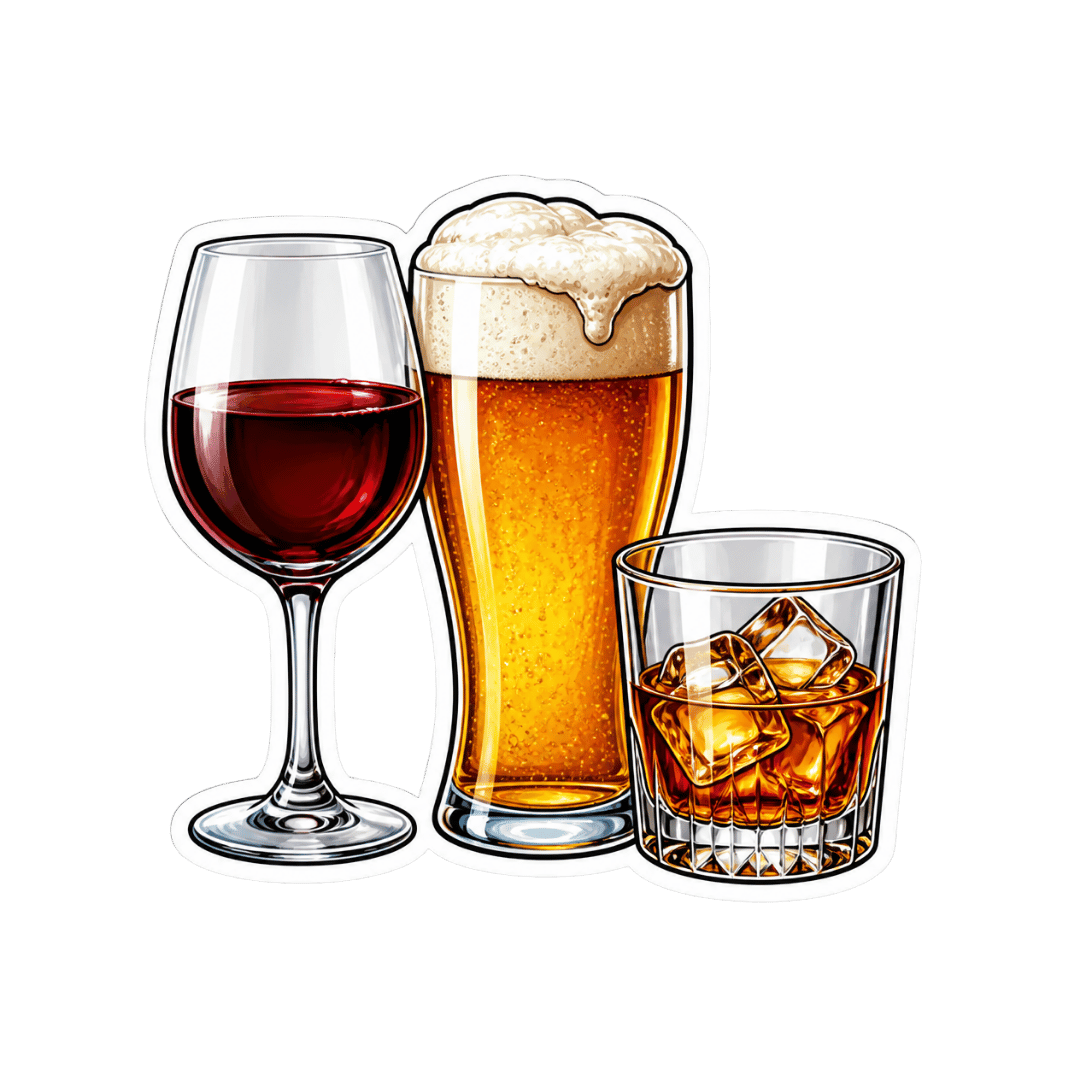
But, of beers, wines, and spirits, are they all equally bad, unit for unit, or are there any important differences to mortality?
Head to head…
Researchers (Dr. Zhangling Chen et al.) tackled this question, and looked at data from 340,924 UK Biobank participants, with a mean age of 56 years, for an average of 13.4 years to investigate associations between alcohol consumption patterns (in total, and of what kinds) and mortality.
Overall alcohol intake results: shocking nobody, high consumption was associated with higher all-cause, cardiovascular disease, cancer, and other-cause mortality, while moderate consumption was associated with higher cancer mortality.
See also: How Much Alcohol Does It Take To Increase Cancer Risk? ← the answer is “any” (although, the risk is dose-dependent, so if not abstaining completely, less is still better than more)
Type by type, the results were as follows:
- Beer and cider: high intake was associated with increased all-cause and cause-specific mortality, while even low intake was associated with higher cancer mortality.
- Wine: lower intake was associated with lower all-cause and cause-specific mortality, while high intake was associated with higher cancer mortality; moderate or low red wine intake was associated with lower all-cause, cardiovascular disease, and other-cause mortality, compared to non-drinkers
- However, looking at what covariate factors were controlled for and which weren’t, this is almost certainly a case of the statistical error raised in “are you making this alcohol mistake?”, most glaringly that they neglected to ask non-drinkers why they didn’t drink, and the reasons why (e.g. medical contraindications, former alcohol abuse, etc) are often the reasons for the higher mortality, not the lack of alcohol.
- Sincerely, alcohol is not exactly an essential food group
- However, looking at what covariate factors were controlled for and which weren’t, this is almost certainly a case of the statistical error raised in “are you making this alcohol mistake?”, most glaringly that they neglected to ask non-drinkers why they didn’t drink, and the reasons why (e.g. medical contraindications, former alcohol abuse, etc) are often the reasons for the higher mortality, not the lack of alcohol.
- Spirits: low and combined moderate-to-high intake were associated with greater all-cause and cause-specific mortality
It’s interesting to note that wine type also made a difference, or rather several differences, specifically:
- higher red wine intake was especially associated with higher all-cause and cancer mortality
- higher white wine intake was especially associated with higher all-cause, cancer, and other-cause mortality
- higher fortified wine intake was especially associated with higher all-cause and other-cause mortality
You can read the paper in full, here: Total and beverage-specific alcohol use at mid-life and all-cause and cause-specific mortality: a prospective cohort study ← that will take you to the abstract; to read the full paper you’ll need to click on “Download PDF”
Want to do better for your mortality than that?
It’s never too early to quit drinking, but it’s also never too late:
What Happens To Your Body When You Stop Drinking Alcohol ← for a detailed timeline which parts of your body recover when
Take care!
Don’t Forget…
Did you arrive here from our newsletter? Don’t forget to return to the email to continue learning!

Learn to Age Gracefully
Join the 98k+ American women taking control of their health & aging with our 100% free (and fun!) daily emails: