
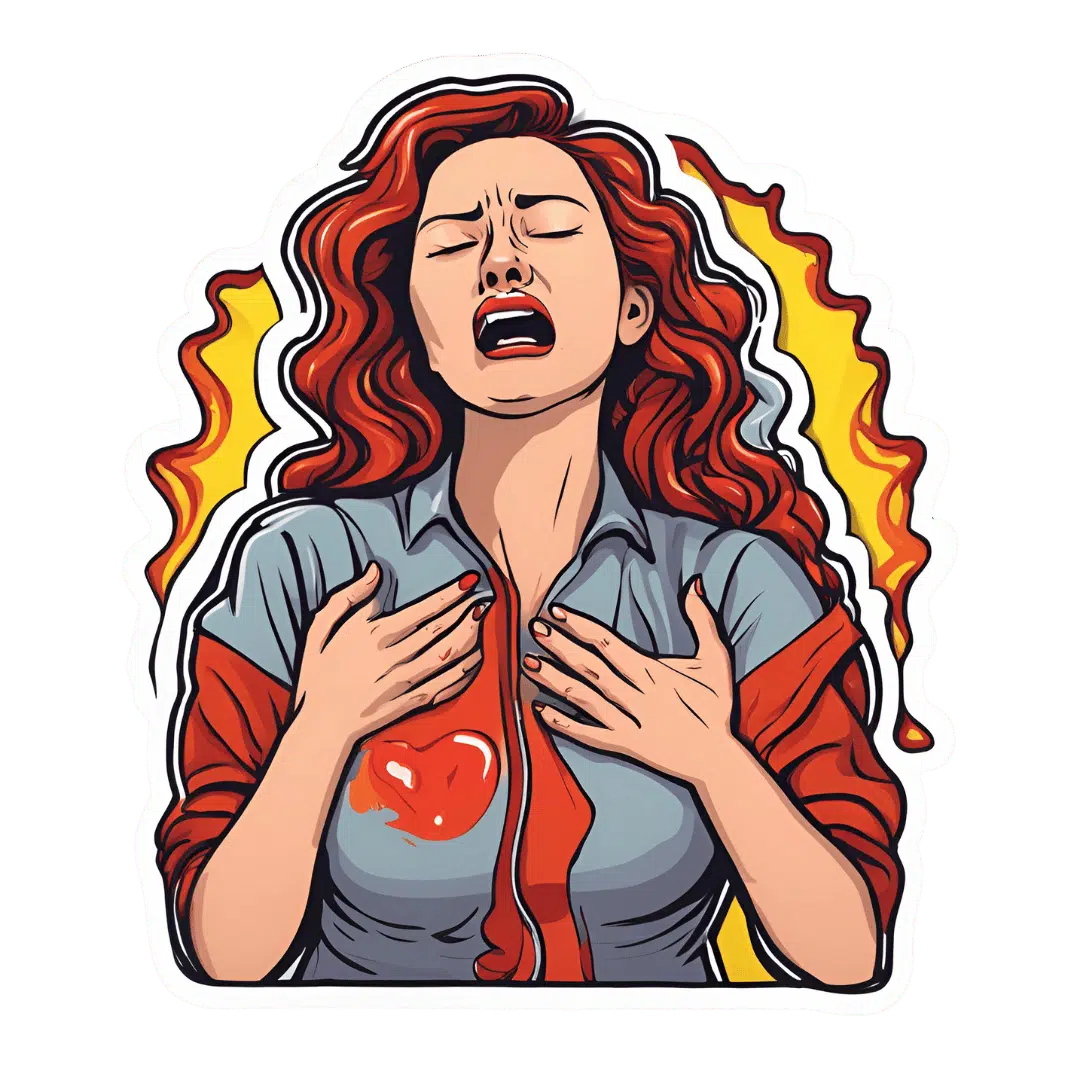
Anxiety Attack vs Panic Attack: Do You Know The Difference?

10almonds is reader-supported. We may, at no cost to you, receive a portion of sales if you purchase a product through a link in this article.

The terms are sometimes used incorrectly, but have quite different meanings. Dr. Julie Smith, psychologist, explains in this short video:

Important distinctions

Anxiety attacks are not clinically recognized terms and lack a clear definition, often used to describe a build-up of anxiety before anticipated stressful events (e.g. social gatherings, medical appointments, etc, though of course what it is will vary from person to person—not everyone finds the same things stressful, or has the same kinds of anticipations around things).

Panic attacks, in contrast, are sudden surges of intense fear or discomfort that peak within minutes. They are characterized by symptoms including at least 4 of:

  • palpitations
  • sweating
  • shortness of breath
  • chest pain
  • dizziness
  • fear of losing control or dying

There’s a misconception that panic attacks never have identifiable triggers while anxiety attacks always do.

In reality, both can occur with or without a clear cause. Panic attacks can arise from various conditions, including trauma, OCD, or phobias, and don’t necessarily mean you have a panic disorder. They can also occur as a drug response, without any known underlying psychological condition.

You may also notice that that list of symptoms has quite a bit of overlap with the symptoms of a heart attack, which a) does not help people to calm down b) can, on the flipside, cause a heart attack to be misdiagnosed as a panic attack.

In terms of management:

  • In the moment: breathing exercises, like extending your exhalation (a common example is the “7-11” method, inhaling for 7 seconds and exhaling for 11 seconds), can calm the body and reduce panic symptoms.
  • More generally: to prevent panic attacks from becoming more frequent, avoid avoiding safe environments that triggered an attack, like supermarkets or social gatherings. Gradual exposure helps reduce anxiety over time, while avoidance can worsen it.

If panic attacks persist, Dr. Smith advises to seek help from a doctor or psychologist to understand their root causes and develop effective coping strategies.

For more on all of this, enjoy:

Click Here If The Embedded Video Doesn’t Load Automatically!

Want to learn more?

You might also like to read:

How To Set Anxiety Aside

Take care!

Don’t Forget…

Did you arrive here from our newsletter? Don’t forget to return to the email to continue learning!

Recommended
  • 7 Days Of Celery Juice: What’s The Verdict?
  • Want straighter teeth or a gap between? Don’t believe TikTok – filing them isn’t the answer
    Aimee Lou Wood’s natural smile sparks debate against DIY tooth filing trends promoted by social media influencers. Here’s why dental experts advise caution.

Learn to Age Gracefully

Join the 98k+ American women taking control of their health & aging with our 100% free (and fun!) daily emails:

  • Fasting Cancer – by Dr. Valter Longo

    10almonds is reader-supported. We may, at no cost to you, receive a portion of sales if you purchase a product through a link in this article.

    We’ve previously reviewed Dr. Longo’s “The Longevity Diet”, and whereas that one was about eating, this one is (superficially, at least) about not eating. Nor is this any kind of dissonance, because, in fact, it’s important to do both!

    That said, he discusses not just fasting per se, but also the use of a personalized fast-mimicking diet, to accomplish the same goal of not overloading the metabolism—as overloading the metabolism results in metabolic disease, and cancer is, ultimately, a metabolic disease of immune dysfunction with genetic disorder*—which makes for quite a deadly trifecta.

    *not in the sense of “hereditary”, though certainly genes can influence cancer risk, but rather, in the sense of “your gene-copying process becomes disordered”.

    The first three chapters (after the introduction, which we’ll comment on shortly) are devoted to explaining the principles at hand:

    1. Fasting cancer while feeding patients
    2. Genes, aging, and cancer
    3. Fasting, nutrition, and physical activity in cancer prevention

    In those chapters, he details a lot of the science for exactly how and why it is possible to “feed the patient and starve the cancer” at the same time.

    After that, the rest of the book—another nine chapters, not counting appendices etc—are given over to fasting and nutrition in the context of nine main types of cancer, one chapter per type. These are not hyperspecific, though, and are rather categorizations, such as “blood cancers”, and “gynecological cancers” and so forth. It’s comprehensive, and while it could be argued that it may mean chapters feel irrelevant to some people (à la “I have never smoked and have no pressing concern about my lung cancer risk” etc), the reality is that it’s good to know how to avoid them all, because if nothing else, it’d be super embarrassing to get a cancer you “thought you couldn’t get”. So, it’s honestly worth the time to read each chapter.

    In the category of criticism, he did open the introduction with a handful of anecdotes to defend the consumption of (well-established group 1 carcinogens) red meat and alcohol as “secondary concerns that might not be such a big deal”, even discussing how surprised his colleagues in the field are that he has this view. Suffice it to say, it’s contrary to the overwhelming body of evidence, and reads suspiciously like a man who simply doesn’t want to give up his steak and wine despite his own longevity diet forswearing them.

    The style is self-indulgently autobiographical and very complimentary, and (in this reviewer’s opinion) it can be tedious to wade through that to get to the science, but at the end of the day, his self-accolades might be needless fluff, but they don’t actually remove anything from the science in question.

    Bottom line: as you can see, there are good and bad things to say about this book, but the information contained in the good makes it well worth reading through the stylistically questionable to get it.

    Click here to check out Fasting Cancer, and starve cancer cells while nourishing your healthy ones!

    Share This Post

  • Beet The Odds – by Dr. Nathan Bryan & Carolyn Pierini

    10almonds is reader-supported. We may, at no cost to you, receive a portion of sales if you purchase a product through a link in this article.

    By the same first-listed author as the book we recently reviewed about nitric oxide, this time he’s teamed up with a clinician specialized in the biochemistry of human nutrigenomics, this time to extol the virtues of beets—and we do say “beets”, since while the root (thus, beetroot) is the most-discussed part of the plant, the leaves and stalks have benefits too.

    We learn a lot about its effects on the heart and blood, and its antioxidant properties, as well as the unique properties associated with betalain and especially betanin. Lastly, unsurprisingly from this author, we also hear about beets’ benefits in the category of improving nitric oxide levels (as the plant is a good source of nitrates, which the body can use to make that).

    The style is is quite bold and colorful; there’s little hard science here, and we are not treated to sources for claims as we go along. It’s also worth noting that this book is a scant 56 pages, so, a lot more than we can fit in an article here (such as our own Beetroot For More Than Just Your Blood Pressure), but still a little lighter than we’re used to.

    There is an ad for Dr. Bryan’s beetroot powder supplements at the end.

    Bottom line: beets are great (unless you are avoiding oxalates, in which case, maybe skip them as they’re quite high in those, but for most people without kidney problems this is a non-issue), and this short, light, enthusiastic book does a fair job of explaining how they’re great.

    Click here to check out Beet The Odds, and beet the odds!

    Share This Post

  • Lucid Dreaming – by Stephen LaBerge Ph.D.

    10almonds is reader-supported. We may, at no cost to you, receive a portion of sales if you purchase a product through a link in this article.

    For any unfamiliar: lucid dreaming means being aware that one is dreaming, while dreaming, and exercising a degree of control over the dream. Superficially, this is fun. But if one really wants to go deeper into it, it can be a lot more:

    Dr. Stephen LaBerge takes a science-based approach to lucid dreaming, and in this work provides not only step-by-step instructions of several ways of inducing lucid dreaming, but also, opens the reader’s mind to things that can be done there beyond the merely recreational:

    In lucid dreams, he argues and illustrates, it’s possible to talk to parts of one’s own subconscious (Inception, anyone? Yes, this book came first) and get quite an amount of self-therapy done. And that hobby you wish you had more time to practice? The possibilities just became limitless. And who wouldn’t want that?

    Grab Your Bedtime Reading From Amazon Now!

    Share This Post

Related Posts

  • 7 Days Of Celery Juice: What’s The Verdict?
  • What are ‘Ozempic babies’? Can the drug really increase your chance of pregnancy?

    10almonds is reader-supported. We may, at no cost to you, receive a portion of sales if you purchase a product through a link in this article.

    Hundreds of thousands of people worldwide are taking drugs like Ozempic to lose weight. But what do we actually know about them? This month, The Conversation’s experts explore their rise, impact and potential consequences.

    We’ve heard a lot about the impacts of Ozempic recently, from rapid weight loss and lowered blood pressure, to persistent vomiting and “Ozempic face”.

    Now we’re seeing a rise in stories about “Ozempic babies”, where women who use drugs like Ozempic (semaglutide) report unexpected pregnancies.

    But does semaglutide (also sold as Wegovy) improve fertility? And if so, how? Here’s what we know so far.

    Remind me, what is Ozempic?

    Ozempic and related drugs (glucagon-like peptide-1 receptor agonists or GLP-1-RAs) were developed to help control blood glucose levels in people with type 2 diabetes.

    But the reason for Ozempic’s huge popularity worldwide is that it promotes weight loss by slowing stomach emptying and reducing appetite.

    Ozempic is prescribed in Australia as a diabetes treatment. It’s not currently approved to treat obesity but some doctors prescribe it “off label” to help people lose weight. Wegovy (a higher dose of semaglutide) is approved for use in Australia to treat obesity but it’s not yet available.

    How does obesity affect fertility?

    Obesity affects the fine-tuned hormonal balance that regulates the menstrual cycle.

    Women with a body mass index (BMI) above 27 are three times more likely than women in the normal weight range to be unable to conceive because they are less likely to ovulate.

    The metabolic conditions of type 2 diabetes and polycystic ovary syndrome (PCOS) are both linked to obesity and fertility difficulties.

    Women with type 2 diabetes are more likely than other women to have obesity and to experience fertility difficulties and miscarriage.

    Similarly, women with PCOS are more likely to have obesity and trouble conceiving than other women because of hormonal imbalances that cause irregular menstrual cycles.

    In men, obesity, diabetes and metabolic syndrome (a cluster of conditions that increase the risk of heart disease and stroke) have negative effects on fertility.

    Low testosterone levels caused by obesity or type 2 diabetes can affect the quality of sperm.

    So how might Ozempic affect fertility?

    Weight loss is recommended for people with obesity to reduce the risk of health problems. As weight loss can improve menstrual irregularities, it may also increase the chance of pregnancy in women with obesity.

    This is why weight loss and metabolic improvement are the most likely reasons why women who use Ozempic report unexpected pregnancies.

    But unexpected pregnancies have also been reported by women who use Ozempic and the contraceptive pill. This has led some experts to suggest that some GLP-1-RAs might affect the absorption of the pill and make it less effective. However, it’s uncertain whether there is a connection between Ozempic and contraceptive failure.

    Person holds pregnancy test
    Some women have reported getting pregnant while taking the contraceptive pill and Ozempic. Cottonbro Studio/Pexels

    In men with type 2 diabetes, obesity and low testosterone, drugs like Ozempic have shown promising results for weight loss and increasing testosterone levels.

    Avoid Ozempic if you’re trying to conceive

    It’s unclear if semaglutide can be harmful in pregnancy. But data from animal studies suggest it should not be used in pregnancy due to potential risks of fetal abnormalities.

    That’s why the Therapeutic Goods Administration recommends women of childbearing potential use contraception when taking semaglutide.

    Similarly, PCOS guidelines state health professionals should ensure women with PCOS who use Ozempic have effective contraception.

    Guidelines recommended stopping semaglutide at least two months before planning pregnancy.

    For women who use Ozempic to manage diabetes, it’s important to seek advice on other options to control blood glucose levels when trying for pregnancy.

    What if you get pregnant while taking Ozempic?

    For those who conceive while using Ozempic, deciding what to do can be difficult. This decision may be even more complicated considering the unknown potential effects of the drug on the fetus.

    While there is little scientific data available, the findings of an observational study of pregnant women with type 2 diabetes who were on diabetes medication, including GLP-1-RAs, are reassuring. This study did not indicate a large increased risk of major congenital malformations in the babies born.

    Women considering or currently using semaglutide before, during, or after pregnancy should consult with a health provider about how to best manage their condition.

    When pregnancies are planned, women can take steps to improve their baby’s health, such as taking folic acid before conception to reduce the risk of neural tube defects, and stopping smoking and consuming alcohol.

    While unexpected pregnancies and “Ozempic babies” may be welcomed, their mothers have not had the opportunity to take these steps and give them the best start in life.

    Read the other articles in The Conversation’s Ozempic series here.

    Karin Hammarberg, Senior Research Fellow, Global and Women’s Health, School of Public Health & Preventive Medicine, Monash University and Robert Norman, Emeritus Professor of Reproductive and Periconceptual Medicine, The Robinson Research Institute, University of Adelaide

    This article is republished from The Conversation under a Creative Commons license. Read the original article.

    Don’t Forget…

    Did you arrive here from our newsletter? Don’t forget to return to the email to continue learning!

    Learn to Age Gracefully

    Join the 98k+ American women taking control of their health & aging with our 100% free (and fun!) daily emails:

  • This Bill Aims To Help Firefighters With Cancer. Getting It Passed Is Just the Beginning.

    10almonds is reader-supported. We may, at no cost to you, receive a portion of sales if you purchase a product through a link in this article.

    As firefighters battled the catastrophic blazes in Los Angeles County in January, California’s U.S. senators, Adam Schiff and Alex Padilla, signed onto legislation with a simple aim: Provide federal assistance to first responders diagnosed with service-related cancer.

    The Honoring Our Fallen Heroes Act is considered crucial by its supporters, with climate change fueling an increase in wildfire frequency and firefighting deemed carcinogenic by the World Health Organization. Firefighters have a 14% higher chance of dying from cancer than the general population, according to a 2024 study, and the disease was responsible for 66% of career firefighter line-of-duty deaths from 2002 to 2019.

    The Los Angeles wildfires brought the fear generated by these statistics into bold relief. As homes, businesses, and cars — and the products within them — were incinerated, gases, chemicals, asbestos, and other toxic pollutants were released into the air, often settling into soil and dust. First responders working at close range, often without adequate respiratory protection, were at higher risk of developing adverse health conditions.

    Just days after the fires were contained, researchers tested a group of 20 firefighters who had come from Northern California to help battle the flames and found dangerously elevated levels of lead and mercury in their blood.

    “Firefighters and first responders put their lives on the line without a second thought to protect California communities from the devastating Southern California fires,” Padilla said in a statement. “When they sacrifice their lives or face severe disabilities due to service-related cancers, we have a shared duty to help get their families back on their feet.”

    But while the Honoring Our Fallen Heroes Act has bipartisan support, it still faces a rough road politically, and those who’ve spent years dealing with similar government-run programs warn of major implementation issues should the measure become law.

    The Senate Judiciary Committee passed a similar bill in 2024, but the measure didn’t advance to a vote on the floor. And with legislators pondering potentially massive federal budget cuts, its fate in Congress this year is far from clear. What is clear is that, for legislation tying benefits to service-related health conditions, the devil is in the details.

    “Getting the piece of legislation passed is not as hard as guarding it,” said John Feal, who was injured at the 9/11 ground zero site while working as a demolition supervisor. He has since become a fierce advocate for first responders and military veterans.

    “You will watch the legislation mature, as more and more people who need the assistance come forward,” Feal said. At that point, he added, the program’s capacity to grow — and to successfully process the applications of those who’ve come forward for help — may become a challenge.

    That, Feal said, is what happened with the various government programs created after the 9/11 attacks to provide monetary compensation and health care to injured first responders, including some later diagnosed with cancer. Both the September 11th Victim Compensation Fund and the World Trade Center Health Program encountered substantial funding issues and were beset by logistical failures.

    The structure of the Honoring Our Fallen Heroes Act, sponsored by Sen. Amy Klobuchar (D-Minn.), might allow it to sidestep some funding pitfalls. Rather than create a new benefit program, the bill would grant firefighters who have non-9/11 cancer-related conditions access to the long-standing Public Safety Officers’ Benefits Program, which provides monetary death, disability, and education benefits to line-of-duty responders and surviving family members.

    Death benefits in such programs are considered mandatory spending and are funded regardless of congressional budget decisions. Funding for disability and education benefits, however, depends on annual appropriations.

    Even with full funding, the legislation could face implementation problems similar to those plaguing the 9/11 programs, including complex eligibility criteria, difficulty documenting that illnesses are service-related, and — more recently — long waits to enroll amid seesawing federal attempts at cutbacks.

    Attorney Michael Barasch represented the late New York police detective James Zadroga, who developed pulmonary fibrosis from toxic exposure at the World Trade Center site and for whom the 9/11 Health and Compensation Act is named. Barasch, who still represents 9/11 victims and lobbies Congress for program improvements and funding, said the Honoring Our Fallen Heroes Act should streamline the process for first responders to document that their cancers are related to fighting wildfires.

    “In my experience representing more than 40,000 members of the 9/11 community, any similar program should have a clear set of standards to determine eligibility,” Barasch told KFF Health News. “Needless complexity creates a serious risk that responders who should have been eligible might not have access to benefits.”

    Feal added that lawmakers should be ready to bolster funding to adequately staff the Public Safety Officers’ Benefits Program if it adds to the conditions currently covered, noting that the 9/11 programs have swelled as more and more first responders have presented service-related conditions.

    “There were 75,000 people in the program in 2015. There’s now close to 140,000,” Feal said. “There’s a backlog on enrollment into the WTC program because they’re understaffed, and there’s also a backlog on getting your illnesses certified so you can get compensated.”

    As the Public Safety Officers’ Benefits Program is currently implemented, firefighters and other first responders are eligible for support for physical injuries they incur in the line of duty or for deaths from duty-related heart attacks, strokes, mental health conditions, and 9/11-related illnesses. The bill would add provisions for those who die or become permanently disabled from other service-related cancers.

    A study has already been launched to track the short- and long-term health impacts of the Los Angeles wildfires. “This was an environmental and health disaster that will unfold over decades,” Kari Nadeau, a professor at Harvard’s T.H. Chan School of Public Health, said in announcing the study.

    Firefighters who battled the massive 2018 Camp Fire in Northern California, meanwhile, have been found to carry higher levels of carcinogens and other toxic substances in their blood than the general population, according to a study commissioned by the San Francisco Firefighters Cancer Prevention Foundation.

    The Honoring Our Fallen Heroes Act was first introduced in 2023 and reintroduced on Jan. 23 of this year, with Klobuchar referencing the California wildfires in her press release. The Congressional Budget Office estimated last year that the bill would cost about $250 million annually from 2024 to 2034; it has not weighed in since the measure was reintroduced.

    “Cancer’s grip on the fire service is undeniable,” said Edward Kelly, president of the International Association of Fire Fighters. “When a firefighter dies from occupational cancer, we owe it to them to ensure their families get the line-of-duty death benefits they are owed.”

    This article was produced by KFF Health News, which publishes California Healthline, an editorially independent service of the California Health Care Foundation. 

    KFF Health News is a national newsroom that produces in-depth journalism about health issues and is one of the core operating programs at KFF—an independent source of health policy research, polling, and journalism. Learn more about KFF.

    Subscribe to KFF Health News’ free Morning Briefing.

    This article first appeared on KFF Health News and is republished here under a Creative Commons license.

    Don’t Forget…

    Did you arrive here from our newsletter? Don’t forget to return to the email to continue learning!

    Learn to Age Gracefully

    Join the 98k+ American women taking control of their health & aging with our 100% free (and fun!) daily emails:

  • Just How Infectious Is The Bird Flu In Cows’ Milk Anyway?

    10almonds is reader-supported. We may, at no cost to you, receive a portion of sales if you purchase a product through a link in this article.

    There’s a rather bleak joke that goes:

    Doctor: “I’m afraid I have bad news for you; your condition is now terminal”
    Patient: “How long do I have?”
    Doctor: “Ten…”
    Patient: “Ten what? Years? Months?”
    Doctor: “Nine…”

    Sometimes, of course, humor itself can help extend life, by the way: Laugh Often, To Laugh Longest!

    In this case, the situation isn’t quite as bad as in the joke, but the answer to the question today is also:

    Ten

    That’s the number of viral particles it takes for infection to occur.

    Which means that any strategy for stopping transmission has to be truly near-perfect, so as to not let that many (10) viral particles through.

    Researchers (Dr. Carolyn Lee et al.) found that as few as 10 H5N1 viral particles getting into a cow’s mammary gland can establish a productive infection, leading to high levels of virus shedding in milk consumed by humans.

    This helps explain how bird bird flu spread so well through US dairy farms despite control efforts, because only a very small quantity of the virus is needed to infect a cow under the right circumstances. Nevertheless, it was very surprising when first taking hold, as the virus appears to preferentially infect the mammary gland rather than the respiratory tract, unlike typical influenza infections.

    To quote a corresponding author on the study,

    ❝This work has all been done in response to the unprecedented spillover of avian influenza into dairy cattle. Initially, we had no idea that cows could even be infected with influenza, let alone that the mammary gland was involved. That in and of itself was a major paradigm shift: It’s not respiratory.

    There is still the bigger question of spillover from wild birds into cows. In waterfowl, it’s a pathogen replicating in their gut. How in the world does it go from a duck’s intestine into a cow’s mammary gland? That’s a head scratcher.❞

    ~ Dr. Andrew Bowman, corresponding author

     Infected cows produced milk with very high viral concentrations for more than a week, and even the lowest infectious dose tested resulted in substantial viral shedding into milk.

    You may be wondering why everyone isn’t getting sick (apart from those who don’t consume dairy), and the answer is that pasteurization inactivates the virus.

    We wrote about that, here: Pasteurization: What It Does And Doesn’t Do

    So with that in mind, it’s one more reason Why you shouldn’t drink raw milk!

    You can read the paper itself in full, here: Dairy cows infected with influenza A(H5N1) reveals low infectious dose and transmission barriers

    Want to learn more?

    To get a lot deeper into the topic of avoiding the toxins the industrial world (including, but not limited to, the animal agriculture industry) likes to throw at us, you might like this book we reviewed:

    Healthy Living in a Contaminated World – by Dr. Donald Hoernschemeyer

    Take care!

    Don’t Forget…

    Did you arrive here from our newsletter? Don’t forget to return to the email to continue learning!

    Learn to Age Gracefully

    Join the 98k+ American women taking control of their health & aging with our 100% free (and fun!) daily emails: