Sugary Drinks? Here’s What Your Brain’s Actually Craving
10almonds is reader-supported. We may, at no cost to you, receive a portion of sales if you purchase a product through a link in this article.

Sugar addiction is, by broad scientific consensus, agreed-upon as an extant thing that does exist, and contemporary research is more looking into the “hows” and “whys” and “whats” rather than the “whether”.
Still, it remains a somewhat complicated topic, because it’s halfway between what science would usually consider a chemical addiction, and what science would usually consider a behavioral addiction:
The Not-So-Sweet Science Of Sugar Addiction
For more depth than one of our articles, then here’s a book we reviewed on the topic: Diet, Drugs, and Dopamine – by Dr. David Kessler
For less depth than one of our articles, then the super-short version is that it works on the same system as a cocaine addiction
A couple more things before we press onwards:
You might be wondering: Which Sugars Are Healthier, And Which Are Just The Same?
You also might be wondering: What’s The Healthiest Sweetener?
Now, with those things in mind…
So, what’s new?
Researchers (Dr. Dana Small et al.) did a randomized controlled trial involving 160 adults, examining how daily consumption of sugary beverages influences responses to associated visual cues.
What this means: 85 of the participants consumed a beverage containing 27 grams of sugar and 111 calories daily for three weeks, while 75 consumed a flavor-matched, unsweetened beverage, with each drink paired with a distinct visual symbol, and their cognitive, behavioral, and physiological responses measured.
The results, in few words:
- Increased motivation: participants consuming the sugary beverage developed faster approach responses to its associated symbol, despite reporting no increased enjoyment of the drink itself.
- Incentive sensitization: repeated sugar consumption increased the motivational power of beverage-associated cues without increasing conscious liking of the beverage.
- Brain changes: functional MRI revealed differences in the ventral striatum, a brain region involved in reward processing and motivation, between the two groups.
And yet, no significant differences emerged between the groups in terms of BMI, blood glucose, dietary intake aside from these drinks, or sensory ratings.
Would you like a burger with that? One of Dr. Small’s colleagues on the study, Dr. Burger, commented thus:
❝The study suggests that cues associated with sugary drinks can build motivational value from repeated consumption, even when people report not liking the flavor of the drink more than before. The next important question is whether these changes influence what and how much people choose to drink in their daily lives.❞
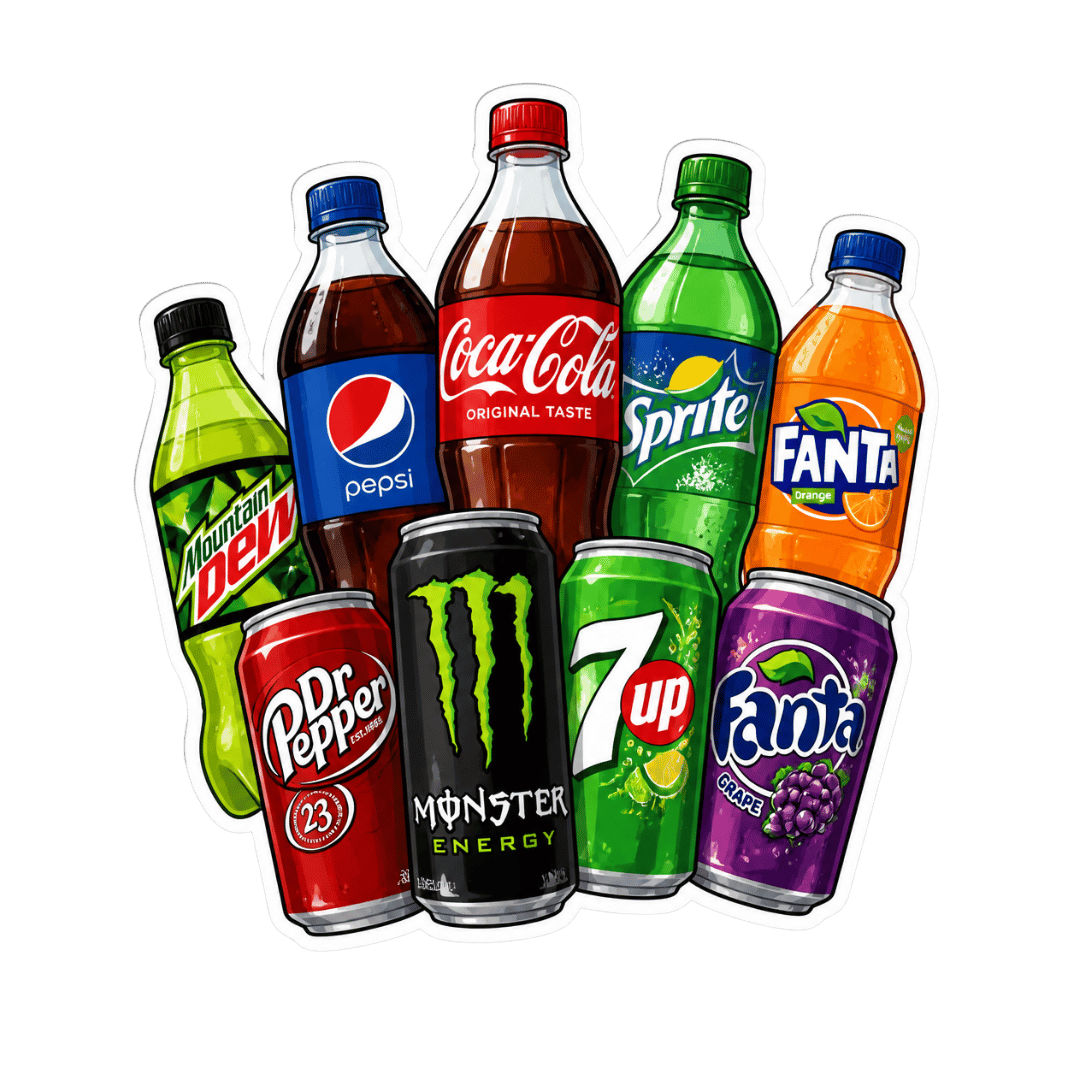
In other words, the general take-away here is that a large part of what’s going in isn’t actually about what’s in the bottle/can, and more about how regular consumption of sugary beverages can increase susceptibility to associated logos, packaging, and advertising, independently of taste preferences.
You can read about this in full, here: Repeated sugar exposure reshapes cue-potentiated motivation without a detectable change in explicit valuation
Want to improve your own habits in this regard?
Then here’s our main feature on that: When It’s More Than “Just” Cravings: How To Beat Food Addictions! ← yes, it says “food” in the title, but the process is of course the same for drinks, too
Or for a more comprehensive guide, you might consider this book that we reviewed a while back: Beat Sugar Addiction Now! – by Dr. Jacob Teitelbaum & Chrystle Fiedler
Take care!
Don’t Forget…
Did you arrive here from our newsletter? Don’t forget to return to the email to continue learning!

Learn to Age Gracefully
Join the 98k+ American women taking control of their health & aging with our 100% free (and fun!) daily emails:
