

Your gluten sensitivity might be something else entirely, new study shows
10almonds is reader-supported. We may, at no cost to you, receive a portion of sales if you purchase a product through a link in this article.
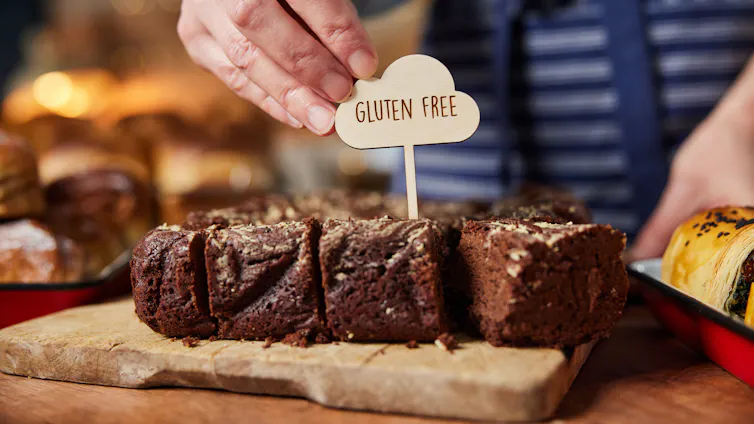
Social media and lifestyle magazines have turned gluten – a protein in wheat, rye and barley – into a dietary villain.
Athletes and celebrities have promoted gluten-free eating as the secret to better health and performance.
But our review in The Lancet published today challenges that idea.
By examining decades of research, we found that for most people who think they react to gluten, gluten itself is rarely the cause.
Symptoms but not coeliac
Coeliac disease is when the body’s immune system attacks itself when someone eats gluten, leading to inflammation and damage to the gut.
But people with gut or other symptoms after eating foods containing gluten can test negative for coeliac disease or wheat allergy. They are said to have non-coeliac gluten sensitivity.
We wanted to understand whether gluten itself, or other factors, truly cause their symptoms.
What we did and what we found
Our study combined more than 58 studies covering symptom changes and possible ways they could arise. These included studying the immune system, gut barrier, microbes in the gut, and psychological explanations.
Across studies, gluten-specific reactions were uncommon and, when they occurred, changes in symptoms were usually small. Many participants who believed they were “gluten sensitive” reacted equally – or more strongly – to a placebo.
One landmark trial looked at the role of fermentable carbohydrates (known as FODMAPs) in people who said they were sensitive to gluten (but didn’t have coeliac disease). When people ate a low-FODMAP diet – avoiding foods such as certain fruits, vegetables, legumes and cereals – their symptoms improved, even when gluten was reintroduced.
Another showed fructans – a type of FODMAP in wheat, onion, garlic and other foods – caused more bloating and discomfort than gluten itself.
This suggests most people who feel unwell after eating gluten are sensitive to something else. This could be FODMAPs such as fructans, or other wheat proteins. Another explanation could be that symptoms reflect a disorder in how the gut interacts with the brain, similar to irritable bowel syndrome.
Some people may be truly sensitive to gluten. However, current evidence suggests this is uncommon.
People expected symptoms
A consistent finding is how expecting to have symptoms profoundly shapes people’s symptoms.
In blinded trials, when people unknowingly ate gluten or placebo, symptom differences almost vanished.
Some who expected gluten to make them unwell developed identical discomfort when exposed to a placebo.
This nocebo effect – the negative counterpart of placebo – shows that belief and prior experience influence how the brain processes signals from the gut.
Brain-imaging research supports this, showing that expectation and emotion activate brain regions involved in pain and how we perceive threats. This can heighten sensitivity to normal gut sensations.
These are real physiological responses. What the evidence is telling us is that focusing attention on the gut, coupled with anxiety about symptoms or repeated negative experiences with food, has real effects. This can sensitise how the gut interacts with the brain (known as the gut–brain axis) so normal digestive sensations are felt as pain or urgency.
Recognising this psychological contribution doesn’t mean symptoms are imagined. When the brain predicts a meal may cause harm, gut sensory pathways amplify every cramp or sensation of discomfort, creating genuine distress.
This helps explain why people remain convinced gluten is to blame even when blinded studies show otherwise. Symptoms are real, but the mechanism is often driven by expectation rather than gluten.
So what else could explain why some people feel better after going gluten-free? Such a change in the diet also reduces high-FODMAP foods and ultra-processed products, encourages mindful eating and offers a sense of control. All these can improve our wellbeing.
People also tend to eat more naturally gluten-free, nutrient-dense foods such as fruits, vegetables, legumes and nuts, which may further support gut health.
The cost of going gluten-free
For the approximately 1% of the population with coeliac disease, avoiding gluten for life is essential.
But for most who feel better gluten-free, gluten is unlikely to be the true problem.
There’s also a cost to going gluten-free unnecessarily. Gluten-free foods are, on average, 139% more expensive than standard ones. They are also often lower in fibre and key nutrients.
Avoiding gluten long term can also reduce diversity in your diet, alter your gut microbes and reinforce anxiety about eating.
Is it worth getting tested?
Unlike coeliac disease or a wheat allergy, non-coeliac gluten sensitivity has no biomarker – there’s no blood test or tissue marker that can confirm it.
Diagnosis instead relies on excluding other conditions and structured dietary testing.
Based on our review, we recommend clinicians:
- rule out coeliac disease and wheat allergy first
- optimise the quality of someone’s overall diet
- trial a low-FODMAP diet if symptoms persist
- only then, consider a four to six-week dietitian-supervised gluten-free trial, followed by a structured re-introduction of gluten-containing foods to see whether gluten truly causes symptoms.
This approach keeps restriction targeted and temporary, avoiding unnecessary long-term exclusion of gluten.
If gluten doesn’t explain someone’s symptoms, combining dietary guidance with psychological support often works best. That’s because expectation, stress and emotion influence our symptoms. Cognitive-behavioural or exposure-based therapies can reduce food-related fear and help people safely reintroduce foods they once avoided.
This integrated model moves beyond the simplistic “gluten is bad” narrative toward personalised, evidence-based gut–brain care.
Jessica Biesiekierski, Associate Professor of Human Nutrition, The University of Melbourne
This article is republished from The Conversation under a Creative Commons license. Read the original article.
Don’t Forget…
Did you arrive here from our newsletter? Don’t forget to return to the email to continue learning!

Recommended
Learn to Age Gracefully
Join the 98k+ American women taking control of their health & aging with our 100% free (and fun!) daily emails:
-
No, COVID-19 vaccines don’t cause ‘turbo cancer’
10almonds is reader-supported. We may, at no cost to you, receive a portion of sales if you purchase a product through a link in this article.
What you need to know
- COVID-19 vaccines do not cause “turbo cancer” or contain SV40, a virus that has been suspected of causing cancer.
- There is no link between rising cancer rates and COVID-19 vaccines.
- Staying up to date on COVID-19 vaccines is a safe, free way to support long-term health.
Myths that COVID-19 vaccines cause cancer have been circulating since the vaccines were first developed. These false claims resurfaced last month after Princess Kate Middleton announced that she is undergoing cancer treatment, with some vaccine opponents falsely claiming Middleton has a “turbo cancer” caused by COVID-19 vaccines.
Here’s what we know: “Turbo cancer” is a made-up term for a fake phenomenon, and there is strong evidence that COVID-19 vaccines do not cause cancer or increase cancer risk.
Read on to learn how to recognize false claims about COVID-19 vaccines and cancer.
Do COVID-19 vaccines contain cancer-causing ingredients?
No. Some vaccine opponents claim that COVID-19 vaccines contain SV40, a virus that has been suspected of causing cancer. This claim is false.
A piece of SV40’s DNA sequence—called a “promoter”—was used as starting material to develop COVID-19 vaccines, but the virus itself is not present in the vaccines. The promoter does not contain the part of the virus that enters the cell nucleus, so it poses no risk.
COVID-19 vaccines and their ingredients have been rigorously studied in millions of people worldwide and have been determined to be safe. The National Cancer Institute and the American Cancer Society agree that COVID-19 vaccines do not increase cancer risk or accelerate cancer growth.
Why are cancer rates rising in the U.S.?
Since the 1990s, cancer rates have been on the rise globally and in the U.S., most notably in people under 50. Increased cancer screening may partially explain the rising number of cancer diagnoses. Exposure to air pollution and lifestyle factors like tobacco use, alcohol use, and diet may also be contributing factors.
What are the benefits of staying up to date on COVID-19 vaccines?
Staying up to date on COVID-19 vaccines is a safe way to protect our long-term health. COVID-19 vaccines prevent severe illness, hospitalization, death, and long COVID.
The CDC says staying up to date on COVID-19 vaccines is a safer and more reliable way to build protection against COVID-19 than getting sick from COVID-19.
For more information, talk to your health care provider.
This article first appeared on Public Good News and is republished here under a Creative Commons license.
Share This Post
-
The Truth About MMS
10almonds is reader-supported. We may, at no cost to you, receive a portion of sales if you purchase a product through a link in this article.
First, what it is:
❝Sodium chlorite solutions are frequently marketed in alternative medicine circles as ‘Miracle Mineral Solution’ (MMS), a panacea for a wide array of illnesses. Distributors of MMS advocate that when mixed with citric acid, it exhibits efficacy against autism and cancer, as well as against various microbial pathogens including SARS-CoV-2-19❞
So, what does the science say about this?
Sodium chlorite cures autism: True or False?
False! Or at least, and we’ll say child here because it is invariably a matter of parents trying to cure their children of autism, it will not cure autism except insofar as it could kill your child and then indeed you would no longer have a child with autism.
Learn more: Dangerous Trend: Chlorine Dioxide and Autism
Why “chlorine dioxide” when we were talking about sodium chlorite? It’s because marketers advocate for mixing it with citric acid, which produces chlorine dioxide.
In other words, please do not drink bleach or give bleach to others to drink.
Sodium chlorite kills cancer cells: True or False?
True! However, it also kills non-cancerous cells, i.e., the rest of you. So this is a little like the old “yes, this thing kills cancer cells in a petri dish, but so does a handgun”.
Let’s look at the science here. For example,
❝The anticancer activity of CIO2 was assessed on DMS114 small-cell lung cancer (SCLC) cells and human umbilical vein endothelial cells (HUVEC) as control by WST-1, Annexin V, cell cycle analysis, and acridine orange staining. We for the first time investigated the possible therapeutic effects of long-term stabilized ClO2 solution (LTSCD).
Our preliminary findings showed that LTSCD significantly inhibited the proliferation of SCLC cells (p < 0.01) with less toxicity in HUVEC cells. Additionally, LTSCD induced apoptotic cell death in SCLC cells through nuclear blebbing and vacuolar formation.
LTSCD can be a therapeutic potential for the treatment of SCLC. However, further investigations are required to assess the LTSCD-induced cell death in SCLC both in vitro and in vivo.❞
Read in full: The Anticancer Potential of Chlorine Dioxide in Small-Cell Lung Cancer Cells
Sounds promising, doesn’t it?
Just one problem, and it’s found in the bonus content you got if you clicked through to read the study
❝This article has been retracted by the Editors-in-Chief due to the presence of fundamental errors and methodological flaws which undermine the credibility of the study’s results and conclusions.
The authors disagree with the decision to retract.❞
Oops!
Sodium chlorite kills pathogenic microbes: True or False?
True! Mostly. It doesn’t kill all pathogenic microbes, but it does kill many. So that one is a health claim that can be at least somewhat justified by good science.
Unfortunately… Do you remember that satirical song about the pharmaceuticals industry, featuring the fictional wonder-drug paracetamoxyfrusibendroneomycin? It has a couplet that goes:
🎵 We tested it on animals, and none of them survived!
But that’s ok ‘cos when we wrote the paper up, we lied 🎵If you’ve never heard this song, here it is on YouTube 🙂
More seriously, this is more or less what happened in the case of sodium chlorite.
❝This study evaluates the in vitro antimicrobial efficacy and cytotoxicity of acidified sodium chlorite (ASC), a source of chlorine dioxide.
Therefore, we aimed to elucidate the activity of ASC against biofilms of Staphylococcus aureus, Pseudomonas aeruginosa, Enterococcus faecalis, Streptococcus mutans, Pseudomonas aeruginosa, Escherichia coli, and Lactobacillus sp. or an organic acid (ASC1, ASC2, respectively). The lowest antimicrobial concentration of ASC registered was 0.002992% (29.92 ppm) but did not exhibit stronger antimicrobial activity than polyhexamethylene biguanide. Biofilms of S. mutans and E. coli were the most susceptible to tested formulations. Biofilm formed by L. rhamnosus displayed susceptibility to concentrations lower than the minimum biofilm eradication concentration (0.09575%, 957.5 ppm). In the in vitro cytotoxic assay towards eukaryotic fibroblasts and in vivo model of Galleria mellonella larvae concentration-related increase of cytotoxic effects was observed.
Chlorine dioxide generated from ASC does destroy pathogens, but effective levels (around 30 ppm) also damage skin cells and caused high mortality in the in vivo model.
Our findings demonstrate that these concentrations of ASC which can effectively eradicate biofilms, also pose potential health risks due to their in vitro and in vivo cytotoxicity.❞
In other words, yes it can eradicate biofilms, but alas, it can also eradicate you, so please don’t.
You can read this paper in full, here: Antimicrobial properties and toxicity challenges of chlorine dioxide used in alternative medicine
As an aside, “toxicity challenges of chlorine dioxide used in alternative medicine” is really a very polite way of putting it. Because yes, that sure does present challenges.
Want to learn more?
Check out:
How To Know Whom To Trust In The Health World
And also: How Science News Outlets Can Lie To You (Yes, Even If They Cite Studies!)
Take care!
Share This Post
-
Most People Over 50 Don’t Know This Core Activation Trick
10almonds is reader-supported. We may, at no cost to you, receive a portion of sales if you purchase a product through a link in this article.
Here’s a simple and effective trick to activate your core muscles, without the confusion created by a lot of more complicated explanations:
Prepare for a poking
The core includes up to 29 muscles (depending on how we count them) around the spine, pelvis, and torso. Activating these muscles improves stability and reduces injury risk during movement, but common advices about how to do so can be a bit overcomplicated and unhelpful, leading to confusion and/or incorrectly-done exercises.
Instead, he says: imagine someone poking your side—your natural reaction is to tense your tummy and glutes. This instinctive tension effectively activates your core, without you having to think about the various muscles involved or whether to push or pull your stomach this way or that.
Once you’ve got that, practice maintaining the core tension while breathing steadily in and out (don’t hold your breath!). Start by feeling the tension with your fingers. Then keep that contraction while breathing to build awareness and control.
Next, you can bring that into other positions and movements, to master it fully and make it a part of your natural way of holding yourself.
For more on all of this, plus visual demonstrations, enjoy:
Click Here If The Embedded Video Doesn’t Load Automatically!
Want to learn more?
You might also like:
Is A Visible Six-Pack Obtainable Regardless Of Genetic Predisposition?
Take care!
Share This Post
Related Posts
-
Hazelnuts vs Almonds – Which is Healthier?
10almonds is reader-supported. We may, at no cost to you, receive a portion of sales if you purchase a product through a link in this article.
Our Verdict
When comparing hazelnuts to almonds, we picked the almonds.
Why?
It’s closer than you might think! But we say almonds do come out on top.
In terms of macronutrients, almonds have notably more protein, while hazelnuts have notably more fat (healthy fats, though). Almonds are also higher in both carbs and fiber. Looking at Glycemic Index, hazelnuts’ GI is low and almonds’ GI is zero. We could call the macros category a tie, but ultimately if we need to prioritize any of these things, it’s protein and fiber, so we’ll call this a nominal win for almonds.
When it comes to vitamins, hazelnuts have more of vitamins B1, B5, B6, B9 C, and K. Meanwhile, almonds have more of vitamins B2, B3, E, and choline. So, a moderate win for hazelnuts.
In the category of minerals, almonds retake the lead with more calcium, magnesium, phosphorus, potassium, selenium, and zinc, while hazelnuts boast more copper and manganese. A clear win for almonds.
Adding up the categories, this makes for a marginal win for almonds. Of course, both of these nuts are very healthy (assuming you are not allergic), and best is to enjoy both if possible.
Want to learn more?
You might like to read:
Take care!
Don’t Forget…
Did you arrive here from our newsletter? Don’t forget to return to the email to continue learning!
Learn to Age Gracefully
Join the 98k+ American women taking control of their health & aging with our 100% free (and fun!) daily emails:
-
Weak Knees? Four Exercises To Strengthen Every Knee Muscle
10almonds is reader-supported. We may, at no cost to you, receive a portion of sales if you purchase a product through a link in this article.
Over-50s specialist physio Will Harlow shows us how:
The most bang-for-buck:
We’ll keep it simple; the four exercises are:
- Knee extensions while sitting: sit back in a chair, straighten your leg, pull your toes towards you, and strongly contract your thigh while pushing your knee down into the chair, before lowering and repeating.
- Hamstring bridge: lie on your back on the floor with your legs resting on a chair or similar elevated surface, press your lower back into the floor, then push through your heels to lift your pelvis by squeezing your hamstrings, before lowering slowly.
- Forward lean calf raise: stand about a meter from a wall, lean forwards with your hands on it, then rise onto your toes through a full range before lowering under control, progressing to one leg if reasonable.
- sit to stand progression: move from a standard sit-to-stand to a staggered stance, and eventually a single-leg version, leaning your body forwards, and controlling both the lift and the descent.
For more on all of this plus visual demonstrations, enjoy:
Click Here If The Embedded Video Doesn’t Load Automatically!
Want to learn more?
You might also like:
- Do This Before Walking To Suffer Less (It Takes 30 Seconds) ← when what feels like a problem in your knees is actually a lack of glute activation
- How To Make Downhill Walking Easier On The Knees ← famously more of a challenge than going uphill, in the case of dubious knees
- The Best Exercise to Stop Your Legs From Giving Out ← this one’s good if, like this writer, you have strong legs and/but also EDS or a similar connective tissue disorder that causes your joints to sometimes just fold like laundry for no obvious reason (it’s about the body’s misguided attempt to save you from something that’s not actually a problem but a tendon got confused so the muscle just dropped it)
Take care!
Don’t Forget…
Did you arrive here from our newsletter? Don’t forget to return to the email to continue learning!
Learn to Age Gracefully
Join the 98k+ American women taking control of their health & aging with our 100% free (and fun!) daily emails:
-
How To Reverse Skin Thinning
10almonds is reader-supported. We may, at no cost to you, receive a portion of sales if you purchase a product through a link in this article.
Dr. Andrea Suarez makes it easy for us:
Not so thin-skinned after all
Skin thinning (skin atrophy) happens when both the outer layer (epidermis) and the deeper layer (dermis) become thinner, which makes your skin fragile, easier to bruise or tear, and slower to heal.
Collagen and elastin gradually decline after your 30s at a rate of about 1% per year, fibroblasts produce less structural protein, hyaluronic acid decreases so your skin holds less water, and sun-induced enzymes break down existing collagen.
How to slow or prevent skin thinning:
- Sun protection: daily broad-spectrum sunscreen, sun-protective clothing, and avoiding tanning beds reduce collagen-destroying UV exposure.
- Don’t smoke: smoking damages collagen production and accelerates dermal aging.
- Enjoy a balanced diet: sufficient protein, fruits, and vegetables support collagen formation and help avoid nutrient deficiencies that worsen skin fragility.
- Avoid unnecessary steroid use: long-term topical or systemic corticosteroids can cause skin atrophy if overused.
Treatments that can help reverse or improve thinning skin
- Topical retinoids: prescription retinoids such as tretinoin and tazarotene stimulate fibroblasts to produce collagen, reduce collagen-destroying enzymes, and increase epidermal cell turnover, which can gradually thicken skin.
- Hyaluronic acid: topical hyaluronic acid can improve hydration and elasticity, and studies using mid-size hyaluronic acid fragments showed improvements in skin thickness and fewer actinic purpura spots.
- Lactic acid (ammonium lactate): applying 12% ammonium lactate twice daily for several months can increase epidermal and dermal thickness while smoothing the skin.
Hormonal approaches to do both:
- DHEA creams or supplements: topical or oral dehydroepiandrosterone can increase oil production, hydration, and skin thickness in older adults.
- Estrogen therapy: bioidentical estradiol hormone replacement therapy can improve dermal thickness and collagen, amongst other markers of skin health.
For more on all of this, enjoy:
Click Here If The Embedded Video Doesn’t Load Automatically!
Want to learn more?
You might also like:
Signs Of Low Estrogen In Women: What Your Skin, Hair, & Nails Are Trying To Tell You
Take care!
Don’t Forget…
Did you arrive here from our newsletter? Don’t forget to return to the email to continue learning!
Learn to Age Gracefully
Join the 98k+ American women taking control of their health & aging with our 100% free (and fun!) daily emails:


