
Why is toddler milk so popular? Follow the money
10almonds is reader-supported. We may, at no cost to you, receive a portion of sales if you purchase a product through a link in this article.
Toddler milk is popular and becoming more so. Just over a third of Australian toddlers drink it. Parents spend hundreds of millions of dollars on it globally. Around the world, toddler milk makes up nearly half of total formula milk sales, with a 200% growth since 2005. Growth is expected to continue.
We’re concerned about the growing popularity of toddler milk – about its nutritional content, cost, how it’s marketed, and about the impact on the health and feeding of young children. Some of us voiced our concerns on the ABC’s 7.30 program recently.
But what’s in toddler milk? How does it compare to cow’s milk? How did it become so popular?
What is toddler milk? Is it healthy?
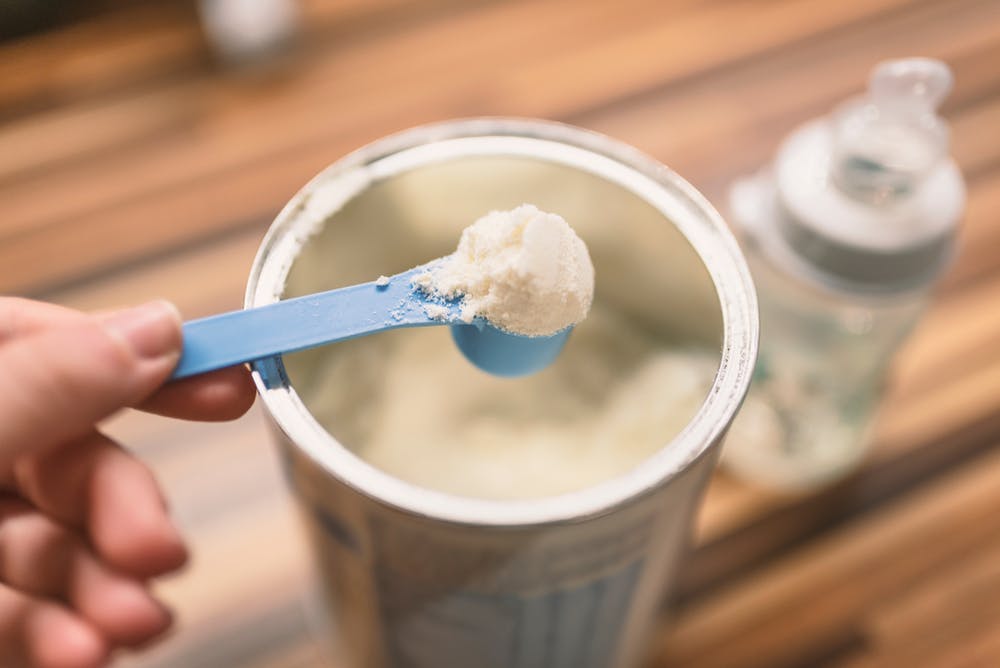
Toddler milk is marketed as appropriate for children aged one to three years. This ultra-processed food contains:
- skim milk powder (cow, soy or goat)
- vegetable oil
- sugars (including added sugars)
- emulsifiers (to help bind the ingredients and improve the texture)
added vitamins and minerals.
Toddler milk is usually lower in calcium and protein, and higher in sugar and calories than regular cow’s milk. Depending on the brand, a serve of toddler milk can contain as much sugar as a soft drink.
Even though toddler milks have added vitamins and minerals, these are found in and better absorbed from regular foods and breastmilk. Toddlers do not need the level of nutrients found in these products if they are eating a varied diet.
Global health authorities, including the World Health Organization (WHO), and Australia’s National Health and Medical Research Council, do not recommend toddler milk for healthy toddlers.
Some children with specific metabolic or dietary medical problems might need tailored alternatives to cow’s milk. However, these products generally are not toddler milks and would be a specific product prescribed by a health-care provider.
Toddler milk is also up to four to five times more expensive than regular cow’s milk. “Premium” toddler milk (the same product, with higher levels of vitamins and minerals) is more expensive.
With the cost-of-living crisis, this means families might choose to go without other essentials to afford toddler milk.
Dragana Gordic/Shutterstock
How toddler milk was invented
Toddler milk was created so infant formula companies could get around rules preventing them from advertising their infant formula.
When manufacturers claim benefits of their toddler milk, many parents assume these claimed benefits apply to infant formula (known as cross-promotion). In other words, marketing toddler milks also boosts interest in their infant formula.
Manufacturers also create brand loyalty and recognition by making the labels of their toddler milk look similar to their infant formula. For parents who used infant formula, toddler milk is positioned as the next stage in feeding.
How toddler milk became so popular
Toddler milk is heavily marketed. Parents are told toddler milk is healthy and provides extra nutrition. Marketing tells parents it will benefit their child’s growth and development, their brain function and their immune system.
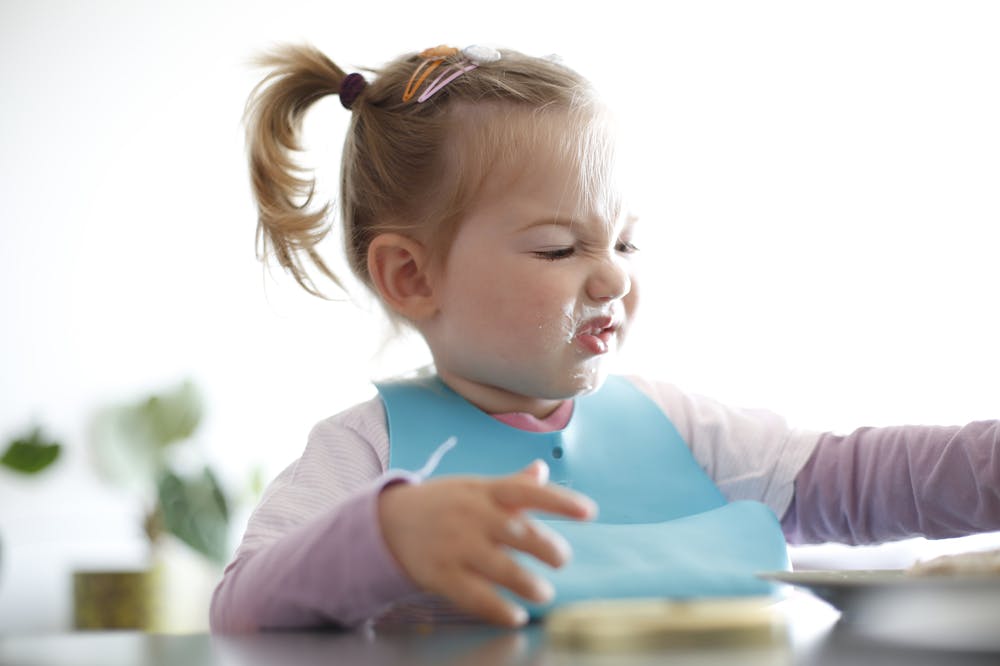
Toddler milk is also presented as a solution to fussy eating, which is common in toddlers.
However, regularly drinking toddler milk could increase the risk of fussiness as it reduces opportunities for toddlers to try new foods. It’s also sweet, needs no chewing, and essentially displaces energy and nutrients that whole foods provide.
zlikovec/Shutterstock
Growing concern
The WHO, along with public health academics, has been raising concerns about the marketing of toddler milk for years.
In Australia, moves to curb how toddler milk is promoted have gone nowhere. Toddler milk is in a category of foods that are allowed to be fortified (to have vitamins and minerals added), with no marketing restrictions. The Australian Competition & Consumer Commission also has concerns about the rise of toddler milk marketing. Despite this, there is no change in how it’s regulated.
This is in contrast to voluntary marketing restrictions in Australia for infant formula.
What needs to happen?
There is enough evidence to show the marketing of commercial milk formula, including toddler milk, influences parents and undermines child health.
So governments need to act to protect parents from this marketing, and to put child health over profits.
Public health authorities and advocates, including us, are calling for the restriction of marketing (not selling) of all formula products for infants and toddlers from birth through to age three years.
Ideally, this would be mandatory, government-enforced marketing restrictions as opposed to industry self-regulation in place currently for infant formulas.
We musn’t blame parents
Toddlers are eating more processed foods (including toddler milk) than ever because time-poor parents are seeking a convenient option to ensure their child is getting adequate nutrition.
Formula manufacturers have used this information, and created a demand for an unnecessary product.
Parents want to do the best for their toddlers, but they need to know the marketing behind toddler milks is misleading.
Toddler milk is an unnecessary, unhealthy, expensive product. Toddlers just need whole foods and breastmilk, and/or cow’s milk or a non-dairy, milk alternative.
If parents are worried about their child’s eating, they should see a health-care professional.
Anthea Rhodes, a paediatrician from Royal Children’s Hospital Melbourne and a lecturer at the University of Melbourne, co-authored this article.
Jennifer McCann, Lecturer Nutrition Sciences, Institute for Physical Activity and Nutrition, Deakin University; Karleen Gribble, Adjunct Associate Professor, School of Nursing and Midwifery, Western Sydney University, and Naomi Hull, PhD candidate, University of Sydney
This article is republished from The Conversation under a Creative Commons license. Read the original article.
Don’t Forget…
Did you arrive here from our newsletter? Don’t forget to return to the email to continue learning!

Recommended
Learn to Age Gracefully
Join the 98k+ American women taking control of their health & aging with our 100% free (and fun!) daily emails:
-
The Bare-Bones Truth About Osteoporosis
10almonds is reader-supported. We may, at no cost to you, receive a portion of sales if you purchase a product through a link in this article.
In yesterday’s issue of 10almonds, we asked you “at what age do you think it’s important to start worrying about osteoporosis?”, and here’s the spread of answers you gave us:
The Bare-bones Truth About Osteoporosis
In yesterday’s issue of 10almonds, we asked you “at what age do you think it’s important to start worrying about osteoporosis?”, and here’s the spread of answers you gave us:
At first glance it may seem shocking that a majority of respondents to a poll in a health-focused newsletter think it’ll never be an issue worth worrying about, but in fact this is partly a statistical quirk, because the vote of the strongest “early prevention” crowd was divided between “as a child” and “as a young adult”.
This poll also gave you the option to add a comment with your vote. Many subscribers chose to do so, explaining your choices… But, interestingly, not one single person who voted for “never” had any additional thoughts to add.
We loved reading your replies, by the way, and wish we had room to include them here, because they were very interesting and thought-provoking.
Let’s get to the myths and facts:
Top myth: “you will never need to worry about it; drink a glass of milk and you’ll be fine!”
The body is constantly repairing itself. Its ability to do that declines with age. Until about 35 on average, we can replace bone mineral as quickly as it is lost. After that, we lose it by up to 1% per year, and that rate climbs after 50, and climbs even more steeply for those who go through (untreated) menopause.
Losing 1% per year might not seem like a lot, but if you want to live to 100, there are some unfortunate implications!
About that menopause, by the way… Because declining estrogen levels late in life contribute significantly to osteoporosis, hormone replacement therapy (HRT) may be of value to many for the sake of bone health, never mind the more obvious and commonly-sought benefits.
On the topic of that glass of milk…
- Milk is a great source of calcium, which is useless to the body if you don’t also have good levels of vitamin D and magnesium.
- People’s vitamin D levels tend to directly correlate to the level of sun where they live, if supplementation isn’t undertaken.
- Plant-based milks are usually fortified with vitamin D (and calcium), by the way.
- Most people are deficient in magnesium, because green leafy things don’t form as big a part of most people’s diets as they should.
See also: An update on magnesium and bone health
Next most common myth: “bone health is all about calcium”
We spoke a little above about the importance of vitamin D and magnesium for being able to properly use that. But potassium is also critical:
Read more: The effects of potassium on bone health
While we’re on the topic…
People think of collagen as being for skin health. And it is important for that, but collagen’s benefits (and the negative effects of its absence) go much deeper, to include bone health. We’ve written about this before, so rather than take more space today, we’ll just drop the link:
We Are Such Stuff As Fish Are Made Of
Want to really maximize your bone health?
You might want to check out this well-sourced LiveStrong article:
Bone Health: Best and Worst Foods
(Teaser: leafy greens are in 2nd place, topped by sardines at #1—where do you think milk ranks?)
Share This Post
-
You May Have More Air Pollution In Your Home Than In The Street
10almonds is reader-supported. We may, at no cost to you, receive a portion of sales if you purchase a product through a link in this article.
Certainly, gas stoves and heaters can cause indoor air pollution, with carbon monoxide (CO) being the main risk. Even if you have a CO alarm, the level at which it will go off is usually the “this will kill you tonight if you don’t do something about it soon” level, rather than the “this will slowly kill your brain cells but you’ll keep functioning otherwise, until one day you don’t” levels of CO.
Still, do by all means have a CO alarm if you have anything in your house that can release CO!
Fun fact about those stoves:
❝Just 1 kilogram of cooking fuel emits 10 quadrillion particles smaller than 3 nanometers, which matches or exceeds what’s emitted from cars with internal combustion engines.
At that rate, you might be inhaling 10-100 times more of these sub-3 nanometer particles from cooking on a gas stove indoors than you would from car exhaust while standing on a busy street.❞
But today, we’re not here about that
Rather, we are looking at some more innocent-seeming things, such as scented cleaning products and air fresheners. Notably, the biggest problem is often not even the cleaning chemicals themselves. Of course: please don’t breathe bleach fumes, etc.
But that’s an obvious risk, and today we’re about the less obvious risks.
So… What is the less obvious risk here?
It’s the fragrances. The terpenes used to hold them react with ozone in the air, to create new nanoparticles. And, just like the nanoparticles from the stove, these can reach very high concentrations indoors, and suffice it to say, if you can smell the fragrance then you have the pollutants inside you.
You can read about how badly different products score, here:
Rapid Nucleation and Growth of Indoor Atmospheric Nanocluster Aerosol during the Use of Scented Volatile Chemical Products in Residential Buildings ← you’ll need to scroll down to the table with different cleaning products and air fresheners
Further, the seemingly-harmless scented candle is, as it turns out, quite a menace too:
❝Full-scale emission experiments were conducted in the Purdue zEDGE Test House using a variety of scented candles (n = 5) and wax warmers/melts (n = 14) under different outdoor air exchange rates (AERs). Terpene concentrations were measured in real-time using a proton transfer reaction time-of-flight mass spectrometer (PTR-TOF-MS). PTR-TOF-MS measurements revealed that scented candle and wax warmer/melt products emit a variety of monoterpenes (C10H16) and oxygen-containing monoterpenoids (C10H14O, C10H16O, C10H18O, C10H20O), with peak concentrations in the range of 10−1 to 102 ppb. Monoterpene EFs were much greater for scented wax warmers/melts (C10H16 EFs ∼ 102 mg per g wax consumed) compared to scented candles (C10H16 EFs ∼ 10−1 to 100 mg per g wax consumed). Significant emissions of reactive terpenes from both products, along with nitrogen oxides (NO, NO2) from candles, depleted indoor ozone (O3) concentrations. Terpene iFs were similar between the two products (iFs ∼ 103 ppm) and increased with decreasing outdoor AER. Terpene iFs during concentration decay periods were similar to, or greater than, iFs during active emission periods for outdoor AERs ≤ 3.0 h−1.
Overall, scented wax warmers/melts were found to release greater quantities of monoterpenes compared to other fragranced consumer products used in the home, including botanical disinfectants, hair care products, air fresheners, and scented sprays.❞
Put in fewer words: scented candles are bad, and wax melts (the kind with no flame, that one might easily expect to thus produce fewer emissions) are at least as bad if not worse, and both are even worse than cleaning products.
Some of the same research team conducted further studies, because of this this, finding:
❝We performed field measurements in a residential test house to investigate atmospheric nanoparticle formation from scented wax melt use. We employed a high-resolution particle size magnifier-scanning mobility particle sizer (PSMPS) and a proton transfer reaction time-of-flight mass spectrometer (PTR-TOF-MS) for real-time monitoring of indoor atmospheric nanoparticle size distributions and terpene mixing ratios, respectively.
Our findings reveal that terpenes released from scented wax melts react with indoor atmospheric ozone (O3) to initiate new particle formation (NPF) events, resulting in significant indoor atmospheric nanoparticle concentrations (>106 cm–3) comparable to those emitted by combustion-based scented candles, gas stoves, diesel engines, and natural gas engines.
We show that scented wax melt-initiated NPF events can result in significant respiratory exposures, with nanoparticle respiratory tract deposited dose rates similar to those determined for combustion-based sources.
Our results challenge the perception of scented wax melts as a safer alternative to combustion-based aromatherapy❞
Read in full: Flame-Free Candles Are Not Pollution-Free: Scented Wax Melts as a Significant Source of Atmospheric Nanoparticles
In short: you might want to ditch the fragranced products!
Want to do more?
Give your household hair a makeover with this multi-vector approach to deal with different risks:
What’s Lurking In Your Household Air?
For that matter, the air is a very important factor for the health of your lungs (and thus, for the health of everything that’s fed oxygen by your lungs), and there are more things we can do in that regard as well:
Seven Things To Do For Good Lung Health!
Take care!
Share This Post
-
How Mood Drugs & Sleep Problems Affect Women’s Hormones
10almonds is reader-supported. We may, at no cost to you, receive a portion of sales if you purchase a product through a link in this article.
…and other items from this week’s health news:
Sleep, drugs, and mixed messages
Most people know that irregular sleep, shift work, jet lag, and artificial light at night can disturb one’s circadian rhythm, but menstrual cycles? Yes, that too!
How this happens: it’s because the timing systems are deeply connected; the brain’s “master clock” interacts with reproductive systems, linking daily and monthly cycles. Furthermore, shorter daylight lengthens reproductive cycles, while longer daylight shortens them, showing sensitivity to seasonal changes—or anything your body might reasonably mistake for a seasonal change (given the ubiquity of bright lights these days).
The same study also found that mood stabilizers have hormonal side effects: lithium, used for bipolar disorder, can lengthen circadian rhythms and disrupt hormonal cycles.
You may be wondering: is this of any relevance to me, postmenopause? And the answer is: it depends, because if you’re on HRT, chances are your body will still adapt to a monthly cycle—even without ova to ovulate (and so forth), the hypothalamus will still regulate the metabolism of your estrogen, no matter whether that estrogen came from your ovaries or a pharmacy. However, the symptoms should be much less severe, and you shouldn’t experience bleeding after the first 6 months or so.
Read in full: How disrupted sleep and mood drugs impact women’s hormonal and mental health
Related: The Other Circadian Rhythms
Long COVID extra bad for many women
Long COVID, short end of the stick? It certainly seems so:
Researchers (Dr. Jacqueline Maybin et al.) have found that women with long COVID face higher risk of abnormal uterine bleeding, with symptoms like fatigue, headaches, and muscle pain worsening during perimenstrual and proliferative phases.
How this happens: Dr. Maybin and her team found a cluster of immune cells in the endometrium of affected women, pointing to inflammation as a likely mechanism rather than ovarian hormone disruption. Which is not too shocking, all things considered (long COVID being an ongoing systemic response to an infection long after it should have been necessary), but it’s good to know.
And, in terms of “what we know”, the science for this one is about as sure as science ever is about anything, as it came from three approaches—data from 12,187 women, a three-month clinical follow-up of women with long COVID, and an analysis of blood and endometrial samples.
Since long COVID affects 3–7% of the global population and is twice as common in women, this is pretty important—not just as trivia, but for practical reasons too; it means that menstrual cycle phases should be factored into long COVID biomarkers (something the researchers also called for in their paper).
Read in full: Study reveals bidirectional relationship between long COVID and menstrual disorders
Related: What Can Be Done About Long COVID?
A reasonable, yet unexpected, extra cancer risk
Researchers (Dr. Mariah Bilalaga et al.) found that nonadherence to cervical screenings (i.e., simply not getting it done when invited/recommended to do so by healthcare providers) went up since the pandemic—most likely a side effect of people initially consciously avoiding unnecessarily going to places where one might get infected, and then developing a new habit around same, whether or not the habit is consciously upheld or just habit now for many.
However, while COVID does continue to be risk, so is cancer, and recommendations are to go get screenings when invited/recommended all the same.
Somehow, awareness of the HPV vaccine (that helps prevent cervical cancer, because most cervical cancer is caused by that virus) also dropped, which hasn’t helped cervical cancer numbers stay under control, either:
Read in full: Nonadherence to cervical cancer screening increased after COVID-19 pandemic
Related: Everything you need to know about cervical cancer
Take care!
Share This Post
Related Posts
-
Alzheimer’s Causative Factors To Avoid
10almonds is reader-supported. We may, at no cost to you, receive a portion of sales if you purchase a product through a link in this article.
The Best Brains Bar Nun?
This is Dr. David Snowdon. He’s an epidemiologist, and one of the world’s foremost experts on Alzheimer’s disease. He was also, most famously, the lead researcher of what has become known as “The Nun Study”.
We recently reviewed his book about this study:
…which we definitely encourage you to check out, but we’ll do our best to summarize its key points today!
Reassurance up-front: no, you don’t have to become a nun
The Nun Study
In 1991, a large number (678) of nuns were recruited for what was to be (and until now, remains) the largest study of its kind into the impact of a wide variety of factors on aging, and in particular, Alzheimer’s disease.
Why it was so important: because the nuns were all from the same Order, had the same occupation (it’s a teaching Order), with very similar lifestyles, schedules, socioeconomic status, general background, access to healthcare, similar diets, same relationship status (celibate), same sex (female), and many other factors also similar, this meant that most of the confounding variables that confound other studies were already controlled-for here.
Enrollment in the study also required consenting to donating one’s brain for study post-mortem—and of those who have since died, indeed 98% of them have been donated (the other 2%, we presume, may have run into technical administrative issues with the donation process, due to the circumstances of death and/or delays in processing the donation).
How the study was undertaken
We don’t have enough space to describe the entire methodology here, but the gist of it is:
- Genetic testing for relevant genetic factors
- Data gathered about lives so far, including not just medical records but also autobiographies that the nuns wrote when they took their vows (at ages 19–21)
- Extensive ongoing personal interviews about habits, life choices, and attitudes
- Yearly evaluations including memory tests and physical function tests
- Brain donation upon death
What they found
Technically, The Nun Study is still ongoing. Of the original 678 nuns (aged 75–106), three are still alive (based on the latest report, at least).
However, lots of results have already been gained, including…
Genes
A year into the study, in 1992, the “apolipoprotein E” (APOE) gene was established as a likely causative factor in Alzheimer’s disease. This is probably not new to our readers in 2024, but there are interesting things being learned even now, for example:
The Alzheimer’s Gene That Varies By Race & Sex
…but watch out! Because also:
Alzheimer’s Sex Differences May Not Be What They Appear
Words
Based on the autobiographies written by the nuns in their youth upon taking their vows, there were two factors that were later correlated with not getting dementia:
- Longer sentences
- Positive outlook
- “Idea density”
That latter item means the relative linguistic density of ideas and complexity thereof, and the fluency and vivacity with which they were expressed (this was not a wishy-washy assessment; there was a hard-science analysis to determine numbers).
Want to spruce up yours? You might like to check out:
Reading, Better: Reading As A Cognitive Exercise
…for specific, evidence-based ways to tweak your reading to fight cognitive decline.
Food
While the dietary habits of the nuns were fairly homogenous, those who favored eating more and cooked greens, beans, and tomatoes, lived longer and with healthier brains.
See also: Brain Food? The Eyes Have It!
Other aspects of brain health & mental health
The study also found that nuns who avoided stroke and depression, were also less likely to get dementia.
For tending to these, check out:
- Two Things You Can Do To Improve Stroke Survival Chances
- Depression, And The Mental Health First-Aid That You’ll Hopefully Never Need
- Behavioral Activation Against Depression & Anxiety
Community & Faith
Obviously, in this matter the nuns were quite a homogenous group, scoring heavily in community and faith. What’s relevant here is the difference between the nuns, and other epidemiological studies in other groups (invariably not scoring so highly).
Community & faith are considered, separately and together, to be protective factors against dementia.
Faith may be something that “you have it or you don’t” (we’re a health science newsletter, not a theological publication, but for the interested, philosopher John Stuart Mill’s 1859 essay “On Liberty“ makes a good argument for it not being something one can choose, prompting him to argue for religious tolerance, on the grounds that religious coercion is a futile effort precisely because a person cannot choose to dis/believe something)
…but community can definitely be chosen, nurtured, and grown. We’ve written about this a bit before:
You might also like to check out this great book on the topic:
Purpose: Design A Community And Change Your Life – by Gina Bianchini
Want more?
We gave a ground-up primer on avoiding Alzheimer’s and other dementias; check it out:
How To Reduce Your Alzheimer’s Risk
Take care!
Don’t Forget…
Did you arrive here from our newsletter? Don’t forget to return to the email to continue learning!
Learn to Age Gracefully
Join the 98k+ American women taking control of their health & aging with our 100% free (and fun!) daily emails:
-
Morin: Your Mouth’s New Best Friend
10almonds is reader-supported. We may, at no cost to you, receive a portion of sales if you purchase a product through a link in this article.
There is a problem with most oral hygiene options, and the problem is, as Dr. Fernanda Brighenti explains:
❝We have a constant flow of saliva. We produce, on average, 1 milliliter of saliva per minute.
Anything we put in our mouths is quickly removed by saliva, especially because it has a smell and taste, which stimulates salivary flow.❞
“Anything we put in our mouths” includes oral hygiene products.
So, what to do about that?
The oral hygiene helper that sticks around
Dr. Brighenti and her team were investigating morin, a flavonoid found in guava leaves, apple peel, fig peel, teas, and almonds, for its antimicrobial, anti-inflammatory, and antioxidant properties.
See also: Are You Getting The Right Kinds Of Flavonoids?
This is relevant, as gum disease is caused by bacterial biofilm buildup, and (inconveniently) current rinses to try to deduce that often have side effects (taste changes, tartar buildup, stains), and antibiotics are definitely not an option you want unless absolutely truly necessary.
See also: Antibiotics: Useful Even Less Often Than Previously Believed (And Still Just As Dangerous) ← includes, halfway down the article, the four ways that antibiotics can kill you!
What they discovered: dried morin powder can be added to oral hygiene products—and it works. Tests on multispecies bacterial biofilm showed strong antimicrobial action, and treated biofilms appeared less stained too.
See also: Make Your Saliva Better For Your Teeth
In the study, more things were tried too: encapsulation with sodium alginate and gellan gum improved solubility, stability, and adherence in the mouth despite saliva washout, but that’s certainly not something most of us can do at home unless we happen to live in a lab—is more something we can expect to see added to commercial products in the future.
What this means: per the researchers’ conclusions, morin provides a safe, natural, inexpensive alternative to antibiotics, and can reduce the side effects of existing treatments.
While this is great news for anyone who has teeth and would like to keep them*, it’s expected to be particularly useful for people with reduced motor skills (older adults, patients with special needs), and people who are sensitive to current oral hygiene products.
*That’s not the only reason, of course; the impact goes far beyond the teeth. Remember, for example, that periodontal disease is the sixth most common chronic condition worldwide; nearly half of the global population has oral disease, and none of us are immune (and it has big implications in turn for cardiovascular disease risk).
To read the paper in full, see: Anti-inflammatory, antioxidant, and antimicrobial evaluation of morin
Want to learn more?
We did a three-part series on oral hygiene:
- Toothpastes & Mouthwashes: Which Help And Which Harm?
- Flossing, Better (And Easier!)
- Less Common Oral Hygiene Options ← this writer is personally a big fan of the miswak stick! While she wouldn’t want to replace the other options entirely, it’s a great quick-and-easy on-the-go way to give one’s teeth a quick clean after a coffee or snack or such, without having to go to a bathroom and use a toothbrush and toothpaste etc.
Take care!
Don’t Forget…
Did you arrive here from our newsletter? Don’t forget to return to the email to continue learning!
Learn to Age Gracefully
Join the 98k+ American women taking control of their health & aging with our 100% free (and fun!) daily emails:
-
How Useful Is Hydrotherapy?
10almonds is reader-supported. We may, at no cost to you, receive a portion of sales if you purchase a product through a link in this article.
Hyyyyyyydromatic…
Hydrotherapy is a very broad term, and refers to any (external) use of water as part of a physical therapy. Today we’re going to look at some of the top ways this can be beneficial—maybe you’ll know them all already, but maybe there’s something you hadn’t thought about or done decently; let’s find out!
Notwithstanding the vague nature of the umbrella term, some brave researchers have done a lot of work to bring us lots of information about what works and what doesn’t, so we’ll be using this to guide us today. For example:
Scientific Evidence-Based Effects of Hydrotherapy on Various Systems of the Body
Swimming (and similar)
An obvious one, this can for most people be a very good full-body exercise, that’s exactly as strenuous (or not) as you want/need it to be.
It can be cardio, it can be resistance, it can be endurance, it can be high-intensity interval training, it can be mobility work, it can be just support for an aching body that gets to enjoy being in the closest to zero-gravity we can get without being in freefall or in space.
See also: How To Do HIIT (Without Wrecking Your Body)
Depending on what’s available for you locally (pool with a shallow area, for example), it can also be a place to do some exercises normally performed on land, but with your weight being partially supported (and as a counterpoint, a little resistance added to movement), and no meaningful risk of falling.
Tip: check out your local facilities, to see if they offer water aerobics classes; because the water necessitates slow movement, this can look a lot like tai chi to watch, but it’s great for mobility and balance.
Water circuit therapy
This isn’t circuit training! Rather, it’s a mixture of thermo- and cryotherapy, that is to say, alternating warm and cold water immersion. This can also be interspersed with the use of a sauna, of course.
See also:
- Ice Baths: To Dip Or Not To Dip?
- Saunas: Health Benefits (& Caveats)
- The Stress Prescription (Against Aging!)
this last one is about thermal shock-mediated hormesis, which sounds drastic, but it’s what we’re doing here with the hot and cold, and it’s good for most people!
Pain relief
Most of the research for this has to do with childbirth pain rather than, for example, back pain, but the science is promising:
Post-exercise recovery
It can be tempting to sink into a hot bath, or at least enjoy a good hot shower, after strenuous exercise. But does it help recovery too? The answer is probably yes:
Effect of hot water immersion on acute physiological responses following resistance exercise
For more on that (and other means of improving post-exercise recovery), check out our previous main feature:
How To Speed Up Recovery After A Workout (According To Actual Science)
Take care!
Don’t Forget…
Did you arrive here from our newsletter? Don’t forget to return to the email to continue learning!
Learn to Age Gracefully
Join the 98k+ American women taking control of their health & aging with our 100% free (and fun!) daily emails:


