
We have drugs to manage HIV. So why are we spending millions looking for cures?
10almonds is reader-supported. We may, at no cost to you, receive a portion of sales if you purchase a product through a link in this article.
Over the past three decades there have been amazing advances in treating and preventing HIV.
It’s now a manageable infection. A person with HIV who takes HIV medicine consistently, before their immune system declines, can expect to live almost as long as someone without HIV.
The same drugs prevent transmission of the virus to sexual partners.
There is still no effective HIV vaccine. But there are highly effective drugs to prevent HIV infection for people without HIV who are at higher risk of acquiring it.
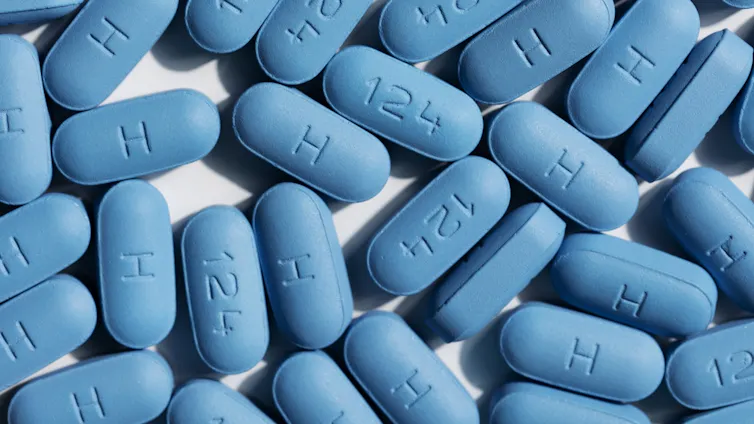
These drugs are known as as “pre-exposure prophylaxis” or PrEP. These come as a pill, which needs to be taken either daily, or “on demand” before and after risky sex. An injection that protects against HIV for six months has recently been approved in the United States.
So with such effective HIV treatment and PrEP, why are we still spending millions looking for HIV cures?
Not everyone has access to these drugs
Access to HIV drugs and PrEP depends on the availability of health clinics, health professionals, and the means to supply and distribute the drugs. In some countries, this infrastructure may not be secure.
For instance, earlier this year, US President Donald Trump’s dissolution of the USAID foreign aid program has threatened the delivery of HIV drugs to many low-income countries.
This demonstrates the fragility of current approaches to treatment and prevention. A secure, uninterrupted supply of HIV medicine is required, and without this, lives will be lost and the number of new cases of HIV will rise.
Another example is the six-monthly PrEP injection just approved in the US. This drug has great potential for controlling HIV if it is made available and affordable in countries with the greatest HIV burden.
But the prospect for lower-income countries accessing this expensive drug looks uncertain, even if it can be made at a fraction of its current cost, as some researchers say.
So despite the success of HIV drugs and PrEP, precarious health-care systems and high drug costs mean we can’t rely on them to bring an end to the ongoing global HIV pandemic. That’s why we also still need to look at other options.
Haven’t people already been ‘cured’?
Worldwide, at least seven people have been “cured” of HIV – or at least have had long-term sustained remission. This means that after stopping HIV drugs, they did not have any replicating HIV in their blood for months or years.
In each case, the person with HIV also had a life-threatening cancer needing a bone marrow transplant. They were each matched with a donor who had a specific genetic variation that resulted in not having HIV receptors in key bone marrow cells.
After the bone marrow transplant, recipients stopped HIV drugs, without detectable levels of the virus returning. The new immune cells made in the transplanted bone marrow lacked the HIV receptors. This stopped the virus from infecting cells and replicating.
But this genetic variation is very rare. Bone marrow transplantation is also risky and extremely resource-intensive. So while this strategy has worked for a few people, it is not a scalable prospect for curing HIV more widely.
So we need to keep looking for other options for a cure, including basic laboratory research to get us there.
How about the ‘breakthrough’ I’ve heard about?
HIV treatment stops the HIV replication that causes immune damage. But there are places in the body where the virus “hides” and drugs cannot reach. If the drugs are stopped, the “latent” HIV comes out of hiding and replicates again. So it can damage the immune system, leading to HIV-related disease.
One approach is to try to force the hidden or latent HIV out into the open, so drugs can target it. This is a strategy called “shock and kill”. And an example of such Australian research was recently reported in the media as a “breakthrough” in the search for an HIV cure.
Researchers in Melbourne have developed a lipid nanoparticle – a tiny ball of fat – that encapsulates messenger RNA (or mRNA) and delivers a “message” to infected white blood cells. This prompts the cells to reveal the “hiding” HIV.
In theory, this will allow the immune system or HIV drugs to target the virus.
This discovery is an important step. However, it is still in the laboratory phase of testing, and is just one piece of the puzzle.
We could say the same about many other results heralded as moving closer to a cure for HIV.
Further research on safety and efficacy is needed before testing in human clinical trials. Such trials start with small numbers and the trialling process takes many years. This and other steps towards a cure are slow and expensive, but necessary.
Importantly, any cure would ultimately need to be fairly low-tech to deliver for it to be feasible and affordable in low-income countries globally.
So where does that leave us?
A cure for HIV that is affordable and scalable would have a profound impact on human heath globally, particularly for people living with HIV. To get there is a long and arduous path that involves solving a range of scientific puzzles, followed by addressing implementation challenges.
In the meantime, ensuring people at risk of HIV have access to testing and prevention interventions – such as PrEP and safe injecting equipment – remains crucial. People living with HIV also need sustained access to effective treatment – regardless of where they live.
Bridget Haire, Associate Professor, Public Health Ethics, School of Population Health, UNSW Sydney and Benjamin Bavinton, Associate Professor, The Kirby Institute, UNSW Sydney
This article is republished from The Conversation under a Creative Commons license. Read the original article.
Don’t Forget…
Did you arrive here from our newsletter? Don’t forget to return to the email to continue learning!
Recommended
Learn to Age Gracefully
Join the 98k+ American women taking control of their health & aging with our 100% free (and fun!) daily emails:
-
Is it OK to lie to someone with dementia?
10almonds is reader-supported. We may, at no cost to you, receive a portion of sales if you purchase a product through a link in this article.
There was disagreement on social media recently after a story was published about an aged care provider creating “fake-away” burgers that mimicked those from a fast-food chain, to a resident living with dementia. The man had such strict food preferences he was refusing to eat anything at meals except a burger from the franchise. This dementia symptom risks malnutrition and social isolation.
But critics of the fake burger approach labelled it trickery and deception of a vulnerable person with cognitive impairment.
Dementia is an illness that progressively robs us of memories. Although it has many forms, it is typical for short-term recall – the memory of something that happened in recent hours or days – to be lost first. As the illness progresses, people may come to increasingly “live in the past”, as distant recall gradually becomes the only memories accessible to the person. So a person in the middle or later stages of the disease may relate to the world as it once was, not how it is today.
This can make ethical care very challenging.
Pikselstock/Shutterstock Is it wrong to lie?
Ethical approaches classically hold that specific actions are moral certainties, regardless of the consequences. In line with this moral absolutism, it is always wrong to lie.
But this ethical approach would require an elderly woman with dementia who continually approaches care staff looking for their long-deceased spouse to be informed their husband has passed – the objective truth.
Distress is the likely outcome, possibly accompanied by behavioural disturbance that could endanger the person or others. The person’s memory has regressed to a point earlier in their life, when their partner was still alive. To inform such a person of the death of their spouse, however gently, is to traumatise them.
And with the memory of what they have just been told likely to quickly fade, and the questioning may resume soon after. If the truth is offered again, the cycle of re-traumatisation continues.
People with dementia may lose short term memories and rely on the past for a sense of the world. Bonsales/Shutterstock A different approach
Most laws are examples of absolutist ethics. One must obey the law at all times. Driving above the speed limit is likely to result in punishment regardless of whether one is in a hurry to pick their child up from kindergarten or not.
Pragmatic ethics rejects the notion certain acts are always morally right or wrong. Instead, acts are evaluated in terms of their “usefulness” and social benefit, humanity, compassion or intent.
The Aged Care Act is a set of laws intended to guide the actions of aged care providers. It says, for example, psychotropic drugs (medications that affect mind and mood) should be the “last resort” in managing the behaviours and psychological symptoms of dementia.
Instead, “best practice” involves preventing behaviour before it occurs. If one can reasonably foresee a caregiver action is likely to result in behavioural disturbance, it flies in the face of best practice.
What to say when you can’t avoid a lie?
What then, becomes the best response when approached by the lady looking for her husband?
Gentle inquiries may help uncover an underlying emotional need, and point caregivers in the right direction to meet that need. Perhaps she is feeling lonely or anxious and has become focused on her husband’s whereabouts? A skilled caregiver might tailor their response, connect with her, perhaps reminisce, and providing a sense of comfort in the process.
This approach aligns with Dementia Australia guidance that carers or loved ones can use four prompts in such scenarios:
- acknowledge concern (“I can tell you’d like him to be here.”)
- suggest an alternative (“He can’t visit right now.”)
- provide reassurance (“I’m here and lots of people care about you.”)
- redirect focus (“Perhaps a walk outside or a cup of tea?”)
These things may or may not work. So, in the face of repeated questions and escalating distress, a mistruth, such as “Don’t worry, he’ll be back soon,” may be the most humane response in the circumstances.
Different realities
It is often said you can never win an argument with a person living with dementia. A lot of time, different realities are being discussed.
So, providing someone who has dementia with a “pretend” burger may well satisfy their preferences, bring joy, mitigate the risk of malnutrition, improve social engagement, and prevent a behavioural disturbance without the use of medication. This seems like the correct approach in ethical terms. On occasion, the end justifies the means.
Steve Macfarlane, Head of Clinical Services, Dementia Support Australia, & Associate Professor of Psychiatry, Monash University
This article is republished from The Conversation under a Creative Commons license. Read the original article.
Share This Post
-
Bamboo Shoots vs Cauliflower – Which is Healthier?
10almonds is reader-supported. We may, at no cost to you, receive a portion of sales if you purchase a product through a link in this article.
Our Verdict
When comparing bamboo shoots to cauliflower, we picked the bamboo.
Why?
Both are great! But…
In terms of macros, bamboo has slightly more fiber, carbs, and protein, giving it a slender first-round victory.
In the category of vitamins, bamboo has more of vitamins A, B1, B2, B3, B6, and E, while cauliflower has more of vitamins B5, B9, C, and K, yielding a modest but clear 6:4 win to bamboo here.
Looking at minerals, bamboo has more copper, iron, manganese, phosphorus, potassium, selenium, and zinc, while cauliflower has more calcium and magnesium, so it’s a 7:2 win for bamboo here.
In other considerations, cauliflower is a good source of sulforaphane, so that’s a point in its favor.
Still, adding up the sections makes for a clear overall win for bamboo, but by all means do enjoy either or both, as diversity is best!
Want to learn more?
You might like:
- Don’t Be Bamboozled By Bamboo! ← including how to eat bamboo, for those unfamiliar with such, as we have been asked about it 🙂
- Broccoli Sprouts & Sulforaphane ← this article talks mostly about broccoli sprouts rather than cauliflower sprouts, but sprouts of any cultivar of Brassica oleracea (e.g. Brussels sprouts, broccoli, cauliflower, cabbage, kale, etc) are great for sulforaphane
Enjoy!
Share This Post
-
Morin: Your Mouth’s New Best Friend
10almonds is reader-supported. We may, at no cost to you, receive a portion of sales if you purchase a product through a link in this article.
There is a problem with most oral hygiene options, and the problem is, as Dr. Fernanda Brighenti explains:
❝We have a constant flow of saliva. We produce, on average, 1 milliliter of saliva per minute.
Anything we put in our mouths is quickly removed by saliva, especially because it has a smell and taste, which stimulates salivary flow.❞
“Anything we put in our mouths” includes oral hygiene products.
So, what to do about that?
The oral hygiene helper that sticks around
Dr. Brighenti and her team were investigating morin, a flavonoid found in guava leaves, apple peel, fig peel, teas, and almonds, for its antimicrobial, anti-inflammatory, and antioxidant properties.
See also: Are You Getting The Right Kinds Of Flavonoids?
This is relevant, as gum disease is caused by bacterial biofilm buildup, and (inconveniently) current rinses to try to deduce that often have side effects (taste changes, tartar buildup, stains), and antibiotics are definitely not an option you want unless absolutely truly necessary.
See also: Antibiotics: Useful Even Less Often Than Previously Believed (And Still Just As Dangerous) ← includes, halfway down the article, the four ways that antibiotics can kill you!
What they discovered: dried morin powder can be added to oral hygiene products—and it works. Tests on multispecies bacterial biofilm showed strong antimicrobial action, and treated biofilms appeared less stained too.
See also: Make Your Saliva Better For Your Teeth
In the study, more things were tried too: encapsulation with sodium alginate and gellan gum improved solubility, stability, and adherence in the mouth despite saliva washout, but that’s certainly not something most of us can do at home unless we happen to live in a lab—is more something we can expect to see added to commercial products in the future.
What this means: per the researchers’ conclusions, morin provides a safe, natural, inexpensive alternative to antibiotics, and can reduce the side effects of existing treatments.
While this is great news for anyone who has teeth and would like to keep them*, it’s expected to be particularly useful for people with reduced motor skills (older adults, patients with special needs), and people who are sensitive to current oral hygiene products.
*That’s not the only reason, of course; the impact goes far beyond the teeth. Remember, for example, that periodontal disease is the sixth most common chronic condition worldwide; nearly half of the global population has oral disease, and none of us are immune (and it has big implications in turn for cardiovascular disease risk).
To read the paper in full, see: Anti-inflammatory, antioxidant, and antimicrobial evaluation of morin
Want to learn more?
We did a three-part series on oral hygiene:
- Toothpastes & Mouthwashes: Which Help And Which Harm?
- Flossing, Better (And Easier!)
- Less Common Oral Hygiene Options ← this writer is personally a big fan of the miswak stick! While she wouldn’t want to replace the other options entirely, it’s a great quick-and-easy on-the-go way to give one’s teeth a quick clean after a coffee or snack or such, without having to go to a bathroom and use a toothbrush and toothpaste etc.
Take care!
Share This Post
Related Posts
-
This Is Your Brain on Music – by Dr. Daniel Levitin
10almonds is reader-supported. We may, at no cost to you, receive a portion of sales if you purchase a product through a link in this article.
Music has sometimes been touted as having cognitive benefits, by its practice and even by the passive experience of it. But what’s the actual science of it?
Dr. Levitin, an accomplished musician and neuroscientist, explores and explains.
We learn about how music in all likelihood allowed our ancestors to develop speech, something that set us apart (and ahead!) as a species. How music was naturally-selected-for in accordance with its relationship with health. How processing music involves almost every part of the brain. How music pertains specifically to memory. And more.
As a bonus, as well as explaining a lot about our brain, this book offers those of us with limited knowledge of music theory a valuable overview of the seven main dimensions of music, too.
Bottom line: if you’d like to know more about the many-faceted relationship between music and cognitive function, this is a top-tier book about such.
Click here to check out “This Is Your Brain On Music”, and learn more about yours!
Don’t Forget…
Did you arrive here from our newsletter? Don’t forget to return to the email to continue learning!
Learn to Age Gracefully
Join the 98k+ American women taking control of their health & aging with our 100% free (and fun!) daily emails:
-
Anti-Inflammatory Diet 101 (What to Eat to Fight Inflammation)
10almonds is reader-supported. We may, at no cost to you, receive a portion of sales if you purchase a product through a link in this article.
Chronic inflammation is a cause and/or exacerbating factor in very many diseases. Arthritis, diabetes, and heart disease are probably top of the list, but there are lots more where they came from. And, it’s good to avoid those things. So, how to eat to avoid inflammation?
Let food be thy medicine
The key things to keep in mind, the “guiding principles” are to prioritize whole, minimally-processed foods, and enjoy foods with plenty of antioxidants. Getting a healthy balance of omega fatty acids is also important, which for most people means getting more omega-3 and less omega-6.
Shopping list (foods to prioritize) includes:
- fruits and vegetables in a variety of colors (e.g. berries, leafy greens, beats)
- whole grains, going for the most fiber-rich options (e.g. quinoa, brown rice, oats)
- healthy fats (e.g. avocados, nuts, seeds)
- fatty fish (e.g. salmon, mackerel, sardines) ← don’t worry about this if you’re vegetarian/vegan though, as the previous category can already cover it
- herbs and spices (e.g. turmeric, garlic, ginger)
Noping list (foods to avoid) includes:
- refined carbohydrates
- highly processed and/or fried foods
- red meats and/or processed meats (yes, that does mean that organic grass-fed farmers’ pinky-promise-certified holistically-raised beef is also off the menu)
- dairy products, especially if unfermented
For more information on each of these, plus advice on transitioning away from an inflammatory diet, enjoy:
Click Here If The Embedded Video Doesn’t Load Automatically!
Want to learn more?
You might also like to read:
How to Prevent (or Reduce) Inflammation
Take care!
Don’t Forget…
Did you arrive here from our newsletter? Don’t forget to return to the email to continue learning!
Learn to Age Gracefully
Join the 98k+ American women taking control of their health & aging with our 100% free (and fun!) daily emails:
-
Functional Exercise For Seniors – by James Atkinson
10almonds is reader-supported. We may, at no cost to you, receive a portion of sales if you purchase a product through a link in this article.
A lot of exercises books are tailored to 20-year-old athletes training for their first Tough Mudder. Others, that the only thing standing between us and a perfect Retroflex Countersupine Divine Pretzel position is a professionally-lit Instagrammable photo.
This one’s not like that.
But! Nor does it think being over a certain age is a reason to not have genuinely robust health, of the kind that may make some younger people envious. So, it lays out, in progressive format, guidelines for exercises targeted at everything we need to build and maintain as we get older.
The writing style is clear, and the illustrations too (the cover art is the same style as the illustrations inside).
Bottom line: if you’re looking for a workout guide that understands you are nearer 80 than 18, and/but also doesn’t assume your age limits your exercise potential to “wrist exercises in chair”, then this book is a fine pick.
Don’t Forget…
Did you arrive here from our newsletter? Don’t forget to return to the email to continue learning!
Learn to Age Gracefully
Join the 98k+ American women taking control of their health & aging with our 100% free (and fun!) daily emails:


