The Traditional African Diet That Reduces Chronic Disease In 2 Weeks

10almonds is reader-supported. We may, at no cost to you, receive a portion of sales if you purchase a product through a link in this article.

Generally speaking, the world’s go-to gold standard diet for good health is the Mediterranean Diet.

You can read about it here: The Mediterranean Diet: What Is It Good For?

As well as: Four Ways To Upgrade The Mediterranean Diet ← for specific tweaks to focus on certain areas of health in particular

However, it’s far from being the only healthy way of eating; indeed, there are many options to choose from. Granted, not all of the options are good (some popular diets are frankly ruinous to the health), but a good number of them are, especially if you have a particular health goal in mind.

For example: Which Diet? Top Diets Ranked By Experts

Today, we’ll be looking at a traditional dietary approach from Tanzania!

The study

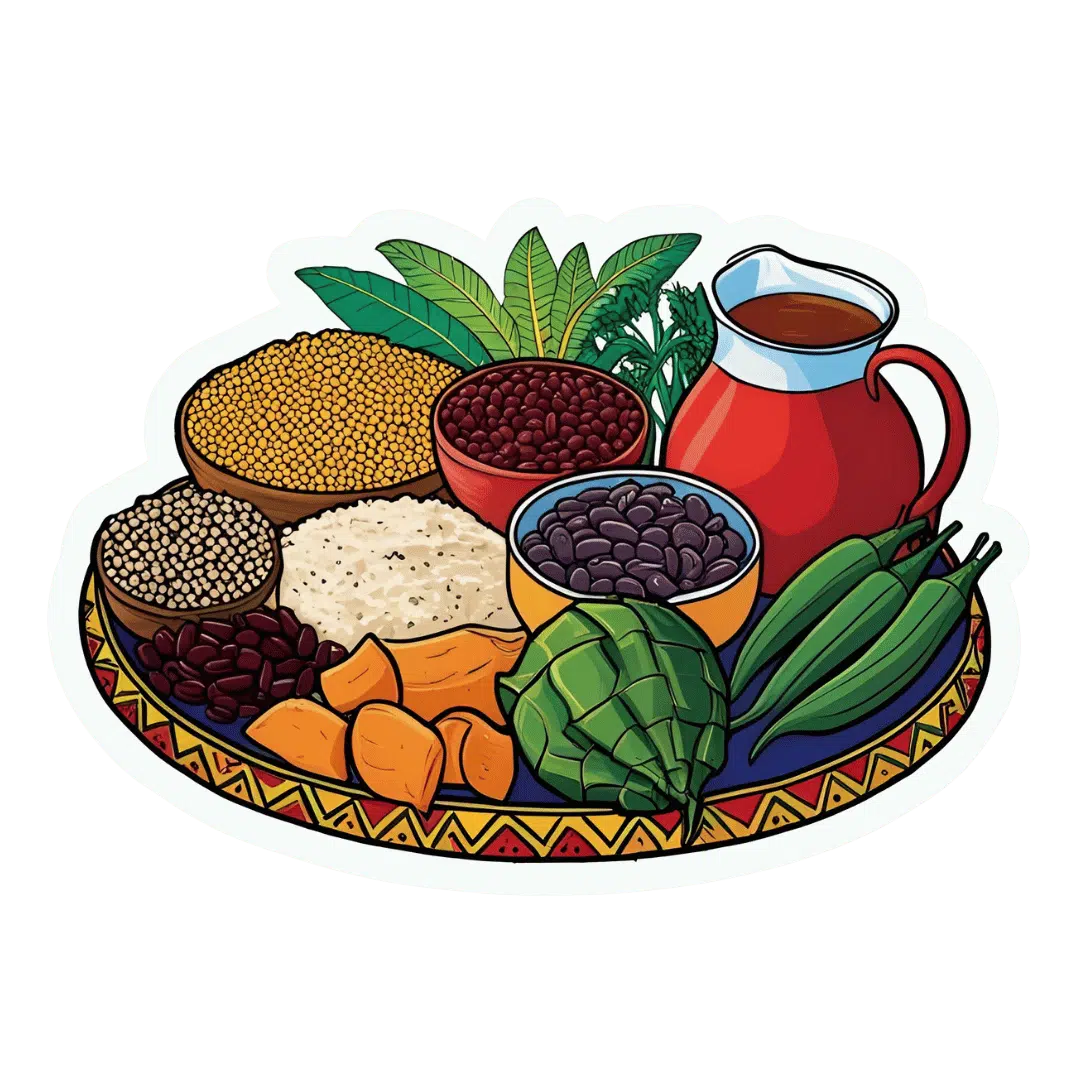
The medium-sized (n=77, so not huge, but certainly statistically significant) study involved healthy Tanzanians from rural and urban areas, comparing traditional diets (including ugali, mchicha, kibiru, and mbege*) with Western diets, by switching these around in groups.

What they found:

  • Switching to a Western diet raised inflammatory proteins and weakened infection defense
  • Switching to a traditional diet reduced inflammatory biomarkers and symptoms of inflammation
  • Some health impacts (from both sides) persisted even four weeks after diet changes, showing lasting effects.

*You may be wondering what these things are, so…

  • Ugali is a kind of thick porridge
  • Mchicha is a traditional vegetable dish made with okra and greens
  • Kibiru is boiled green plantain with kidney beans
  • Mbege is a fermented millet and banana-based drink

A special note about mbege: mbege is considered a kind of beer, but its alcohol content is usually very low, more like Eastern European kvass. In terms of culinary experience when drinking it, however, it’s very different from kvass, and is more like a Desi lassi, making it a great accompaniment to spicy food, if you’re so inclined.

You can read the paper in its entirety here (there’s a lot more detail than we can include here):

Immune and metabolic effects of African heritage diets versus Western diets in men: a randomized controlled trial

Want more African inspiration?

This one’s from the other side of Africa (Ghana, to be precise, and from the south of Ghana, to be even more precise, because as with most countries, different parts of the country have different regional variations when it comes to cooking) but is well-worth checking out:

Ghanaian Red Bean & Sweet Potato Groundnut Stew

Enjoy!

Don’t Forget…

Did you arrive here from our newsletter? Don’t forget to return to the email to continue learning!

  • Stop Doing Sit-Ups After 60 (Do This Instead)
    Will Harlow, the over-50s specialist physio, shows us how: Deep core The main idea here is that sit-ups are a poor choice for people over 60 because they repeatedly flex your spine and mainly train the rectus abdominis, rather than the deeper muscles that stabilize and protect your spine. First, try some core activation: gently…

Learn to Age Gracefully

Join the 98k+ American women taking control of their health & aging with our 100% free (and fun!) daily emails:

  • Nectarine vs Plum – Which is Healthier?

    10almonds is reader-supported. We may, at no cost to you, receive a portion of sales if you purchase a product through a link in this article.

    Our Verdict

    When comparing nectarines to plums, we picked the nectarines.

    Why?

    Both are great! But nectarines come out better on balance:

    In terms of macros, nectarines have slightly more fiber while plums have slightly more carbs, resulting of course in a lower glycemic index. Plums do have a low GI also; just, nectarines have it better, so that’s a modest first-round win for nectarines.

    When it comes to vitamins, nectarines have more of vitamins B1, B2, B3, B5, and E, while plums have more of vitamins B6, C, and K; the two fruits are equal in other vitamins, so that’s a 5:3 win for nectarines.

    Looking at minerals, nectarines have more copper, iron, magnesium, manganese, phosphorus, potassium, and zinc, while plums are not higher in any mineral. They’re great too, and not far behind nectarines! But nectarines just marginally beat them for each of those 7 minerals we mentioned, so they claim a third win a row here.

    In other considerations, both are great sources of polyphenols, and/but plums have more, so that’s a point in plums’ favor.

    Adding up the sections makes for a clear overall win for nectarines, but by all means enjoy either or both, as diversity is good!

    Want to learn more?

    You might like:

    Top 8 Fruits That Prevent & Kill Cancer

    Enjoy!

    Share This Post

  • Eat Your Age – by Dr. Ian Smith

    10almonds is reader-supported. We may, at no cost to you, receive a portion of sales if you purchase a product through a link in this article.

    We previously reviewed Dr. Smith’s book about intermittent fasting, “Fast Burn”, and today it’s a less common topic, for while many people have written books about intermittent fasting, how many have written a decade-by-decade guide to optimal nutrition for each each age-range?

    And that’s what he does here. With an eating plan for each age range (with recipes!), he explores what’s most important for our bodies in each decade. Of course, what is good or bad for us at one age will probably continue to be good or bad for us at another, but the truth is that we can do well to adjust what we’re eating to our changing bodies, and optimize what we can optimize, to give our body a boost (or a rest) in the ways it actually needs as we go.

    It’s not all about nutrition (although that is definitely the “main course”); he also covers exercises at different ages, medical tests at different ages, and so forth.

    The style is quite accessible pop-science, maybe even slightly lighter than 10almonds’ style (i.e. slightly fewer big words, etc), and/but still with frequent references to the hard science for those who do want to delve further.

    Bottom line: if you’ve been wondering how to optimize what you’re eating for your changing body, this book can be a very handy guide!

    Click here to check out Eat Your Age, and indeed eat for the best health at every age!

    Share This Post

  • High Histamine Foods To Avoid (And Low Histamine Foods To Eat Instead)

    10almonds is reader-supported. We may, at no cost to you, receive a portion of sales if you purchase a product through a link in this article.

    Nour Zibdeh is an Integrative and Functional Dietician, and she helps people overcome food intolerances. Today, it’s about getting rid of the underdiagnosed condition that is histamine intolerance, by first eliminating the triggers, and then not getting stuck on the low-histamine diet

    The recommendations

    High histamine foods to avoid include:

    • Alcohol (all types)
    • Fermented foods—normally great for the gut, but bad in this case
    • That includes most cheeses and yogurts
    • Aged, cured, or otherwise preserved meat
    • Some plants, e.g. tomato, spinach, eggplant, banana, avocado. Again, normally all great, but not in this case.

    Low histamine foods to eat include:

    • Fruits and vegetables not mentioned above
    • Minimally processed meat and fish, either fresh from the butcher/fishmonger, or frozen (not from the chilled food section of the supermarket), and eaten the same day they were purchased or defrosted, because otherwise histamine builds up over time (and quite quickly)
    • Grains, but she recommends skipping gluten, given the high likelihood of a comorbid gluten intolerance. So instead she recommends for example quinoa, oats, rice, buckwheat, millet, etc.

    For more about these (and more examples), as well as how to then phase safely off the low histamine diet, enjoy:

    Click Here If The Embedded Video Doesn’t Load Automatically!

    Further reading

    Food intolerances often gang up on a person (i.e., comorbidity is high), so you might also like to read about:

    Take care!

    Share This Post

  • Identically Different – by Dr. Tim Spector

    10almonds is reader-supported. We may, at no cost to you, receive a portion of sales if you purchase a product through a link in this article.

    Dr. Tim Spector, of Spoon Fed and Food For Life fame, this time focuses on the useful science of epigenetics, by which our genes are not nearly so immutable as most people think they are.

    Not only can gene expression be changed in the short-term (after all, genes are only if-then instructions, which can be readily modulated by hormones and to a lesser extent diet and other factors), but also in the long-term, so lastingly as to be passed on to the next generation.

    We say “useful”, because it means that a lot of health risks can be lowered, and healthy longevity increased, by tweaking things here and there.

    It’s not all useful though—this book also meanders ill-sourcedly through the history of Nazi race science, eugenics, and such. Dr. Spector has noticeably less expertise when it comes to history, compared to his own field (medicine, genetic epidemiology, nutrition).

    The modern science is much better-sourced, however, and relevant advice on a chapter-by-chapter basis is sound where it appears.

    The style is very readable pop-science, and when he sticks to his field, it’s very well done.

    Bottom line: if you’d like to understand more about epigenetics and what it means for you in your life in practical terms, this book can shine some light on that.

    Click here to check out Identically Different, and change your genes!

    Don’t Forget…

    Did you arrive here from our newsletter? Don’t forget to return to the email to continue learning!

    Learn to Age Gracefully

    Join the 98k+ American women taking control of their health & aging with our 100% free (and fun!) daily emails:

  • Cooling Bulgarian Tarator

    10almonds is reader-supported. We may, at no cost to you, receive a portion of sales if you purchase a product through a link in this article.

    The “Bulgarian” qualifier is important here because the name “tarator” is used to refer to several different dishes from nearby-ish countries, and they aren’t the same. Today’s dish (a very healthy and deliciously cooling cucumber soup) isn’t well-known outside of Bulgaria, but it should be, and with your help we can share it around the world. It’s super-easy and takes only about 10 minutes to prepare:

    You will need

    • 1 large cucumber, cut into small (¼” x ¼”) cubes or small (1″ x ⅛”) batons (the size is important; any smaller and we lose texture; any larger and we lose the balance of the soup, and also make it very different to eat with a spoon)
    • 2 cups plain unsweetened yogurt (your preference what kind; live-cultured of some kind is best, and yes, vegan is fine too)
    • 1½ cup water, chilled but not icy (fridge-temperature is great)
    • ½ cup chopped walnuts (substitutions are not advised; omit if allergic)
    • ½ bulb garlic, minced
    • 3 tbsp fresh dill, chopped
    • 2 tbsp extra virgin olive oil
    • 1 tsp black pepper, coarse ground
    • ½ tsp MSG* or 1 tsp low-sodium salt

    Method

    (we suggest you read everything at least once before doing anything)

    1) Mix the cucumber, garlic, 2 tbsp of the dill, oil, MSG-or-salt and pepper in a big bowl

    2) Add the yogurt and mix it in too

    3) Add the cold water slowly and stir thoroughly; it may take a minute to achieve smooth consistency of the liquid—it should be creamy but thin, and definitely shouldn’t stand up by itself

    4) Top with the chopped nuts, and the other tbsp of dill as a garnish

    5) Serve immediately, or chill in the fridge until ready to serve. It’s perfect as a breakfast or a light lunch, by the way.

    Enjoy!

    Want to learn more?

    For those interested in some of the science of what we have going on today:

    Take care!

    Don’t Forget…

    Did you arrive here from our newsletter? Don’t forget to return to the email to continue learning!

    Learn to Age Gracefully

    Join the 98k+ American women taking control of their health & aging with our 100% free (and fun!) daily emails:

  • Eat Your Vitamins – by Mascha Davis, RDN

    10almonds is reader-supported. We may, at no cost to you, receive a portion of sales if you purchase a product through a link in this article.

    This book methodically discusses an assortment of vitamins, minerals, and other nutrients; the “other nutrients” category including amino acids (branched chain and essential), prebiotics and probiotics, and triglycerides of various kinds.

    It makes the argument that we are better off getting these things from nature than from supplements, and in the category of criticism, it doesn’t make that argument very well. The truth is that yes, bioavailability of many nutrients is higher from food, the author is a little selective in problem recognition—for example, criticizing supplements as sometimes being contaminated with heavy metals, right after recommending fish (famously a rich source of heavy metals, along with actual nutrients).

    In a similar vein, she does not pay a lot of attention to downsides of certain foods, so for example we will see her recommending beef as a source of many nutrients—which it is! It’s just also a top risk factor for heart disease, cancer, diabetes, and more. But, the author is a registered dietician-nutritionist and not a cardiologist, oncologist, epidemiologist, etc, and it shows.

    On the other hand, a strength of this book is that it does elucidate what the various nutrients are and what they actually do, which conveys a level of understanding that very many people don’t otherwise have (your average person in the street is unlikely to be able to say what vitamin B3 actually does, for example).

    The style is straightforward and clear, making this book an easy quick reference source, as well as being readable cover-to-cover if you so desire.

    Bottom line: if you’d like to know more about the nutrients we humans need, this is a great book! Just watch out for the downsides of some foods though, as the author can be a bit overly generous in her recommendations.

    Click here to check out Eat Your Vitamins, and indeed eat your vitamins!

    Don’t Forget…

    Did you arrive here from our newsletter? Don’t forget to return to the email to continue learning!

    Learn to Age Gracefully

    Join the 98k+ American women taking control of their health & aging with our 100% free (and fun!) daily emails: