

“Recovery is possible when we replace judgment with compassion”: How this mother turned pain into service for others
10almonds is reader-supported. We may, at no cost to you, receive a portion of sales if you purchase a product through a link in this article.
This is the second installment in a series about Pennsylvanians in recovery from substance use disorder and how stigma affected their recovery. The series is a collaboration between Public Good News, Centro Integral de la Mujer Madre Tierra, and Life Unites Us. If you’d like to share your story, contact us at mailto:[email protected].
[Editor’s note: The contents of this interview have been edited for length and clarity. This interview was originally conducted in Spanish.]
Carmen Albrecht, 58
Outreach bilingual coordinator at Peace and Harmony House in Berks County
Reading, Pennsylvania
I am a mother of five children. I have 22 grandchildren, six great-grandchildren, and I have been married for 16 years. I came to the United States from Puerto Rico in 1979, when my parents separated. My father struggled a lot with alcohol and was abusive toward my mother.
I stayed in the United States with my father, and during that time, I decided to start a family at a very young age. By the age of 21, I already had five children. Very shortly after having my children, I was introduced to cocaine. Less than a year later, I was completely addicted.
By 1996, I had lost my five children to social services because I had become consumed by my addiction.
It controlled me completely—not only mentally, but also physically and emotionally. It numbed so much of the sadness, pain, and loneliness I had back then as a single mother.
There were many times I tried to leave it behind because people wanted me to change so I could get my children back and move forward. I was a young person, only 27 years old. With addiction, I didn’t just lose my dignity—I lost my pride and my faith.
There were many blows along the way because my own people looked at me differently and no one respected me anymore. The stigma crushed me completely, and I kept going with that pain.
I was treated badly. People called me “drug addict,” “dirty,” and told me I was worthless. They said, “They took your children away because you deserved it,” and, “Your family will never accept you like that.” There was a time in 2002 when I sought help, and my children were returned to me—but about a year and a half later, or less, I lost them again.
This is something I wrote:
“During the struggle with addiction for more than 10 years, one of the deepest wounds did not come only from the drugs, but from the stigma that surrounded me. People who called me an ‘addict’ looked at me with contempt, as if I were less than human. Over time, those words began to feel like the truth. I felt useless. I felt worthless, convinced that this was the only future waiting for me. Stigma doesn’t just hurt—it completely crushes you. It makes you believe you don’t deserve help. It makes you hide from people, hide like a worm all tangled up, making you think there is no way out. And when you are already at your lowest point, that judgment can push you even deeper—and it does. It wasn’t until I went through many jails and institutions that I was able to slow down enough to see what I could do and realize that there was hope for me. There, I received structure and support and the opportunity to begin to rebuild myself.”
When I left prison, I had already met someone—and that person did not judge me for who I was. That person supported me. I remember thinking, “That can’t be real because nobody loves me.” But he was the only one who stayed there, standing strong with me. That’s how my recovery began.
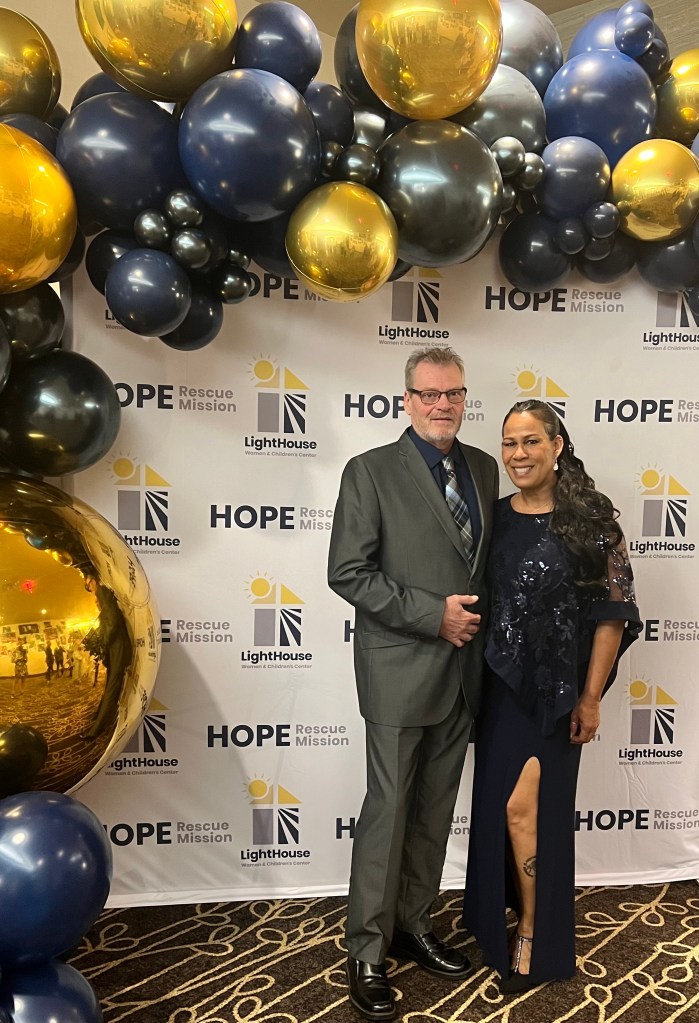
I had to go to court, see the judge, report to parole, deal with social services, take care of my mental health, keep a job, and maintain a home—and for me, that was overwhelming. But with the support of the person who is now my husband, and the support of the job I had, I was able to complete all those programs in 18 months.
Then I said to myself, “I have to make a change in my life. I have to help those who are where I once was.” If I don’t help them, they won’t find a way out because this is incredibly hard.
So I set aside all the things that hurt me so much. Those names people called me and the ways they hurt me, that was the addiction, that wasn’t who I truly was. I am different. I am a strong person, and I can do this. Little by little, I kept going. I started studying and went back to school. I earned my GED. I completed an 18-month program in drug and alcohol counseling and got my first job serving people with mental health needs. By 2008, I was working as an assistant to social workers in a halfway house.
I had a deep hunger to keep moving forward and to keep learning more about what drugs do to people, about the damage I had done to myself, and how I was able to overcome the stigma of how people treated me and how they saw me. I had to learn to walk with my head held high, not look back, and give myself the pride of knowing that I am not that person anymore. I had to look at myself in the mirror every morning and say, “Wow, I am beautiful.”
So I kept studying. I also graduated as a Certified Recovery Specialist. I have a diploma in drug and alcohol counseling, and I also have more than 200 certificates related to working with addiction, alcohol, mental health, and homelessness because I went through all of that myself.
Until recently, I worked at the Hope Rescue Mission with people struggling with addiction, homelessness, and mental health. And now I am working as a bilingual community outreach coordinator at Peace and Harmony House in Berks County.
Even at the age I am now, I want to keep going forward. I want to help in every way I can. I have been able to help thousands and thousands of people, and I have helped send many people to rehabilitation centers who trust me deeply. I have a family that loves me unconditionally. My grandchildren love me. And by the grace of God, today I have been sober for 21 years.
I have spent 18 years working in the field of addiction, walking alongside people who are living what I once lived. Every day I see how stigma continues to be a huge barrier for those seeking help. That’s why I speak about this because no one should be defined by their worst moments. Recovery is possible when we replace judgment with compassion.
If you or anyone you know is considering suicide or self-harm or is anxious, depressed, upset, or needs to talk, call the Suicide & Crisis Lifeline at 988 or text the Crisis Text Line at 741-741. For international resources, here is a good place to begin.
If you’re looking for substance use disorder or mental health help in Pennsylvania, find a list of resources here.
This article first appeared on Public Good News and is republished here under a Creative Commons Attribution-NoDerivatives 4.0 International License.
Don’t Forget…
Did you arrive here from our newsletter? Don’t forget to return to the email to continue learning!

Recommended
Learn to Age Gracefully
Join the 98k+ American women taking control of their health & aging with our 100% free (and fun!) daily emails:
-
Elon Musk says ‘disc replacement’ worked for him. But evidence this surgery helps chronic pain is lacking
10almonds is reader-supported. We may, at no cost to you, receive a portion of sales if you purchase a product through a link in this article.
Last week in a post on X, owner of the platform Elon Musk recommended people look into disc replacement if they’re experiencing severe neck or back pain.
According to a biography of the billionaire, he’s had chronic back and neck pain since he tried to “judo throw” a 350-pound sumo wrestler in 2013 at a Japanese-themed party for his 42nd birthday, and blew out a disc at the base of his neck.
In comments following the post, Musk said the surgery was a “gamechanger” and reduced his pain significantly.
Musk’s original post has so far had more than 50 million views and generated controversy. So what is disc replacement surgery and what does the evidence tells us about its benefits and harms?
What’s involved in a disc replacement?
Disc replacement is a type of surgery in which one or more spinal discs (a cushion between the spine bones, also known as vertebrae) are removed and replaced with an artificial disc to retain movement between the vertebrae. Artificial discs are made of metal or a combination of metal and plastic.
Disc replacement may be performed for a number of reasons, including slipped discs in the neck, as appears to be the case for Musk.
Disc replacement is major surgery. It requires general anaesthesia and the operation usually takes 2–4 hours. Most people stay in hospital for 2–7 days. After surgery patients can walk but need to avoid things like strenuous exercise and driving for 3–6 weeks. People may be required to wear a neck collar (following neck surgery) or a back brace (following back surgery) for about 6 weeks.
Costs vary depending on whether you have surgery in the public or private health system, if you have private health insurance, and your level of coverage if you do. In Australia, even if you have health insurance, a disc replacement surgery may leave you more than A$12,000 out of pocket.
Disc replacement surgery is not performed as much as other spinal surgeries (for example, spinal fusion) but its use is increasing.
In New South Wales for example, rates of privately-funded disc replacement increased six-fold from 6.2 per million people in 2010–11 to 38.4 per million in 2019–20.
What are the benefits and harms?
People considering surgery will typically weigh that option against not having surgery. But there has been very little research comparing disc replacement surgery with non-surgical treatments.
Clinical trials are the best way to determine if a treatment is effective. You first want to show that a new treatment is better than doing nothing before you start comparisons with other treatments. For surgical procedures, the next step might be to compare the procedure to non-surgical alternatives.
Unfortunately, these crucial first research steps have largely been skipped for disc replacement surgery for both neck and back pain. As a result, there’s a great deal of uncertainty about the treatment.
There are no clinical trials we know of investigating whether disc replacement is effective for neck pain compared to nothing or compared to non-surgical treatments.
For low back pain, the only clinical trial that has been conducted to our knowledge comparing disc replacement to a non-surgical alternative found disc replacement surgery was slightly more effective than an intensive rehabilitation program after two years and eight years.
Many people experience chronic pain. Yan Krukau/Pexels Complications are not uncommon, and can include disclocation of the artificial disc, fracture (break) of the artificial disc, and infection.
In the clinical trial mentioned above, 26 of the 77 surgical patients had a complication within two years of follow up, including one person who underwent revision surgery that damaged an artery leading to a leg needing to be amputated. Revision surgery means a re-do to the primary surgery if something needs fixing.
Are there effective alternatives?
The first thing to consider is whether you need surgery. Seeking a second opinion may help you feel more informed about your options.
Many surgeons see disc replacement as an alternative to spinal fusion, and this choice is often presented to patients. Indeed, the research evidence used to support disc replacement mainly comes from studies that compare disc replacement to spinal fusion. These studies show people with neck pain may recover and return to work faster after disc replacement compared to spinal fusion and that people with back pain may get slightly better pain relief with disc replacement than with spinal fusion.
However, spinal fusion is similarly not well supported by evidence comparing it to non-surgical alternatives and, like disc replacement, it’s also expensive and associated with considerable risks of harm.
Fortunately for patients, there are new, non-surgical treatments for neck and back pain that evidence is showing are effective – and are far cheaper than surgery. These include treatments that address both physical and psychological factors that contribute to a person’s pain, such as cognitive functional therapy.
While Musk reported a good immediate outcome with disc replacement surgery, given the evidence – or lack thereof – we advise caution when considering this surgery. And if you’re presented with the choice between disc replacement and spinal fusion, you might want to consider a third alternative: not having surgery at all.
Giovanni E Ferreira, NHMRC Emerging Leader Research Fellow, Institute of Musculoskeletal Health, University of Sydney; Christine Lin, Professor, Institute for Musculoskeletal Health, University of Sydney; Christopher Maher, Professor, Sydney School of Public Health, University of Sydney; Ian Harris, Professor of Orthopaedic Surgery, UNSW Sydney, and Joshua Zadro, NHMRC Emerging Leader Research Fellow, University of Sydney
This article is republished from The Conversation under a Creative Commons license. Read the original article.
Share This Post
-
Kiwi vs Lemon – Which is Healthier?
10almonds is reader-supported. We may, at no cost to you, receive a portion of sales if you purchase a product through a link in this article.
Our Verdict
When comparing kiwi to lemon, we picked the kiwi.
Why?
A fairly straightforward one today!
In terms of macros, kiwi has more protein, carbs, and fiber, the ratio of the latter two also giving it the lower glycemic index. An easy win for kiwi here.
In the category of vitamins, kiwi has more of vitamins A, B2, B3, B9, C, E, K, and choline, while lemon has more of vitamins B1 and B6. Yes, that’s right, lemon didn’t even win on the vitamin C that it’s famous for. In any case, a clear 8:2 win for kiwi.
Looking at minerals, kiwi has more calcium, copper, magnesium, manganese, phosphorus, potassium, and zinc, while lemon has more iron and selenium. So, looking at this 7:2 win for kiwi, you might want to reconsider that “glass of lemon water to replenish minerals” trend!
None of this is to knock lemons, by the way; lemons are still a very respectable fruit, nutritionally. Probably very few people are out there eating lemons the way one might eat kiwi…
(writer’s note: I say “very few”, as once upon a time when my son was small, I remember coming into the kitchen to find he had helped himself to lemon wedges and was just eating them, so it can happen. But I also one time when he was just as small, found him drinking hot sauce directly from the bottle, so hey, he clearly already enjoyed strong flavors. Lest I seem a very inattentive mother, I’ll say in my defense that our kitchen has no real toddler-height hazards when the oven is cold, and those items were from the bottom of the fridge, so easy to access if I leave the room for a moment to grab something)
…but what we do want to say here is: if you don’t care for lemons so much, you’re not missing out. If the lemon water isn’t calling to you, you can skip it guilt-free.
In any case, do enjoy either or both, but kiwi’s the clear winner here!
Want to learn more?
You might like to read:
Top 8 Fruits That Prevent & Kill Cancer ← kiwi is top of the list! It has some cool properties, as you’ll see, killing cancer cells while sparing healthy ones.
Take care!
Share This Post
-
Fix 90% Of Your Body’s Problems In 30 Days
10almonds is reader-supported. We may, at no cost to you, receive a portion of sales if you purchase a product through a link in this article.
When it comes to mobility problems and associated pain, the key is targeting the root cause, not doing random stretches (bearing in mind, random stretches might actually make some things worse in some cases, if an underlying problem isn’t addressed first).
Targeting weak points to fix
Here are 7 exercises that, between them, will cover most bases. However, you may also wish to just do the one(s) that pertain(s) to your specific mobility issue and/or pain, per the descriptions. If that’s you, then by all means go for it; simply doing what you need to in a targeted fashion is very much the spirit of what this is about; you don’t have to do everything all the time, or else health and fitness would be truly a full-time occupation, and more!
The exercises:
- 90/90 knee drops: improve hip internal/external rotation to reduce strain on knees, ankles, and lower back; perform slowly with control, using regressions if needed (10–20 reps per side).
- Deep squat with reach: open hips and improve torso rotation by squatting deeply, pushing knees out with elbows, and alternating arm reaches while looking up (3–5 reps per side).
- Banded glute bridges: strengthen glutes to support proper running mechanics and reduce knee/lower back strain by engaging the core, lifting hips, and resisting inward knee movement (10–15 reps).
- Hip flexor & hamstring rock-backs: alternate between forward lunge to stretch hip flexors and rocking back to stretch hamstrings, addressing tightness from prolonged sitting (5 reps per leg).
- Thread the needle: improve upper back mobility and posture by threading one arm under the body while on hands and knees, holding at the bottom briefly (5–10 reps per side).
- Stork stand: build balance and stability—stand on one leg for 30 seconds, then with eyes closed; improves coordination and is linked to longevity and injury prevention.
- Lunge with rotation: combine deep lunge, elbow-to-ankle, and upward arm reach to stretch hip flexors, hamstrings, back, and improve rotation (5 reps per side, optional progression by lifting back knee).
For more on each of these, plus visual demonstrations, enjoy:
Click Here If The Embedded Video Doesn’t Load Automatically!
Want to learn more?
You might also like:
The Best Mobility Exercises For Each Joint
Take care!
Share This Post
Related Posts
-
Asparagus vs Brussels Sprouts – Which is Healthier?
10almonds is reader-supported. We may, at no cost to you, receive a portion of sales if you purchase a product through a link in this article.
Our Verdict
When comparing asparagus to Brussels sprouts, we picked the sprouts.
Why?
Both are great! But…
In terms of macros, Brussels sprouts have more fiber, carbs, and protein, making them the more nutrient-dense option in the macros category.
In the category of vitamins, asparagus has slightly more of vitamins B1, B2, B3, and E, while Brussels sprouts have more of vitamins B5, B6, B7, B9, C, K, and choline, making a respectable win for sprouts there.
When it comes to minerals, asparagus has more coper, iron, selenium, and zinc, while Brussels sprouts have more calcium, magnesium, manganese, phosphorus, and potassium, for a more marginal win this time.
Looking at phytochemicals, asparagus has about 10x the polyphenol content (notably, quercetin), and thus scores a win here.
Adding up the sections makes for a convincing overall win for Brussels sprouts, but asparagus definitely has its merits too, so by all means enjoy either or both; diversity is good!
Want to learn more?
You might like:
Good Things Come In Small Packages: Sprout Your Seeds, Grains, Beans, Etc ← one of the reasons sprouts are so potent!
Enjoy!
Don’t Forget…
Did you arrive here from our newsletter? Don’t forget to return to the email to continue learning!
Learn to Age Gracefully
Join the 98k+ American women taking control of their health & aging with our 100% free (and fun!) daily emails:
-
Gentle Nutrition – by Rachel Hartley, RD, LD
10almonds is reader-supported. We may, at no cost to you, receive a portion of sales if you purchase a product through a link in this article.
The subtitle here claims “a non-diet approach”, but doesn’t everything, nowadays? Even books titled “The such-and-such Diet” tend to also assure us “it’s not actually a diet; it’s just a way of eating”, as if a diet is not—by definition—a way of eating. Usually what they want to communicate is that it’s not a restrictive diet, usually meaning not restrictive in quantity, or not restrictive in food type (rarely both).
This book is about intuitive eating, which is about as non-restrictive as any dietary approach can be, since it doesn’t restrict food type at at all, and it doesn’t restrict quantity in advance—rather, we learn to pay closer attention to our full signals.
No wait, we don’t. This time, it’s not about “full”, it’s about “satisfied”. This comes in two forms:
- A principle somewhat akin to the “eat until 80% full” idea
- A principle of ensuring the good is culinarily satisfying
This latter is important, if we want to have a good relationship with eating, and it also helps reduce portion sizes, when we truly take the time to mindfully savor a tasty morsel, rather than wolf down a plate of mediocre food.
The style is one that balance being encouraging with delivering science to back up that encouragement. This not only means encouragement to take up this dietary approach, but also, encouragement to let go of things like calorie-counting and BMI.
The recipes arranged per meal type, and indeed include things not found in many healthy eating books, such as gyoza dumplings, gnocchi, wontons, and shortbread. The recipes are mostly not, by default, vegan, vegetarian, gluten-free, dairy-free, or such. So if you have your own food restriction(s), the number of usable recipes will be diminished, barring any substitutions you can make yourself.
Bottom line: this is more about about how to go about intuitive eating, than it is a book with a lot of nutritional information (though there is some of that too). If you’d like to get going with intuitive eating, then this book can help.
Click here to check out Gentle Nutrition, and nourish gently!
Don’t Forget…
Did you arrive here from our newsletter? Don’t forget to return to the email to continue learning!
Learn to Age Gracefully
Join the 98k+ American women taking control of their health & aging with our 100% free (and fun!) daily emails:
-
Mung Beans vs Soybeans – Which is Healthier?
10almonds is reader-supported. We may, at no cost to you, receive a portion of sales if you purchase a product through a link in this article.
Our Verdict
When comparing mung beans to soybeans, we picked the soy.
Why?
Mung beans are great, but honestly, it’s not close:
In terms of macros, soy has more than 2x the protein (of which, it’s also a complete protein, containing significant amounts of all essential amino acids) while mung beans have more than 2x the carbs. In their defense, mung beans also have very slightly more fiber, but the carb:fiber ratio is such that soybeans have the lower GI by far.
When it comes to vitamins, mung beans have more of vitamins A, B3, B5, and, B9, while soybeans have more of vitamins B2, B6, C, E, and K, making for a moderate win for soybeans, especially as that vitamin K is more than 7x as much as mung beans have.
In the category of minerals, soy wins even more convincingly; soybeans have more calcium, copper, iron, magnesium, manganese, phosphorus, potassium, selenium, and zinc. On the other hand, mung beans have more sodium.
Adding up the sections makes for a clear overall win for soy, but by all means enjoy either or both, as diversity is good!
Want to learn more?
You might like:
Why You Can’t Skimp On Amino Acids
Enjoy!
Don’t Forget…
Did you arrive here from our newsletter? Don’t forget to return to the email to continue learning!
Learn to Age Gracefully
Join the 98k+ American women taking control of their health & aging with our 100% free (and fun!) daily emails:


