
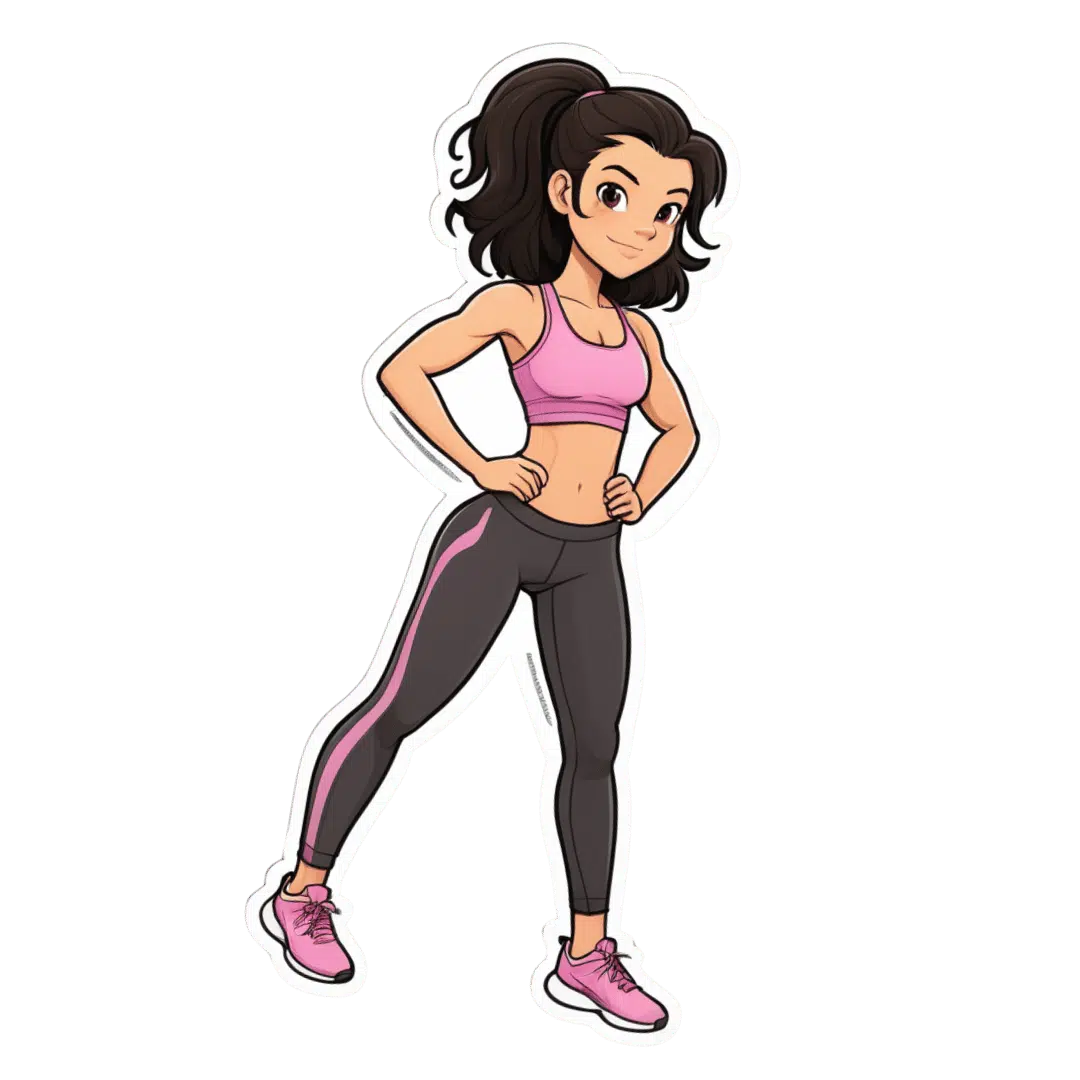
Make Stair-Climbing Easy With This One Exercise

10almonds is reader-supported. We may, at no cost to you, receive a portion of sales if you purchase a product through a link in this article.

Your knees are usually not the problem, even if it feels like they are!

The problem is higher up

Or at least, it usually is.

Specifically, the gluteus medius (one of the butt-muscles) controls leg and pelvis alignment, and without a stable pelvis (for example, in the case of weak glutes), the thigh bone moves out of alignment, also reducing quadriceps efficiency and thus increasing knee joint strain, which is why you feel it there—it’s the end result, not the cause.

So, what’s in order is an exercise to activate and strengthen the gluteus medius (or rather, the glutei medii, if we want to get fancy, as you have one on each side, and unlike many leg muscles, it’s almost impossible to lose one to accident/incident without the same accident/incident also killing you).

How to do it:

  • Stand upright with your hands on a stable surface (e.g. a wall) for support
  • Shift all your weight onto one leg
  • Move your free leg diagonally out and slightly backwards (80% out, 20% back)
  • Keep your upper body still and straight throughout
  • Hold briefly at the top, then return your leg to the center
  • Repeat 10–20 times per leg

It’s best to do the exercise just before using stairs (for activation benefits) and casually throughout the day (for strength build-up benefits).

Note: a slight ache is fine and even good; it means the gluteus medius is activated, which improves knee stability during stair use—even if the muscle feels tired!

If experiencing actual pain though, do stop and consult a local physio.

For more on all of this plus a visual demonstration, enjoy:

Click Here If The Embedded Video Doesn’t Load Automatically!

Want to learn more?

You might also like:

How To Make Downhill Walking Easier On The Knees ← several important things, and they work for going down stairs also!

Take care!

Don’t Forget…

Did you arrive here from our newsletter? Don’t forget to return to the email to continue learning!

  • Stop Stretching Tight Shoulders (Do This Instead)
    Mobility coach Alisa Szyman shows us how: Addressing the root causes Fun fact: tight shoulders are usually a symptom of poor shoulder control, thoracic spine stiffness, weak overhead function, and reduced shoulder stability, so stretching alone doesn’t address the root causes. So, instead, consider: *CARs = Controlled Articular Rotations For more on all of this…

Learn to Age Gracefully

Join the 98k+ American women taking control of their health & aging with our 100% free (and fun!) daily emails:

  • Why Is Rabies The Most Lethal Infectious Disease?

    10almonds is reader-supported. We may, at no cost to you, receive a portion of sales if you purchase a product through a link in this article.

    We may not hear of epidemics or pandemics, but…

    In bite-size terms…

    Rabies is caused by viruses in the Lyssavirus genus, especially the classical rabies virus, which infects the mammalian nervous system and thus can (and all-too-often does) spread through mammals.

    Transmission usually occurs through saliva entering tissue via a bite, but even just saliva contacting vulnerable areas can also pose a risk, and infections closer to the head can progress more quickly because the virus travels towards the brain through nerves.

    Why rabies is hard to stop: rabies virions can remain hidden for days, months, or (rarely) even years, while suppressing parts of the immune response, and travel inside nerve cells at up to 10cm per day, which helps shield them from immune defenses too.

    Once the virus reaches the central nervous system, symptoms begin rapidly as the infection spreads through nervous tissue, initially causing flu-like illness before progressing into severe neurological disease.

    Why rabies is so deadly: rabies viruses usually avoid triggering strong inflammation in the brain, preventing immune cells and many therapies from reaching infected tissue effectively, and once symptoms appear, rabies is almost always fatal.

    Pre-exposure and post-exposure rabies vaccinations are highly effective if (and usually only if) administered before symptoms develop, preventing the virus from reaching the central nervous system. In contrast, very few people have survived symptomatic rabies, usually after intensive medical care and often with lasting neurological damage.

    For this reason, even merely possible exposures, such as waking to find a bat in a bedroom, merit urgent medical evaluation—precisely because rabies prevention is only reliably effective before symptoms begin.

    For more on all of this, enjoy:

    Click Here If The Embedded Video Doesn’t Load Automatically!

    Want to learn more?

    You might also like:

    Lyssavirus is rare, but deadly. What should you do if a bat bites you?

    Take care!

    Share This Post

  • If Retinal Is Messing Up Your Skin…

    10almonds is reader-supported. We may, at no cost to you, receive a portion of sales if you purchase a product through a link in this article.

    Dr. Andrea Suarez helps us put it right:

    Retin-ouch?

    First, what it is: retinal (retinaldehyde) is a topical vitamin A derivative that increases cell turnover, thus rejuvenating the skin, and as such can improve the appearance of fine lines, uneven texture, and pigmentation. although it requires one fewer conversion step in the skin than retinol and thus is generally considered more effective*, both can improve visible signs of aging and support collagen production with consistent use.

    *Which can be a good or bad thing depending on your skin; sometimes more effective is not what you want, when it comes to a product whose mechanism of action involves irritating the cells enough to get your body to jettison them in favor of new ones!

    Now, as retinal increases skin-cell turnover, it temporarily raises transepidermal water loss, which can lead to dryness, peeling, flaking, stinging, and sensitivity during the first few months. Lifestyle factors such as hot showers, heaters, fireplaces, alcohol consumption, and overwashing can make these effects worse.

    So, to support your skin while that happens, it can be a good to use only a gentle cleanser, thoroughly rinse away cleanser residue, consider double cleansing with an oil cleanser followed by a mild cream cleanser when removing makeup (if you wear such), apply moisturizers containing ceramides, use a richer moisturizer or occlusive ointment at night if tolerated, run a humidifier while sleeping (if appropriate for your climate), and avoid exfoliating more than necessary.

    You can also make things easier for your skin if you:

    • start just a few nights per week and gradually increase towards nightly use
    • avoid alternating between multiple retinoids
    • use the moisturizer-retinal-moisturizer “sandwich method”
    • protect sensitive areas such as your eyelids, lips, neck, and earlobe creases with petroleum jelly
    • consider short-contact therapy by rinsing retinal off after about 30 minutes if your skin is highly sensitive
    • apply only enough product to form a thin film!

    For more on all of this plus some visual illustrations, enjoy:

    Click Here If The Embedded Video Doesn’t Load Automatically!

    Want to learn more?

    You might also like:

    Retinoids: Retinol vs Retinal vs Retinoic Acid vs..? ← for demystifying this list of similar-sounding words and what they all mean and what it means for you 😎

    Take care!

    Share This Post

  • Menopause, & When Not To Let Your Guard Down

    10almonds is reader-supported. We may, at no cost to you, receive a portion of sales if you purchase a product through a link in this article.

    This is Dr. Jessica Shepherd, a physician Fellow of the American College of Obstetricians & Gynecologists, CEO at Sanctum Medical & Wellness, and CMO at Hers.

    She’s most well-known for her expertise in the field of the menopause. So, what does she want us to know?

    Untreated menopause is more serious than most people think

    Beyond the famous hot flashes, there’s also the increased osteoporosis risk, which is more well-known at least amongst the health-conscious, but oft-neglected is the increased cardiovascular disease risk:

    What Menopause Does To The Heart

    …and, which a lot of Dr. Shepherd’s work focuses on, it also increases dementia risk; she cites that 60–80% of dementia cases are women, and it’s also established that it progresses more quickly in women than men too, and this is associated with lower estrogen levels (not a problem for men, because testosterone does it for them) which had previously been a protective factor, but in untreated menopause, was no longer there to help:

    Alzheimer’s Sex Differences May Not Be What They Appear

    Treated menopause is safer than many people think

    The Women’s Health Initiative (WHI) study, conducted in the 90s and published in 2002, linked HRT to breast cancer, causing fear, but it turned out that this was quite bad science in several ways and the reporting was even worse (even the flawed data did not really support the conclusion, much less the headlines); it was since broadly refuted (and in fact, it can be a protective factor, depending on the HRT regimen), but fearmongering headlines made it to mainstream news, whereas “oopsies, never mind, we take that back” didn’t.

    The short version of the current state of the science is: breast cancer risk varies depending on age, HRT type, and dosage; some kinds of HRT can increase the risk marginally in those older than 60, but absolute risk is low compared to placebo, and taking estrogen alone can reduce risk at any age in the event of not having a uterus (almost always because of having had a hysterectomy; as a quirk, it is possible to be born without, though).

    It’s worth noting that even in the cases where HRT marginally increased the risk of breast cancer, it significantly decreased the risk of cancers in total, as well fractures and all-cause-mortality compared to the placebo group.

    In other words, it might be worth having a 0.12% risk of breast cancer, to avoid the >30% risk of osteoporosis, which can ultimately be just as fatal (without even looking at the other things the HRT is protective against).

    However! In the case of those who already have (or have had) breast cancer, increasing estrogen levels can indeed make that worse/return, and it becomes more complicated in cases where you haven’t had it, but there is a family history of it, or you otherwise know you have the gene for it.

    You can read more about HRT and breast cancer risk (increases and decreases) here:

    HRT: A Tale Of Two Approaches

    …and about the same with regard to HMT, here:

    The Hormone Therapy That Reduces Breast Cancer Risk & More

    Lifestyle matters, and continues to matter

    Menopause often receives the following attention from people:

    1. Perimenopause: “Is this menopause?”
    2. Menopause: “Ok, choices to make about HRT or not, plus I should watch out for osteoporosis”
    3. Postmenopause: “Yay, that’s behind me now, back to the new normal”

    The reality, Dr. Shepherd advises, is that “postmenopause” is a misnomer because if it’s not being treated, then the changes are continuing to occur in your body.

    This is a simple factor of physiology; your body is always rebuilding itself, will never stop until you die, and in untreated menopause+postmenopause, it’s now doing it without much estrogen.

    So, you can’t let your guard down!

    Thus, she recommends: focus on maintaining muscle mass, bone health, and cardiovascular health. If you focus on those things, the rest (including your brain, which is highly dependent on cardiovascular health) will mostly take care of itself.

    Because falls and fractures, particularly hip fractures, drastically reduce quality and length of life in older adults, it is vital to avoid those, and try to be sufficiently robust so that if you do go A over T, you won’t injure yourself too badly, because your bones are strong. As a bonus, the same things (especially that muscle mass we talked about) will help you avoid falling in the first place, by improving stability.

    See also: Resistance Is Useful! (Especially As We Get Older)

    And about falls specifically: Fall Special: Be Robust, Mobile, & Balanced!

    Want to know more from Dr. Shepherd?

    You might like this book of hers that we reviewed not long back:

    Generation M – by Dr. Jessica Shepherd

    Take care!

    Share This Post

  • Next-Level Metabolism – by Dr. Jade Teta

    10almonds is reader-supported. We may, at no cost to you, receive a portion of sales if you purchase a product through a link in this article.

    This book starts with the preface that “this is not a diet book”, but all the diet books nowadays say that, even when the title is “The Such-And-Such Diet”. So, is this one a diet book?

    No, it isn’t. It’s rather an informational explanation of how metabolism works, and the very many things that can affect it, ranging from genes and epigenetics to diet and exercise to stress and sleep, and more.

    Where this book most excels is in the personalization aspect; it describes how to assess your own system inputs and outputs (which are a lot more things than just calories in, calories out), and read your own body’s cues in terms of what’s going on with you metabolically.

    Because the truth is, we’re all a bit different (aside from, perhaps, identical twins etc living identical lifestyles in all respects, down to having the same meals and the same schedule), and while there definitely are some universal truths of metabolism (e.g. whole fruit is always going to be better than high-fructose corn syrup), when it comes to the finer details on the other hand, what goes for one person genuinely may not go for another, and there can be a multitude of reasons why. This book helps identify those, and go with what actually works for you.

    The style is half pop-science, half pep-talk. The book could have been a lot shorter without all the pep talk, but for those who like that sort of thing, that is the sort of thing they like.

    Bottom line: if you’d like to understand your metabolism (as opposed to some clinically standardized average of metabolism), then this book can help you do that.

    Click here to check out Next-Level Metabolism, and level-up your understanding of it!

    Don’t Forget…

    Did you arrive here from our newsletter? Don’t forget to return to the email to continue learning!

    Learn to Age Gracefully

    Join the 98k+ American women taking control of their health & aging with our 100% free (and fun!) daily emails:

  • 6 Daily Habits To Keep Your Brain Young & Sharp

    10almonds is reader-supported. We may, at no cost to you, receive a portion of sales if you purchase a product through a link in this article.

    Without brain health, we do not have health. So here are six ways to keep it in order:

    Food for thought

    The six areas to focus on are as follows:

    1. Physical exercise: as we at 10almonds sometimes say, what’s good for the heart is good for the brain (because the brain is only as healthy as the circulation feeding it). For this reason, the recommendation here is for physical exercise that improves heart health—so, walking, running, swimming, dancing, etc.
    2. Healthy diet: shocking nobody, this is important too. Specifically, a diet rich in fruits, vegetables, and healthy proteins and fats is important—partly for the heart benefits that give indirect benefits to the brain, and partly because the brain is built of stuff and so we have to consume that stuff in order to rebuild it (omega-3s features strongly here, for instance). Remember to hydrate, too! The body can’t do anything without water.
    3. Good sleep: yes, the famous 7–9 hours sleep per night, and yes, even at your age, whatever that might be. This is important for memory consolidation, cell repair, toxin removal, and more. Sleep deprivation, on the other hand, leads to cognitive decline and brain shrinkage.
    4. Mental stimulation: ideally, engaging those parts of the brain you most wish to protect (e.g. language, memory, or whatever is most important to you).
    5. Social interaction: this one gets underestimated a lot, but it’s important to have meaningful conversations (not just polite smalltalk from a small menu of stock phrases), and that these should be two-way, i.e. involving both listening/reading and speaking/writing. Ideally, all four of those, which for most people means online and offline social interactions.
    6. Stress management: because chronic stress damages brain cells and accelerates cognitive decline, it’s important to manage that; practices like mindfulness meditation go a very long way and make a big difference.

    For more on all of these, enjoy:

    Click Here If The Embedded Video Doesn’t Load Automatically!

    Want to learn more?

    You might also like to read:

    The Physical Exercises That Build Your Brain ← this is different from just exercising for one’s heart and thus the brain by extension, and rather, is specific exercises that strengthen specific parts of the brain.

    Take care!

    Don’t Forget…

    Did you arrive here from our newsletter? Don’t forget to return to the email to continue learning!

    Learn to Age Gracefully

    Join the 98k+ American women taking control of their health & aging with our 100% free (and fun!) daily emails:

  • No, beetroot isn’t vegetable Viagra. But here’s what else it can do

    10almonds is reader-supported. We may, at no cost to you, receive a portion of sales if you purchase a product through a link in this article.

    Beetroot has been in the news for all the wrong reasons. Supply issues in recent months have seen a shortage of tinned beetroot on Australian supermarket shelves. At one point, a tin was reportedly selling on eBay for more than A$65.

    But as supplies increase, we turn our attention to beetroot’s apparent health benefits.

    Is beetroot really vegetable Viagra, as UK TV doctor Michael Mosley suggests? What about beetroot’s other apparent health benefits – from reducing your blood pressure to improving your daily workout? Here’s what the science says.

    What’s so special about beetroot?

    Beetroot – alongside foods such as berries, nuts and leafy greens – is a “superfood”. It contains above-average levels per gram of certain vitamins and minerals.

    Beetroot is particularly rich in vitamin B and C, minerals, fibre and antioxidants.

    Most cooking methods don’t significantly alter its antioxidant levels. Pressure cooking does, however, lower levels of carotenoid (a type of antioxidant) compared to raw beetroot.

    Processing into capsules, powders, chips or juice may affect beetroot’s ability to act as an antioxidant. However, this can vary between products, including between different brands of beetroot juice.

    Is beetroot really vegetable Viagra?

    The Romans are said to have used beetroot and its juice as an aphrodisiac.

    But there’s limited scientific evidence to say beetroot improves your sex life. This does not mean it doesn’t. Rather, the vast number of scientific studies looking at the effect of beetroot have not measured libido or other aspects of sexual health.

    How could it work?

    When we eat beetroot, chemical reactions involving bacteria and enzymes transform the nitrate in beetroot into nitrite, then to nitric oxide. Nitric oxide helps dilate (widen) blood vessels, potentially improving circulation.

    The richest sources of dietary nitric oxide that have been tested in clinical studies are beetroot, rocket and spinach.

    Nitric oxide is also thought to support testosterone in its role in controlling blood flow before and during sex in men.

    Beetroot’s ability to improve blood flow can benefit the circulatory system of the heart and blood vessels. This may positively impact sexual function, theoretically in men and women.

    Therefore, it is reasonable to suggest there could be a modest link between beetroot and preparedness for sex, but don’t expect it to transform your sex life.

    What else could it do?

    Beetroot has received increasing attention over recent years due to its antioxidant and anti-tumour effect in humans.

    Clinical trials have not verified all beetroot’s active ingredients and their effects. However, beetroot may be a potentially helpful treatment for various health issues related to oxidative stress and inflammation, such as cancer and diabetes. The idea is that you can take beetroot supplements or eat extra beetroot alongside your regular medicines (rather than replace them).

    There is evidence beetroot juice can help lower systolic blood pressure (the first number in your blood pressure reading) by 2.73-4.81 mmHg (millimetres of mercury, the standard unit of measuring blood pressure) in people with high blood pressure. Some researchers say this reduction is comparable to the effects seen with certain medications and dietary interventions.

    Other research finds even people without high blood pressure (but at risk of it) could benefit.

    Beetroot may also improve athletic performance. Some studies show small benefits for endurance athletes (who run, swim or cycle long distances). These studies looked at various forms of the food, such as beetroot juice as well as beetroot-based supplements.

    How to get more beetroot in your diet

    There is scientific evidence to support positive impacts of consuming beetroot in whole, juice and supplement forms. So even if you can’t get hold of tinned beetroot, there are plenty of other ways you can get more beetroot into your diet. You can try:

    • raw beetroot – grate raw beetroot and add it to salads or coleslaw, or slice beetroot to use as a crunchy topping for sandwiches or wraps
    • cooked beetroot – roast beetroot with olive oil, salt and pepper for a flavour packed side dish. Alternatively, steam beetroot and serve it as a standalone dish or mixed into other dishes
    • beetroot juice – make fresh beetroot juice using a juicer. You can combine it with other fruits and vegetables for added flavour. You can also blend raw or cooked beetroot with water and strain to make a juice
    • smoothies – add beetroot to your favourite smoothie. It pairs well with fruits such as berries, apples and oranges
    • soups – use beetroot in soups for both flavour and colour. Borscht is a classic beetroot soup, but you can also experiment with other recipes
    • pickled beetroot – make pickled beetroot at home, or buy it from the supermarket. This can be a tasty addition to salads or sandwiches
    • beetroot hummus – blend cooked beetroot into your homemade hummus for a vibrant and nutritious dip. You can also buy beetroot hummus from the supermarket
    • grilled beetroot – slice beetroot and grill it for a smoky flavour
    • beetroot chips – slice raw beetroot thinly, toss the slices with olive oil and your favourite seasonings, then bake or dehydrate them to make crispy beetroot chips
    • cakes and baked goods – add grated beetroot to muffins, cakes, or brownies for a moist and colourful twist.
    Three squares of beetroot/chocolate cake with white icing and nuts sprinkled on top
    You can add beetroot to baked goods. Ekaterina Khoroshilova/Shutterstock

    Are there any downsides?

    Compared to the large number of studies on the beneficial effects of beetroot, there is very little evidence of negative side effects.

    If you eat large amounts of beetroot, your urine may turn red or purple (called beeturia). But this is generally harmless.

    There have been reports in some countries of beetroot-based dietary supplements contaminated with harmful substances, yet we have not seen this reported in Australia.

    What’s the take-home message?

    Beetroot may give some modest boost to sex for men and women, likely by helping your circulation. But it’s unlikely to transform your sex life or act as vegetable Viagra. We know there are many contributing factors to sexual wellbeing. Diet is only one.

    For individually tailored support talk to your GP or an accredited practising dietitian.

    Lauren Ball, Professor of Community Health and Wellbeing, The University of Queensland and Emily Burch, Lecturer, Southern Cross University

    This article is republished from The Conversation under a Creative Commons license. Read the original article.

    Don’t Forget…

    Did you arrive here from our newsletter? Don’t forget to return to the email to continue learning!

    Learn to Age Gracefully

    Join the 98k+ American women taking control of their health & aging with our 100% free (and fun!) daily emails: