
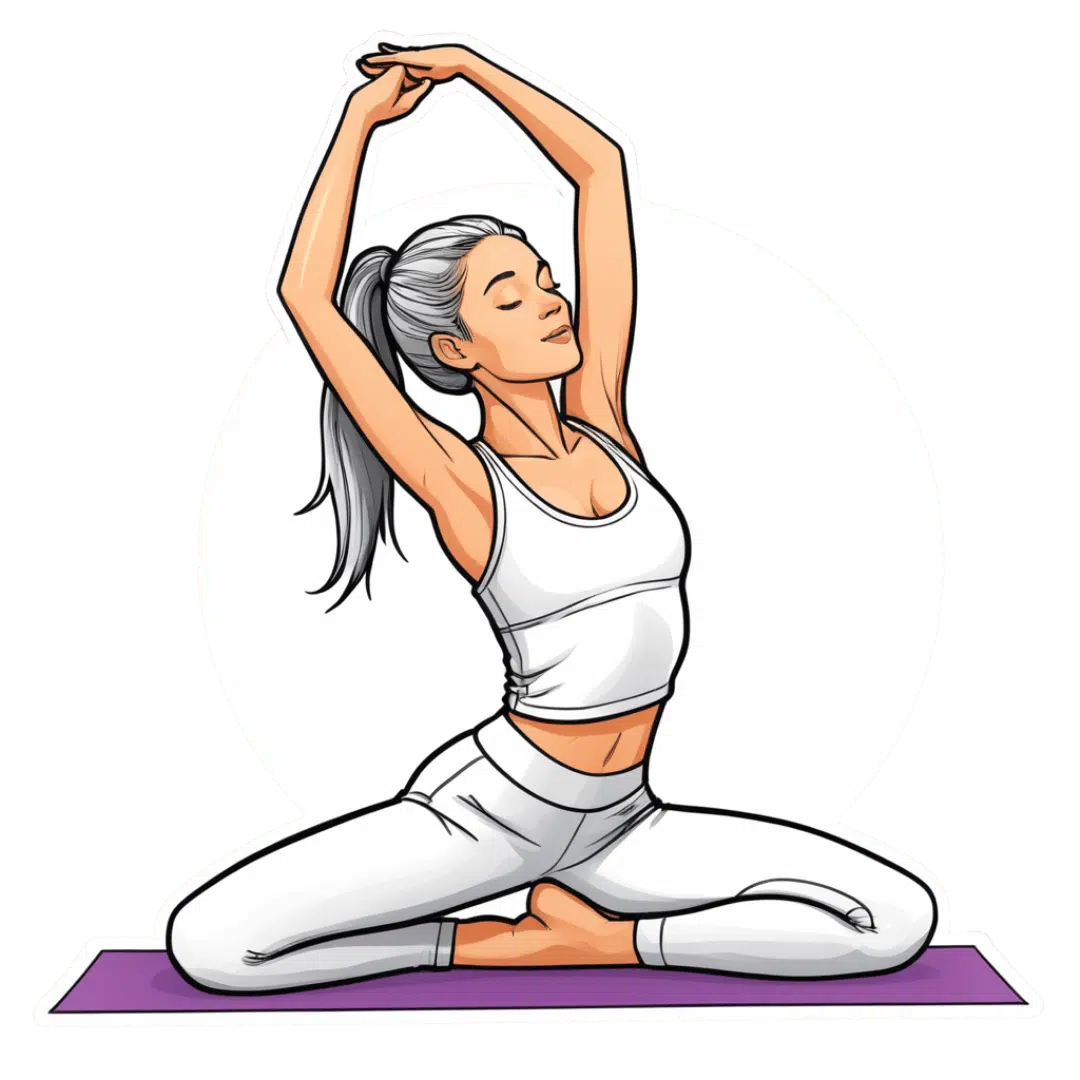
Make It Count: The Best Three Morning Stretches

10almonds is reader-supported. We may, at no cost to you, receive a portion of sales if you purchase a product through a link in this article.

When you’ve just woken up, do you open your eyes, do a flip out of bed, land in a superhero pose, and do an hour of physical training? No?

The good news is, you don’t have to! Because even very short daily stretching sessions are more effective than occasional long ones:

Just do literally a few minutes (in total) each day!

Even just 20–30 seconds of each (each side) per day is enough for progress:

  1. Camel pose sweeps: dynamically stretch the hip flexors, abdominals, chest, and shoulders by sweeping one arm up while lifting your hips; this stimulates the nervous system by exposing vital organs, increasing adrenaline and energy*
  2. Lunge and hamstring sequence: start in a low lunge to open your hips and chest, then shift backwards into a hamstring stretch; alternate these movements to increase your flexibility and energy
  3. Twisting side body lift: seated with one leg bent, twist towards your bent leg, lift your hips and sweep your arm overhead, then lower into a side bend; this stretches the side of your body and boosts endorphin levels too, which is good at any time, but especially first thing in the morning

*The reason this works this way is because it counteracts fetal-like sleeping posture; mild activation of the nervous system mimics the body’s natural survival response, promoting alertness without real danger—basically, it’s the gentle yoga asana equivalent of a cold shower!

For more on all of these plus visual demonstrations, enjoy:

Click Here If The Embedded Video Doesn’t Load Automatically!

Want to learn more?

You might also like:

Stiff Joints? Do These 3 Stretches Every Morning To Avoid Pain ← an alternative set, if your goal for now is more restorative than progressive

Take care!

Don’t Forget…

Did you arrive here from our newsletter? Don’t forget to return to the email to continue learning!

Learn to Age Gracefully

Join the 98k+ American women taking control of their health & aging with our 100% free (and fun!) daily emails:

  • Why Your Hair Texture Changes After 40 (& How To Reverse That)

    10almonds is reader-supported. We may, at no cost to you, receive a portion of sales if you purchase a product through a link in this article.

    Dr. Andrea Suarez shows us how:

    The follicle freshener routine

    As we get older, our aging scalp biology can reduce ceramides, barrier function, sebum, collagen, and elastin, leading to drier, more brittle, wiry hair, increased shedding, and more visible scalp.

    Additionally, hair follicles gradually shrink, producing shorter, finer, less pigmented hairs (i.e. more gray) while shortening the growth phase and lengthening the resting phase, which can also alter texture and make hair feel coarser.

    It’s not just about the passage of time; oxidative stress, reduced blood flow, microinflammation, stem cell damage, hormonal shifts, collagen loss, and scalp barrier decline all contribute to weaker follicle function.

    Some things may be counterintuitive, for example aging reduces moisture retention and sebum, so overcleansing, harsh shampoos, shampoo residue, and hot water itself can worsen dryness and irritation, and on the flipside, maintaining your scalp’s acid mantle and microbiome can help reduce inflammation.

    Alas, most “anti-aging” scalp serums primarily improve temporary softness or shine rather than meaningfully reversing follicle aging, as many ingredients don’t even effectively reach the follicle.

    So, what does work? The strongest evidence remains for minoxidil, red light and/or low-level laser therapy, ketoconazole shampoo, and zinc pyrithione shampoo, with caffeine and scalp massage featuring lower on the list.

    Lifestyle factors are also important: adequate protein, fruits, vegetables, legumes, whole grains are all very good things to enjoy, and non-dietary lifestyle factors such as good sleep and stress management are important too, because hair growth is metabolically demanding and sensitive to systemic changes.

    For more on all of this, enjoy:

    Click Here If The Embedded Video Doesn’t Load Automatically!

    Want to learn more?

    You might also like:

    Red Light Therapy Every Day For 5 Years (Plus New Research)! ← our recent explainer on RLT

    Take care!

    Share This Post

  • Is it safe to use cake decorating dusts and dyes? 2 experts explain

    10almonds is reader-supported. We may, at no cost to you, receive a portion of sales if you purchase a product through a link in this article.

    Have you ever baked or decorated a birthday cake?

    Interest in elaborate cakes is booming, driven by social media trends and television shows such as Is It Cake?.

    This means products such as edible glitter and colourful dyes are becoming increasingly common at children’s parties and other social events.

    But a recent incident, where a young boy from Queensland was hospitalised after inhaling cake decorating powder, has raised concerns about the safety of these products.

    And authorities have now announced a nationwide recall of the product in question.

    Klaus Vedfelt/Getty

    What is ‘cake dust’?

    “Cake dust” refers to many different products used to decorate cakes. This includes edible glitter, metallic-looking powders, coloured dusts that are brushed on to decorations, and liquid colours that are sprayed on to cakes using airbrushes.

    These products are made of various substances. Some are a mixture of food colourings and sugar or starch. Some also contain pigments that give them a metallic or glitter-like appearance. These pigments may contain small amounts of aluminium, copper or zinc that, when eaten in large amounts, can be toxic to humans.

    Many also contain amorphous silicon dioxide, which helps stop powders from clumping together. This is not to be confused with crystalline silica dust, which has been shown to cause a long-term lung disease called silicosis.

    These substances aren’t inherently harmful, but can be dangerous if you are exposed to large amounts. However, how you consume them matters. For example, eating tiny amounts on the surface of a cake is very different to inhaling a concentrated cloud of fine powder.

    This is because your lungs don’t process particles in the same way as your digestive system. Fine particles can travel deep into your airways, where your body then absorbs them. These particles may irritate lung tissue or trigger inflammation in both small and large airways. They may also block airways and reduce oxygen intake.

    This can cause persistent coughing, wheezing and shortness of breath. If you have any of these symptoms, or notice your lips turning blue, visit the emergency department immediately.

    ‘Non-toxic’ doesn’t mean edible

    Some cake decorating products are labelled “non-toxic” rather than “edible”. You might assume these terms are interchangeable, but they are not.

    In the recent Queensland case, the metallic cake dust was reportedly labelled “non-toxic” and intended only “for use on removable parts” of cakes. However, it was sold next to other edible cake decorating products.

    Unfortunately, this is not the first time such dusts have put people’s health at risk. Between 2018 and 2019, United States health authorities investigated multiple poisonings linked to metallic “luster dust” cake decorations. These products contained high levels of metals, including copper and zinc. The child from Queensland inhaled cake dust that also contained these metals.

    Are they more harmful to kids?

    Yes. This is because children have much smaller airways than adults, which can become blocked or irritated more easily. They also breathe more quickly relative to their body size, meaning they may inhale more potentially toxic substances at a time.

    Children are often drawn to these metallic-looking cake products because they appear to be sparkly. They are also more likely to accidentally inhale cake dusts, for example while helping decorate cakes or blowing out candles.

    In the Queensland case, the child inhaled about one tablespoon of gold cake dust before he started coughing, became unresponsive and ultimately spent days in an induced coma. It’s likely the inhaled dust entered the boy’s lungs, where it blocked his airways.

    This case shows the importance of keeping toddlers away from anything they could swallow, or that may settle in their lungs.

    It also underscores the need for more research and tighter regulation. Research should focus on what metals, pigments and fine particles are actually in cake decorating products. Companies must make labels clearer and more comprehensive, adding warnings – such as “avoid inhalation” or “keep away from children” – if appropriate. Regulators should also reconsider how these products are marketed and sold, particularly if they are commonly used around children.

    So, can I still use these products?

    Parents and keen bakers can still use cake decorating products safely, by taking some simple precautions.

    Check the label

    Always check the label on any cake decorating products, to ensure the product is edible and intended for food-related use.

    Avoid imports

    Some imported products may not meet local food safety standards, meaning their labels may be unclear or inaccurate. And it’s best to avoid buying products sold through overseas online marketplaces, as they are generally less regulated.

    Use and store them with care

    When using cake decorating products, you should always follow the directions for use and only apply small amounts in well-ventilated areas. It’s best to keep them away from children, especially if they have allergies or lung conditions such as asthma or cystic fibrosis. Remember to close or secure any open products, and store them where young children won’t reach them.

    William Alexander Donald, Professor of Chemistry, UNSW Sydney and Deborah Yates, Conjoint Professor, Medicine & Health, UNSW Sydney

    This article is republished from The Conversation under a Creative Commons license. Read the original article.

    Share This Post

  • 3 Ways To Increase Your Push-Ups (In Just 30-Days!)

    10almonds is reader-supported. We may, at no cost to you, receive a portion of sales if you purchase a product through a link in this article.

    Cori Lefkowitz, of “Strong at Every Age”, shows us how:

    Pushing it up

    A lot of people who struggle with push-ups will do make-it-easier modifications; doing them one one’s knees is a popular one, for example. However, more reps of a modified push-up only makes you stronger at that modification, not at the full push-up.

    So, how to get around this problem?

    Three ways:

    1. Cluster sets: do 3–5 rounds at the start of your workout; set a target of 6–10 total reps per round, and do 1–3 reps of the hardest variation you can, resting 15–30 seconds between mini-sets until the round is complete (rest for at least a minute between rounds).
    2. Slow eccentric push-ups: for 3–5 seconds, focus only on lowering yourself down, then reset at the top. This lets you train harder variations and build control even if you can’t push back up yet.
    3. Push-up holds: hold the push-up at weak points (e.g. bottom, halfway, or top—whatever it is for you) to build slow-twitch tension and improve your form (so that you no longer find yourself wobbly). This helps develop mind–muscle connection, which in turn helps pretty much all other parts of this endeavor.

    For an extra upwards push, you can combine these three ways with incline push-ups. As a very strong general rule, it’s almost always better to push towards harder variations rather than higher reps of the same easier version.

    Why “almost always”? Well, if you’re doing some push-up challenge and specifically want to do very many reps for the sake of it, then building rep count will be what you want. But for anything that’s not “high reps for the sake high reps”, the above method will stand you in better stead.

    Click Here If The Embedded Video Doesn’t Load Automatically!

    Want to learn more?

    You might also like:

    How To Get Your First Pull-Up

    Take care!

    Share This Post

  • Practical Optimism – by Dr. Sue Varma

    10almonds is reader-supported. We may, at no cost to you, receive a portion of sales if you purchase a product through a link in this article.

    We’ve written before about how to get your brain onto a more positive track (without toxic positivity), but there’s a lot more to be said than we can fit into an article, so here’s a whole book packed full with usable advice.

    The subtitle claims “the art, science, and practice of…”, but mostly it’s the science of. If there’s art to be found here, then this reviewer missed it, and as for the practice of, well, that’s down to the reader, of course.

    However, it is easy to use the contents of this book to translate science into practice without difficulty.

    If you’re a fan of acronyms, initialisms, and other mnemonics (such as the rhyming “Name, Claim, Tame, and Reframe”), then you’ll love this book as they come thick and fast throughout, and they contribute to the overall ease of application of the ideas within.

    The writing style is conversational but with enough clinical content that one never forgets who is speaking—not in the egotistical way that some authors do, but rather, just, she has a lot of professional experience to share and it shows.

    Bottom line: if you’d like to be more optimistic without delving into the delusional, this book can really help a lot with that (in measurable ways, no less!).

    Click here to check out Practical Optimism, and brighten up your life!

    Don’t Forget…

    Did you arrive here from our newsletter? Don’t forget to return to the email to continue learning!

    Learn to Age Gracefully

    Join the 98k+ American women taking control of their health & aging with our 100% free (and fun!) daily emails:

  • Stop Cancer 20 Years Ago

    10almonds is reader-supported. We may, at no cost to you, receive a portion of sales if you purchase a product through a link in this article.

    Get Abreast And Keep Abreast

    This is Dr. Jenn Simmons. Her specialization is integrative oncology, as she—then a breast cancer surgeon—got breast cancer, decided the system wasn’t nearly as good from the patients’ side of things as from the doctors’ side, and took to educate herself, and now others, on how things can be better.

    What does she want us to know?

    Start now

    If you have breast cancer, the best time to start adjusting your lifestyle might be 20 years ago, but the second-best time is now. We realize our readers with breast cancer (or a history thereof) probably have indeed started already—all strength to you.

    What this means for those of us without breast cancer (or a history therof) is: start now

    Even if you don’t have a genetic risk factor, even if there’s no history of it in your family, there’s just no reason not to start now.

    Start what, you ask? Taking away its roots. And how?

    Inflammation as the root of cancer

    To oversimplify: cancer occurs because an accidentally immortal cell replicates and replicates and replicates and takes any nearby resources to keep on going. While science doesn’t know all the details of how this happens, it is a factor of genetic mutation (itself a normal process, without which evolution would be impossible), something which in turn is accelerated by damage to the DNA. The damage to the DNA? That occurs (often as not) as a result of cellular oxidation. Cellular oxidation is far from the only genotoxic thing out there, and a lot of non-food “this thing causes cancer” warnings are usually about other kinds of genotoxicity. But cellular oxidation is a big one, and it’s one that we can fight vigorously with our lifestyle.

    Because cellular oxidation and inflammation go hand-in-hand, reducing one tends to reduce the other. That’s why so often you’ll see in our Research Review Monday features, a line that goes something like:

    “and now for those things that usually come together: antioxidant, anti-inflammatory, anticancer, and anti-aging”

    So, fight inflammation now, and have a reduced risk of a lot of other woes later.

    See: How to Prevent (or Reduce) Inflammation

    Don’t settle for “normal”

    People are told, correctly but not always helpfully, such things as:

    • It’s normal to have less energy at your age
    • It’s normal to have a weaker immune system at your age
    • It’s normal to be at a higher risk of diabetes, heart disease, etc

    …and many more. And these things are true! But that doesn’t mean we have to settle for them.

    We can be all the way over on the healthy end of the distribution curve. We can do that!

    (so can everyone else, given sufficient opportunity and resources, because health is not a zero-sum game)

    If we’re going to get a cancer diagnosis, then our 60s are the decade where we’re most likely to get it. Earlier than that and the risk is extant but lower; later than that and technically the risk increases, but we probably got it already in our 60s.

    So, if we be younger than 60, then now’s a good time to prepare to hit the ground running when we get there. And if we missed that chance, then again, the second-best time is now:

    See: Focusing On Health In Our Sixties

    Fast to live

    Of course, anything can happen to anyone at any age (alas), but this is about the benefits of living a fasting lifestyle—that is to say, not just fasting for a 4-week health kick or something, but making it one’s “new normal” and just continuing it for life.

    This doesn’t mean “never eat”, of course, but it does mean “practice intermittent fasting, if you can”—something that Dr. Simmons strongly advocates.

    See: Intermittent Fasting: We Sort The Science From The Hype

    While this calls back to the previous “fight inflammation”, it deserves its own mention here as a very specific way of fighting it.

    It’s never too late

    All of the advices that go before a cancer diagnosis, continue to stand afterwards too. There is no point of “well, I already have cancer, so what’s the harm in…?”

    The harm in it after a diagnosis will be the same as the harm before. When it comes to lifestyle, preventing a cancer and preventing it from spreading are very much the same thing, which is also the same as shrinking it. Basically, if it’s anticancer, it’s anticancer, no matter whether it’s before, during, or after.

    Dr. Simmons has seen too many patients get a diagnosis, and place their lives squarely in the hands of doctors, when doctors can only do so much.

    Instead, Dr. Simmons recommends taking charge of your health as best you are able, today and onwards, no matter what. And that means two things:

    1. Knowing stuff
    2. Doing stuff

    So it becomes our responsibility (and our lifeline) to educate ourselves, and take action accordingly.

    Want to know more?

    We recently reviewed her book, and heartily recommend it:

    The Smart Woman’s Guide to Breast Cancer – by Dr. Jenn Simmons

    Enjoy!

    Don’t Forget…

    Did you arrive here from our newsletter? Don’t forget to return to the email to continue learning!

    Learn to Age Gracefully

    Join the 98k+ American women taking control of their health & aging with our 100% free (and fun!) daily emails:

  • Why do our pupils dilate when we’re aroused? Anatomy experts explain

    10almonds is reader-supported. We may, at no cost to you, receive a portion of sales if you purchase a product through a link in this article.

    His gaze softens as he draws closer to you. With one hand around your waist and the other cradling your jaw, he pulls you in. You look into his eyes, and notice his pupils have grown large and hungry.

    So the story goes in every other romance novel, where enlarged pupils are commonly enlisted as imagery to indicate sexual arousal. And it’s not unusual to read advice online suggesting dilated pupils are a sure sign someone you like also likes you back.

    But what does the science say?

    In fact, it’s true: our pupils really do tend to grow large when we’re aroused. Here’s why.

    What is the pupil?

    The pupil is an opening in the iris (the coloured part of the eye) which directs light through the eyeball and onto the retina.

    Typically this opening is 2-4 millimetres in diameter in bright light, and 4-8 millimetres in darkness.

    The black colour of the pupil is the colour of the inside of your eye. Surrounding the pupil are two tiny muscles of the iris which are under separate control.

    The muscle around the edge of the pupil acts like a sphincter. When stimulated by the parasympathetic nervous system (sometimes known as the “rest and digest” system), it contracts to close down the pupil.

    On the outside of the sphincter, another muscle acts like the springs holding the trampoline mat.

    When stimulated by the sympathetic nervous system (the “fight or flight” system), it shortens to enlarge the pupil.

    A woman with brown eyes looks ahead in dim light and her pupils are large.
    The pupil is an opening in the iris. rtem/Shutterstock

    Your pupils and the six ‘fs’

    There are two different mechanisms to make the pupils dilate.

    The first is by direct sympathetic nervous system stimulation causing the pupil to dilate (enlarge). This is triggered when you need or want to:

    1. fight
    2. flee
    3. feed
    4. fornicate
    5. get a “fix” (of illicit drugs such as cocaine or methamphetamine)

    The second is by stopping the signals of the parasympathetic nerves going to the sphincter muscle of the pupil. This is triggered when you need or want to focus (number 6).

    Together, these are sometimes known as “the six f’s”.

    So, is it the same for all of us?

    A meta-analysis of 550 heterosexual men, 403 heterosexual women, 132 lesbian women, 124 bisexual men and 65 gay men reported that pupil dilation is related to your sex and your sexual preferences.

    Overall, the study found men’s pupils dilate strictly according to their sexual preferences, and women’s pupils dilate more variably.

    The study found that heterosexual men’s pupils dilated more in response to erotic imagery of women, and gay men’s pupils dilated more in response to erotic imagery of men.

    However, lesbian women’s pupils also dilated more in response to erotic imagery of men, and heterosexual women’s pupils dilated for erotic imagery of men and women.

    Two men gently embrace and smile while looking into one another's eyes.
    Pupil dilation triggers can be different for different people. Rawpixel.com/Shutterstock

    Are large pupils more attractive?

    Interestingly, a study of 60 young adults (aged between 18 and 26) found pupils of 5 millimetre diameter most attractive.

    A pupil of 5 millimetres is abnormal for situations in bright light. Could it be that we’re attracted to the types of pupils we’ve seen before in the relative darkness of an intimate setting?

    The idea of large pupils being attractive isn’t new. During the Renaissance in Italy, women used eye drops made from a poisonous plant called Atropa belladonna (belladonna means “beautiful woman” in Italian) to make their pupils dilate. This gave them a wide-eyed, “seductive” look (it also, unfortunately, was rather dangerous).

    The plant contains a chemical called atropine, which is still (safely) used today by ophthalmologists and optometrists to dilate the pupils for eye exams or surgery.

    Getting in sync

    Pupil dilation also plays a role in social and interpersonal interactions. Studies have found administration of oxytocin (a hormone associated with bonding and trust) enhances pupil responses to emotional expressions, suggesting increased sensitivity to social cues.

    Pupil dilation synchrony between people has been linked to better teamwork and mutual attraction, reflecting shared arousal states.

    This phenomenon, sometimes referred to as “pupil mimicry” or “pupil contagion”, aligns with other autonomic synchronisations such as heart rate.

    It all goes to show that so much of connection and attraction is subconscious.

    A woman smiles gently as she stares into the eyes of her lover.
    So much of attraction is subconscious. RZ Images/Shutterstock

    What else can make the pupils dilate?

    Various substances and medical conditions can also affect pupil size. Stimulants such as Ritalin and Adderall, anticholinergics (often used to treat Parkinson’s disease and chronic obstructive pulmonary disease), and certain medications such as phenylephrine (Sudafed PE), and benzodiazepines such as alprazolam (Xanax) can all cause pupil dilation.

    So too can illicit drugs such as cocaine, ketamine, MDMA, LSD and cannabis.

    Some neurological conditions or closed angle glaucoma, as well as stressful situations, can cause the pupils to stay dilated (a condition known as mydriasis).

    If you have prolonged dilation of your pupils, you should speak to your doctor.

    Does intellectual or emotional arousal cause pupil dilation?

    When you are trying to solve a mathematics problem, listening carefully as you take notes, or listening to your favourite singer’s music, your pupils will enlarge.

    Anticipation of rewards, emotional conflict, and processing of emotionally charged stimuli – such as scary movies or certain trigger sounds – also lead to increased pupil size.

    Anxiety, pain, and even conditions such as fibromyalgia have also been linked to dilated pupils.

    Context is everything

    It is crucial to emphasise pupil dilation doesn’t automatically mean someone is aroused. Interpreting pupil dilation requires context, and you can’t assume big pupils means the person is attracted to you.

    Verbal consent and other behavioural cues are essential.

    If you’re wondering if the other person likes you, why not just ask?

    Amanda Meyer, Senior Lecturer, Anatomy and Pathology in the College of Medicine and Dentistry, James Cook University and Monika Zimanyi, Associate Professor in Anatomy, James Cook University

    This article is republished from The Conversation under a Creative Commons license. Read the original article.

    Don’t Forget…

    Did you arrive here from our newsletter? Don’t forget to return to the email to continue learning!

    Learn to Age Gracefully

    Join the 98k+ American women taking control of their health & aging with our 100% free (and fun!) daily emails: