
How to handle teen ‘big feelings’ as the social media ban kicks in

10almonds is reader-supported. We may, at no cost to you, receive a portion of sales if you purchase a product through a link in this article.

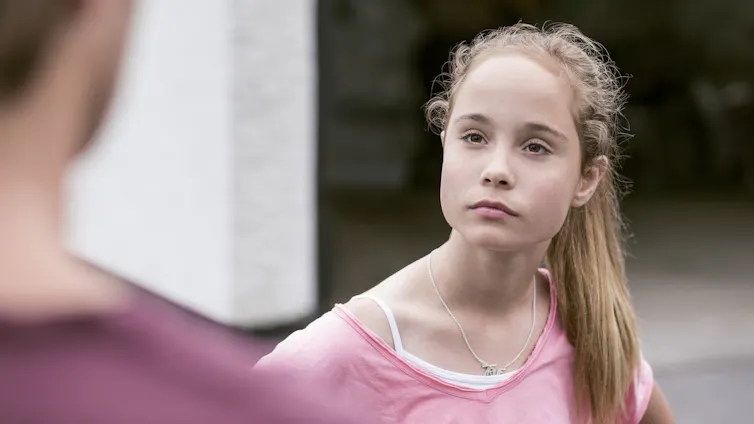
Watching your teenager grieve the loss of their social media account can be confronting. Many are genuinely distressed or struggling with the change, and many parents are unsure how to respond.

Australiaโ€™s social media ban, which started this week, means teens under the age of 16, have lost accounts to platforms such as TikTok, Snapchat and Instagram.

These are the platforms they relied on to talk to friends, find support, follow interests, or decompress after school.

While some teens feel relieved or not fussed, many are feeling sad, worried, powerless, helpless, disappointed or angry.

These arenโ€™t signs of entitlement. Theyโ€™re signs your teen may need support. https://www.youtube.com/embed/u4KrMG6H0zg?wmode=transparent&start=0 A mixed bag: hereโ€™s what more than 17,000 teenagers think of the ban.
Maskot/Getty

Why losing social media hits some teens hard

Thereโ€™s a neurological reason why the loss of social media can hit teens so hard.

Adolescence is a period of enormous social, neurological and emotional change. Teen brains are wired for peer connection, and their brains become more sensitive to feedback from their peers. Meanwhile the brain regions responsible for impulse control, managing strong emotions and long-term planning are still developing.

When teens say losing social media feels like being โ€œcut offโ€, they arenโ€™t being dramatic. Their neurological systems are reacting to a loss of social reinforcement.

Connect and validate their feelings

If your teen is upset, the instinct might be to justify the governmentโ€™s decision or to explain why life offline is healthier. However, advice lands badly when a young person feels unheard. Teens often perceive even well-meaning advice as criticism.

Accepting their feelings about the changes helps validate their experience. You can say:

Feeling angry or sad makes total sense. I know you used those sites to stay connected with your friends.

Losing your account feels huge. Itโ€™s a big change to deal with.

Then pause and listen.

Or you can sit with them without saying much. Some teens prefer parents to just listen sympathetically.

Supporting your teen doesnโ€™t mean you agree with their perspective. It means youโ€™re acknowledging their emotional reality. When teens feel understood, they become more open to talking โ€“ and eventually, to problem-solving.

The first two weeks may be the toughest. Some teens may experience grief and withdrawal-like symptoms: boredom, anxiety, irritability, restlessness and a powerful urge to โ€œjust check onceโ€.

Help teens understand these reactions are normal. Social media platforms are designed to keep users hooked.

Understand the โ€˜whyโ€™ together

It might help to explore the governementโ€™s concerns about social media with your teen โ€“ but not as a lecture. The ban isnโ€™t about social media being inherently bad, but about how platforms are designed.

You can talk about algorithms maximising engagement using the same mechanisms as gambling to encourage dependence and addiction. Or you can talk about how feeds are personalised to keep users scrolling for longer.

Ask your teen what they think about these concerns. This isnโ€™t about convincing them the ban is right, but developing their awareness of how digital platforms work. This prepares them for use when theyโ€™re older.

Help teens rebuild what social media gave them

To support your teen, it helps to understand the function social media played in their life. Was it to:

  • connect with friends?
  • find community around a niche interest or identity?
  • share creative work, or find outlets for self-expression?
  • de-stress after a busy day?
  • know what others are talking about?

Once you understand this, you can help them find alternatives that genuinely meet their needs. They might be able to maintain:

  • connection by organising a get-together, make FaceTime calls, join clubs, or have group chats on allowed platforms
  • creativity by finding other outlets such as photography, video-making, music, writing, art, or gaming communities with safe age settings
  • relaxation by reading, exercise, podcasts, nature time, shows you can watch together.

Many teens wonโ€™t immediately know what they want to try. They may need time and space to have their feelings first. Once they are ready, inviting them to brainstorm a few options (without pressuring them) can help.

Problem-solve together, notice efforts

Once emotions settle, gently shift to collaborative problem-solving. You can ask:

Whatโ€™s been the hardest part this week?

How could we help you stay connected in ways that are allowed?

What would make this change even a tiny bit easier?

Let your teen lead. Young people are much more likely to follow through on strategies they helped design.

Even small signs of coping deserve acknowledgement. You can say:

I can see youโ€™ve been finding other ways to talk to friends. That takes maturity.

Iโ€™m proud of how open youโ€™ve been about how youโ€™re feeling.

But if something doesnโ€™t work, treat it like an experiment. You can say:

OK, that didnโ€™t help as much as we hoped. What else could we try?

Check in later

For teens, losing social media isnโ€™t simply losing an app. It can feel like losing a community, a creative outlet, or a place where they felt understood.

Keep an eye out and offer opportunities to check in with how they are going. This ensures teens donโ€™t navigate this transition alone or become secretive โ€“ and that your relationship remains a source of support.


The eSafety Commissioner website explains why the rules were brought in and how they will work; youth mental health service headspace has seven tips for navigating the social media ban; the Raising Childrenโ€™s website explains how teens use technology for entertainment; tips for digital wellness and how to draw up a โ€œcontractโ€ for use of a childโ€™s first phone are also available.

Christiane Kehoe, Senior Lecturer in Psychiatry, The University of Melbourne and Elizabeth Westrupp, Associate Professor in Psychology, Deakin University

This article is republished from The Conversation under a Creative Commons license. Read the original article.

Don’t Forget…

Did you arrive here from our newsletter? Don’t forget to return to the email to continue learning!
  • Does Your Butt…Wink?
    Avoid the dreaded butt wink during squats by maintaining a neutral spine and working on hip, glute, and hamstring flexibility and strength.

Learn to Age Gracefully

Join the 98k+ American women taking control of their health & aging with our 100% free (and fun!) daily emails:

  • For many who are suffering with prolonged grief, the holidays can be a time to reflect and find meaning inย loss

    10almonds is reader-supported. We may, at no cost to you, receive a portion of sales if you purchase a product through a link in this article.

    The holiday season is meant to be filled with joy, connection and celebration of rituals. Many people, however, are starkly reminded of their grief this time of year and of whom โ€“ or what โ€“ they have lost.

    The added stress of the holiday season doesnโ€™t help. Studies show that the holidays negatively affect many peopleโ€™s mental health.

    While COVID-19-related stressors may have lessened, the grief from change and loss that so many endured during the pandemic persists. This can cause difficult emotions to resurface when they are least expected.

    I am a licensed therapist and trauma-sensitive yoga instructor. For the last 12 years, Iโ€™ve helped clients and families manage grief, depression, anxiety and complex trauma. This includes many health care workers and first responders who have recounted endless stories to me about how the pandemic increased burnout and affected their mental health and quality of life.

    I developed an online program that research shows has improved their well-being. And Iโ€™ve observed firsthand how much grief and sadness can intensify during the holidays.

    Post-pandemic holidays and prolonged grief

    During the pandemic, family dynamics, close relationships and social connections were strained, mental health problems increased or worsened, and most peopleโ€™s holiday traditions and routines were upended.

    Those who lost a loved one during the pandemic may not have been able to practice rituals such as holding a memorial service, further delaying the grieving process. As a result, holiday traditions may feel more painful now for some. Time off from school or work can also trigger more intense feelings of grief and contribute to feelings of loneliness, isolation or depression.

    Sometimes feelings of grief are so persistent and severe that they interfere with daily life. For the past several decades, researchers and clinicians have been grappling with how to clearly define and treat complicated grief that does not abate over time.

    In March 2022, a new entry to describe complicated grief was added to the Diagnostic and Statistical Manual of Mental Disorders, or DSM, which classifies a spectrum of mental health disorders and problems to better understand peopleโ€™s symptoms and experiences in order to treat them.

    This newly defined condition is called prolonged grief disorder. About 10% of bereaved adults are at risk, and those rates appear to have increased in the aftermath of the pandemic.

    People with prolonged grief disorder experience intense emotions, longing for the deceased, or troublesome preoccupation with memories of their loved one. Some also find it difficult to reengage socially and may feel emotionally numb. They commonly avoid reminders of their loved one and may experience a loss of identity and feel bleak about their future. These symptoms persist nearly every day for at least a month. Prolonged grief disorder can be diagnosed at least one year after a significant loss for adults and at least six months after a loss for children.

    I am no stranger to complicated grief: A close friend of mine died by suicide when I was in college, and I was one of the last people he spoke to before he ended his life. This upended my sense of predictability and control in my life and left me untangling the many existential themes that suicide loss survivors often face.

    How grieving alters brain chemistry

    Research suggests that grief not only has negative consequences for a personโ€™s physical health, but for brain chemistry too.

    The feeling of grief and intense yearning may disrupt the neural reward systems in the brain. When bereaved individuals seek connection to their lost loved one, they are craving the chemical reward they felt before their loss when they connected with that person. These reward-seeking behaviors tend to operate on a feedback loop, functioning similar to substance addiction, and could be why some people get stuck in the despair of their grief.

    One study showed an increased activation of the amygdala when showing death-related images to people who are dealing with complicated grief, compared to adults who are not grieving a loss. The amygdala, which initiates our fight or flight response for survival, is also associated with managing distress when separated from a loved one. These changes in the brain might explain the great impact prolonged grief has on someoneโ€™s life and their ability to function.

    Recognizing prolonged grief disorder

    Experts have developed scales to help measure symptoms of prolonged grief disorder. If you identify with some of these signs for at least one year, it may be time to reach out to a mental health professional.

    Grief is not linear and doesnโ€™t follow a timeline. It is a dynamic, evolving process that is different for everyone. There is no wrong way to grieve, so be compassionate to yourself and donโ€™t make judgments on what you should or shouldnโ€™t be doing.

    Increasing your social supports and engaging in meaningful activities are important first steps. It is critical to address any preexisting or co-occurring mental health concerns such as anxiety, depression or post-traumatic stress.

    It can be easy to confuse grief with depression, as some symptoms do overlap, but there are critical differences.

    If you are experiencing symptoms of depression for longer than a few weeks and it is affecting your everyday life, work and relationships, it may be time to talk with your primary care doctor or therapist.

    A sixth stage of grief

    I have found that naming the stage of grief that someone is experiencing helps diminish the power it might have over them, allowing them to mourn their loss.

    For decades, most clinicians and researchers have recognized five stages of grief: denial/shock, anger, depression, bargaining and acceptance.

    But โ€œacceptingโ€ your grief doesnโ€™t sit well for many. That is why a sixth stage of grief, called โ€œfinding meaning,โ€ adds another perspective. Honoring a loss by reflecting on its meaning and the weight of its impact can help people discover ways to move forward. Recognizing how oneโ€™s life and identity are different while making space for your grief during the holidays might be one way to soften the despair.

    When my friend died by suicide, I found a deeper appreciation for what he brought into my life, soaking up the moments he would have enjoyed, in honor of him. After many years, I was able to find meaning by spreading mental health awareness. I spoke as an expert presenter for suicide prevention organizations, wrote about suicide loss and became certified to teach my local community how to respond to someone experiencing signs of mental health distress or crisis through Mental Health First Aid courses. Finding meaning is different for everyone, though.

    Sometimes, adding a routine or holiday tradition can ease the pain and allow a new version of life, while still remembering your loved one. Take out that old recipe or visit your favorite restaurant you enjoyed together. You can choose to stay open to what life has to offer, while grieving and honoring your loss. This may offer new meaning to what โ€“ and who โ€“ is around you.

    If you need emotional support or are in a mental health crisis, dial 988 or chat online with a crisis counselor.The Conversation

    Mandy Doria, Assistant Professor of Psychiatry, University of Colorado Anschutz Medical Campus

    This article is republished from The Conversation under a Creative Commons license. Read the original article.

    Share This Post

  • Hate Sit-Ups? Try This 10-Minute Standing Abs Routine!

    10almonds is reader-supported. We may, at no cost to you, receive a portion of sales if you purchase a product through a link in this article.

    Abdominal muscles are important to many people for aesthetics; they also fulfil the important role of keeping your innards in, as well as being a critical part of core stability (and you cannot have a truly healthy back without healthy abs on the other side). However, not everyone loves sit-ups and their many variations, so hereโ€™s an all-standing workout instead:

    On your feet!

    The exercise are as follows:

    1. High knees: engage core to work abs; do slow for low impact. Great for speeding up the metabolism. Jog during rest to keep moving.
    2. Extend & twist: raise arms high, drive them down while raising one leg into a twist. No rest, switch sides immediately.
    3. Extend & vertical crunch: extend leg back, drive knee forward into a crunch. Swap sides with no breaks.
    4. Oblique jacks: jump or slow version; targeting the obliques.
    5. Front toe-touch: engage core for effectiveness.
    6. Crossover toe-touch: no break; move into this directly from the front toe-touch.
    7. Wood chop: lift arms up, twist, chop down. Great for obliques. No rest between sides.
    8. Heisman: step side to side, bringing your other knee up towards the opposite side. Focus on core engagement rather than speed.
    9. Side leg raise & side bent: raise leg to side with slight bend; works obliques. No rest between sides.

    Thatโ€™s it!

    For a visual demonstration, enjoy:

    Click Here If The Embedded Video Doesnโ€™t Load Automatically!

    Want to learn more?

    You might also like to read:

    Is A Visible Six-Pack Obtainable Regardless Of Genetic Predisposition?

    Take care!

    Share This Post

  • Why Everyone You Donโ€™t Like Is A Narcissist

    10almonds is reader-supported. We may, at no cost to you, receive a portion of sales if you purchase a product through a link in this article.

    Weโ€™ve written before about how psychiatry tends to name disorders after how they affect other people, rather than how they affect the bearer, and this is most exemplified when it comes to personality disorders. For example:

    โ€œYou have a deep insecurity about never being good enough, and you constantly mess up in your attempt to overcompensate? You may have Evil Bastard Disorder!โ€

    โ€œYou have a crippling fear of abandonment and that you are fundamentally unloveable, so you do all you can to try to keep people close? You must have Manipulative Bitch Disorder!โ€

    See also: Miss Diagnosis: Anxiety, ADHD, & Women

    Antisocial Diagnoses

    These days, it is easy to find on YouTube countless videos of how to spot a narcissist, with a list of key traits that all mysteriously describe exactly the exes of everyone in the comments.

    And these days it is mostly โ€œnarcissistโ€, because โ€œpsychopathโ€ and โ€œsociopathโ€ have fallen out of popular favor a bit:

    • perhaps for coming across as overly sensationalized, and thus lacking credibility
    • perhaps because โ€œNarcissistic Personality Disorder (NPD)โ€ exists in the DSM-5 (the USโ€™s latest โ€œDiagnostic and Statistical Manual of Mental Disordersโ€), while psychopathy and sociopathy are not mentioned as existing.

    You may be wondering: what do โ€œpsychopathyโ€ and โ€œsociopathyโ€ mean?

    And the answer is: they mean whatever the speaker wants them to mean. Their definitions and differences/similarities have been vigorously debated by clinicians and lay enthusiasts alike for long enough that the scientific world has pretty much given up on them and moved on.

    Stigma vs pathology

    Because of the popular media (and social media) representation of NPD, it is easy to armchair diagnose oneโ€™s relative/ex/neighbor/in-law/boss/etc as being a narcissist, because the focus is on โ€œnarcissists do these bad things that are mean to peopleโ€.

    If the focus were instead on โ€œnarcissists have cripplingly low self-esteem, and are desperate to not show weakness in a world they have learned is harsh and predatoryโ€, then there may not be so many armchair diagnosesโ€”or at the very least, the labels may be attached with a little more compassion, the same way we might with other mental health issues such as depression.

    Not that those with depression get an easy time of it socially eitherโ€”societyโ€™s response is generally some manner of โ€œarenโ€™t you better yet, stop being lazyโ€โ€”but at the very least, depressed people are not typically viewed with hatred.

    A quick aside: if you or someone you know is struggling with depression, here are some things that actually help:

    The Mental Health First-Aid Youโ€™ll Hopefully Never Need

    The disorder is not the problem

    Maybe your relative, ex, neighbor, etc really is clinically diagnosable as a narcissist. There are still two important things to bear in mind:

    • After centuries of diagnosing people with mental health maladies that we now know donโ€™t exist per se (madness, hysteria, etc), and in recent decades countless revisions to the DSM and similar tomes, thank goodness we now have the final and perfect set of definitions that surely wonโ€™t be re-written in the next few years or so โ† this is irony; it will absolutely be re-written numerous times yet because of course itโ€™s still not a magically perfect descriptor of the broad spectrum of human nature
    • The disorder is not the problem; the way they treat (or have treated) you is the problem.

    For example, letโ€™s take a key thing generally attributed to narcissists: a lack of empathy

    Now, empathy can be divided into:

    • affective empathy: the ability to feel what other people are feeling
    • cognitive empathy: the ability to intellectually understand what other people are feeling (akin to sympathy, which is the same but with the requisite of having experienced the thing in question oneself)

    A narcissist (as well as various other people without NPD) will typically have negligible affective empathy, and their cognitive empathy may be a little sluggish too.

    Sluggish = it may take them a beat longer than most people, to realize what an external signifier of emotions means, or correctly guess how something will be felt by others. This can result in gravely misspeaking (or inappropriately emoting), after failing to adequately quickly โ€œread the roomโ€ in terms of what would be a socially appropriate response. To save face, they may then either deny/minimize the thing they just said/did, or double-down on it and go on [what for them feels like] the counterattack.

    As to why this shutting off of empathy happens: they have learned that the world is painful, and that people are sources of pain, and soโ€”to avoid further painโ€”have closed themselves off to that, often at a very early age. This will also apply to themselves; narcissists typically have negligible self-empathy too, which is why they will commonly make self-destructive decisions, even while trying to put themselves first.

    Important note on how this impacts other people: the โ€œGolden Ruleโ€ of โ€œtreat others as you would wish to be treatedโ€ becomes intangible, as they have no more knowledge of their own emotional needs than they do of anyone elseโ€™s, so cannot make that comparison.

    Consider: if instead of being blind to empathy, they were colorblindโ€ฆ You would probably not berate them for buying green apples when you asked for red. They were simply incapable of seeing that, and consequently made a mistake. So it is when itโ€™s a part of the brain thatโ€™s not working normally.

    Soโ€ฆ Since the behavior does adversely affect other people, what can be done about it? Even if โ€œhate them for it and call for their eradication from the face of the Earthโ€ is not a reasonable (or compassionate) option, what is?

    Take the bull by the horns

    Above all, and despite all appearances, a narcissistโ€™s deepest desire is simply to be accepted as good enough. If you throw them a life-ring in that regard, they will generally take it.

    So, communicate (gently, because a perceived attack will trigger defensiveness instead, and possibly a counterattack, neither of which are useful to anyone) what behavior is causing a problem and why, and ask them to do an alternative thing instead.

    And, this is important, the alternative thing has to be something they are capable of doing. Not merely something that you feel they should be capable of doing, but that they are actually capable of doing.

    • So not: โ€œbe a bit more sensitive!โ€ because that is like asking the colorblind person to โ€œbe a bit more observant about colorsโ€; they are simply not capable of it and it is folly to expect it of them, because no matter how hard they try, they canโ€™t.
    • But rather: โ€œit upsets me when you joke about xyz; I know that probably doesnโ€™t make sense to you and thatโ€™s ok, it doesnโ€™t have to. I am asking, however, if you will please simply refrain from joking about xyz. Would you do that for me?โ€

    Presented with such, itโ€™s much more likely that the narcissist will drop their previous attempt to be good enough (by joking, because everyone loves someone with a sense of humor, right?) for a new, different attempt to be good enough (by showing โ€œbehold, look, I am a good person and doing the thing you asked, of which I am capableโ€).

    Thatโ€™s just one example, but the same methodology can be applied to most things.

    For tricks pertaining to how to communicate such things without causing undue resistance, see:

    Seriously Useful Communication Skills

    Take care!

    Share This Post

  • Brain Benefits in 3 Months…through walking?

    10almonds is reader-supported. We may, at no cost to you, receive a portion of sales if you purchase a product through a link in this article.

    Keeping it Simple

    Today’s video (below) is another Big Think production (can you tell that we love their work?). Wendy Suzuki does a wonderful job of breaking down the brain benefits of exercise into three categories, within three minutes.

    The first question to ask yourself is: what is your current level of fitness?

    Low Fitness

    Exercising, even if it’s just going on a walk, 2-3 times a week improves baseline mood state, as well as enhances prefrontal and hippocampal function. These areas of the brain are crucial for complex behaviors like planning and personality development, as well as memory and learning.

    Mid Fitness

    The suggested regimen is, without surprise, to slightly increase your regular workouts over three months. Whilst you’re already getting the benefits from the low-fitness routine, there is a likelihood that you’ll increase your baseline dopamine and serotonin levelsโ€“which, of course, we love! Read more on dopamine herehere, or here.

    High Fitness

    If you consider yourself in the high fitness bracket then well done, you’re doing an amazing job! Wendy Suzuki doesn’t make many suggestions for you; all she mentions is that there is the possibility of “too much” exercise actually having negative effects on the brain. However, if you’re not competing at an Olympic level, you should be fine.

    Fitness and Exercise in General

    Of course, fitness and exercise are both very broad terms. We would suggest that you find an exercise routine that you genuinely enjoyโ€“something that is easy to continue over the long term. Try browsing different areas of exercise to see what resonates with you. For instance, Total Fitness After 40 is a great book on all things fitness in the second half of your life. Alternatively, search through our archive for fitness-related material.

    Anyway, without further ado, here is today’s video:

    How was the video? If youโ€™ve discovered any great videos yourself that youโ€™d like to share with fellow 10almonds readers, then please do email them to us!

    Don’t Forget…

    Did you arrive here from our newsletter? Don’t forget to return to the email to continue learning!

    Learn to Age Gracefully

    Join the 98k+ American women taking control of their health & aging with our 100% free (and fun!) daily emails:

  • 6 Signs Of Stroke (One Month In Advance)

    10almonds is reader-supported. We may, at no cost to you, receive a portion of sales if you purchase a product through a link in this article.

    Most people can recognise the signs of a stroke when it’s just happened, but knowing the signs that appear a month beforehand would be very useful. That’s what this video’s about!

    The Warning Signs

    • Persistently elevated blood pressure: one more reason to have an at-home testing kit and use it regularly! Or a smartwatch or similar that’ll do it for you. The reason this is relevant is because high blood pressure can lead to damaging blood vessels, causing a stroke.
    • Excessive fatigue: of course, this one can have many possible causes, but one of them is a “transient ischemic attack” (TIA), which is essentially a micro-stroke, and can be a precursor to a more severe stroke. So, we’re not doing the Google MD thing here of saying “if this, then that”, but we are saying: paying attention to the overall patterns can be very useful. Rather than fretting unduly about a symptom in isolation, see how it fits into the big picture.
    • Vision problems: especially if sudden-onset with no obvious alternative cause can be a sign of neural damage, and may indicate a stroke on the way.
    • Speech problems: if there’s not an obvious alternative explanation (e.g. you’ve just finished your third martini, or was this the fourth?), then speech problems (e.g. slurred speech, trouble forming sentences, etc) are a very worrying indicator and should be treated as a medical emergency.
    • Neurological problems: a bit of a catch-all category, but memory issues, loss of balance, nausea without an obvious alternative cause, are all things that should get checked out immediately just in case.
    • Numbness or weakness in the extremities: especially if on one side of the body only, is often caused by the TIA we mentioned earlier. If it’s both sides, then peripheral neuropathy may be the culprit, but having a neurologist take a look at it is a good idea either way.
    https://www.youtube.com/watch?v=z0_yZkz2iXY

    Click Here If The Embedded Video Doesnโ€™t Load Automatically!

    Want to learn more?

    You might also like to read:

    Two Things You Can Do To Improve Stroke Survival Chances

    Take care!

    Don’t Forget…

    Did you arrive here from our newsletter? Don’t forget to return to the email to continue learning!

    Learn to Age Gracefully

    Join the 98k+ American women taking control of their health & aging with our 100% free (and fun!) daily emails:

  • Lobster vs Crab โ€“ Which is Healthier?

    10almonds is reader-supported. We may, at no cost to you, receive a portion of sales if you purchase a product through a link in this article.

    Our Verdict

    When comparing lobster to crab, we picked the crab.

    Why?

    Generally speaking, most seafood is healthy in moderation (assuming it’s well-prepared, not poisonous, and you don’t have an allergy), and for most people, these two sea creatures are indeed considered a reasonable part of a healthy balanced diet.

    In terms of macros, they’re comparable in protein, and technically crab has about 2x the fat, but in both cases it’s next to nothing, so 2x almost nothing is still almost nothing. And, if we break down the lipids profiles, crab has a sufficiently smaller percentage of saturated fat (compared to monounsaturated and polyunsaturated), that crab actually has less saturated fat than lobster. In balance, the category of macros is either a tie or a slight win for crab, depending on your personal priorities.

    When it comes to vitamins, crab wins easily with more of vitamins A, B1, B2, B6, B9, B12, and C, in most cases by considerable margins (we’re talking multiples of what lobster has). Lobster, meanwhile, has more of vitamin B3 (tiny margin) and vitamin B5 (pantothenic acid, as in, the vitamin that’s in basically everything edible, and thus almost impossible to be deficient in unless literally starving).

    The minerals scene is more balanced; lobster has more calcium, copper, manganese, and selenium, while crab has more iron, magnesium, phosphorus, potassium, and zinc. The margins are comparable from one creature to another, so all in all the 4:5 score means a modest win for crab.

    Both of these creatures are good sources of omega-3 fatty acids, but crab is better.

    Lobster and crab are both somewhat high in cholesterol, but crab is the relatively lower of the two.

    In short: for most people most of the time, both are fine to enjoy in moderation, but if picking one, crab is the healthier by most metrics.

    Want to learn more?

    You might like to read:

    Shrimp vs Caviar โ€“ Which is Healthier?

    Take care!

    Don’t Forget…

    Did you arrive here from our newsletter? Don’t forget to return to the email to continue learning!

    Learn to Age Gracefully

    Join the 98k+ American women taking control of their health & aging with our 100% free (and fun!) daily emails: