
Going to the dentist is expensive. Here are 3 things you can do to protect your oral health – and 3 things to avoid

10almonds is reader-supported. We may, at no cost to you, receive a portion of sales if you purchase a product through a link in this article.

Around one in three Australians delayed their visit to a dentist in the last financial year – or didn’t go at all – due to cost.

Given it doesn’t look like dental treatment is being added to Medicare any time soon, what can you do?

Most oral and dental diseases are preventable, if you take care of your teeth and mouth. In-between visits to the dentist, here’s what you can do to avoid preventable issues – and blow-out costs.
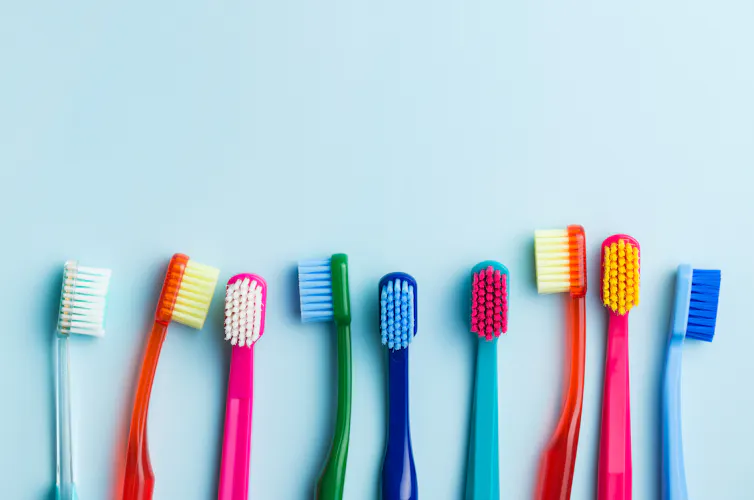
Jiri Hera/Shutterstock

What causes diseases in your mouth?

More than 1,000 species of microbes live in the mouth. Most dental and oral diseases are due to an imbalance or overgrowth in these microbes within the plaque (or “biofilm”).

Plaque gathers on the hard surfaces inside the mouth (your teeth), as well as soft surfaces (such as your tongue). Removing plaque manually with brushing and flossing is the most effective way to maintain oral health.

Plaque starts to form immediately after brushing, which is why you should remove it regularly.

Things to do

1. Brush twice a day

Use a toothbrush with soft bristles (either electric or manual). Soft bristles remove plaque without damaging the teeth or gums. A fluoridated toothpaste will help strengthen the teeth.

Brush for at least two minutes, using a sweeping and scrubbing motion, away from the gums. It’s a good idea to start at the back teeth and work your way through to the front teeth. Don’t forget to scrub the biting surface of the teeth.

2. Floss

Don’t skip this step – it’s crucial to clean in-between the teeth where a toothbrush can’t reach. Once a day should be enough.

Whether you use floss, a pick, a bottle brush or other devices may depend on the space between your teeth.

3. Clean your tongue

To completely remove the microbes, it’s also important to clean your tongue regularly (twice daily). You can use a toothbrush while you’re already brushing, or a special tongue scraper – just don’t brush or scrape too hard.
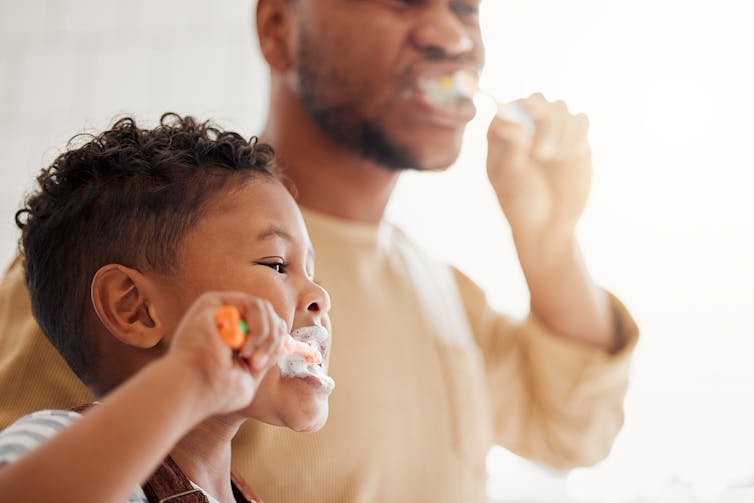
Little boy and father brush teeth in mirror.
Brushing twice a day is important to remove bacteria in the mouth and on the teeth. PeopleImages.com – Yuri A/Shutterstock

Things to avoid

1. Sugary drinks and refined food

What we eat and drink can affect the mouth’s pH.

When bacteria in the mouth break down sugars, they produce acids. The acidity can dissolve minerals in the teeth and lead to decay.

Refined foods – such as white bread, cakes and pastries – can easily be broken down by the mouth’s bacteria. So, having a lot of them, as well as sugary drinks, can damage the teeth and cause cavities.

Water is the best choice to drink with your meals. Sparkling and soda water are acidic and can lead to mineral loss from the teeth, even when they are unflavoured. There is evidence flavoured sparkling water can be as harmful as orange juice.

2. Tobacco and vaping

Smoking or using smokeless tobacco (such as chewed tobacco or snuff pouches) is linked to oral cancer.

Nicotine is also known to increase the severity of gum diseases – even when inflammation isn’t visible.

This is true for both smoking and smokeless tobacco (such as chewed tobacco or snuff pouches).

Vaping also increases your risk of developing cavities and gum disease.

3. Too much alcohol, tea and coffee

Drinking a lot of coffee, tea or red wine can stain your teeth. So if you’re concerned about your teeth appearing yellow or brown, it’s best to limit your intake.

Drinking alcohol is also linked to an increased risk of developing oral cancers, which most commonly affect the tongue, floor of the mouth, cheek and palate.
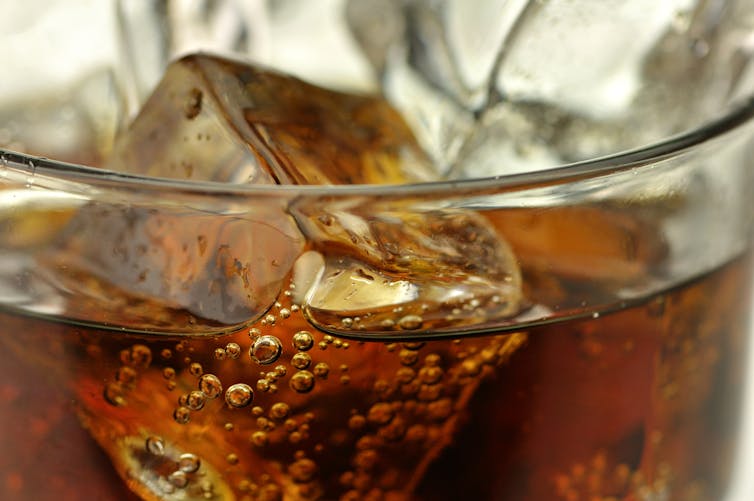
Close up of cola with ice.
Drinks that are fizzy and sugary can damage the teeth. Svetlana Foote/Shutterstock

Your mouth’s health is linked to your overall health

Leaving oral diseases untreated (such as gum disease) has been linked to developing other conditions, such as liver disease, and pre-existing conditions getting worse.

This is particularly evident if you have diabetes. Evidence shows it’s easier to manage blood sugar levels when gum diseases are properly treated.

You can keep an eye on symptoms such as bleeding gums, which may be an early sign of gum disease. If symptoms worry you, talk to your GP or diabetes educator. They may be able to refer you to a dentist if needed.

Dileep Sharma, Professor and Head of Discipline – Oral Health, University of Newcastle

This article is republished from The Conversation under a Creative Commons license. Read the original article.

Don’t Forget…

Did you arrive here from our newsletter? Don’t forget to return to the email to continue learning!

Learn to Age Gracefully

Join the 98k+ American women taking control of their health & aging with our 100% free (and fun!) daily emails:

  • Cottage cheese is back and all over TikTok. Two dietitians explain why social media’s obsessed

    10almonds is reader-supported. We may, at no cost to you, receive a portion of sales if you purchase a product through a link in this article.

    You might remember cottage cheese from your childhood. Back then, it was considered “diet food”. You ate it out of the tub, with celery or spread it on crackers for a low-calorie snack. Then cottage cheese went out of fashion.

    But cottage cheese is having a resurgence. In recent months, Google searches for “cottage cheese” have risen to the highest levels since 2004.

    Social media influencers have been promoting its benefits on TikTok and Instagram with hashtags such as #cottagecheese, #cottagecheeseforlife, and #cottagecheeserecipe. Sales of cottage cheese around the world have skyrocketed.

    Let’s see why cottage cheese is having such a moment.

    Karolina Kaboompics/Pexels

    What is cottage cheese?

    Cottage cheese is a fresh dairy cheese product with a mild flavour and a slightly tangy taste. It is made by curdling cow’s milk, then draining the whey, leaving behind the curds. These curds are usually small and lumpy, and the texture can vary from creamy to dry, depending on the amount of whey left in the cheese.

    The term “cottage cheese” is said to have originated because the cheese was generally made in cottage-type houses from leftover milk, after making butter.

    Cottage cheese is cheap, costing about A$12 per kilogram in the supermarket, similar to ricotta cheese.

    It’s also surprisingly simple to make at home using freely available recipes. All you need is milk, salt and a splash of vinegar.

    We’re using cottage cheese in new ways

    It’s difficult to know what started the latest cottage cheese trend. But the creativity of social media means people are sharing alternative ways to use cottage cheese, changing people’s views from it being boring and lacking flavour to it being versatile and healthy.

    People are spreading cottage cheese on toast and using it to make dishes such as porridge, dips, salads, bread and flatbreads. They’re using it in cakes and scones, and in desserts such as mousse and ice cream.

    Is cottage cheese healthy?

    Compared with other cheeses, cottage cheese is low in fat and therefore energy (kilojoules or kJ). This makes it a smart choice for people looking to cut down on their daily energy intake.

    For example, 100 grams of cottage cheese contains about 556kJ. The same amount of cheddar contains 1,254kJ and parmesan 1,565kJ.

    Many cheeses are rich in protein but they often contain higher amounts of kilojoules due to their fat content. But cottage cheese has substantial amounts of protein with fewer kilojoules.

    This makes cottage cheese an ideal option for people aiming to maximise their protein intake without eating large amounts of kilojoules.

    Some 100g of cottage cheese provides 17g protein. This is about the same found in three eggs, 60g chicken breast or 320 millilitres (about 300g) full-fat yoghurt.

    Woman taking picture of pancakes with smartphone
    People are sharing images of their cottage cheese creations on TikTok and Instagram. New Africa/Shutterstock

    Cottage cheese also contains high levels of vitamin B12 (important for healthy brain function), riboflavin (supports healthy skin and eyes), phosphorus (helps build strong bones and teeth) and folate (essential for cell growth).

    However, cottage cheese is lower in calcium compared with other cheeses. It contains just 89 milligrams per 100g. This compares with parmesan (948mg), haloumi (620mg) and ricotta (170mg).

    You’ve convinced me. How can I use cottage cheese?

    Beyond its excellent nutrition profile, the resurgence of cottage cheese is enabling people to experiment in the kitchen. Its neutral flavour and varied textures – ranging from smooth to chunky – makes it suitable for a range of dishes, from sweet to savoury.

    TikTok and Instagram have some great recipes. You could start with an old faithful recipe of celery and cottage cheese, and work your way towards new options such as cottage cheese ice cream.

    The healthiest recipes will be those that combine cottage cheese with wholefoods such as fruits, vegetables, nuts and seeds, and lean protein sources.

    For instance, you can make a cottage cheese wrap then fill it with vegetables and a lean source of protein (such as chicken or fish).

    Other combinations include cottage cheese salad dressings, vegetable dips and egg salads.

    Cottage cheese’s rise in popularity is well deserved. Including more cottage cheese in your diet is a smart choice for getting a high dose of protein without adding processed ingredients or too much energy. Embrace the trend and get creative in the kitchen.

    Lauren Ball, Professor of Community Health and Wellbeing, The University of Queensland and Emily Burch, Accredited Practising Dietitian and Lecturer, Southern Cross University

    This article is republished from The Conversation under a Creative Commons license. Read the original article.

    Share This Post

  • Delay Ageing – by Dr. Colin Rose

    10almonds is reader-supported. We may, at no cost to you, receive a portion of sales if you purchase a product through a link in this article.

    Note: the title is spelled that way because it is British English. We generally write in US English here at 10almonds, but we’ll first quote directly from Dr. Rose as written:

    ❝I have written Delay Ageing because there is some very important recent University research on ageing and age related illness that deserves to be made accessible to a general audience.❞

    What is this research? Well, there’s quite a lot over its 300-odd pages (exact number depends on the edition and whether we count end matter), and most of it is tweaks and refinements on things with which you’ll probably be at least brushingly familiar if you’re a regular 10almonds reader.

    Dr. Rose addresses the nine hallmarks of aging, of which there are ten, ranging from such things as “telomeres get shorter” and “DNA accumulates damage”, to “stem cells become exhausted” and “cells fail to communicate properly”, and asks the question “what if we were to target all these things simultaneously?”.

    Rather than going for drugs on drugs on drugs (half of them to deal with undesired side effects of the previous ones), Dr. Cole leaves no stone unturned to find lifestyle interventions that will improve each of these, even if just a little. Because, all those “little” improvements add up and even compound, and on the flipside, mean that factors of aging aren’t adding up and compounding so much or so quickly anymore.

    The rather broad umbrella of “lifestyle interventions” obviously includes food under its auspices, and with it, nutraceuticals. So to give one example, if you’re taking a fisetin supplement (a natural senolytic agent), you’ll find science vindicating that here. And much more.

    The style is… Less pop-science and more “textbook written for laypersons”, and you may be thinking “isn’t that the same?” and the difference is that the textbook has a lot less polish and finesse, but often more precise information.

    Bottom line: if you’d like to combat aging on 10 different fronts with easily implementable lifestyle interventions, and know exactly what is doing what and how, then this is the book for you.

    Click here to check out Delay Ageing, and delay aging!

    Share This Post

  • Parsnip vs Pumpkin – Which is Healthier?

    10almonds is reader-supported. We may, at no cost to you, receive a portion of sales if you purchase a product through a link in this article.

    Our Verdict

    When comparing parsnips to pumpkin, we picked the parsnips.

    Why?

    It wasn’t close:

    In terms of macros, parsnips have nearly 10x the fiber for a little over 2x the carbs, and a tiny bit more protein, all adding up to an easy win for parsnips in this category.

    In the category of vitamins, parsnips have more of vitamins B1, B3, B5, B6, B9, C, E and K, while pumpkin has more vitamin A (whence the color) and B2. It’s worth noting that not only is that division of vitamins already very stacked in favor of parsnips, but also, parsnips have 20x more vitamin K, and are a very good source of that. So, a very clear win for parsnips here.

    Looking at minerals next, parsnips have more calcium, magnesium, manganese, phosphorus, potassium, selenium, and zinc, while pumpkin has a little more copper and iron. Another rather one-sided win for parsnips.

    In other considerations, neither are particularly great for polyphenols, by the standards of most vegetables, but this is not too surprising: root vegetables and squashes are often much lower in polyphenols than most. In any case, a tie in this category.

    Want to learn more?

    You might like:

    Sunflower Seeds vs Pumpkin Seeds – Which is Healthier? ← to restore some of pumpkin’s honor 😉

    Enjoy!

    Share This Post

  • WHO Overturns Dogma on Airborne Disease Spread. The CDC Might Not Act on It.

    10almonds is reader-supported. We may, at no cost to you, receive a portion of sales if you purchase a product through a link in this article.

    The World Health Organization has issued a report that transforms how the world understands respiratory infections like covid-19, influenza, and measles.

    Motivated by grave missteps in the pandemic, the WHO convened about 50 experts in virology, epidemiology, aerosol science, and bioengineering, among other specialties, who spent two years poring through the evidence on how airborne viruses and bacteria spread.

    However, the WHO report stops short of prescribing actions that governments, hospitals, and the public should take in response. It remains to be seen how the Centers for Disease Control and Prevention will act on this information in its own guidance for infection control in health care settings.

    The WHO concluded that airborne transmission occurs as sick people exhale pathogens that remain suspended in the air, contained in tiny particles of saliva and mucus that are inhaled by others.

    While it may seem obvious, and some researchers have pushed for this acknowledgment for more than a decade, an alternative dogma persisted — which kept health authorities from saying that covid was airborne for many months into the pandemic.

    Specifically, they relied on a traditional notion that respiratory viruses spread mainly through droplets spewed out of an infected person’s nose or mouth. These droplets infect others by landing directly in their mouth, nose, or eyes — or they get carried into these orifices on droplet-contaminated fingers. Although these routes of transmission still happen, particularly among young children, experts have concluded that many respiratory infections spread as people simply breathe in virus-laden air.

    “This is a complete U-turn,” said Julian Tang, a clinical virologist at the University of Leicester in the United Kingdom, who advised the WHO on the report. He also helped the agency create an online tool to assess the risk of airborne transmission indoors.

    Peg Seminario, an occupational health and safety specialist in Bethesda, Maryland, welcomed the shift after years of resistance from health authorities. “The dogma that droplets are a major mode of transmission is the ‘flat Earth’ position now,” she said. “Hurray! We are finally recognizing that the world is round.”

    The change puts fresh emphasis on the need to improve ventilation indoors and stockpile quality face masks before the next airborne disease explodes. Far from a remote possibility, measles is on the rise this year and the H5N1 bird flu is spreading among cattle in several states. Scientists worry that as the H5N1 virus spends more time in mammals, it could evolve to more easily infect people and spread among them through the air.

    Traditional beliefs on droplet transmission help explain why the WHO and the CDC focused so acutely on hand-washing and surface-cleaning at the beginning of the pandemic. Such advice overwhelmed recommendations for N95 masks that filter out most virus-laden particles suspended in the air. Employers denied many health care workers access to N95s, insisting that only those routinely working within feet of covid patients needed them. More than 3,600 health care workers died in the first year of the pandemic, many due to a lack of protection.

    However, a committee advising the CDC appears poised to brush aside the updated science when it comes to its pending guidance on health care facilities.

    Lisa Brosseau, an aerosol expert and a consultant at the Center for Infectious Disease Research and Policy in Minnesota, warns of a repeat of 2020 if that happens.

    “The rubber hits the road when you make decisions on how to protect people,” Brosseau said. “Aerosol scientists may see this report as a big win because they think everything will now follow from the science. But that’s not how this works and there are still major barriers.”

    Money is one. If a respiratory disease spreads through inhalation, it means that people can lower their risk of infection indoors through sometimes costly methods to clean the air, such as mechanical ventilation and using air purifiers, and wearing an N95 mask. The CDC has so far been reluctant to press for such measures, as it updates foundational guidelines on curbing airborne infections in hospitals, nursing homes, prisons, and other facilities that provide health care. This year, a committee advising the CDC released a draft guidance that differs significantly from the WHO report.

    Whereas the WHO report doesn’t characterize airborne viruses and bacteria as traveling short distances or long, the CDC draft maintains those traditional categories. It prescribes looser-fitting surgical masks rather than N95s for pathogens that “spread predominantly over short distances.” Surgical masks block far fewer airborne virus particles than N95s, which cost roughly 10 times as much.

    Researchers and health care workers have been outraged about the committee’s draft, filing letters and petitions to the CDC. They say it gets the science wrong and endangers health. “A separation between short- and long-range distance is totally artificial,” Tang said.

    Airborne viruses travel much like cigarette smoke, he explained. The scent will be strongest beside a smoker, but those farther away will inhale more and more smoke if they remain in the room, especially when there’s no ventilation.

    Likewise, people open windows when they burn toast so that smoke dissipates before filling the kitchen and setting off an alarm. “You think viruses stop after 3 feet and drop to the ground?” Tang said of the classical notion of distance. “That is absurd.”

    The CDC’s advisory committee is comprised primarily of infection control researchers at large hospital systems, while the WHO consulted a diverse group of scientists looking at many different types of studies. For example, one analysis examined the puff clouds expelled by singers, and musicians playing clarinets, French horns, saxophones, and trumpets. Another reviewed 16 investigations into covid outbreaks at restaurants, a gym, a food processing factory, and other venues, finding that insufficient ventilation probably made them worse than they would otherwise be.

    In response to the outcry, the CDC returned the draft to its committee for review, asking it to reconsider its advice. Meetings from an expanded working group have since been held privately. But the National Nurses United union obtained notes of the conversations through a public records request to the agency. The records suggest a push for more lax protection. “It may be difficult as far as compliance is concerned to not have surgical masks as an option,” said one unidentified member, according to notes from the committee’s March 14 discussion. Another warned that “supply and compliance would be difficult.”

    The nurses’ union, far from echoing such concerns, wrote on its website, “The Work Group has prioritized employer costs and profits (often under the umbrella of ‘feasibility’ and ‘flexibility’) over robust protections.” Jane Thomason, the union’s lead industrial hygienist, said the meeting records suggest the CDC group is working backward, molding its definitions of airborne transmission to fit the outcome it prefers.

    Tang expects resistance to the WHO report. “Infection control people who have built their careers on this will object,” he said. “It takes a long time to change people’s way of thinking.”

    The CDC declined to comment on how the WHO’s shift might influence its final policies on infection control in health facilities, which might not be completed this year. Creating policies to protect people from inhaling airborne viruses is complicated by the number of factors that influence how they spread indoors, such as ventilation, temperature, and the size of the space.

    Adding to the complexity, policymakers must weigh the toll of various ailments, ranging from covid to colds to tuberculosis, against the burden of protection. And tolls often depend on context, such as whether an outbreak happens in a school or a cancer ward.

    “What is the level of mortality that people will accept without precautions?” Tang said. “That’s another question.”

    KFF Health News is a national newsroom that produces in-depth journalism about health issues and is one of the core operating programs at KFF—an independent source of health policy research, polling, and journalism. Learn more about KFF.

    Subscribe to KFF Health News’ free Morning Briefing.

    Don’t Forget…

    Did you arrive here from our newsletter? Don’t forget to return to the email to continue learning!

    Learn to Age Gracefully

    Join the 98k+ American women taking control of their health & aging with our 100% free (and fun!) daily emails:

  • The Life-Changing Manga Of Tidying Up – by Marie Kondo

    10almonds is reader-supported. We may, at no cost to you, receive a portion of sales if you purchase a product through a link in this article.

    Everyone knows the slogan “does this spark joy?”, but there’s a whole method to the magic that goes far beyond that. It spans all manner of things from the over-arching strategy of taking on a house-sized tidying project, to practical little tips like “store these things this way instead; now they’re safe, tidy and accessible—and look good too!”.

    You may be wondering: why are we reviewing this book instead of the much more famous “The Life-Changing Magic of Tidying Up”?

    It’s simple: here at 10almonds, we like things to be super simple and easy to digest.

    This book is smaller, simpler, and more digestible than her more famous book, without sacrificing content. And you know what? We held it in our hands and it sparked joy

    Bottom line is: it’s useful, it’s beautiful, it will change your life (and your underwear drawer).

    PS: this 10almonds team-member gifted a copy to her 12-year-old son. He implemented it the same day, unbidden. Magic indeed!

    Spark Joy In Your House Today With This Wonderful Book!

    Don’t Forget…

    Did you arrive here from our newsletter? Don’t forget to return to the email to continue learning!

    Learn to Age Gracefully

    Join the 98k+ American women taking control of their health & aging with our 100% free (and fun!) daily emails:

  • Gut Feelings – by Dr Will Cole

    10almonds is reader-supported. We may, at no cost to you, receive a portion of sales if you purchase a product through a link in this article.

    More and more, science is uncovering links between our gut health and the rest of our health—including our mental health! We all know “get some fiber and consider probiotics”, but what else is there that we can do?

    Quite a lot, actually. And part of it, which Dr. Cole also explores, is the fact that the gut-brain highway is a two-way street!

    The book looks a lot especially at the particular relationship between shame and eating. The shame need not initially be about eating, though it can certainly end up that way too. But any kind of shame—be it relating to one’s body, work, relationship, or anything else, can not only have a direct effect on the gut, but indirect too:

    Once our “eating our feelings” instinct kicks in, things can spiral from there, after all.

    So, Dr. Cole walks us through tackling this from both sides—nutrition and psychology. With chapters full of tips and tricks, plus a 21-day plan (not a diet plan, a habit integration plan), this book hits shame (and inflammation, incidentally) hard and leads us into much healthier habits and cycles.

    In short: if you’d like to have a better relationship with your food, improve your gut health, and/or reduce inflammation, this is definitely a book for you!

    Click here to check out Gut Feelings on Amazon today!

    Don’t Forget…

    Did you arrive here from our newsletter? Don’t forget to return to the email to continue learning!

    Learn to Age Gracefully

    Join the 98k+ American women taking control of their health & aging with our 100% free (and fun!) daily emails: