Folic Acid In Menopause: Good Or Bad?
10almonds is reader-supported. We may, at no cost to you, receive a portion of sales if you purchase a product through a link in this article.

It’s Q&A Day at 10almonds!
Have a question or a request? We love to hear from you!
In cases where we’ve already covered something, we might link to what we wrote before, but will always be happy to revisit any of our topics again in the future too—there’s always more to say!
As ever: if the question/request can be answered briefly, we’ll do it here in our Q&A Thursday edition. If not, we’ll make a main feature of it shortly afterwards!
So, no question/request too big or small 😎
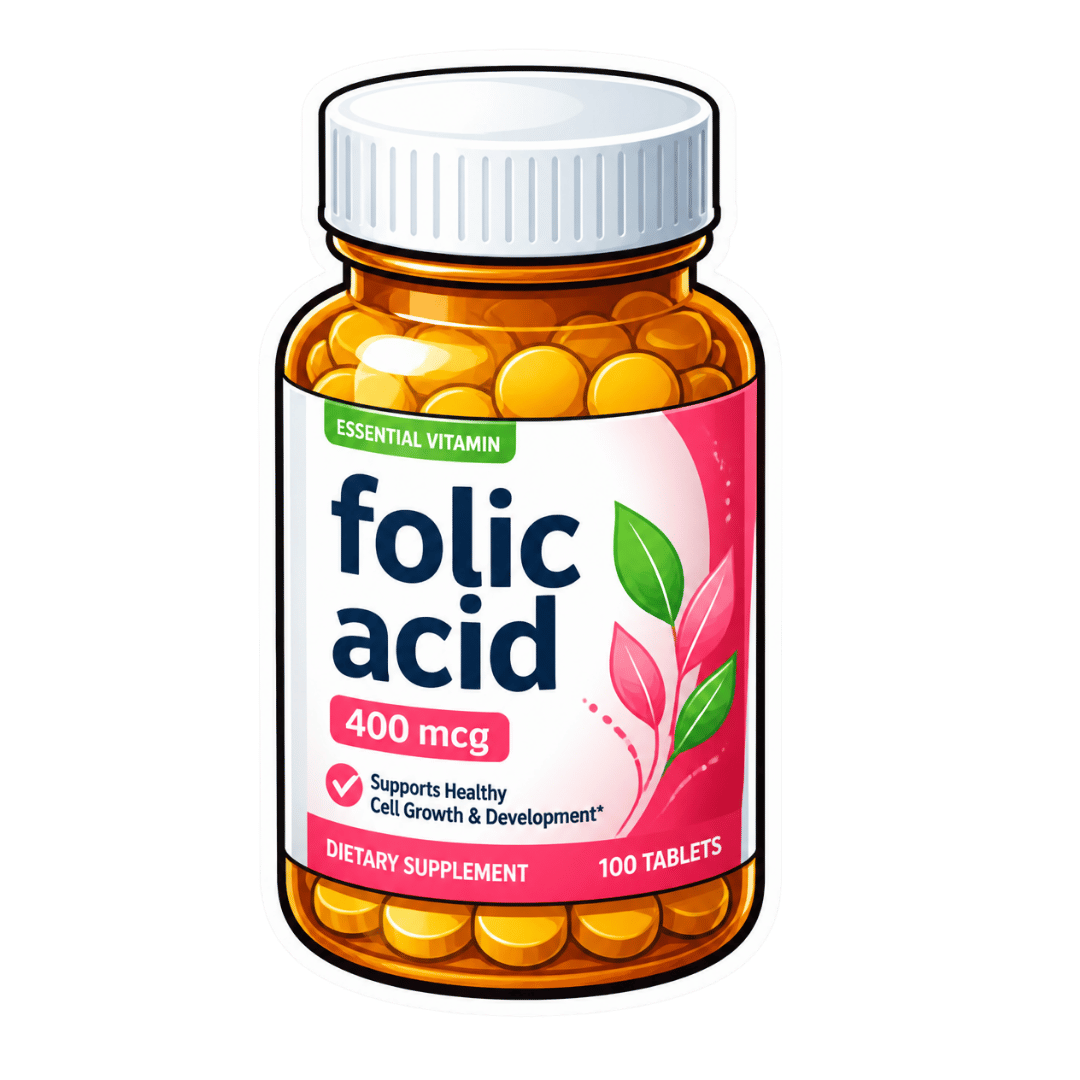
❝I was told that I should take Folic Acid after menopause, but on my medicine jar it says ‘For adults aged over 18 and under 50 only’, so what is right?❞
Let’s start by making a quick reference to our standard legal/medical disclaimer, that we are not doctors, let alone your doctors, and cannot pronounce on what you should and should not be taking; what we offer here is health science information, not medical advice.
Now that’s out of the way:
It’s likely mostly also simply a disclaimer. It’s not that vitamin B9 (folic acid, folate, and an assortment of other names) becomes no longer necessary after 50, let alone that it becomes somehow dangerous to consume per se (it is a vitamin; we will die without it; that’s what the “vita” bit of the word means; it is vital).
Of course, too much of anything, including vitamins, can be dangerous.
Indeed, we wrote about this one specifically, here: Folic Acid: What If You Take Too Much?
There are also some potential issues, of which the significant ones are usually only relevant if there’s also a vitamin B12 deficiency:
- Too much vitamin B9 can mask a vitamin B12 deficiency, where vitamin B12 deficiencies become more common as we get older
- Too much vitamin B9 without sufficient vitamin B12 can also accelerate age-related cognitive decline
(aside from that, it can increase the risk of childhood brain development, but that’s not a risk to you aged 50+, and it may increase the risk of cancer reoccurrence by around 1–6%, but that’s not an issue for most people, and for the people for whom it is an issue, as you see, the risk is low; still, obviously speak with your doctor if you think this one may apply to you, or even if you don’t, because speaking to your doctor about what you’re taking is rarely a bad idea)
How to get the most out of it
Of course, sticking to recommended dosage guidelines is important, but you can also go with a different vitamer of vitamin B9 (a vitamer is a variation of a vitamin), namely, l-methylfolate, which can help dodge a lot of the methylation issues and thus related problems we talked about.
See also: Which B Vitamins? It Makes A Difference
Please still stick to the recommended dosage guidelines of course, but it’s safer and as a bonus, you’ll also get more “bang for buck”.
Want to try some? We don’t sell it, but here for your convenience is an example product on Amazon 😎
Enjoy!
Don’t Forget…
Did you arrive here from our newsletter? Don’t forget to return to the email to continue learning!
Recommended
Learn to Age Gracefully
Join the 98k+ American women taking control of their health & aging with our 100% free (and fun!) daily emails: