
Do therapies like EMDR affect memories of traumatic events?
10almonds is reader-supported. We may, at no cost to you, receive a portion of sales if you purchase a product through a link in this article.
To recover from abuse or another traumatic experience, some people turn to a therapy called eye-movement desensitisation and reprocessing, or EMDR.
But this may present problems if these people pursue justice in the courts. In New South Wales, for instance, evidence obtained using EMDR canโt be used in a case unless it has been approved by the director (or deputy) of public prosecutions.
Prosecutors are concerned that after EMDR, trauma memories canโt be relied on as valid testimony. This has resulted in court cases not proceeding.
But what does the evidence say?
What is EMDR?
EMDR is one of the common exposure-based treatments for post-traumatic stress disorder (PTSD).
This group of therapies โ which encompass prolonged exposure, cognitive processing therapy, EMDR and other variants โ all ask a patient to recall their trauma. The therapists integrates this information and aims to correct unhelpful thought patterns that may be prolonging their distress.
Each of these treatments is recommended in most international guidelines for treating PTSD.
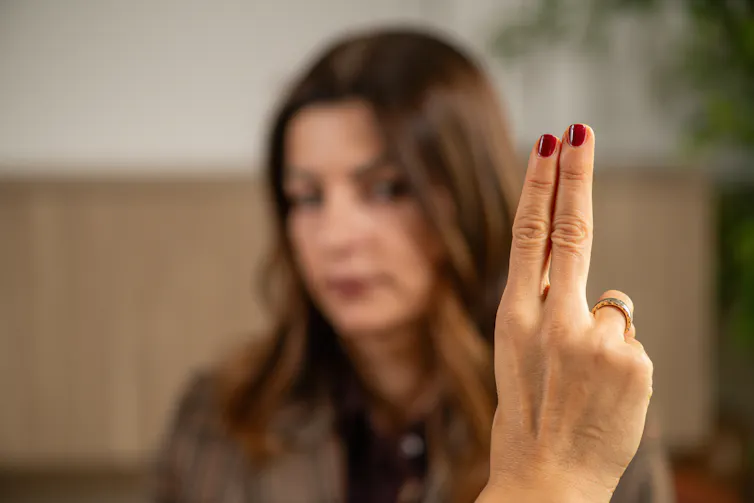
EMDR is different from the other exposure-based therapies because the therapist also asks the patient to move their eyes in a rapid side-to-side movement. This will typically involve following the therapistโs fingers move back and forth.
Proponents of EMDR initially proposed eye movements triggered neural processes that help people better adjust to or process trauma memories. However, the actual role of eye movements has been subject to much debate.
Although the mechanism isnโt yet fully understood, the weight of evidence suggests eye movements may reduce distress while recounting trauma memories because it depletes our working memory capacity. This results in less focus on the negative emotions associated with the memory.
Where did concerns about EMDR affecting memories come from?
EMDR has been criticised for potentially distorting peopleโs memories of traumatic events dates since the 1990s when the treatment increased in popularity.
This was also a period when when a controversial movement of โrecovered memory therapiesโ emerged. These were used to guide people to reconstruct memories that were purportedly โhiddenโ or โrepressedโ.
This involved therapists directing patients to focus attention on internal states, suspend reality and allow themselves to be guided by the therapist to recover so-called โrepressed memoriesโ, often of satanic or ritual abuse.
In the wake of this movement, many studies showed this sort of guided intervention could lead to false, or even implanted, memories.
At the same time, researchers were concerned about hypnotic techniques. During hypnosis, people could reconstruct false memories. They were particularly susceptible to misleading information and had stronger confidence in these memories.
For this reason, authorities around the world cautioned against using hypnosis in cases that may involve the person subsequently needing to give testimony in legal proceedings.
Some likened EMDR to hypnosis, others were sceptical of its claims
Some agencies and experts considered EMDR a hypnosis-like intervention because it focused the personโs attention on their internal state, promoted increased absorption in memories and actively guided memories.
Many also likened the finger waving in front of the patientโs face as inducing a hypnotic state.
Because EMDR guided patients to process memories in a way that made them less distressing, some concluded EMDR-elicited memories were comparably susceptible to distortion as hypnotically-induced memories.
This perception of EMDR at the time may also have been influenced by much initial scepticism of the therapy.
In the early period of its popularity, EMDR proponents made excessive claims of its success, such as being able to completely resolve trauma memories in a single session, despite the lack of evidence.
What does the evidence actually say?
Itโs difficult to test the claim that EMDR increases the likelihood of false memories because you canโt readily study this in clinical settings.
Instead, researchers have used experimental designs in people without PTSD to determine if eye movements themselves are likely to lead to false memories. The results are mixed.
Multiple studies have shown eye movements can lead to false memories. One study showed healthy research participants a video of a car accident. Half the sample then used eye movements. Then all participants were read an eye-witness narrative that involved false information about the video.
This study found those who used eye movements were more susceptible to the misinformation. It seems this effect may occur because eye movements reduce the vividness and intensity of emotions in memories, thereby making them more susceptible to false memories.
However, other laboratory-based studies have not replicated this effect. One study using the same design found using eye movements didnโt make memory more likely, reduce correct memory details, or affect the vividness or emotional intensity of the memory.
What does this all mean?
EMDR is one of a suite of exposure-based treatments for PTSD that involve recounting trauma memories and integrating new information about the trauma. These appear to be key in helping people resolve their traumatic stress. Although EMDR is not better than other exposure-based treatment, it is as effective as the others.
Although some evidence points to eye movements making a person more susceptible to false memories, other studies do not find this. Importantly, these studies are not actually testing EMDR.
There is no direct evidence that EMDR leads to false memories, just as there is no evidence that prolonged exposure or other exposure-based treatments do. Singling EMDR out as being particularly susceptible to memory distortion doesnโt appear to be supported by the scientific evidence.
The position of legal authorities to not accept testimony following EMDR is therefore not justified and may deny trauma survivors the right to legal proceedings.
If this article has raised issues for you, or if youโre concerned about someone you know, call Lifeline on 13 11 14. The National Sexual Assault, Family and Domestic Violence Counselling Line โ 1800 RESPECT (1800 737 732) โ is also available 24/7 for any Australian who has experienced family violence or sexual assault.
Richard Bryant, Professor & Director of Traumatic Stress Clinic, UNSW Sydney
This article is republished from The Conversation under a Creative Commons license. Read the original article.
Don’t Forget…
Did you arrive here from our newsletter? Don’t forget to return to the email to continue learning!

Recommended
Learn to Age Gracefully
Join the 98k+ American women taking control of their health & aging with our 100% free (and fun!) daily emails:
-
Do you take your own blood pressure at home? Hereโs how to choose the device that fits your armย best
10almonds is reader-supported. We may, at no cost to you, receive a portion of sales if you purchase a product through a link in this article.
About one in three Australian adults have hypertension, or high blood pressure.
High blood pressure is a leading contributor to preventable disability and early death because โ particularly when itโs not well controlled โ it increases the risk of developing conditions including heart disease, stroke, kidney disease and dementia.
Doctors are increasingly using blood pressure measurements taken at home to guide decisions about managing hypertension, such as whether you have hypertension in the first place, and whether you need to start or change medications. These readings can complement measurements taken in a doctorโs office and can be done more often.
Notably, home blood pressure measurements also reduce the โwhite coatโ effect, which refers to someoneโs blood pressure being high due to anxiety associated with a doctorโs office or medical environment. For this reason your doctor may ask you to measure your blood pressure at home to confirm whether itโs high or not.
For people who may have been advised to measure their blood pressure at home, having a device with a correctly sized cuff is essential to obtain accurate readings.
But in a new study, weโve found many people could be using cuffs that donโt fit their arm properly.
J_art/Getty Images Why is cuff size important?
Home blood pressure devices are usually sold with a single cuff size โ either standard or a larger one, sometimes called โwide-rangeโ.
But having the wrong cuff size affects the accuracy of the blood pressure reading.
If the cuff is too small, systolic blood pressure (the top number in a blood pressure reading, which denotes the pressure in your arteries when the heart pumps blood) will be overestimated. Conversely, if the cuff is too big, systolic blood pressure will be underestimated. The worse the cuff fits, the greater the measurement error is likely to be.
If your doctor makes decisions about your blood pressure based on inaccurate data, it could mean missing out on treatment to reduce your blood pressure when itโs needed, or starting treatment when itโs not needed.
Our study
In our analysis, we estimated the arm sizes of 18.7 million Australian adults based on data from the National Health Survey for 2017โ18. We estimated upper-arm circumference ranged from 20 to 62 centimetres, with an average of 32cm.
We then categorised these arm sizes to see how many would fit common home blood pressure cuffs: standard (22 to 32cm) and wide-range (22 to 42cm).
About 9 million people โ 48% of Australian adults โ had arms too big for the standard cuff size. And about 700,000 people (roughly 3.7% of Australian adults) had arms larger than 42cm, which means both the standard and wide-range cuff sizes could be too small. Only a very small number had arms that would be too small for both cuff sizes.
We calculated that, among adults reported to have hypertension in 2018, the standard cuff size would be unsuitable in about 60% of people, while both the standard and wide-range cuff size would be unsuitable in about 6%.
The main limitation of our study is that we estimated arm sizes, because a measurement of arm size wasnโt available in the survey data. This estimate was based on an equation developed from a group of people in the United States relatively similar to the Australian population.
Itโs possible some of our estimates may not be completely accurate, affecting our results. That said, research in the US has produced broadly similar findings, indicating 6.4% of adults would have arms too big for the wide-range cuff size.
How to choose the right device for you
You can measure the size of your arm at home by wrapping a measuring tape around the half-way point of your upper arm. This is roughly where your bicep is.
When choosing a home blood pressure monitor, the cuff size range is often reported on the cuff itself, on the box, or in the product description online. Some cuffs also have markings which can be used to double check if it fits your arm.
Itโs best to use the cuff that came with your device. If you use a different cuff, even one that says it is compatible with many devices, it may not give a correct reading. Home blood pressure devices are tested to work accurately with the specific cuffs they come with, so itโs not clear how well other cuffs would work with your device.
If you canโt find a cuff that fits, many manufacturers have a range of different devices, so contacting them to see if they have other options is a good place to start. A wrist cuff device is an option but is only recommended when blood pressure canโt be measured on the upper arm.
Finally, ensure the device you choose is validated, meaning it has passed accuracy testing in a broad sample of people using a standard process. You can search for the device manufacturer name and model number on lists of validated devices compiled by the independent international organisation STRIDE BP.
If you are unsure about the accuracy of your home blood pressure device, you can take it to your doctor to see if the measurements are similar to the device they use in the clinic.
Ritu Trivedi, Postdoctoral Research Fellow, School of Health Sciences, University of Sydney; Clara Chow, Cardiologist at Westmead Hospital; Director of the Westmead Applied Research Centre, University of Sydney, and Dean Picone, Senior Research Fellow, Sydney School of Health Sciences, Faculty of Medicine and Health, University of Sydney
This article is republished from The Conversation under a Creative Commons license. Read the original article.
Share This Post
-
Cantaloupe vs Lychees โ Which is Healthier?
10almonds is reader-supported. We may, at no cost to you, receive a portion of sales if you purchase a product through a link in this article.
Our Verdict
When comparing cantaloupe to lychees, we picked the cantaloupe.
Why?
Both have their merits and it was close!
In terms of macros, there’s no meaningful difference except that lychees have more carbs, so that could swing this any which way depending on how you feel about that. There’s enough fiber in both that it’s a non-issue metabolically though, so we call this round a tie.
In the category of vitamins, cantaloupe has more of vitamins A, B1, B3, B5, B7, B9, and K, while lychees have more of vitamins B2, B6, C, and E; a 7:4 win for cantaloupe.
Looking at minerals, cantaloupe has more calcium, magnesium, potassium, and zinc, while lychees have more copper, iron, phosphorus, and selenium, for a 4:4 tie in this round.
Adding up the sections makes for a modest overall win for cantaloupe, but by all means enjoy either or both, as diversity is good!
Want to learn more?
You might like:
Some Surprising Truths About Hunger And Satiety โ our main feature in which we examine the science of volumetrics, including a study that shows how water that is part of a food (but not served with a food) decreases caloric intake.
Another reason to enjoy melons!
Share This Post
-
What is hyaluronic acid โ and is it OK for kids and teens to use this common skincare ingredient?
10almonds is reader-supported. We may, at no cost to you, receive a portion of sales if you purchase a product through a link in this article.
Earlier this month, Kmart pulled a โhyaluronic acid cleansing balmโ from its shelves, after a teen who used the skincare product was hospitalised, reporting eye pain and blurred vision. Itโs unclear what ingredient caused this reaction.
In a statement, Kmart said it was removing the product while conducting an investigation. The retailer also said:
We want to assure our customers that our cosmetics are designed to ensure that they comply with both Australian and European requirements on ingredients.
Hyaluronic acid โ despite the name โ is a gentle ingredient commonly used in skincare products.
But what does hyaluronic acid do to your skin as a skincare ingredient? And is it safe for tweens and teens?
Sabinayro/Shutterstock What is hyaluronic acid?
Hyaluronic acid is a glycosaminoglycan โ a sugar-based molecule found naturally in the skin, eyes, joint fluid and connective tissue.
It plays a key role in hydrating the skin and tissues, lubricating our joints and supporting tissue repair.
Beyond cosmetics, hyaluronic acid is used in drug delivery, regenerative medicine, wound repair, and to treat conditions such as atherosclerosis (where the arterial walls harden and narrow) and osteoarthritis (a degenerative joint disease).
It is also a key ingredient in many eye drops and contact lens care solutions.
How is it used in skincare?
While the word โacidโ might suggest it is harsh and potentially damaging to the skin, hyaluronic acid is not used in its acidic form in skincare products. It is usually used in its salt form, sodium hyaluronate.
In skincare, active acids such as salicylic acid usually lower the skinโs pH and exfoliate it by breaking the bonds between dead skin cells.
Hyaluronic acid, in contrast, is used to hydrate the skin. It is a humectant, an ingredient that attracts and retains water molecules.
Hyaluronic acid has three qualities that make it suitable for skincare: itโs soluble (can be dissolved in water), biocompatible (meaning itโs not harmful to the body), and biodegradable (naturally breaks down into non-toxic, simpler substances).
It is usually safe and well-tolerated, meaning it has very few side effects.
In skincare products, hyaluronic is used in different forms. Smaller hyaluronic molecules can penetrate deeper into the skin and hydrate the lower levels. In products this is often advertised as โanti-ageingโ, because it stimulates the production of collagen (a structural protein in the skin), and helps to improve elasticity and reduce the appearance of fine lines.
Larger hyaluronic acid molecules remain on the skinโs surface and have an immediate hydrating effect, preventing water evaporation from the skin.
Hyaluronic acid helps the skin attract and retain water molecules for hydration. Art_Photo/Shutterstock Any risks?
Hyaluronic acid is generally a safe ingredient, even for sensitive skin. But products advertised as โhyaluronic acid skincareโ may contain other ingredients which can cause irritation.
In particular, fragrances, preservatives and surfactants (ingredients that produce foam and help wash away oil and dirt) may be safe for skin but burn or otherwise irritate the eyes.
This is because the cornea and conjuctiva (the thin membrane covering the eye) are much more sensitive than the skin.
How are skincare ingredients regulated?
Unlike medicines and products used for therapeutic reasons, which are regulated by the Therapeutic Goods Administration (TGA), general cosmetic products do not require pre-market safety testing or approval.
Instead, companies need to register their business with the Australian Industrial Chemicals Introduction Scheme and verify that their ingredients are not banned or restricted in Australia.
This creates a potential gap where defective products remain on the market, only to be recalled after adverse reactions occur.
Are these products appropriate for children?
Most scientific research on active ingredients โ including hyaluronic acid โ has been evaluated in older populations. This leaves a gap in understanding how they affect teen and preteen skin.
Many products are designed for ageing and/or specific skin types, and are largely unnecessary for children and younger people.
In some cases, they can potentially be harmful to their skin. For example, unless prescribed by a dermatologist, itโs advisable for young people to avoid retinoid products (containing retinol or retinal) as they can cause redness, peeling and drying.
Similarly, products with alpha hydroxy acids can cause irritation, itching, redness and may worsen acne in young skin.
So, what should younger people look for?
Preteens and teens should avoid products containing active ingredients such as retinol, vitamin C, alpha- and beta- hydroxy acids, and peptides, as well as those labelled with terms such as anti-ageing, wrinkle-reducing, brightening, or firming.
To keep skin clean and protected, teenagers can use a good cleanser, a simple moisturiser and a broad spectrum SPF 30 or 50 sunscreen.
Itโs best to opt for gentle, fragrance-free cleansers and moisturisers suitable for all skin types. Consulting with a pharmacist can provide personalised recommendations based on individual skin needs.
Zoe Porter, Lecturer, Pharmacy and Pharmaceutical Science, Monash University and Laurence Orlando, Senior Lecturer, Product Formulation and Development, Analytical Methods, Monash University
This article is republished from The Conversation under a Creative Commons license. Read the original article.
Share This Post
Related Posts
-
Avocado vs Fig โ Which is Healthier?
10almonds is reader-supported. We may, at no cost to you, receive a portion of sales if you purchase a product through a link in this article.
Our Verdict
When comparing avocado to figs, we picked the avocado.
Why?
Figs are great, but this one wasn’t close:
In terms of macros, avocados have more than 2x the fiber and much more fat (famously healthy fats, including omega-3 fatty acids), while figs have more carbs, so this one’s an easy first-round win for avocados.
In the category of vitamins, avocados have more of vitamins B1, B2, B3, B5, B6, B7, B9, C, E, and K, while figs are not higher in any vitamin, giving avocados a very one-sided win in this round.
Looking at minerals, avocados have more copper, iron, magnesium, manganese, phosphorus, potassium, selenium, and zinc, while figs boast only more calcium, so this one’s another win for avocados.
Adding up the sections makes for a very clear overall win for avocados, but by all means enjoy either or both, as diversity is best!
Want to learn more?
You might like:
Omega-3s: Different Sources, Different Benefits?
Enjoy!
Don’t Forget…
Did you arrive here from our newsletter? Don’t forget to return to the email to continue learning!
Learn to Age Gracefully
Join the 98k+ American women taking control of their health & aging with our 100% free (and fun!) daily emails:
-
Dark Spots Gone! (Antihyperpigmentation Method)
10almonds is reader-supported. We may, at no cost to you, receive a portion of sales if you purchase a product through a link in this article.
Dr. Sam Ellis, dermatologist, shows us how:
Letโs make this clear
Your skin, that is. The trick here is to treat stubborn hyperpigmentation with a โkitchen sinkโ strategy that targets pigment production, inflammation, oxidative stress, and cell turnover;
- Cleansing is optional: skip a morning cleanse if your skin is sensitive or dry to preserve overnight oils, but use a gentle, non-stripping cleanser if your skin is oily or has heavy nighttime product residue.
- AHA exfoliation one to two times weekly: use alpha hydroxy acids like glycolic, lactic, or mandelic acid to increase cell turnover and fade surface pigment.
- Daily antioxidant protection: apply an antioxidant on non-exfoliation days to neutralize free radicals and reduce pigment stimulation, with vitamin C as the gold standard.
- Prescription options: apply prescription treatments like azelaic acid or hydroquinone after antioxidants, with azelaic acid being pregnancy-safe, anti-inflammatory, pigment-reducing, and available both by prescription and OTC.
- Non-prescription pigment serums: layer targeted treatments such as Allies of Skin Tranexamic and Arbutin Advanced Brightening Serum, which combines alpha arbutin, tranexamic acid, licorice root extract, and other pigment inhibitors at effective levels while remaining gentle.
- Moisturizer as needed: use a lightweight moisturizer if required for hydration, ensuring it layers well without interfering with actives or sunscreen. This also helps with skin shedding, counterintuitively, because the skin struggles to do what it’s supposed to if it’s too dry.
- Sunscreen is non-negotiable: apply an adequate amount and consider layering in two applications for better coverage.
That’s quite a bit of layering, so wait about 30โ60 seconds between steps, aiming for a thorough but efficient routine that takes more than 2 minutes but still under 10 minutes.
For more on all that plus some additional product-specific recommendations, enjoy:
Click Here If The Embedded Video Doesnโt Load Automatically!
Want to learn more?
You might also like:
Discoloration 101: Tips, Tricks, & Best Approaches For Your Skin Type!
Take care!
Don’t Forget…
Did you arrive here from our newsletter? Don’t forget to return to the email to continue learning!
Learn to Age Gracefully
Join the 98k+ American women taking control of their health & aging with our 100% free (and fun!) daily emails:
-
Almonds vs Edamame โ Which is Healthier?
10almonds is reader-supported. We may, at no cost to you, receive a portion of sales if you purchase a product through a link in this article.
Our Verdict
When comparing almonds to edamame, we picked the almonds.
Why?
It’s not just our pro-almond bias! When it comes to these two superfood snacks, there is a clear winner:
In terms of macros, almonds have nearly 3x the fiber, more than 2x the carbs, and 2x the protein, winning easily in this category.
In the category of vitamins, things look closer to even; almonds have more of vitamins B1, B2, B3, B6, and E, while edamame has more of vitamins B5, B9, C, and K. Superficially that’s a 5:4 marginal win for almonds, but it’s worth bearing in mind that one of these vitamins is an outlier in its abundance: almonds have 35x the vitamin E, meaning that just 2oz of almonds already covers the recommended daily amount of vitamin E. In any case, a clear win for almonds here.
Looking at minerals next, it’s more one-sided again; almonds are richer in calcium, copper, iron, magnesium, manganese, phosphorus, potassium, selenium, and zinc, while edamame is not higher in any mineral, unless we count sodium, in which case we can mention: edamame is 6x higher in sodium (and then obviously even more if you cook it in salted water, but we’re not counting that, just what’s in the unprepared beans already). All in all, one more overwhelming win for almonds.
In other considerations, both are good sources of polyphenols, but almonds have more (especially notably higher in heavy-hitters quercetin and kaempferol).
Adding up the sections and there can be only one winner today; it’s almonds by a country mile. Do enjoy either or both though, as diversity is good!
Want to learn more?
You might like:
The Diet That Slows Skin Aging
Enjoy!
Don’t Forget…
Did you arrive here from our newsletter? Don’t forget to return to the email to continue learning!
Learn to Age Gracefully
Join the 98k+ American women taking control of their health & aging with our 100% free (and fun!) daily emails:


