
Can a new blood test really detect ME/CFS? An expert unpacks new research

10almonds is reader-supported. We may, at no cost to you, receive a portion of sales if you purchase a product through a link in this article.

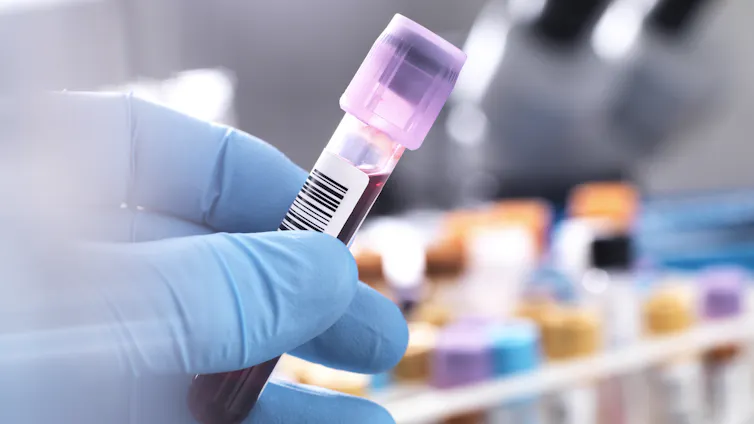
Scientists in the United Kingdom say they have developed a blood test that can diagnose myalgic encephalomyelitis/chronic fatigue syndrome (ME/CFS) with 96% accuracy – the first of its kind.

For many who live with the debilitating condition, this will be exciting news.

Despite affecting millions of people worldwide, this condition remains poorly understood. It is characterised by unrelenting fatigue that doesn’t improve with rest, and post-exertional malaise – a worsening of symptoms after even minor physical or mental activity.

Yet with no reliable test, many people wait years for a diagnosis. This usually depends on symptoms meeting certain clinical criteria. But diagnostic criteria can be controversial as they vary worldwide and many are outdated.

An accurate blood test could be a game changer for diagnosis.

So, how excited should we get? Here’s what we know.
Westend61/Getty

How diagnosis works without a test

Currently, you can only receive a diagnosis if you experience disabling fatigue – one of the key symptoms according to most clinical criteria – for at least six months, accompanied by post-exertional malaise.

But people with the condition often experience a wide range of other symptoms, including headaches, muscle or joint pain, sleep disturbances, dizziness, a racing heart, and problems with memory, thinking and decision making.

So, clinicians must also rule out other conditions with overlapping symptoms.

This means diagnosis relies heavily on clinicians’ knowledge of ME/CFS and their willingness to listen to the patient’s complex symptom history. This process can take years – and the delay in diagnosis has real consequences.

Evidence suggests early intervention is key to recovery. Rest during the early stages of the illness likely results in better long-term outcomes, as has been suggested for the clinically similar disease long COVID.

One study showed a delayed ME/CFS diagnosis was linked to poorer outcomes, meaning recovery was less likely and the chance of developing more severe symptoms increased.

Without a definitive diagnosis, patients regularly face disbelief about their illness and have limited access to information, health-care services and medical benefits.

Frequent delays in diagnosis may contribute to the condition’s low recovery rate, which is estimated at just 1–10%.

What the new study looked at

To develop a diagnostic test, the new study identified biomarkers that may be specific to people with this condition.

In this case, the biomarkers relate to epigenetics – changes in the structure of a person’s chromosomes, influencing which genes can be turned on or off.

These changes occur due to environmental influences such as stress, infection and exercise. So, when someone develops ME/CFS, the illness may change the structure of their chromosomes – but until now researchers hadn’t identified what this would look like.

The researchers examined blood samples from people they knew had ME/CFS and identified around 200 such biomarkers. These changes formed a distinct biological “signature” that was not present in the blood of healthy participants in the comparison group.

This signature was very accurate in correctly identifying which samples were from people with the condition and which were from the comparison group.

According to the researchers, the test’s sensitivity was 92% – this is the probability a positive result will show when someone has the condition. It had a specificity of 98%, meaning the probability it can rule out negative cases.

This combined to an overall diagnostic accuracy of 96%.

So, is this a breakthrough?

This research is promising, but it’s still very early days. It was a proof-of-concept study, meaning small-scale research to initially test whether an idea might work.

In this case, researchers explored the idea that structural changes in chromosomes could be used as biomarkers of ME/CFS. Their results suggest they can.

However, there were several limitations. The study involved a relatively small number of people: 47 participants with severe ME/CFS and 61 in the healthy “control” group.

The ME/CFS group had more females, and its participants were so severely affected they were housebound. So they presumably had lower activity levels than the control group.

We know a person’s sex and activity levels can influence these chromosomal changes, so this may have affected the results.

To develop a diagnostic test that can be used widely, several crucial steps remain.

How much a person’s sex and exercise levels influence these biomarkers needs to be determined. The biomarkers will also need to be validated in larger, more diverse groups, which include people with less and more severe symptoms than in this study and those from different backgrounds.

To confirm these biomarkers are truly specific to ME/CFS, they need to be compared with other conditions that share similar symptoms, such as multiple sclerosis and fibromyalgia.

Finally, it’s also important that a test, if developed, should be affordable and accessible.

ME/CFS remains a severely underdiagnosed condition, and the lack of a reliable test continues to delay care and worsen outcomes. Identifying biomarkers, as this study aimed to do, is a promising first step.

Sarah Annesley, Senior Postdoctoral Research Fellow in Cell and Molecular Biology, La Trobe University

This article is republished from The Conversation under a Creative Commons license. Read the original article.

Don’t Forget…

Did you arrive here from our newsletter? Don’t forget to return to the email to continue learning!

Learn to Age Gracefully

Join the 98k+ American women taking control of their health & aging with our 100% free (and fun!) daily emails:

  • Genius Foods – by Max Lugavere

    10almonds is reader-supported. We may, at no cost to you, receive a portion of sales if you purchase a product through a link in this article.

    There is a lot of seemingly conflicting (or sometimes: actually conflicting!) information out there with regard to nutrition and various aspects of health. Why, for example, are we told:

    • Be sure to get plenty of good healthy fats from nuts and seeds, for metabolic health and brain health too!
    • But these terrible nut and seed oils lead to heart disease and dementia! Avoid them at all costs!

    Max Lugavere demystifies this and more.

    His science-led approach is primarily focused on avoiding dementia, and/but is at least not bad when it comes to other areas of health too.

    He takes us on a tour of different parts of our nutrition, including:

    • Perhaps the clearest explanation of “healthy” vs “unhealthy” fats this reviewer has read
    • Managing carbs (simple and complex) for healthy glucose management—essential for good brain health
    • What foods to improve or reduce—a lot you might guess, but this is a comprehensive guide to brain health so it’d be remiss to skip it
    • The role that intermittent fasting can play as a bonus extra

    While the main thrust of the book is about avoiding cognitive impairment in the long-term (including later-life dementia), he makes good, evidence-based arguments for how this same dietary plan improves cognitive function in the short-term, too.

    Speaking of that dietary plan: he does give a step-by-step guide in a “make this change first, then this, then this” fashion, and offers some sample recipes too. This is by no means a recipe book though—most of the book is taking us through the science, not the kitchen.

    Bottom line: this is the book for getting unconfused with regard to diet and brain health, making a lot of good science easy to understand. Which we love!

    Click here to check out “Genius Foods” on Amazon today, give your brain a boost!

    Share This Post

  • Flu vaccines are now available for 2025. What’s on offer and which one should I get?

    10almonds is reader-supported. We may, at no cost to you, receive a portion of sales if you purchase a product through a link in this article.

    It’s that time of year when flu vaccines are becoming available in Australia. You may have received an email from your GP clinic or a text message from your pharmacy telling you they’re in stock.

    So far in 2025 in Australia, there have been more flu notifications compared to the same period in previous years.

    Elsewhere, many northern hemisphere countries have reported intense flu activity during the 2024–25 winter season. This has included several deaths in children.

    Although it’s difficult to make predictions about the intensity and timing of the upcoming flu season, it’s a good time to start thinking about vaccination.

    PeopleImages.com – Yuri A/Shutterstock

    Who should get vaccinated, and when?

    In Australia, flu vaccines are available for everyone over the age of six months. Flu vaccines don’t work well in young infants, but they can be protected if their mothers are immunised during pregnancy.

    The National Immunisation Program provides free vaccines for people at higher risk, including specific age groups (adults older than 65 and children between six months and five years), those with chronic medical conditions, pregnant women and Aboriginal and Torres Strait Islander people.

    For healthy adults and children outside these groups, a flu vaccine costs around A$20–30. The vaccines are widely available at GPs and pharmacies, and through workplace programs.

    Flu vaccines reduce the risk of GP presentation with influenza by around 30–60% and hospitalisation with influenza by about 50–70%.

    There’s some evidence the protection from flu vaccines wanes over several months. Ideally, everyone would get vaccinated within a few months of the peak of the flu season. But in reality, we can’t easily predict when this will occur, and since the COVID pandemic, flu seasons have arrived unusually early in the year. So, some time in the next month or so is a good time to get vaccinated.

    A woman sitting on a couch blowing her nose.
    The flu can be a nasty virus to catch. Kmpzzz/Shutterstock

    In general, flu vaccines can be given at the same time as most other vaccines, including COVID vaccines, but check with your vaccination provider about whether this is appropriate for you.

    Influenza vaccines are regarded as safe. While some people may get a sore arm or fever, these symptoms are usually mild and short lived. Serious side effects, such as Guillain-Barré syndrome, are rare, and are thought to be less common than after influenza infection.

    Why do we need a flu vaccine every year?

    Influenza is a difficult virus to make vaccines for, as the virus changes frequently, and vaccines generally only provide protection against a limited range of strains. Some studies suggest mutations in the influenza virus are 20 times more common than with SARS-CoV-2, the virus that causes COVID.

    This means, each year, experts need to predict the likely circulating strains in the next season, so vaccines can be manufactured in preparation.

    The World Health Organization coordinates two meetings each year – in February to decide on vaccine strains for the following northern hemisphere season, and around September for the southern hemisphere.

    Although all current influenza vaccines contain strains from four influenza subtypes (A/H1N1, A/H3N2, B Victoria and B Yamagata), one of the strains appears to have disappeared during the pandemic. So next year’s vaccines will probably drop the B Yamagata strain.

    Seasonal flu vaccines don’t provide protection against avian influenza (bird flu) strains, but vaccination is still recommended for people who may be at risk of bird flu, such as poultry workers. This is to reduce the chance that a new virus could result from the combination of both seasonal and avian influenza strains.

    Which vaccines are available?

    There are a variety of vaccines you may be offered when you book in or turn up for a flu vaccine.

    Over the past few years, new types of vaccines have been developed. Some of these attempt to improve the body’s immune response to vaccines. For example, Fluad Quad contains an adjuvant called MF59, an additional substance designed to attract immune cells to the site of vaccination.

    Other vaccines, such as Fluzone High-Dose, use a larger dose of the vaccine strains to improve the immune response. These vaccines are recommended for older people, as immune responses tend to decline with age.

    Certain vaccines use alternative production methods to try to improve the match between vaccine strains and the circulating strains. Standard flu vaccines are produced using influenza viruses grown in chicken eggs. One weakness of this method is that viral mutations can occur during the production process, known as “egg adaptation”. During some of the seasons between 2014 and 2019, this was shown to reduce the effectiveness of flu vaccines.

    The avoid this issue, cell-based vaccines, such as Flucelvax Quad, use influenza vaccine strains grown in mammalian cells rather than eggs.

    A doctor examines a small boy with a stethoscope.
    Flu vaccines are free for certain vulnerable groups, such as children under five. SeventyFour/Shutterstock

    The key takeaways are:

    1. older people are recommended to receive an enhanced vaccine (Fluad Quad for >65 years or Fluzone High-Dose for >60 years), with Fluad Quad provided free under the National Immunisation Program
    2. other people are recommended to receive a standard vaccine (egg-based or cell-based), with vaccines provided free for high-risk groups and children between six months and five years.

    Looking to the future

    There are several new flu vaccines currently under development. Recombinant vaccines, such as Flublok, use insect cells to produce a specific component of the virus.

    With the success of mRNA vaccines for COVID, there is interest in using a similar process for influenza. In theory, this could shorten the time to develop vaccines, for both seasonal influenza and pandemic influenza.

    There’s also interest in combination vaccines – for example, a single shot could provide protection against both COVID and the flu.

    The “holy grail” of influenza vaccines is one that could provide long-lasting protection against many different strains. Although we’re not there yet, you’re at lower risk of influenza and its complications if you get a flu shot.

    Allen Cheng, Professor of Infectious Diseases, Monash University

    This article is republished from The Conversation under a Creative Commons license. Read the original article.

    Share This Post

  • Brown Rice vs Russet Potatoes – Which is Healthier?

    10almonds is reader-supported. We may, at no cost to you, receive a portion of sales if you purchase a product through a link in this article.

    Our Verdict

    When comparing brown rice to russet potatoes, we picked the rice.

    Why?

    First we’ll note: for brevity and to avoid undue repetitiveness, we’re henceforth going to just say “rice” and “potato”, respectively, but values and conclusions are still for brown rice and russet potatoes. Also, we are including the flesh and skin into the metrics for the potato (without the skin, many nutrients are no longer present).

    In terms of macros, the rice has more fiber, carbs, and protein. It’s difficult to compare glycemic indices in this case, because they both need cooking before eating, and how one cooks them (and whether one cools them) along with other preparatory methods will change the GI considerably. Thus, we’ll simply go with the more nutritionally dense option, and that’s the rice.

    In the category of vitamins, the rice has much more of vitamins B1, B2, B3, B5, B6, B7, B9, E, and choline, while the potato has more of vitamins C and K. A clear win for rice (and by the way, that’s 60x the vitamin E, but as potatoes don’t have much vitamin E, in practical terms, it’s actually the B-vitamins where rice’s strengths really show, as potatoes aren’t a bad source but rice is amazing).

    When it comes to minerals, rice has a lot more copper, iron, magnesium, manganese, phosphorus, selenium, and zinc, while potato has more calcium and potassium. Another easy win for rice.

    You may be wondering about phytic acid: brown rice contains this by default, and it is something of an antinutrient (i.e., if left as-is, it reduces the bioavailability of other nutrients), and/but the phytic acid content is reduced to negligible by two things: soaking and heating (especially if those two things are combined) ← doing this the way described results in bioavailability of nutrients that’s even better than if there were just no phytic acid, albeit it requires you having the time to soak, and do so at temperature.

    All in all, adding up the sections makes for an overall win for brown rice, but by all means enjoy either or both; diversity is good!

    Want to learn more?

    You might like:

    Carb-Strong or Carb-Wrong? Should You Go Light Or Heavy On Carbs?

    Enjoy!

    Share This Post

  • As The Summer Gets Hotter Still…

    10almonds is reader-supported. We may, at no cost to you, receive a portion of sales if you purchase a product through a link in this article.

    It’s Q&A Day at 10almonds!

    Have a question or a request? We love to hear from you!

    In cases where we’ve already covered something, we might link to what we wrote before, but will always be happy to revisit any of our topics again in the future too—there’s always more to say!

    As ever: if the question/request can be answered briefly, we’ll do it here in our Q&A Thursday edition. If not, we’ll make a main feature of it shortly afterwards!

    So, no question/request too big or small

    ❝I would love to see an article about heat dehydrated illness….so much of the US is under hot conditions. I had an fainting sweating episode and now trying to recoup from it. What should we do? Drink water,rest…???❞

    We have done some of this, but it’s always a good one to revisit! Last summer (N. Hemisphere summer), we wrote this:

    Stay Safe From Heat Exhaustion & Heatstroke!

    …and this year, it’s getting hotter still (and is already the hottest summer on record), with certainly much of the US seriously affected, as you say. Next year, it will probably be worse again; climate change is getting predictable like that, and likely will continue until fixed. We are but a health science publication, so we can’t fix the world’s climate, but we can reiterate the above advice, and urge everyone to take it seriously.

    Note: heat exhaustion and heatstroke kill. Yes, we’re including heat exhaustion in that, because by the time you get heat exhaustion, you’re often not in the best state of mind to take the correct steps to avoid the heatstroke that follows.

    To think otherwise would be akin to thinking “falling never killed anyone; it’s only when you stop falling that it’s dangerous”.

    This summer, we did also write this more niche article:

    Surviving Summer While Fat

    …whose advice won’t apply to everyone, but will be helpful to some, and honestly, some of that advice does go for everyone.

    One thing we didn’t write about in those articles that we’ll add here:

    Humidity is dangerous:

    • Dry heat: you sweat, the sweat evaporates, cooling you. As well as losing heat, you’ve also now lost water and salts, which you’ll need to replenish, but your body is operating correctly.
    • Humid heat: you sweat, and now you are just sweaty until further notice. It doesn’t evaporate because the surrounding humidity doesn’t provide the physics for that. Not only are you not losing heat through evaporating sweat, but also, if you’re wearing clothes, that’s now an insulating layer you’re wearing.

    …so that means, watch the humidity as carefully as you watch the temperature, and when it’s high, get extra serious about finding ways to keep yourself cool (e.g. shade, rest, cooling showers etc if you can, that kind of thing).

    Take care!

    Don’t Forget…

    Did you arrive here from our newsletter? Don’t forget to return to the email to continue learning!

    Learn to Age Gracefully

    Join the 98k+ American women taking control of their health & aging with our 100% free (and fun!) daily emails:

  • Ozempic vs Five Natural Supplements

    10almonds is reader-supported. We may, at no cost to you, receive a portion of sales if you purchase a product through a link in this article.

    Semaglutide (GLP-1 agonist) drugs Ozempic and Wegovy really do work for losing weight, provided one then remains on these expensive drugs for life. Dr. Jin Sung recommends a supplements-based approach, instead.

    Natural Alternatives

    Dr. Sung recommends:

    • Berberine, which increases production and secretion of GLP-1.
    • Probiotics, which increase GLP-1 secretion. In particular he recommends Akkermansia municiphila which secretes P9, and this protein stimulates GLP-1 production and secretion.
    • Psyllium, a soluble dietary fiber which will increase short-chain fatty acids which then help with increasing GLP-1.
    • Curcumin, which enhances L-cell numbers, in turn promoting and increasing GLP-1 secretion. Also, curcumin may prolong gastric emptying, and increase insulin sensitivity.
    • Ginseng, of which the bioactive compound stimulates secretion of GLP-1, and also has anti-diabetic effects.

    Dr. Sung explains more about each of these in his video:

    Click Here If The Embedded Video Doesn’t Load Automatically!

    Want to know more?

    You might enjoy our previous main feature looking at some of the pros and cons:

    Semaglutide For Weight Loss?

    Take care!

    Don’t Forget…

    Did you arrive here from our newsletter? Don’t forget to return to the email to continue learning!

    Learn to Age Gracefully

    Join the 98k+ American women taking control of their health & aging with our 100% free (and fun!) daily emails:

  • Mind Over Medicine – by Dr. Lissa Rankin

    10almonds is reader-supported. We may, at no cost to you, receive a portion of sales if you purchase a product through a link in this article.

    Some background first: the author, a medical doctor, suffered a breakdown as a result of a series of life experiences (an understatement that doesn’t do it justice; her story is very moving; this reviewer cried while reading) and, in her short-term quest to merely survive and rebuild her life, she found a better way to help others, too. Which, like many doctors, was what she wanted to do in the first place, of course—alas that the modern medical industry all-too-often not only works doctors to the bone, but also creates conditions whereby they cannot possible treat patients with an appropriate level of care.

    The primary premise of the book is thatbroadly speaking, healing (of tangible, physical maladies) can come primarily, if not entirely, from within.

    It doesn’t mean you’ll never need medicine or surgery, but it does mean that if you’re not creating the right internal conditions for those things to work—or worse, if you are actively creating adverse internal conditions for those things to work—you are are sabotaging your own health.

    This is for the most part not, by the way, about “eat some plants and do some exercise and get some sleep and don’t smoke or drink”. Rather: yes, those things too, but it’s not the focus here.

    The focus instead is… Well, let’s outline the six steps of her method:

    1. Believe that healing is possible (maximize placebo effect, reduce nocebo effect)
    2. Let your “inner pilot light” guide you (this sounds mystical, but it’s mostly about how we typically have an intuitive grasp of what is wrong with our life that is creating a barrier to health, and if we listen to that, we can set about improving things)
    3. Surround yourself with appropriate support (always sensible)
    4. Diagnose the root causes of your illness (i.e. beyond the obvious; there’s a reason she says “causes” and not “cause”. Because yes, infection, yes, inflammation, yes, a bad diet, etc, but also things like stress, trauma, overwork, and so forth)
    5. Write the prescription for yourself (i.e. be fully on board with the treatment that you are pursuing, and this also includes not just “I agree this medication/surgery is what’s best for me”, but also “social prescribing”, non-drug things to improve one’s holistic wellbeing, say for example “a walk in the park each morning”or “Marie Kondo my living space” or “get a divorce” “find new purpose by volunteering for a worthy cause” or “take up swimming” etc)
    6. Treat your fears and resistance (in other words, troubleshoot all the aforementioned things if you think “that sounds good, but first I need to procrastinate”)

    The style is mostly very personal, light pop science, but Dr. Rankin has also backed up what she recommends with a wealth of science. Indeed, the early parts of her own journey were full of thinking “this is probably so, but I can’t find the evidence to back it up; all I have is anecdotes and confirmation bias; I need to do better than that” and then a rigorous process of research that show her to be a very respectable academic, in addition to being a very human healer.

    We don’t normally reference other people’s reviews, but in this case we think it’s worth mentioning that this book has also been reviewed very favorably by such well-respected figures as Dr. Gabor Maté (author of the excellent When The Body Says No, amongst many other things) and less famously but also highly relevant, Dr. Kelly Turner (author of Radical Remission, which we also gave a glowing review a little while back).

    Bottom line: you know what, we have no reservations of any kind about this book. It’s good science, very accessible, potentially life-changing, an engaging read, and applicable to literally everyone who is alive.

    Click here to check out Mind Over Medicine, and find you can attain better health than you previously thought possible!

    Don’t Forget…

    Did you arrive here from our newsletter? Don’t forget to return to the email to continue learning!

    Learn to Age Gracefully

    Join the 98k+ American women taking control of their health & aging with our 100% free (and fun!) daily emails: