
Build Bone Without Jumping
10almonds is reader-supported. We may, at no cost to you, receive a portion of sales if you purchase a product through a link in this article.

Dr. Lisa Moore shows us several ways:
Understand the gravity of the situation
Jumping is great to keep your bones healthy, strong, and dense!
Jumping is not so great if you already have osteoporosis, as you are much more likely to break something.
So, what to do?
First, understand the mechanics and physiology of why jumping works: impact improves bone density by increasing ground reaction forces—when your body pushes into the ground and the ground pushes back, making it stronger, in accordance with Woolf’s Law (the bone of a healthy animal adapts to the loads placed on it).
This is because bone is living tissue and when a bone experiences regular, appropriately applied loading—such as compression, tension, or shear—it responds by becoming denser and stronger in the areas where that stress occurs.
Conversely, when loading is reduced or absent, bone tissue is gradually reabsorbed, and the bone becomes weaker.
This is why weight-bearing, resistance, and impact-style forces are particularly effective for improving bone density, while non–weight-bearing activity has much less effect on skeletal strength.
Note: you will need a certain baseline amount of strength to be able to do this. So if you don’t work up to it slowly first.
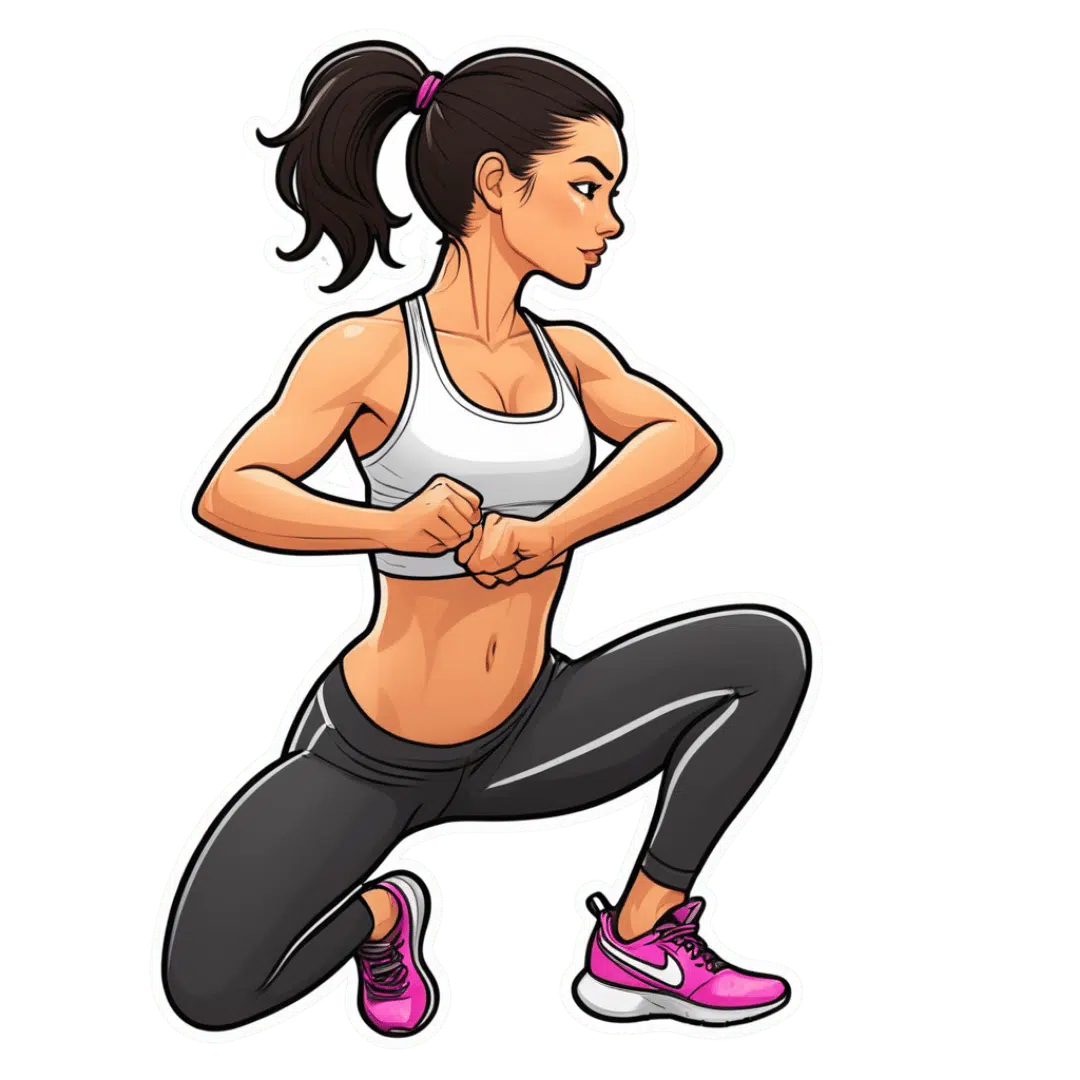
Squats that will work:
- Squats with speed: a slow bodyweight squat produces the force associated with about 1x bodyweight, while performing the same squat more explosively can raise ground reaction forces to 2–3x that of bodyweight, without jumping, as you accelerate due to gravity on the way down, and then you push downwards again, powerfully pushing the entire planet away, because that’s how strong you are.
- It sounds silly like that, but as we know from Newton, these forces are equal and opposite!
- Squats with speed and load: holding weight during strength or power exercises further increases ground reaction forces, providing more bone stimulus while remaining controlled, so that’s the progression to aim for here.
Step-ups are great too; here are some considerations to get the most out of them:
- Step height matters: step-ups create higher gravitational potential energy (and thus greater force when that energy is used on the way down) as the step gets higher, with lateral and forward step-ups offering different force levels while still being lower risk than jumping. On which note…
- Lateral stepovers: lateral step-based movements combine power and speed to raise ground reaction forces in a way that often feels safer and more comfortable than traditional impact, and again, Woolf’s Law is quite specific about this—bones strengthen in the exact regions and directions that forces are applied. So if you only train in one direction, your bone will only be strong in one direction, which means it’ll break easily if a force is applied in a different direction (say, you slip and fall sideways).
- Weighted step-ups: adding weight to step-ups also increases the force, of course.
As for which to focus on increasing (safely, please) you probably remember from school that force = mass x acceleration, so increasing either the mass or the acceleration will give benefits.
For more on all of this plus some notes about heel stomps vs heel drops, enjoy:
Click Here If The Embedded Video Doesn’t Load Automatically!
Want to learn more?
You might also like:
Osteoporosis & Exercises: Which To Do (And Which To Avoid)
Take care!
Don’t Forget…
Did you arrive here from our newsletter? Don’t forget to return to the email to continue learning!
Recommended

Learn to Age Gracefully
Join the 98k+ American women taking control of their health & aging with our 100% free (and fun!) daily emails: