
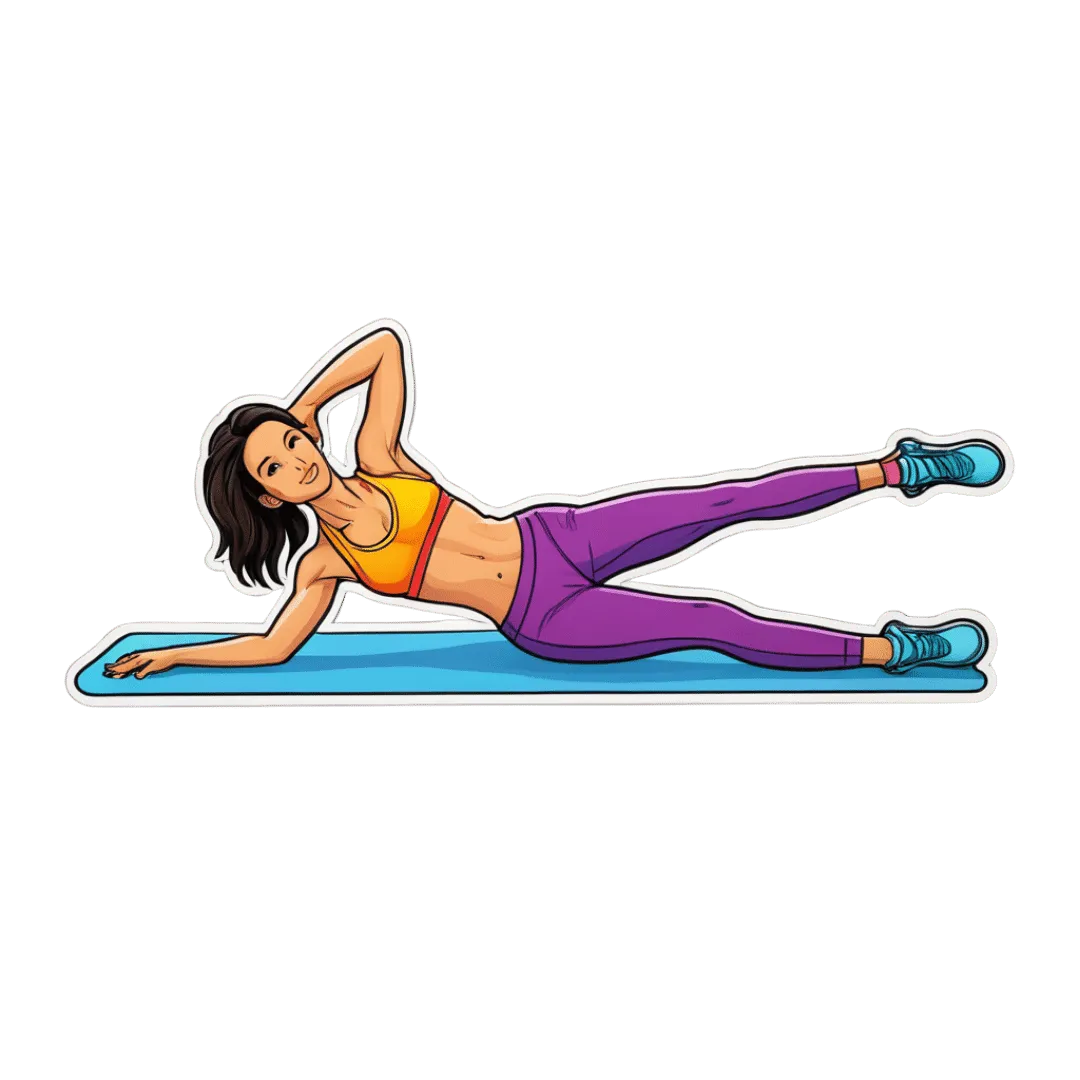
Bodyweight Isometrics For Strength Without Joint Pain
10almonds is reader-supported. We may, at no cost to you, receive a portion of sales if you purchase a product through a link in this article.
Joint pain can make exercising hard, but isometric exercises make it as easy as can be, and without pain.
Limitation: if your joints are already hurting at rest, this won’t be an instant fix, but it will improve strength which will reduce the pressure on your joints (and thus, the pain) in the long-term.
You *can* do the exercises!
…or at least some of them; take your pick! The heading here is a nod to his popular video series of the format “You can do XYZ, my friend!”, for accomplishing one’s first pull-ups, push-ups, squats, etc.
We haven’t featured one of of Hampton Liu’s calisthenics videos for a while, so we’re making up for it now, and we’re reminded how friendly and encouraging he is.
Anyway, the trick he advises here is to use bodyweight isometric exercises as safer alternatives to dynamic moves like push-ups and pull-ups, and then adding in the gentlest and easiest of dynamics, in many cases “yielding holds”, i.e. first holding a position and then gently lowering yourself down. The reason for adding these gentle dynamics to what has otherwise been an isometric exercise, is that taking your joint gently through its range of motion is an important regular thing to do if you don’t want it to “seize up”.
For example (in few words for each, for brevity; really the video is necessary to explain the exercises or else this text will become very long):
- Pull-up variations: choose angles (e.g. slightly above bottom, halfway, top) and use overcoming isometrics (max effort, cannot move) followed by yielding isometrics (holding against gravity at a reduced level of effort).
- Push-up variations: apply same principles as pull-ups at top, middle, or bottom positions; progress the difficulty by switching to one arm, or changing hand width.
- Leg raise variations: you can do these on a bar, or parallel bars, or the ground at chosen angles; overcoming holds at sticking points, and doing yielding holds at easier angles for 30โ60 seconds.
- Squat variations: use quarter squat, parallel, or slightly below positions; one-leg options are also worth doing when you’re able; overcoming holds (pushing without moving), and then yielding holds for 30โ60 seconds.
- Bridge variation: hold a static tabletop position with a backbend for up to 60 seconds; you can use props to help get into position if needed, but try to do it without if you can.
For more on all of this, plus visual demonstrations, enjoy:
Click Here If The Embedded Video Doesnโt Load Automatically!
Want to learn more?
You might also like:
When Bad Joints Stop You From Exercising (5 Things To Change) โ isometric exercises (and other low-impact training methods) are #1 on this five-point plan! Can you guess the other four?
Take care!
Don’t Forget…
Did you arrive here from our newsletter? Don’t forget to return to the email to continue learning!
Recommended
Learn to Age Gracefully
Join the 98k+ American women taking control of their health & aging with our 100% free (and fun!) daily emails:
-
Fall Asleep In 2 Minutes (Doctor Explains)
10almonds is reader-supported. We may, at no cost to you, receive a portion of sales if you purchase a product through a link in this article.
Beyond “sleep hygiene”, Dr. Siobhan Deshauer has insights to share:
Rest for your body and mind
First, do still do the basics. That means dimming/filtering lights for an hour before bed, lowering the room temperature a little, ensuring you have nice fresh sheets, not having alcohol or caffeine before bed, and getting out of bed if you’re not asleep within half an hour, to avoid associating being in bed with wakefulness.
Next, the extra tips:
- Progressive relaxation: tense and relax each muscle group from toes to head
- Box breathing: inhale, hold, exhale, and hold for 4 seconds each; helps calm the nervous system (itโs called โbox breathingโ because of the 4:4:4:4 setup)
- Diaphragmatic breathing: focus on belly breathing, with longer exhalation to activate the parasympathetic nervous system (note that this can, and even ideally should, be done at the same time as the previous)
- Cognitive shuffling: think of words starting with each letter of a chosen word while visualizing them (this is like โcounting sheepโ, but does the job betterโthe job in question being preventing your brain from moving to anything more strenuous or stressful)
For more on all of these plus some extra side-along advice, enjoy:
Click Here If The Embedded Video Doesnโt Load Automatically!
Want to learn more?
You might also like to read:
Non-Sleep Deep Rest: A Neurobiologistโs Take โ a way to get many of the benefits of sleep, while awake
Take care!
Share This Post
-
Knee Cracking & Popping: Should You Be Worried?
10almonds is reader-supported. We may, at no cost to you, receive a portion of sales if you purchase a product through a link in this article.
Dr. Tom Walters (Doctor of Physical Therapy) explains about what’s going on behind our musical knees, and whether or not this synovial symphony is cause for concern.
When to worry (and when not to)
If the clicking/cracking/popping/etc does not come with pain, then it is probably being caused by the harmless movement of fluid within the joints, in this case specifically the patellofemoral joint, just behind the kneecap.
As Dr. Walters says:
โIt is extremely important that people understand that noises from the knee are usually not associated with pathology and may actually be a sign of a healthy, well-lubricated joint. letโs be careful not to make people feel bad about their knee noise as it can negatively influence how they view their body!โ
On the other hand, there is also such a thing as patellofemoral joint pain syndrome (PFPS), which is very common, and involves pain behind the kneecap, especially upon over-stressing the knee(s).
In such cases, it is good to get that checked out by a doctor/physiotherapist.
Dr. Walters advises us to gradually build up strength, and not try for too much too quickly. He also advises us to take care to strengthen our glutes in particular, so our knees have adequate support. Gentle stretching of the quadriceps and soft tissue mobilization with a foam roller, are also recommended, to reduce tension on the kneecap.
For more on these things and especially about the exercises, enjoy:
Click Here If The Embedded Video Doesnโt Load Automatically!
Want to learn more?
You might like to read:
How To Really Take Care Of Your Joints
Take care!
Share This Post
-
Younger โ by Dr. Sara Gottfried
10almonds is reader-supported. We may, at no cost to you, receive a portion of sales if you purchase a product through a link in this article.
Does this do the things it says in the subtitle? In honestly, not really, no, but what it does do (if implemented) is modify your gene expression, slow aging, and extend healthspan. Which is all good stuff, even if itโs not the snappy SEO-oriented keywords in the subtitle.
A lot of the book pertains to turning certain genes (e.g. SIRT1, mTOR, VDR, APOE4, etc) on or off per what is sensible in each case, noting that while genes are relatively fixed (technically they can be changed, but the science is young and we canโt do much yet), gene expression is something we can control quite a bit. And while it may be unsettling to have the loaded gun that is the APOE4 gene being held against your head, at the end of the day there are things we can do that influence whether the trigger gets pulled, and when. Same goes for other undesirable genes, and also for the desirable ones that are useless if they never actually get expressed.
She offers (contained within the book, not as an upsell) a 7-week program that aims to set the reader up with good healthy habits to do just that and thus help keep age-related maladies at bay, and if we slip up, perhaps later in the year or so, we can always recommence the program.
The advice is also just good health advice, even without taking gene expression into account, because there are a stack of benefits to each of the things in her protocol.
The style is personable without being padded with fluff, accessible without dumbing down, and information-dense without being a challenging read. The formatting helps a lot also; a clear instructional layout is a lot better than a wall of text.
Bottom line: if youโd like to tweak your genes for healthy longevity, this book can help you do just that!
Share This Post
Related Posts
-
Cleaning Up Your Mental Mess โ by Dr. Caroline Leaf
10almonds is reader-supported. We may, at no cost to you, receive a portion of sales if you purchase a product through a link in this article.
First of all, what mental mess is this? Well, that depends on you, but common items include:
- Anxiety
- Depression
- Stress
- Trauma
Dr. Caroline Leaf also includes the more nebulous item “toxic thoughts”, but this is mostly a catch-all term.
Given that it says “5 simple scientifically proven steps”, it would be fair if you are wondering:
“Is this going to be just basic CBT stuff?”
And… First, let’s not knock basic CBT stuff. It’s not a panacea, but it’s a great tool for a lot of things. However… Also, no, this book is not about just basic CBT stuff.
In fact, this book’s methods are presented in such a novel way that this reviewer was taken aback by how unlike it was to anything she’d read before.
And, it’s not that the components themselves are newโit’s just that they’re put together differently, in a much more organized comprehensive and systematic way, so that a lot less stuff falls through the cracks (a common problem with standalone psychological tools and techniques).
Bottom line: if you buy one mental health self-help book this year, we recommend that it be this one
Click here to check out Cleaning Up Your Mental Mess, and take a load off your mind!
Don’t Forget…
Did you arrive here from our newsletter? Don’t forget to return to the email to continue learning!
Learn to Age Gracefully
Join the 98k+ American women taking control of their health & aging with our 100% free (and fun!) daily emails:
-
The Good, The Bad, & The Vigorously Debated
10almonds is reader-supported. We may, at no cost to you, receive a portion of sales if you purchase a product through a link in this article.
This week in health news sees some pretty varied topics:
One more reason to care about the gut-brain axis
Stroke is a top killer in much of the industrialized world, usually making it into the top-few list on a per-country basis. And, itโs rising in prevalence, too. This is partly because our longevity is increasing so age-related things kill us more often, statistically, than age-unrelated things. But thatโs only part of the reason; another is that our lifestyle (on the national level) is becoming more conducive to stroke. Diet is a large contributor to that, and gut health has now been identified as a key factor.
What recent research has shown is that minutes after a stroke occurs, normal gut anatomy is disrupted, and cells responsible for gut barrier integrity are eroded, and bugs from the gut get into the blood, and arrive at the (newly damaged) brain vasculature, where the blood-brain barrier is often also compromised on account of the stroke.
Because of this, critical to reducing post-stroke neuroinflammation (something that makes stroke damage more severe and recovery a lot harder) is improving the gutโs ability to heal itself quickly.
This can be helped with a dose of Insulin-like Growth Factor (IGF-1), but there are other things that can help or hinder, and those other things are modifiable by us as individuals in our lifestyle choices (e.g. a gut-healthy diet with plenty of fiber, and avoiding gut-unhealthy things like sugar and alcohol that feed C. albicans growths that will put roots through your intestines and make holes as they do), because the better/worse your gut barrier integrity is to start with, the easier/harder it will be for your gut to repair itself quickly:
Read in full: Healing the gut can reduce long-term impact of stroke
Related: Stop Sabotaging Your Gut
How about that seasonal lead-spiced hot drink?
Lead contamination in ground spices has become a bit of an issue, ground turmeric has had quite some flak in this regard, and now the spotlight is on cinnamon.
These reports, by the way, do not specify what kind of cinnamon (i.e. cassia vs Ceylon), however, clicking through to assorted sources and then doing our own digging finds that all cinnamon products we found listed as contaminated, were cassia cinnamon. This is unsurprising, as a) itโs cheaper b) itโs the kind most readily found on shelves in the US. That said, when it comes to Ceylon (sweet) cinnamon, absence of evidence is not evidence of absence, so that doesnโt mean they got the all-clear on lead contamination, but rather, that they havenโt received the same scrutiny as yet.
Itโs worth noting that cinnamon sticks have been found to have less contamination than ground cinnamon, though.
Itโs also worth noting that since some adulterated products have had lead added deliberately in increase the weight and darken the color, this is more likely to happen to cassia cinnamon than sweet cinnamon because cassia cinnamon is visibly darker, so adding a darkening agent to sweet cinnamon would just make it look like cassia (which no seller would want to do since cassia is the cheaper of the two).
Read in full: Why lead-tainted cinnamon products have turned up on shelves, and what questions consumers should ask
Related: Sweet Cinnamon vs Regular Cinnamon โ Which is Healthier? โ this also covers toxicity issues, by the way
A matter of life and death
Assisted dying is currently legal in 10/40 US states, and Canada. Over in the UK, itโs being debated (and voted on) in Parliament today, at time of writing.
While bodily autonomy discussions are usually quite straightforward arguments between the very separate camps of
- โmy body, my choiceโ vs
- โthey shouldnโt be allowed to do thatโ,
โฆthis one comes with a considerable middleground, because
- โpeople should have to right to end things without extra suffering and on their own termsโ, and
- โmany disabled people fear being placed in a position of having justify why they are not exercising their right to die when it might be cheaper and easier for others if they didโ
โฆare positions with a lot of potential overlap.
In any case, we know most of our readers are in the US, but with a 10/40 split in US states (and some recent controversies in Canada), itโs likely a topic thatโll come up for most people at some point, so itโs good to understand it, and this is as good an opportunity as any:
Read in full: How would the assisted dying bill work and what issues might it create?
Related: Managing Your Mortality โ this talks about psychological/social considerations, as well as end-of-life care, palliative care (which is not quite the same thing!) and euthanasia in various forms, including the unofficial kind that you might want to be aware of if you want to avoid that happening.
Take care!
Don’t Forget…
Did you arrive here from our newsletter? Don’t forget to return to the email to continue learning!
Learn to Age Gracefully
Join the 98k+ American women taking control of their health & aging with our 100% free (and fun!) daily emails:
-
52 Small Changes โ by Brett Blumenthal
10almonds is reader-supported. We may, at no cost to you, receive a portion of sales if you purchase a product through a link in this article.
We see a lot of books that exhort us to get a six-pack in a month, change our life in 7 days, learn Japanese in 24 hours. The reality is, things take time!
Brett Blumenthal is more realistic while being just as motivational:
The idea is simple… Make one small change per week for 52 weeks, and at the end of the year, you’ll be healthier and happier.
At 10almonds, we’re big fans of small changes that add up (or rather: compound!) to make big differences, so this one’s absolutely our style!
Best of all, she offers us not just “do this” advice, but also “and here’s the information and resources you’ll need to make this change work the best it can for you”
The advices range in topic from nutrition to exercise to sleep to mental wellness to interpersonal stuff and more. The biggest focus is on personal health, though, with small changes to exercise and nutrition making up the lion’s share of the changes.
Bottom line: this is a book you’ll want to grab once a week. Consider setting a reminder on your phone to check in with it each Sunday, for example!
Take the first step and order “52 Small Changes” from Amazon today!
Don’t Forget…
Did you arrive here from our newsletter? Don’t forget to return to the email to continue learning!
Learn to Age Gracefully
Join the 98k+ American women taking control of their health & aging with our 100% free (and fun!) daily emails:


