
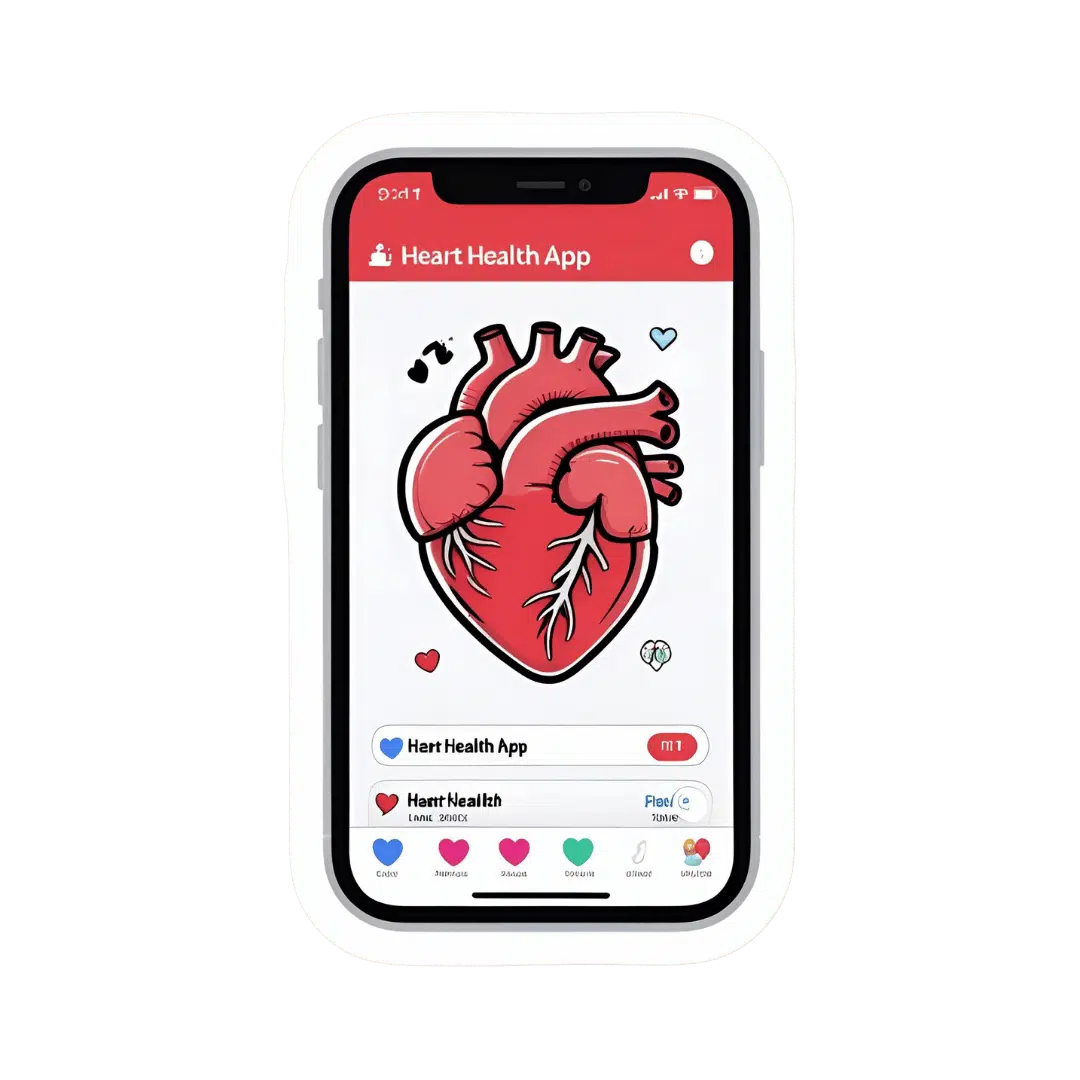
Surviving A Heart Attack? Stroke? There’s An App For That
10almonds is reader-supported. We may, at no cost to you, receive a portion of sales if you purchase a product through a link in this article.

❝Stopped.❞
~ The last words of Dr. Joseph Henry Green, President of the Royal College of Surgeons, who had been taking his own pulse
Sometimes, self-diagnosis isn’t so clear as that, though, especially when it comes to life-threatening issues with the heart and brain (i.e. things we can’t readily look at, and diagnose with the same ease we might diagnose a broken arm or such). Indeed, many people have a heart attack or stroke and, upon finding that they are not dead, conclude “I guess I’m fine after all” and continue about their day
Unfortunately, it’s often the case that in fact they still needed medical attention within the hour (literally: the hour after a heart attack or stroke is called “the golden hour” by doctors in the field, as medical treatments are most effective then, and less likely to help so much afterwards).
As a result, a lot of people die because they didn’t seek medical attention because they dismissed their own experience once the immediate symptoms abated.
About The “Emergency Call for Heart Attack and Stroke” (ECHAS) App
This is a smartphone app that can be used at home to identify the signs of heart attacks and strokes, including:
- A virtual exam using questions similar to those asked in ERs.
- A finger-tapping test to detect one-sided body weakness.
- A risk score to advise whether to call 911, a hotline, or a doctor.
In a moderate-size (n=202) study, it successfully detected strokes in under 2 minutes and heart attacks in 1 minute, and when we say “successfully”, it was 100% accurate in identifying patients who were later admitted to the hospital. Obviously, we cannot say about the patients who didn’t go to hospital, because there was (consequently) no further data for them, but we can conclude:
- there were no false positives (that’s the “100% accurate in identifying patients who were later admitted to the hospital” part)
- while we can’t say for sure there were no false negatives, it is promising that there were no reports of “app said patient was fine, patient then deteriorated/died”, which would have been picked up. So, it looks promisingly like there were no false negatives either.
In terms of ease of use, it was rated by the study participants as very easy to use, making it suitable for people without medical training, and for that matter, people without medical training in the middle of a medical crisis who thus might not be at their best when using it.
You can read the study paper in full, here: Assessment of the Sensitivity of a Smartphone App to Assist Patients in the Identification of Stroke and Myocardial Infarction: Cross-Sectional Study
Sounds great; where can I get it?
At time of writing, it’s not publicly available just yet, but the researchers want to trial it on a much larger scale, so we’ll keep an eye out for invitations to that trial (probably in a huge, crowdsourced data way, like ZOE and 1 Million Nights and such) and advise you to do so, too.
In all likelihood, it’ll appear soon for iPhone and Android in their respective app stores.
In the meantime, you might want to check out:
Take care!
Don’t Forget…
Did you arrive here from our newsletter? Don’t forget to return to the email to continue learning!
Recommended
Learn to Age Gracefully
Join the 98k+ American women taking control of their health & aging with our 100% free (and fun!) daily emails: