
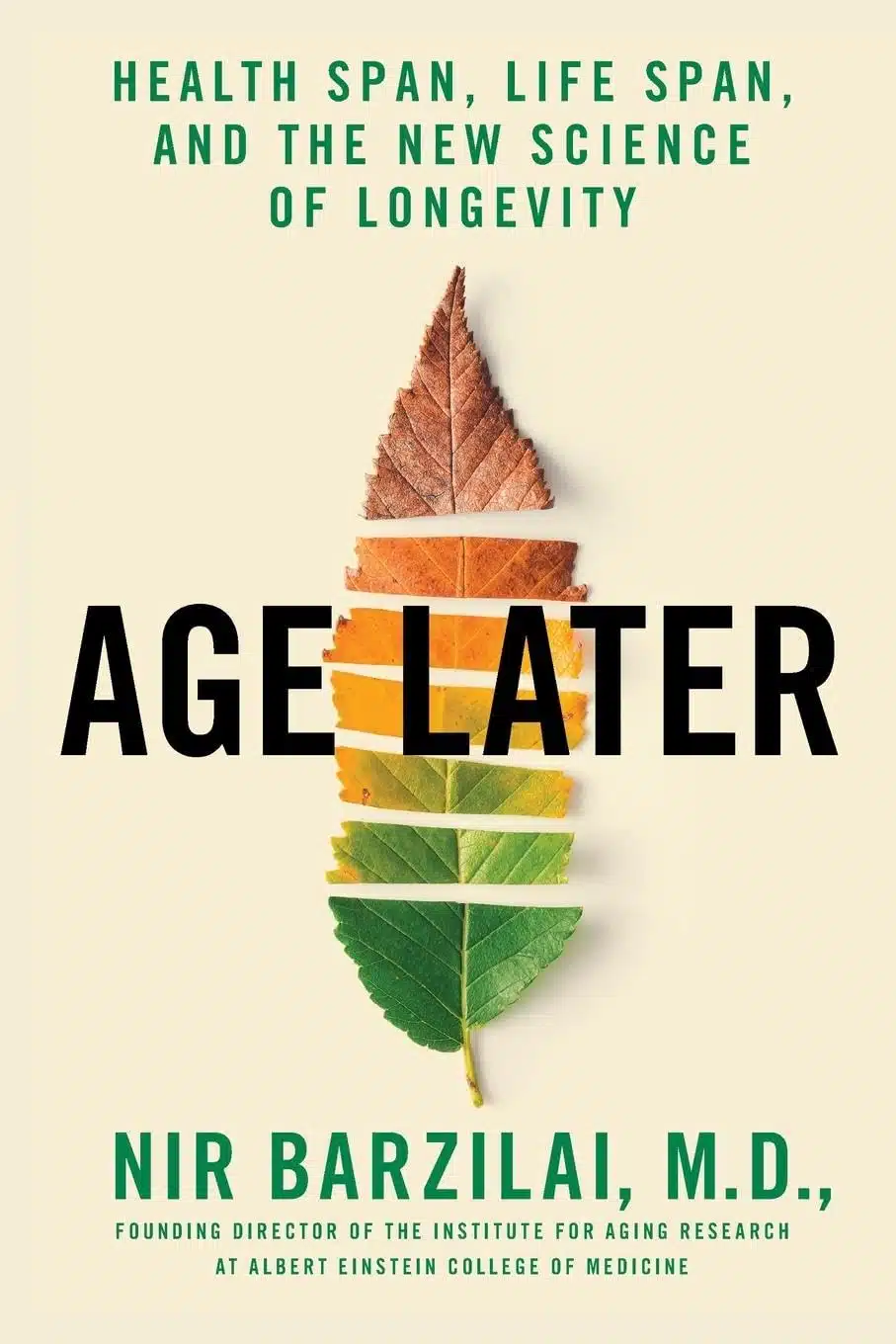
Age Later – by Dr. Nir Barzilai
10almonds is reader-supported. We may, at no cost to you, receive a portion of sales if you purchase a product through a link in this article.

Dr. Barzilai discusses why we age, why supercentenarians age more slowly, and even, why it is so often the case that supercentenarians outside of Blue Zones have poor lifestyles (their longevity is because of protective genes that mitigate the harmful effects of those poor lifestyles—the ultimate in “survivorship bias”).
He also talks not just genetics, but also epigenetics, and thus gene expression. Bearing in mind, there’s a scale of modifiability there: with current tech, we can’t easily change a bad gene… But we often can just switch it off (or at least downregulate its expression). This is where studies in supercentenarians are helpful even for those who don’t have such fortunate genes—the supercentenarian studies show us which genes we want on or off, what gene expressions to aim for, etc. Further clinical studies can then show us what lifestyle interventions (exercise, diet, nutraceuticals, etc) can do that for us.
With regard to those lifestyle interventions, he does cover many, and that’s where a lot of the practical value of the book comes from. But it’s not just “do this, do that”; understanding the reasons behind why things work the way they do is important, so as to be more likely to do it right, and also to enjoy greater adherence (we tend to do things we understand more readily than things we have just been told to do).
There are areas definitely within the author’s blind spots—for example, when talking about menopausal HRT, he discusses at great length the results of the discredited WHI study, and considers it the only study of relevance. So, this is a reminder to not believe everything said by someone who sounds confident (Dr. Barzilai’s professional background is mostly in treating diabetes).
In terms of style, it is very much narrative; somewhat pop-science, but more “this doctor wants to tell stories”. So many stories. Now, the stories all have informational value, so this isn’t padding, but it is the style, so we mention it as such. As for citations, there aren’t any, so if you want to look up the science he mentions, you’re going to need a bit of digital sleuthery to find the papers from the clues in the stories.
Bottom line: if you’re interested in the science of aging and how that has been progressing for the past decades and where we’re at, this book will give you so many jumping-off points, and is an engaging read.
Don’t Forget…
Did you arrive here from our newsletter? Don’t forget to return to the email to continue learning!
Learn to Age Gracefully
Join the 98k+ American women taking control of their health & aging with our 100% free (and fun!) daily emails: