
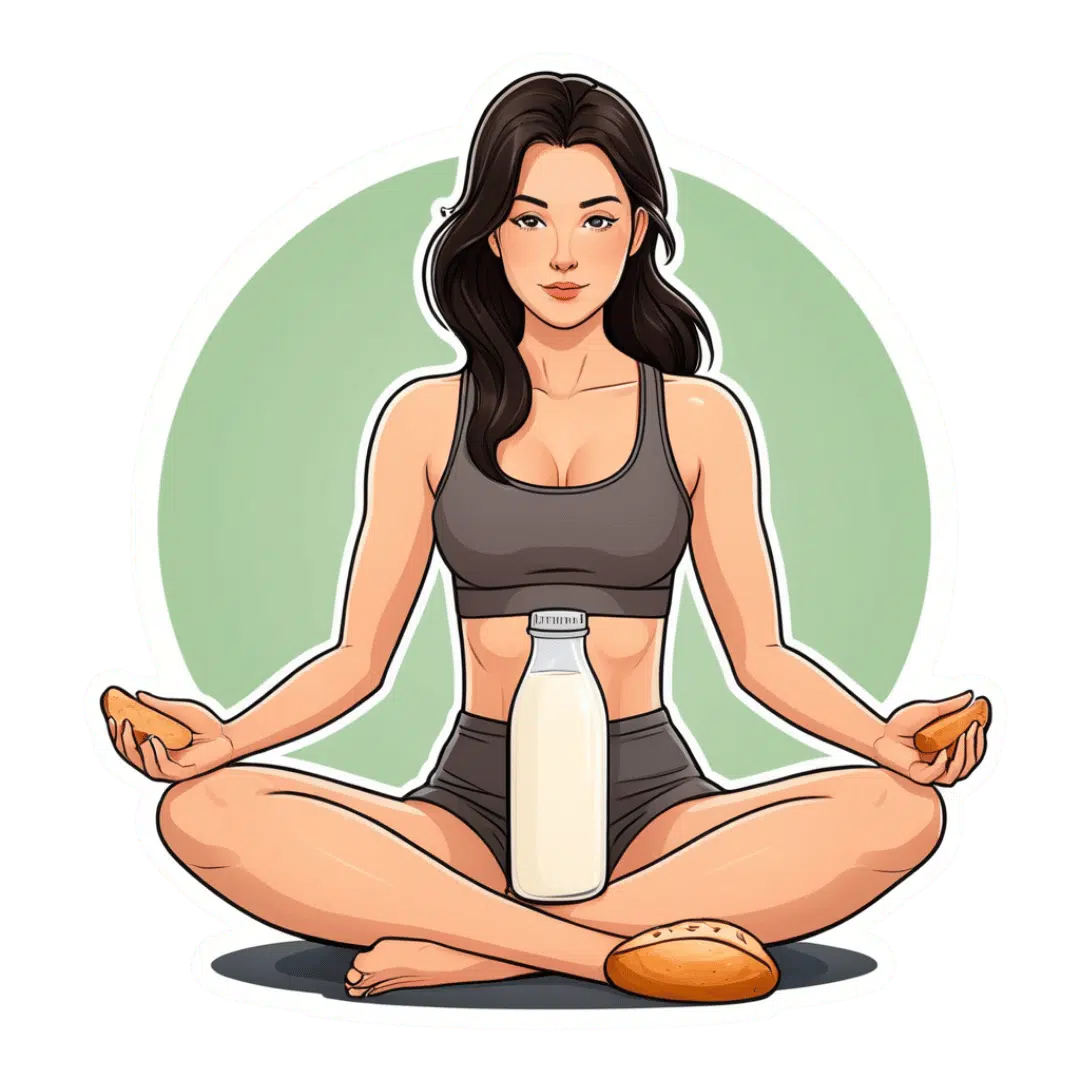
3 Surprises: Yoga, Nut Milk, & Gluten

10almonds is reader-supported. We may, at no cost to you, receive a portion of sales if you purchase a product through a link in this article.

This week in the world of health science news, not everything is as it might seem…

Yoga: not so good for the heart?

To be clear: it’s not bad for the health either.

Researchers (Dr. Poovitha Paramashiva et al.) found that yoga does, on balance, improve vascular health somewhat, but is significantly less effective than other structured exercise such as tai chi, Pilates, or HIIT.

One of the notable problems is that prolonged sitting stiffens arteries—sometimes described as “the new smoking”, which steals years from vascular health.

Of course, not every kind of yoga involves prolonged sitting, and some involve more movement than others. Dr. Paramashiva and her team conclude that yoga has many benefits, and/but should be supplemented with more dynamic exercise for full heart protection.

Read in full: Yoga isn’t as heart-healthy as you think, new study reveals

Related: Which Style Of Yoga Is Best For You?

Nut milks: not a poor imitation

Often thought it as poor imitations of milk from other mammals such as cows, nut milks have, on balance, more to offer healthwise.

Nut milks provide healthy fats with a much better lipids profile than cows’ milk, and all are usually fortified with calcium, vitamin D, and often even vitamin B12.

When it comes to fermented products (kefir, yogurts, cheeses), lactic acid bacteria improve safety, texture, antioxidant activity, and mineral bioavailability while producing bioactive peptides and probiotics; some strains also add natural thickening and prebiotic effects. All of this goes for plant-based products just the same as animal-based products.

In terms of safety, in all cases traditional heat treatments (HTST, UHT) extend shelf life; advanced non-thermal methods (HPH, UHPH, HHP, PEF, HC, ohmic heating) improve microbial safety while preserving flavor and nutrients. In any case, you will certainly not get bird flu from nut milk, either way.

One thing animal-based dairy products do have over nut-based equivalents is that they are usually higher in protein, so that’s one thing in their favor, to perhaps set against the usually poor lipids profiles in animal milks.

Read in full: Can nut-based milks match dairy for safety, nutrition and flavor?

Related: Which Plant Milk?

The other side of gluten

Everybody these days knows about the possibility of food allergies, sensitivities, and intolerances, and gluten is high on the public awareness list.

However, sometimes one thing can be easily mistaken for another, and assuming a gluten sensitivity or similar can lead one to miss the real problem—which could be a matter of a serious medical condition going undiagnosed, or it could be like one commenter mentioned under the video we shared today, saying:

❝I think my biggest mistake was deciding my gut issues were gluten sensitivity rather than “crap food” sensitivity. Most GF products are highly processed so now I’m back on wheat at least I can eat real bread, sourdough wholemeal with added seeds.❞

So that’s something that can happen.

Furthermore, gluten may be better than merely harmless! As the below-linked science shows, gluten peptides can act as antioxidants, lower blood pressure, reduce cholesterol, improve blood sugar control, and favorably modulate immune function. Some opioid-like peptides (exorphins) can even influence mood, appetite, and gut function.

This latter is in part because fermentation with lactic acid bacteria and fungal proteases (all of which normally live in our gut) can reduce harmful gluten fragments while releasing beneficial peptides.

And if you do have a sensitivity? Protease supplements (like latiglutenase) aim to break down gluten in the gut to protect sensitive individuals from accidental exposure, but clinical results remain inconsistent, so don’t count on that one just yet.

Similarly, in cases of Celiac disease, enzyme-based methods, such as prolyl endopeptidases, are being tested to neutralize toxic peptides—but this is a work in progress and the science is young so far.

Read in full: How gluten harms some people but helps others

Related: Why Going Gluten-Free Could Be A Bad Idea

Take care!

Don’t Forget…

Did you arrive here from our newsletter? Don’t forget to return to the email to continue learning!

Learn to Age Gracefully

Join the 98k+ American women taking control of their health & aging with our 100% free (and fun!) daily emails:

  • Guava vs Lime – Which is Healthier?

    10almonds is reader-supported. We may, at no cost to you, receive a portion of sales if you purchase a product through a link in this article.

    Our Verdict

    When comparing guava to lime, we picked the guava.

    Why?

    Not a contentious one today:

    In terms of macros, guava has nearly 2x the fiber, more than 4x the protein, and slightly more carbs, winning this round.

    In the category of vitamins, guava has a lot more of vitamins A, B1, B2, B3, B5, B6, B7, B9, C, E, K, and choline, while limes are not higher in any vitamins. You might be wondering about the difference in vitamin C, for which limes are famous, and the answer is that guavas have about 7x more vitamin C than limes. In any case, a clear win for guava on all counts.

    Looking at minerals, guavas have more copper, magnesium, manganese, phosphorus, potassium, selenium, and zinc, while limes have more calcium and iron. Another win for guavas.

    In other considerations, guavas are also higher in polyphenols, so that’s another point scored there.

    Adding up the sections makes for a complete win for guavas, but by all means enjoy either or both; diversity is good!

    Want to learn more?

    You might like:

    Why You’re Probably Not Getting Enough Fiber (And How To Fix It)

    Enjoy!

    Share This Post

  • 12 Questions For Better Brain Health

    10almonds is reader-supported. We may, at no cost to you, receive a portion of sales if you purchase a product through a link in this article.

    We usually preface our “Expert Insights” pieces with a nice banner that has a stylish tall cutout that allows us to put a photo of the expert in. Today we’re not doing that, because for today’s camera-shy expert, we could only find one photo, and it’s a small, grainy, square headshot that looks like it was taken some decades ago, and would not fit our template at all. You can see it here, though!

    In any case, Dr. Linda Selwa is a neurologist and neurophysiologist with nearly 40 years of professional experience.

    The right questions to ask

    As a neurologist, she found that one of the problems that results in delayed interventions (and thus, lower efficacy of those interventions) is that people don’t know there’s anything to worry about until a degenerative brain condition has degenerated past a certain point. With that in mind, she bids us ask ourselves the following questions, and discuss them with our primary healthcare providers as appropriate:

    1. Sleep: Are you able to get sufficient sleep to feel rested?
    2. Affect, mood and mental health: Do you have concerns about your mood, anxiety, or stress?
    3. Food, diet and supplements: Do you have concerns about getting enough or healthy enough food, or have any questions about supplements or vitamins?
    4. Exercise: Do you find ways to fit physical exercise into your life?
    5. Supportive social interactions: Do you have regular contact with close friends or family, and do you have enough support from people?
    6. Trauma avoidance: Do you wear seatbelts and helmets, and use car seats for children?
    7. Blood pressure: Have you had problems with high blood pressure at home or at doctor visits, or do you have any concerns about blood pressure treatment or getting a blood pressure cuff at home?
    8. Risks, genetic and metabolic factors: Do you have trouble controlling blood sugar or cholesterol? Is there a neurological disease that runs in your family?
    9. Affordability and adherence: Do you have any trouble with the cost of your medicines?
    10. Infection: Are you up to date on vaccines, and do you have enough information about those vaccines?
    11. Negative exposures: Do you smoke, drink more than one to two drinks per day, or use non-prescription drugs? Do you drink well water, or live in an area with known air or water pollution?
    12. Social and structural determinants of health: Do you have concerns about keeping housing, having transportation, having access to care and medical insurance, or being physically or emotionally safe from harm?

    You will note that some of these are well-known (to 10almonds readers, at least!) risk factors for cognitive decline, but others are more about systemic and/or environmental considerations, things that don’t directly pertain to brain health, but can have a big impact on it anyway.

    About “concerns”: in the case of those questions that ask “do you have concerns about…?”, and you’re not sure, then yes, you do indeed have concerns.

    About “trouble”: as for these kinds of health-related questionnaires in general, if a question asks you “do you have trouble with…?” and your answer is something like “no, because I have a special way of dealing with that problem” then the answer for the purposes of the questionnaire is yes, you do indeed have trouble.

    Note that you can “have trouble with” something that you simultaneously “have under control”—just as a person can have no trouble at all with something that they leave very much out of control.

    Further explanation on each of the questions

    If you’re wondering what is meant by any of these, or what counts, or why the question is even being asked, then we recommend you check out Dr. Selwa et al’s recently-published paper, then all is explained in there, in surprisingly easy-to-read fashion:

    Emerging Issues In Neurology: The Neurologist’s Role in Promoting Brain Health

    If you scroll past the abstract, introduction, and disclaimers, then you’ll be straight into the tables of information about the above 12 factors.

    Want to be even more proactive?

    Check out:

    How To Reduce Your Alzheimer’s Risk

    Take care!

    Share This Post

  • Some women start menopause after surgery or medical treatment. Here’s how it’s different

    10almonds is reader-supported. We may, at no cost to you, receive a portion of sales if you purchase a product through a link in this article.

    For most women, menopause occurs naturally around the age of 49. In the lead up to menopause, the quality and quantity of eggs declines over time. Then the ovaries stop releasing eggs completely.

    At this time, the ovaries also stop producing the sex hormones oestrogen and progesterone. This causes menstrual periods to end. When you clock 12 months of no periods, you’re in menopause.

    But some women will start menopause quickly after having their ovaries removed in surgery. Others will transition to menopause over a longer timeframe if medical treatments, such as chemotherapy or radiotherapy, damage their ovaries.

    So what can you expect from menopause due to surgery or medical treatments?

    MomentoJpeg/Getty Images

    What treatments can cause menopause?

    Surgical menopause occurs when women have their ovaries removed to treat conditions such as ovarian cancer.

    Some women with a genetic predisposition to ovarian and breast cancer, such as those like Angelina Jolie who carry the BRCA1 gene, may also have their ovaries removed to stop the production of oestrogen. This reduces the risk of ovarian and breast cancers, which are considered oestrogen-dependent cancers.

    Other pelvic surgery can damage the ovaries and trigger menopause, such as removal of ovarian cysts or treatment for endometriosis.

    Medical treatments that severely damage or are toxic to the ovaries can also trigger menopause. These include chemotherapy or radiotherapy for cancer, and treatment for rheumatological conditions such as lupus.

    Whether you become menopausal after medical treatment will depend on your age, underlying ovarian reserve, as well as the type and dose of chemotherapy or radiotherapy. Younger women generally have greater ovarian stores so can withstand more damage.

    When does it happen? How is it diagnosed?

    Menopause due to medical treatment may occur earlier than the typical age of natural menopause. When menopause occurs between 40 and 45 years, it’s called early menopause. Around 12% of women will have early menopause.

    Before 40, early menopause is called “premature ovarian insufficiency”. This is because for women whose periods spontaneously stop, there’s still a chance of their ovarian function returning. But this is less likely if periods stop due to the effect of medical treatments. And it’s impossible after surgical menopause. Around 4% of women have premature ovarian insufficiency.

    The diagnosis of surgical menopause is clear. But making a diagnosis of menopause after medical treatments can be more difficult. The diagnosis is based on four months or more of no or irregular menstrual periods, plus a high follicle-stimulating hormone level, which is determined using a blood test.

    What are the symptoms? How do they differ?

    Symptoms of oestrogen deficiency, such as hot flushes, usually start quickly after surgical menopause. Other symptoms such as vaginal dryness may develop more slowly. Symptoms of surgical menopause are often more severe than natural menopause.

    But every person’s experience is different. And symptoms can vary within and between people. It can also be hard to tell what symptoms are due to menopause and what are due to the underlying health problem or treatment, such as the effects of chemotherapy on cognition.

    Low oestrogen from premature ovarian insufficiency can cause vaginal dryness, reduced libido, muscle decline and bone loss, and may also impair brain function. It can also increase risk risk of heart disease and stroke, with a higher risk after surgical menopause than spontaneous premature menopause.

    Premature ovarian insufficiency can can also result in poorer mental health and quality of life, and can impact your ability to work.

    Women with surgical menopause cannot become pregnant, while women with premature ovarian insufficiency are unlikely to fall pregnant naturally.

    How is it treated?

    Our previous research has shown women with early menopause and premature ovarian insufficiency often receive poor health care. There is a large variation of quality between health providers.

    To assist health-care professionals provide best-practice care, in 2024 we updated the evidence-based guidelines with 145 recommendations to treat early menopause and premature ovarian insufficiency.

    Hormone-replacement therapy (HRT), which replaces the missing oestrogen (plus progesterone if you still have your uterus), is the mainstay of treatment for women with premature ovarian insufficiency and early menopause.

    Women who have undergone surgical menopause or are experiencing premature ovarian insufficiency can consider HRT for symptom relief and bone protection.

    However, HRT cannot be used if you have certain health conditions such as hormone-sensitive breast cancers.

    It’s important you talk to you health-care provider about the pros and cons of HRT in your situation.

    Other treatment options include:

    • vaginal oestrogen, which can be helpful for vaginal dryness
    • cognitive behavioural therapy (CBT), which be helpful for managing hot flushes, sleep and mood.

    Although Chinese herbal medicine may alleviate menopausal symptoms in some women, overall there isn’t enough scientific evidence that complementary therapies can effectively manage premature ovarian insufficiency.

    Health practitioners should talk to patients about the likely symptoms and risks of surgical menopause and premature ovarian insufficiency before starting any treatments that can cause these conditions.

    Options to minimise these risks and preserve fertility should also be discussed and may require a referral to a specialist.

    Carolyn Ee, Associate Professor, Cancer Survivorship and Primary Care, Caring Futures Institute, Flinders University; Western Sydney University and Amanda Vincent, Adjunct Clinical Associate Professor and Endocrinologist, Monash University

    This article is republished from The Conversation under a Creative Commons license. Read the original article.

    Share This Post

  • Art and music therapies can be ‘life changing’ for people with disability

    10almonds is reader-supported. We may, at no cost to you, receive a portion of sales if you purchase a product through a link in this article.

    From November, music and art therapists will be able to charge the National Disability Insurance Scheme (NDIS) the same as counsellors, after an independent review found they can be effective and “even life changing” for some people with disability.

    The National Disability Insurance Agency commissioned the review, led by health economist Stephen Duckett, after widespread criticism of pricing changes it announced last year.

    In November last year, the federal government announced it would slash the maximum therapists could bill per hour from A$193.99 to $67.56, citing insufficient evidence they were effective.

    This week, the National Disability Insurance Agency (NDIA) has accepted the Duckett Review’s 19 recommendations, and the finding these therapies are effective and beneficial for people with specific conditions and disabilities.

    Here’s what we know, and what will change.

    Halfpoint/Getty

    What’s changing

    Art and music therapies will be restored to the “therapy supports” funding category, following last year’s unexpected announcement they would be restricted to the “community participation” category.

    These NDIS funding categories are different in two important ways.

    The first relates to the maximum hourly rate for an individual session. Therapy supports can cost a maximum of $193.99 an hour. In contrast, “community participation” costs are capped at $67.56 an hour.

    The review recommended a new hourly rate of $156.16 for individual art and music therapy sessions – the same hourly rate as counselling. However this remains significantly lower than other allied health services with similar levels of training, such as occupational therapy.

    The second difference is that therapy services and community participation programs have very different requirements for providing evidence they are beneficial, and for providers’ qualifications levels and training.

    The review also recommended a clearer distinction between art and music as a therapeutic support, and art and music as an activity.

    And it recommended these therapies should be delivered by a qualified and registered music or art therapist.

    So, what’s the difference?

    As a music therapy researcher, I am often asked to explain the difference between “music therapy” and “music activity”.

    People can be confused because music activities might also make us feel good. For example, music activities such as singing in a community choir can have mental health benefits for adults. Learning to play the ukulele has been shown to build stronger empathic skills in children.

    Music activities like these are valuable for many people, but they are not music therapy.

    Music therapy practice is informed by research into the benefits of specific methods and techniques for people with disability. These include autistic children, people with profound disabilities, and people recovering from major injury.

    For example, if a client is non-speaking, the therapist might use a vocal improvisation technique, creating supportive music to encourage the person to make sounds with their voice. The back-and-forth musical dialogue at first doesn’t rely on words. But the therapist may help the client extend to more expressive vocalisations and even word production.

    In Australia, music therapists must complete a two-year master’s degree before they are able to register with the Australian Music Therapy Association, and engage in continuous professional development.

    The review said artists or musicians who do not have relevant qualifications to register with their professional bodies should not charge the new hourly rate for therapy.

    So, what does the evidence say?

    The new review acknowledged that establishing the evidence for therapy and disability is a complex task.

    Around one in five Australians live with disability. Each person has unique needs and strengths, and disability occurs across the lifespan, meaning needs can also change. But when studying whether a particular kind of therapy is beneficial, researchers will focus on a particular group of people, such as adults with cerebral palsy.

    This means the quantity and quality of evidence available will vary across different age groups and conditions – and there may be gaps. So care needs to be taken when interpreting the research to consider whether findings from one study might be applicable to other people with similar goals, needs, or conditions.

    Qualified therapists are trained to interpret this evidence. They may be working with a client whose condition or needs differ from what’s in the existing research literature. So, they will consider whether a study showing benefits for music therapy with one group (such as non-speaking autistic children) could be relevant to another (for example, other people who have limitations in verbal expression).

    The Duckett Review acknowledges this challenge of generalising evidence across different therapies. But it also warns of possible discrimination against people with rare conditions that attract limited research funding, and calls for more research.

    Grace Thompson, Associate Professor in Music Therapy; Senior Academic Fellow at Melbourne Centre for the Study of Higher Education, The University of Melbourne

    This article is republished from The Conversation under a Creative Commons license. Read the original article.

    Don’t Forget…

    Did you arrive here from our newsletter? Don’t forget to return to the email to continue learning!

    Learn to Age Gracefully

    Join the 98k+ American women taking control of their health & aging with our 100% free (and fun!) daily emails:

  • If You’re Shedding A Lot Of Hair, This Is Probably Why

    10almonds is reader-supported. We may, at no cost to you, receive a portion of sales if you purchase a product through a link in this article.

    Dr. Andrea Suarez explains what causes it and what to do about it:

    Telogen effluvium

    Losing up to about 100 hairs a day is normal because hair cycles through growth (anagen), rest, and shedding (telogen), and shedding often looks worse on wash or brush days.

    Chances are, however, you’re not counting them one by one. So, how to tell the difference? A shed telogen hair has a small white bulb at the end, while breakage looks blunt and has no white tip, and both can happen at the same time.

    Increased shedding doesn’t automatically mean balding, and shedding and hair loss are related but not the same process.

    However! A major stressor can push many follicles into rest at once, with noticeable shedding starting about three months later.

    Common triggers include: rapid weight loss, medications (including GLP-1 drugs), fever or illness, surgery or hospitalization, pregnancy and postpartum changes, untreated menopause, emotional stress, endurance events, accidents, thyroid disease, low iron, and chronic inflammation.

    Shedding often lasts three to six months and usually resolves within nine to twelve months once the trigger is controlled. Regrowth takes that amount of time time because hair grows roughly one centimeter per month, and your hair will look thin if half of it is shoulder-length and the other half is just regrowing from scratch.

    Some things you can do about it:

    • At-home hair care basics: be gentle, avoid tight styles and heat, don’t aggressively brush wet hair, and use a wide-tooth comb to limit breakage.
    • Scalp health matters: regularly shampoo your scalp to reduce oil, residue, dandruff, and inflammation, which supports healthier follicle function and regrowth. Medicated shampoo ingredients such as selenium sulfide, salicylic acid, zinc pyrithione, ketoconazole, and piroctone olamine can reduce inflammation and yeast overgrowth that can/would otherwise impair scalp health.
    • Nutrition and lifestyle: adequate protein, sufficient calories, reasonable weight maintenance (i.e., if you must lose weight, don’t do it too quickly), good sleep, and stress management all support hair recovery. Get good vitamin/mineral coverage, but don’t overdo it, as overdosing can cause hair loss.
    • RLT / low-level laser therapy: red and near-infrared light can improve cellular energy, blood flow, and inflammation, supporting reduced shedding and improved density with consistent use over months. Peer-reviewed studies, including recent work, show gradual increases in hair count, density, and thickness with ongoing use.
    • Medical options: treatments like topical or oral minoxidil can help, sometimes combined with device-based therapy, depending on the diagnosis.

    For more on all of this, enjoy:

    Click Here If The Embedded Video Doesn’t Load Automatically!

    Want to learn more?

    You might also like:

    What Different Kinds of Hair Loss/Thinning Say About Your Health ← Dr. Siobhan Deshauer discusses (and shows) 15 specific diagnosable things

    Take care!

    Don’t Forget…

    Did you arrive here from our newsletter? Don’t forget to return to the email to continue learning!

    Learn to Age Gracefully

    Join the 98k+ American women taking control of their health & aging with our 100% free (and fun!) daily emails:

  • Why do disinfectants only kill 99.9% of germs? Here’s the science

    10almonds is reader-supported. We may, at no cost to you, receive a portion of sales if you purchase a product through a link in this article.

    Have you ever wondered why most disinfectants indicate they kill 99.9% or 99.99% of germs, but never promise to wipe out all of them? Perhaps the thought has crossed your mind mid-way through cleaning your kitchen or bathroom.

    Surely, in a world where science is able to do all sorts of amazing things, someone would have invented a disinfectant that is 100% effective?

    The answer to this conundrum requires understanding a bit of microbiology and a bit of mathematics.

    Davor Geber/Shutterstock

    What is a disinfectant?

    A disinfectant is a substance used to kill or inactivate bacteria, viruses and other microbes on inanimate objects.

    There are literally millions of microbes on surfaces and objects in our domestic environment. While most microbes are not harmful (and some are even good for us) a small proportion can make us sick.

    Although disinfection can include physical interventions such as heat treatment or the use of UV light, typically when we think of disinfectants we are referring to the use of chemicals to kill microbes on surfaces or objects.

    Chemical disinfectants often contain active ingredients such as alcohols, chlorine compounds and hydrogen peroxide which can target vital components of different microbes to kill them.

    Gloved hands spraying and wiping a surface.
    Diseinfectants can contain a range of ingredients. Maridav/Shutterstock

    The maths of microbial elimination

    In the past few years we’ve all become familiar with the concept of exponential growth in the context of the spread of COVID cases.

    This is where numbers grow at an ever-accelerating rate, which can lead to an explosion in the size of something very quickly. For example, if a colony of 100 bacteria doubles every hour, in 24 hours’ time the population of bacteria would be more than 1.5 billion.

    Conversely, the killing or inactivating of microbes follows a logarithmic decay pattern, which is essentially the opposite of exponential growth. Here, while the number of microbes decreases over time, the rate of death becomes slower as the number of microbes becomes smaller.

    For example, if a particular disinfectant kills 90% of bacteria every minute, after one minute, only 10% of the original bacteria will remain. After the next minute, 10% of that remaining 10% (or 1% of the original amount) will remain, and so on.

    Because of this logarithmic decay pattern, it’s not possible to ever claim you can kill 100% of any microbial population. You can only ever scientifically say that you are able to reduce the microbial load by a proportion of the initial population. This is why most disinfectants sold for domestic use indicate they kill 99.9% of germs.

    Other products such as hand sanitisers and disinfectant wipes, which also often purport to kill 99.9% of germs, follow the same principle.

    A tub of cleaning supplies.
    You might have noticed none of the cleaning products in your laundry cupboard kill 100% of germs. Africa Studio/Shutterstock

    Real-world implications

    As with a lot of science, things get a bit more complicated in the real world than they are in the laboratory. There are a number of other factors to consider when assessing how well a disinfectant is likely to remove microbes from a surface.

    One of these factors is the size of the initial microbial population that you’re trying to get rid of. That is, the more contaminated a surface is, the harder the disinfectant needs to work to eliminate the microbes.

    If for example you were to start off with only 100 microbes on a surface or object, and you removed 99.9% of these using a disinfectant, you could have a lot of confidence that you have effectively removed all the microbes from that surface or object (called sterilisation).

    In contrast, if you have a large initial microbial population of hundreds of millions or billions of microbes contaminating a surface, even reducing the microbial load by 99.9% may still mean there are potentially millions of microbes remaining on the surface.

    Time is is a key factor that determines how effectively microbes are killed. So exposing a highly contaminated surface to disinfectant for a longer period is one way to ensure you kill more of the microbial population.

    This is why if you look closely at the labels of many common household disinfectants, they will often suggest that to disinfect you should apply the product then wait a specified time before wiping clean. So always consult the label on the product you’re using.

    A woman cleaning a kitchen counter with a pink cloth.
    Disinfectants won’t necessarily work in your kitchen exactly like they work in a lab. Ground Picture/Shutterstock

    Other factors such as temperature, humidity and the type of surface also influence how well a disinfectant works outside the lab.

    Similarly, microbes in the real world may be either more or less sensitive to disinfection than those used for testing in the lab.

    Disinfectants are one part infection control

    The sensible use of disinfectants plays an important role in our daily lives in reducing our exposure to pathogens (microbes that cause illness). They can therefore reduce our chances of getting sick.

    The fact disinfectants can’t be shown to be 100% effective from a scientific perspective in no way detracts from their importance in infection control. But their use should always be complemented by other infection control practices, such as hand washing, to reduce the risk of infection.

    Hassan Vally, Associate Professor, Epidemiology, Deakin University

    This article is republished from The Conversation under a Creative Commons license. Read the original article.

    Don’t Forget…

    Did you arrive here from our newsletter? Don’t forget to return to the email to continue learning!

    Learn to Age Gracefully

    Join the 98k+ American women taking control of their health & aging with our 100% free (and fun!) daily emails: