
What exercises will keep my ageing joints healthy?

10almonds is reader-supported. We may, at no cost to you, receive a portion of sales if you purchase a product through a link in this article.

Growing older has plenty of upsides – but achy joints is not one of them.

As we age, the joints that once handled every bend and fall start to weaken. This is because the amount of cartilage, a tough but flexible kind of connective tissue, and fluid in your joints decreases over time.

This may lead some people to avoid activities such as exercise. But with the right approach, exercise can actually help protect your joints.

Let’s dive into the science.
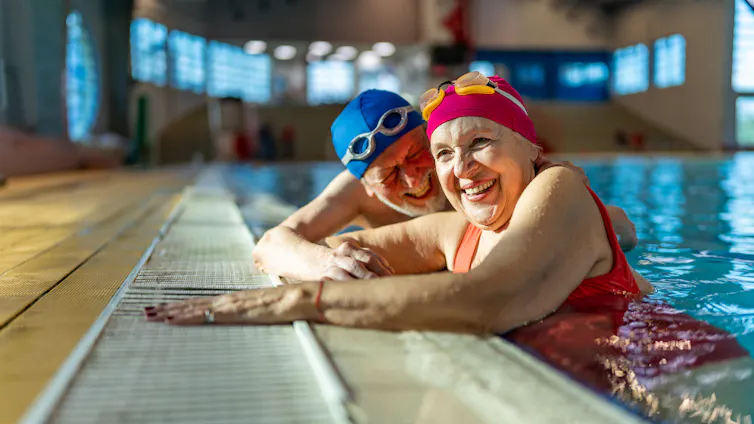
ljubaphoto/Getty

Why joints matter

Each joint is cushioned by articular cartilage, a type of specialised tissue that covers the ends of bones. This cartilage protects the joints and creates a smooth surface for motion.

A thick liquid known as synovial fluid also helps lubricate your knees, hips and shoulders. It does this by reducing friction between your cartilage and joints. Synovial fluid also supplies cartilage with key nutrients.

However, cartilage isn’t very good at repairing itself. This is partly because it doesn’t have its own blood supply.

The gradual breakdown of cartilage is known as osteoarthritis, a condition which affects more than 500 million people worldwide. People with osteoarthritis often feel the most pain in weight-bearing joints such as the knees, hips and spine.

How exercise impacts your joints

The body distributes synovial fluid through motion. So exercise helps gets this fluid, and the nutrients it contains, to cartilage.

Meanwhile, muscles around your joints act as shock absorbers. So strengthening your muscles, including through exercises such as weightlifting, helps to reduce the pressure placed on your joints. Research suggests strength exercises targeting the quadriceps, a group of muscles at the front of the thigh, are particularly effective at reducing joint pain.

A landmark Cochrane review assessed all the relevant evidence looking at the effect of exercise on osteoarthritis. It found exercise reduces pain and improves function in people with knee osteoarthritis. It also showed exercise has a similar impact as anti-inflammatory drugs, but without the same side effects.

Exercise may also help maintain proprioception, the body’s ability to sense its own position and movement. However, proprioception declines with age. So as you get older, your brain is less able to register these signals and may cause your joints to bear weight unevenly. This wears down your joints quicker.

However, exercising on varied and even unstable surfaces can reduce this wear-and-tear process. It forces your ankle, knee and hip joints to quickly adjust their movements, keeping them engaged and flexible.

What about low-impact exercise?

Low-impact exercise refers to exercises where you keep at least one foot on the ground, or support the body in some other way. This kind of exercise reduces the amount of weight and force placed on joints.

Examples of low-impact exercise include swimming and water aerobics. Both involve being suspended in water, which can support up to 90% of your body weight. Cycling may also be beneficial for your joints, particularly your knees.

Tai chi, a gentle form of exercise based on gentle movements and breathing techniques, is another option. Research suggests it may be as effective as physical therapy for people with knee osteoarthritis. Yoga can also help strengthen the muscles around your joints and improve your overall flexibility.

Walking deserves a special mention. Walking on uneven terrain, such as on grass, gravel or bush trails, can help maintain proprioception. One 2026 study found unstable surface training significantly improves postural control, or the ability to remain stable, in older adults.

Another systematic review found exercises which challenged participants’ balance reduced fall rates by roughly 23%. This is important, given falls are the leading cause of injury-related death in adults over 65.

I’ve never done low-impact exercise. How can I start?

Here are three tips to make low-impact exercise as safe and effective as possible.

1. Start small

You don’t need any fancy equipment to start. Where possible, opt to walk on uneven surfaces, such as grass, sand or gravel, instead of pavement. Even ten minutes walking across a park lawn will improve your joint movement.

You can also practise standing on one leg, for example while brushing your teeth. It’s best to start on firm ground first, aiming to stand on each leg for 30 seconds. You can then progress to standing on a folded towel or foam pad. Importantly, you should master each task or level of difficulty before advancing.

2. Use support

Safety is paramount. Always perform low-impact exercises near something you can hold for support, such as a park bench or bathroom vanity. If you’re walking for exercise, walking poles are an excellent option. Importantly, never exercise on unstable surfaces when you’re tired.

3. Get advice

No exercise is risk-free. For example, holding a yoga pose beyond your range of motion may injure your lower back, shoulders or knees. Doing deep squats or lunges with poor form can put unnecessary strain on your knee joint.

So before you start, speak to a certified exercise physiologist or physiotherapist. They can help you design a tailored exercise program.

The bottom line

Our joints are subject to the inevitable wear-and-tear of age, but low-impact exercise can help. So it’s worth trying, no matter how young or old you are.

Gordon Waddington, AIS Professor of Sports Medicine Research, University of Canberra

This article is republished from The Conversation under a Creative Commons license. Read the original article.

Don’t Forget…

Did you arrive here from our newsletter? Don’t forget to return to the email to continue learning!

Learn to Age Gracefully

Join the 98k+ American women taking control of their health & aging with our 100% free (and fun!) daily emails:

  • How worried should I be about cryptosporidiosis? Am I safe at the pool?

    10almonds is reader-supported. We may, at no cost to you, receive a portion of sales if you purchase a product through a link in this article.

    You might have heard of something called “cryptosporidiosis” recently, closely followed by warnings to stay away from your local swimming pool if you’ve had diarrhoea.

    More than 700 cases of this gastrointestinal disease were reported in Queensland in January, which is 13 times more than in January last year. Just under 500 cases have been recorded in New South Wales this year to-date, while other states have similarly reported an increase in the number of cryptosporidiosis infections in recent months.

    Cryptosporidiosis has been listed as a national notifiable disease in Australia since 2001.
    But what exactly is it, and should we be worried?

    What causes cryptosporidiosis, and who is affected?

    Cryptosporidiosis is the disease caused by the parasite Cryptosporidium, of which there are two types that can make us sick. Cryptosporidum hominis only affects humans and is the major cause of recent outbreaks in Australia, while Cryptosporidium parvum can also affect animals.

    The infection is spread by spores called oocysts in the stools of humans and animals. When ingested, these oocysts migrate and mature in the small bowel. They damage the small bowel lining and can lead to diarrhoea, nausea, vomiting, fever and abdominal discomfort.

    Most people develop symptoms anywhere from one to 12 days after becoming infected. Usually these symptoms resolve within two weeks, but the illness may last longer and can be severe in those with a weakened immune system.

    Children and the elderly tend to be the most commonly affected. Cryptosporidiosis is more prevalent in young children, particularly those under five, but the disease can affect people of any age.

    A 'pool closed' sign in front of a swimming pool.
    A number of public pools have been closed lately due to cryptosporidiosis outbreaks.
    LBeddoe/Shutterstock

    So how do we catch it?

    Most major outbreaks of cryptosporidiosis have been due to people drinking contaminated water. The largest recorded outbreak occurred in Milwaukee in 1993 where 403,000 people were believed to have been infected.

    Cryptosporidium oocysts are very small in size and in Milwaukee they passed through the filtration system of one of the water treatment plants undetected, infecting the city’s water supply. As few as ten oocysts can cause infection, making it possible for contaminated drinking water to affect a very large number of people.

    Four days after infection a person with cryptosporidiosis can shed up to ten billion oocysts into their stool a day, with the shedding persisting for about two weeks. This is why one infected person in a swimming pool can infect the entire pool in a single visit.

    Cryptosporidium oocysts excreted in the faeces of infected humans and animals can also reach natural bodies of water such as beaches, rivers and lakes directly through sewer pipes or indirectly such as in manure transported with surface runoff after heavy rain.

    One study which modelled Cryptosporidium concentrations in rivers around the world estimated there are anywhere from 100 to one million oocysts in a litre of river water.

    In Australia, cryptosporidiosis outbreaks tend to occur during the late spring and early summer periods when there’s an increase in recreational water activities such as swimming in natural water holes, water catchments and public pools. We don’t know exactly why cases have seen such a surge this summer compared to other years, but we know Cryptosporidium is very infectious.

    Oocysts have been found in foods such as fresh vegetables and seafood but these are not common sources of infection in Australia.

    What about chlorine?

    Contrary to popular belief, chlorine doesn’t kill off all infectious microbes in a swimming pool. Cryptosporidium oocysts are hardy, thick-walled and resistant to chlorine and acid. They are not destroyed by chlorine at the normal concentrations found in swimming pools.

    We also know oocysts can be significantly protected from the effects of chlorine in swimming pools by faecal material, so the presence of even small amounts of faecal matter contaminated with Cryptosporidium in a swimming pool would necessitate closure and a thorough decontamination.

    Young children and in particular children in nappies are known to increase the potential for disease transmission in recreational water. Proper nappy changing, frequent bathroom breaks and showering before swimming to remove faecal residue are helpful ways to reduce the risk.

    Two children playing in a body of water.
    Cryptosporidium can spread in other bodies of water, not just swimming pools.
    Yulia Simonova/Shutterstock

    Some sensible precautions

    Other measures you can take to reduce yours and others’ risk of cryptosporidiosis include:

    • avoid swimming in natural waters such as rivers and creeks during and for at least three days after heavy rain
    • avoid swimming in beaches for at least one day after heavy rain
    • avoid drinking untreated water such as water from rivers or springs. If you need to drink untreated water, boiling it first will kill the Cryptosporidium
    • avoid swallowing water when swimming if you can
    • if you’ve had diarrhoea, avoid swimming for at least two weeks after it has resolved
    • avoid sharing towels or linen for at least two weeks after diarrhoea has resolved
    • avoid sharing, touching or preparing food that other people may eat for at least 48 hours after diarrhoea has resolved
    • wash your hands with soap and water after going to the bathroom or before preparing food (Cryptosporidium is not killed by alcohol gels and sanitisers).

    Not all cases of diarrhoea are due to cryptosporidiosis. There are many other causes of infectious gastroenteritis and because the vast majority of the time recovery is uneventful you don’t need to see a doctor unless very unwell. If you do suspect you may have cryptosporidiosis you can ask your doctor to refer you for a stool test.The Conversation

    Vincent Ho, Associate Professor and clinical academic gastroenterologist, Western Sydney University

    This article is republished from The Conversation under a Creative Commons license. Read the original article.

    Share This Post

  • Food Fix – by Dr. Mark Hyman

    10almonds is reader-supported. We may, at no cost to you, receive a portion of sales if you purchase a product through a link in this article.

    On a simplistic level, “eat more plants, but ideally not monocrops, and definitely fewer animals” is respectable, ecologically-aware advice that is also consistent with good health. But it is a simplification, and perhaps an oversimplification.

    Is there space on a healthy, ecologically sound plate for animal products? Yes, argues Dr. Mark Hyman. It’s a small space, but it’s there.

    For example, some kinds of fish are both healthier and more sustainable as a food source than others, same goes for some kinds of dairy products. Poultry, too, can be farmed sustainably in a way that promotes a small self-contained ecosystem—and in terms of health, consumption of poultry appears to be health-neutral at worst.

    As this book explores:

    • Oftentimes, food choices look like: healthy/sustainable/cheap (choose one).
    • Dr. Hyman shows how in fact, we can have it more like: healthy/sustainable/cheap (choose two).
    • He argues that if more people “vote with their fork”, production will continue to adjust accordingly, and we’ll get: healthy/sustainable/cheap (all three).

    To this end, while some parts of the book can feel like they are purely academic (pertaining less to what we can do as individuals, and more on what governments, farming companies, etc can do), it’s good to know what issues we might also take to the ballot box, if we’re able.

    The big picture aside, the book remains very strong even just from an individual health perspective, though.

    Bottom line: if you have an interest in preserving your own health, and possibly humanity itself, this is an excellent book.

    Click here to check out Food Fix, and level-up yours!

    Share This Post

  • A person in Texas caught bird flu after mixing with dairy cattle. Should we be worried?

    10almonds is reader-supported. We may, at no cost to you, receive a portion of sales if you purchase a product through a link in this article.

    The United States’ Centers for Disease Control and Prevention (CDC) has issued a health alert after the first case of H5N1 avian influenza, or bird flu, seemingly spread from a cow to a human.

    A farm worker in Texas contracted the virus amid an outbreak in dairy cattle. This is the second human case in the US; a poultry worker tested positive in Colorado in 2022.

    The virus strain identified in the Texan farm worker is not readily transmissible between humans and therefore not a pandemic threat. But it’s a significant development nonetheless.

    Some background on bird flu

    There are two types of avian influenza: highly pathogenic or low pathogenic, based on the level of disease the strain causes in birds. H5N1 is a highly pathogenic avian influenza.

    H5N1 first emerged in 1997 in Hong Kong and then China in 2003, spreading through wild bird migration and poultry trading. It has caused periodic epidemics in poultry farms, with occasional human cases.

    Influenza A viruses such as H5N1 are further divided into variants, called clades. The unique variant causing the current epidemic is H5N1 clade 2.3.4.4b, which emerged in late 2020 and is now widespread globally, especially in the Americas.

    In the past, outbreaks could be controlled by culling of infected birds, and H5N1 would die down for a while. But this has become increasingly difficult due to escalating outbreaks since 2021.

    Wild animals are now in the mix

    Waterfowl (ducks, swans and geese) are the main global spreaders of avian flu, as they migrate across the world via specific routes that bypass Australia. The main hub for waterfowl to migrate around the world is Quinghai lake in China.

    But there’s been an increasing number of infected non-waterfowl birds, such as true thrushes and raptors, which use different flyways. Worryingly, the infection has spread to Antarctica too, which means Australia is now at risk from different bird species which fly here.

    H5N1 has escalated in an unprecedented fashion since 2021, and an increasing number of mammals including sea lions, goats, red foxes, coyotes, even domestic dogs and cats have become infected around the world.

    Wild animals like red foxes which live in peri-urban areas are a possible new route of spread to farms, domestic pets and humans.

    Dairy cows and goats have now become infected with H5N1 in at least 17 farms across seven US states.

    What are the symptoms?

    Globally, there have been 14 cases of H5N1 clade 2.3.4.4b virus in humans, and 889 H5N1 human cases overall since 2003.

    Previous human cases have presented with a severe respiratory illness, but H5N1 2.3.4.4b is causing illness affecting other organs too, like the brain, eyes and liver.

    For example, more recent cases have developed neurological complications including seizures, organ failure and stroke. It’s been estimated that around half of people infected with H5N1 will die.

    The case in the Texan farm worker appears to be mild. This person presented with conjunctivitis, which is unusual.

    Food safety

    Contact with sick poultry is a key risk factor for human infection. Likewise, the farm worker in Texas was likely in close contact with the infected cattle.

    The CDC advises pasteurised milk and well cooked eggs are safe. However, handling of infected meat or eggs in the process of cooking, or drinking unpasteurised milk, may pose a risk.

    Although there’s no H5N1 in Australian poultry or cattle, hygienic food practices are always a good idea, as raw milk or poorly cooked meat, eggs or poultry can be contaminated with microbes such as salmonella and E Coli.

    If it’s not a pandemic, why are we worried?

    Scientists have feared avian influenza may cause a pandemic since about 2005. Avian flu viruses don’t easily spread in humans. But if an avian virus mutates to spread in humans, it can cause a pandemic.

    One concern is if birds were to infect an animal like a pig, this acts as a genetic mixing vessel. In areas where humans and livestock exist in close proximity, for example farms, markets or even in homes with backyard poultry, the probability of bird and human flu strains mixing and mutating to cause a new pandemic strain is higher.

    A visual depicting potential pathways to a novel pandemic influenza virus.
    There are a number of potential pathways to a pandemic caused by influenza. Author provided

    The cows infected in Texas were tested because farmers noticed they were producing less milk. If beef cattle are similarly affected, it may not be as easily identified, and the economic loss to farmers may be a disincentive to test or report infections.

    How can we prevent a pandemic?

    For now there is no spread of H5N1 between humans, so there’s no immediate risk of a pandemic.

    However, we now have unprecedented and persistent infection with H5N1 clade 2.3.4.4b in farms, wild animals and a wider range of wild birds than ever before, creating more chances for H5N1 to mutate and cause a pandemic.

    Unlike the previous epidemiology of avian flu, where hot spots were in Asia, the new hot spots (and likely sites of emergence of a pandemic) are in the Americas, Europe or in Africa.

    Pandemics grow exponentially, so early warnings for animal and human outbreaks are crucial. We can monitor infections using surveillance tools such as our EPIWATCH platform.

    The earlier epidemics can be detected, the better the chance of stamping them out and rapidly developing vaccines.

    Although there is a vaccine for birds, it has been largely avoided until recently because it’s only partially effective and can mask outbreaks. But it’s no longer feasible to control an outbreak by culling infected birds, so some countries like France began vaccinating poultry in 2023.

    For humans, seasonal flu vaccines may provide a small amount of cross-protection, but for the best protection, vaccines need to be matched exactly to the pandemic strain, and this takes time. The 2009 flu pandemic started in May in Australia, but the vaccines were available in September, after the pandemic peak.

    To reduce the risk of a pandemic, we must identify how H5N1 is spreading to so many mammalian species, what new wild bird pathways pose a risk, and monitor for early signs of outbreaks and illness in animals, birds and humans. Economic compensation for farmers is also crucial to ensure we detect all outbreaks and avoid compromising the food supply.

    C Raina MacIntyre, Professor of Global Biosecurity, NHMRC L3 Research Fellow, Head, Biosecurity Program, Kirby Institute, UNSW Sydney; Ashley Quigley, Senior Research Associate, Global Biosecurity, UNSW Sydney; Haley Stone, PhD Candidate, Biosecurity Program, Kirby Institute, UNSW Sydney; Matthew Scotch, Associate Dean of Research and Professor of Biomedical Informatics, College of Health Solutions, Arizona State University, and Rebecca Dawson, Research Associate, The Kirby Institute, UNSW Sydney

    This article is republished from The Conversation under a Creative Commons license. Read the original article.

    Share This Post

  • Avoiding/Managing Osteoarthritis

    10almonds is reader-supported. We may, at no cost to you, receive a portion of sales if you purchase a product through a link in this article.

    Avoiding/Managing Osteoarthritis

    Arthritis is the umbrella term for a cluster of joint diseases involving inflammation of the joints, hence “arthr-” (joint) “-itis” (suffix used to denote inflammation).

    Inflammatory vs Non-Inflammatory Arthritis

    Arthritis is broadly divided into inflammatory arthritis and non-inflammatory arthritis.

    Some forms, such as rheumatoid arthritis, are of the inflammatory kind. We wrote about that previously:

    See: Avoiding/Managing Rheumatoid Arthritis

    You may be wondering: how does one get non-inflammatory inflammation of the joints?

    The answer is, in “non-inflammatory” arthritis, such as osteoarthritis, the damage comes first (by general wear-and-tear) and inflammation generally follows as part of the symptoms, rather than the cause.

    So the name can be a little confusing. In the case of osteo- and other “non-inflammatory” forms of arthritis, you definitely still want to keep your inflammation at bay as best you can; it’s just not the prime focus.

    So, what should we focus on?

    First and foremost: avoiding wear-and-tear if possible. Naturally, we all must live our lives, and sometimes that means taking a few knocks, and definitely it means using our joints. An unused joint would suffer just as much as an abused one. But, we can take care of our joints!

    We wrote on that previously, too:

    See: How To Really Look After Your Joints

    New osteoarthritis medication (hot off the press!)

    At 10almonds, we try to keep on top of new developments, and here’s a shiny new one from this month:

    Note also that Dr. Flavia Cicuttini there talks about what we talked about above—that calling it non-inflammatory arthritis is a little misleading, as the inflammation still occurs.

    And finally…

    You might consider other lifestyle adjustments to manage your symptoms. These include:

    • Exercise—gently, though!
    • Rest—while keeping mobility going.
    • Mobility aids—if it helps, it helps.
    • Go easy on the use of braces, splints, etc—these can offer short-term relief, but at a long term cost of loss of mobility.
      • Only you can decide where to draw the line when it comes to that trade-off.

    You can also check out our previous article:

    See: Managing Chronic Pain (Realistically!)

    Take good care of yourself!

    Don’t Forget…

    Did you arrive here from our newsletter? Don’t forget to return to the email to continue learning!

    Learn to Age Gracefully

    Join the 98k+ American women taking control of their health & aging with our 100% free (and fun!) daily emails:

  • Red Bell Peppers vs Tomatoes – Which is Healthier?

    10almonds is reader-supported. We may, at no cost to you, receive a portion of sales if you purchase a product through a link in this article.

    Our Verdict

    When comparing red bell peppers to tomatoes, we picked the peppers.

    Why?

    In terms of macronutrients, these two fruits-that-get-used-as-vegetables are similar in most respects; they’re mostly water, negligible protein and fat, similar amounts of carbs, even a similar carb breakdown (mostly fructose and glucose). One thing that does set them apart is that peppers* have about 2x the fiber, which difference results in peppers having the lower Glycemic Index—though tomatoes are quite low in GI too.

    *for brevity we’re just going to write “peppers”, but we are still talking about sweet red bell peppers throughout. This is important, as different color peppers have different nutrient profiles.

    In the category of vitamins, peppers have much more of vitamins A, B1, B2, B3, B5, B6, B9, C, and E. In contrast, tomatoes have more vitamin K. An easy win for peppers.

    When it comes to minerals, the margins are narrower, but peppers have more iron, zinc, and selenium, while tomatoes have more calcium and copper. They’re approximately equal on other minerals they both contain, making this category a slight (3:2) win for peppers.

    As for phytochemical benefits, both are good sources of lycopene (both better when cooked) and other carotenes (for example lutein), and both have an array of assorted flavonoids.

    All in all, a win for peppers, but both are great!

    Want to learn more?

    You might like to read:

    Take care!

    Don’t Forget…

    Did you arrive here from our newsletter? Don’t forget to return to the email to continue learning!

    Learn to Age Gracefully

    Join the 98k+ American women taking control of their health & aging with our 100% free (and fun!) daily emails:

  • Fall Special

    10almonds is reader-supported. We may, at no cost to you, receive a portion of sales if you purchase a product through a link in this article.

    Some fall-themed advice…

    It is now, nominally at least, fall. We’re going to talk about the other kind of “fall” though, the kind that results in broken hips and more.

    If you’re thinking “not me; that happens to older more infirm people”, rest assured, it can and statistically probably will happen to you at some point. So, how to play the odds?

    First, be robust!

    We may not be able to make ourselves like children who bounce easily, but we also don’t have to crumble into dust at the slightest knock, either. There are two important ways we can start to make ourselves robust from the inside out, and they are simple: diet and exercise.

    “But I don’t have osteoporosis”—great! But osteoporosis is preceded by osteopenia, which is generally asymptomatic at first, and also if we’re not very careful about it, we will lose about 1% bone density per year from the age of about 35 onwards, with that rate of loss climbing sharply from the age of 50 onwards, and even more steeply in cases of untreated menopause.

    So in other words, don’t take your bone strength for granted; there’s a first time for everything, and you don’t want to find out the hard (and yet, dare we say it, brittle) way.

    Second, be dynamic!

    Be able to fall and get up safely. If your later life is going to be a triathlon of things you need to train for now, then being able to fall and get up safely should be at the top of the list.

    Being able to “deep squat” will help you a lot here, in being able to get up with minimal (or no) use of your hands. We shared a great instructional video about this last week.

    It also means that the more your lower body can still take your weight while your torso is closer to the ground (without your legs buckling and collapsing, for instance), the softer and gentler you’ll hit the floor if you do fall, because the final “drop” will be from a lower height.

    If at all possible, consider taking some classes of a martial art that involves safely falling—aikido is typically the softest and gentlest and is famously great for people of all ages, but judo or jujitsu will suffice if aikido isn’t available where you are. You don’t have to get a black belt (unless you want to), and any decent instructor will be happy to guide you through the basics of safely falling and then send you on your merry way, if that’s all you wanted.

    The benefits of this are twofold:

    • Obviously, if you fall, you will have better technique and thus be less likely to incur injury
    • As you are falling, you will be less afraid, and thus less likely to tense up mid-fall (tensing up will exacerbate any falling injury)

    Click here to find an aikido teacher near you (you can search by country, state, and city)

    Third, be balanced!

    Spending even just a few minutes each day working on your balance can go a long way.

    Standing on one leg (and then the other) is a very good obvious starting point. Please, do so safely. The shower is not the best place to take up this practice, for instance. A nice safe grassy area is great. Your carpeted living room or bedroom is next-best.

    Another great approach is the practice of bāguàzhǎng circle-walking.

    Bāguà is tai chi’s lesser-known cousin, and those arts are two of the three main schools of wǔdāngquán. But, fear not, you don’t have to don orange robes and live atop the Wudang mountains to get what you need in this case.

    To give a text-based summary: bāguàzhǎng circle-walking involves walking in a small circle, with a low center of gravity, moving one’s weight very purposefully from one leg to the other, keeping complete stability the whole time that one is (often!) on one leg.

    Once you get good at this, you’ll see that this is essentially a super-enhanced version of the “standing on one leg” exercise, because it’s about keeping balance while on one leg, and/but while moving also.

    Naturally, if you do get good at this, you’ll be very unlikely to fall in the first place.

    Here’s a visual primer. This video will show the basic footwork, and the video that follows it (it’ll prompt you if you want to watch it) shows how to bring it up to a standard walking speed, without losing fluidity of movement:

    Don’t Forget…

    Did you arrive here from our newsletter? Don’t forget to return to the email to continue learning!

    Learn to Age Gracefully

    Join the 98k+ American women taking control of their health & aging with our 100% free (and fun!) daily emails: