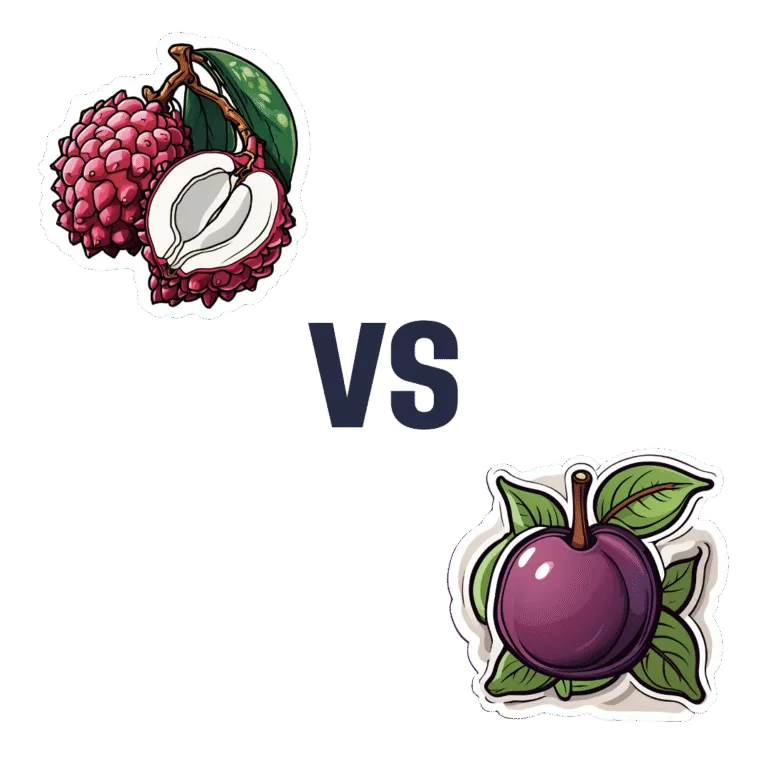
Russet Potato vs Sweet Potato – Which is Healthier?

10almonds is reader-supported. We may, at no cost to you, receive a portion of sales if you purchase a product through a link in this article.

Our Verdict

When comparing russet potato to sweet potato, we picked the sweet.

Why?

In terms of macros, the sweet potato has 50% more fiber, for the same carbs, scoring a first-round victory.

In the category of vitamins, russet potatoes have more of vitamins B6 and B9, while sweet potatoes have more of vitamins A, B1, B2, B3, B5, B7, C, E, and K, winning this round easily too. In particular, they have 961x more vitamin A, of which they are an excellent source!

Looking at minerals, russet potatoes have more iron, phosphorus, and selenium, while sweet potatoes have more calcium, copper, and manganese, for a 3:3 tie in this round.

Adding up the sections makes for an overall win for sweet potatoes, but by all means do enjoy either or both, as diversity is best!

Want to learn more?

You might like:

Carb-Strong or Carb-Wrong? Should You Go Light Or Heavy On Carbs?

And you might also consider:

Do Tomatoes & Other Nightshades Cause Inflammation & Worsen Arthritis? ← a common argument against potatoes, not rooted in good science, as it turns out.

Enjoy!

Don’t Forget…

Did you arrive here from our newsletter? Don’t forget to return to the email to continue learning!

Learn to Age Gracefully

Join the 98k+ American women taking control of their health & aging with our 100% free (and fun!) daily emails:

  • Why Psyllium Is Healthy Through-And-Through

    10almonds is reader-supported. We may, at no cost to you, receive a portion of sales if you purchase a product through a link in this article.

    Psyllium is the powder of the husk of the seed of the plant Plantago ovata.

    It can be taken as a supplement, and/or used in cooking.

    What’s special about it?

    It is fibrous, and the fiber is largely soluble fiber. It’s a “bulk-forming laxative”, which means that (dosed correctly) it is good against both constipation (because it’s a laxative) and diarrhea (because it’s bulk-forming).

    See also, because this is Research Review Monday and we provide papers for everything:

    Fiber supplements and clinically proven health benefits: How to recognize and recommend an effective fiber therapy

    In other words, it will tend things towards being a 3 or 4 on the Bristol Stool Scalethis is not pretty, but it is informative.

    Before the bowels

    Because of how it increases the viscosity of substances it finds itself in, psyllium slows stomach-emptying, and thus improves feelings of satiety.

    Here’s a study in which taking psyllium before breakfast and lunch resulted in increased satiety between meals, and reduction in food-related cravings:

    Satiety effects of psyllium in healthy volunteers

    Prebiotic benefits

    We can’t digest psyllium, but our gut bacteria can—somewhat! Because they can only digest some of the psyllium fibers, that means the rest will have the stool-softening effect, while we also get the usual in-gut benefits from prebiotic fiber first too:

    The Effect of Psyllium Husk on Intestinal Microbiota in Constipated Patients and Healthy Controls

    Cholesterol-binding

    Psyllium can bind to cholesterol during the digestive process. Why only “can”? Well, if you don’t consume cholesterol (for example, if you are vegan), then there won’t be cholesterol in the digestive tract to bind to (yes, we do need some cholesterol to live, but like most animals, we can synthesize it ourselves).

    What this cholesterol-binding action means is that the dietary cholesterol thus bound cannot enter the bloodstream, and is simply excreted instead:

    Plantago consumption significantly reduces total cholesterol and low-density lipoprotein cholesterol in adults: A systematic review and meta-analysis

    Heart health beyond cholesterol

    Psyllium supplementation can also help lower high blood pressure but does not significantly lower already-healthy blood pressure, so it can be particularly good for keeping things in safe ranges:

    ❝Given the overarching benefits and lack of reported side effects, particularly for hypertensive patients, health care providers and clinicians should consider the use of psyllium supplementation for the treatment or abatement of hypertension, or hypertensive symptoms.❞

    ~ Dr. Mina Salek et al.

    Read in full: The effect of psyllium supplementation on blood pressure: a systematic review and meta-analysis of randomized controlled trials ← you can see the concrete numbers here

    Is it safe?

    Psyllium is first and foremost a foodstuff, and is considered very safe unless you have an allergy (which is rare, but possible).

    However, it is still recommended to start at a low dose and work up, because anything that changes your gut microbiota, even if it changes it for the better, will be easiest if done slowly (or else, you will hear about it from your gut).

    Want to try some?

    We don’t sell it, but here for your convenience is an example product on Amazon

    Enjoy!

    Share This Post

  • Considering taking Wegovy to lose weight? Here are the risks and benefits – and how it differs from Ozempic

    10almonds is reader-supported. We may, at no cost to you, receive a portion of sales if you purchase a product through a link in this article.

    The weight-loss drug Wegovy is now available in Australia.

    Wegovy is administered as a once-weekly injection and is approved specifically for weight management. It’s intended to be used in combination with a reduced-energy diet and increased physical activity.

    So how does Wegovy work and how much weight can you expect to lose while taking it? And what are the potential risks – and costs – for those who use it?

    Let’s look at what the science says.

    Halfpoint/Shutterstock

    What is Wegovy?

    Wegovy is a brand name for the medication semaglutide. Semaglutide is a glucagon-like peptide-1 receptor agonist (GLP-1RA). This means it makes your body’s own glucagon-like peptide-1 hormone, called GLP-1 for short, work better.

    Normally when you eat, the body releases the GLP-1 hormone which helps signal to your brain that you are full. Semaglutides enhance this effect, leading to a feeling of fullness, even when you haven’t eaten.

    Another role of GLP-1 is to stimulate the body to produce more insulin, a hormone which helps lower the level of glucose (sugar) in the blood. That’s why semaglutides have been used for several years to treat type 2 diabetes.

    Pack of Wegovy injections
    Wegovy is self-injected once a week. S Becker/Shutterstock

    How does Wegovy differ from Ozempic?

    Like Wegovy, Ozempic is a semaglutide. The way Wegovy and Ozempic work in the body are essentially the same. They’re made by the same pharmaceutical company, Novo Nordisk.

    But there are two differences:

    1) They are approved for two different (but related) reasons.

    In Australia (and the United States), Ozempic is approved for use to improve blood glucose levels in adults with type 2 diabetes. By managing blood glucose levels effectively, the medication aims to reduce the risk of major complications, such as heart disease.

    Wegovy is approved for use alongside diet and exercise for people with a body mass index (BMI) of 30 or greater, or 27 or greater but with other conditions such as high blood pressure.

    Wegovy can also be used in people aged 12 years and older. Like Ozempic, Wegovy aims to reduce the risk of future health complications, including heart disease.

    2) They are both injected but come in different strengths.

    Ozempic is available in pre-loaded single-dose pens with varying dosages of 0.25 mg, 0.5 mg, 1 mg, or 2 mg per injection. The dose can be slowly increased, up to a maximum of 2 mg per week, if needed.

    Wegovy is available in prefilled single-dose pens with doses of 0.25 mg, 0.5 mg, 1 mg, 1.7 mg, or 2.4 mg. The treatment starts with a dose of 0.25 mg once weekly for four weeks, after which the dose is gradually increased until reaching a maintenance dose of 2.4 mg weekly.

    While it’s unknown what the impact of Wegovy’s introduction will be on Ozempic’s availability, Ozempic is still anticipated to be in low supply for the remainder of 2024.

    Is Wegovy effective for weight loss?

    Given Wegovy is a semaglutide, there is very strong evidence it can help people lose weight and maintain this weight loss.

    A recent study found that over four years, participants taking Wevovy as indicated experienced an average weight loss of 10.2% body weight and a reduction in waist circumference of 7.7cm.

    For those who stop taking the medication, analyses have shown that about two-thirds of weight lost is regained.

    Man leans against a bridge rail
    Wegovy can help people lose weight and maintain their weight loss – while they take the drug. Mladen Mitrinovic/Shutterstock

    What are the side effects of Wegovy?

    The most common side effects are nausea and vomiting.

    However, other serious side effects are also possible because of the whole-of-body impact of the medication. Thyroid tumours and cancer have been detected as a risk in animal studies, yet are rarely seen in human scientific literature.

    In the four-year Wegovy trial, 16.6% of participants who received Wegovy (1,461 people) experienced an adverse event that led to them permanently discontinuing their use of the medication. This was higher than the 8.2% of participants (718 people) who received the placebo (with no active ingredient).

    Side effects included gastrointestinal disorders (including nausea and vomiting), which affected 10% of people who used Wegovy compared to 2% of people who used the placebo.

    Gallbladder-related disorders occurred in 2.8% of people who used Wegovy, and 2.3% of people who received the placebo.

    Recently, concerns about suicidal thoughts and behaviours have been raised, after a global analysis reviewed more than 36 million reports of adverse events from semaglutide (Ozempic or Wegovy) since 2000.

    There were 107 reports of suicidal thoughts and self-harm among people taking semaglutide, sadly including six actual deaths. When people stopped the medication, 62.5% found the thoughts went away. What we don’t know is whether dose, weight loss, or previous mental health status or use of antidepressants had a role to play.

    Finally, concerns are growing about the negative effect of semaglutides on our social and emotional connection with food. Anecdotal and scientific evidence suggests people who use semaglutides significantly reduce their daily dietary intake (as anticipated) by skipping meals and avoiding social occasions – not very enjoyable for people and their loved ones.

    How can people access Wegovy?

    Wegovy is available for purchase at pharmacists with a prescription from a doctor.

    But there is a hefty price tag. Wegovy is not currently subsidised through the Pharmaceutical Benefits Scheme, leaving patients to cover the cost. The current cost is estimated at around A$460 per month dose.

    If you’re considering Wegovy, make an appointment with your doctor for individual advice.

    Lauren Ball, Professor of Community Health and Wellbeing, The University of Queensland and Emily Burch, Accredited Practising Dietitian and Lecturer, Southern Cross University

    This article is republished from The Conversation under a Creative Commons license. Read the original article.

    Share This Post

  • Every Woman Should Be Able To Do A Pull-Up

    10almonds is reader-supported. We may, at no cost to you, receive a portion of sales if you purchase a product through a link in this article.

    Cori Lefkowitz, of “Strong At Every Age”, talks us through what’s actually important (and why):

    It’s not about the pull-up

    The important part here is to challenge self-imposed limits, rather than literally apply to every individual circumstance. If, for example, you do not have arms, then quite possibly pull-ups are indeed not the ideal target exercise for you!

    There’s a common mental barrier that applies to [this and] a lot of things: people often treat a single failed attempt as proof they’ll never succeed, instead of recognizing that strength skills (just like most other skills) require progressive training.

    And then it gets worse, because avoiding challenging movements over time is (of course!) one of the major things that contributes to declining strength with age.

    But let’s say you do want to do pull-ups, specifically. A laudable goal! And an intrinsically worthy one too, because working towards a pull-up can reduce neck, shoulder, elbow, and upper-back discomfort by improving posture and joint function.

    With that in mind…

    1. Mobility first: improving chest, lat, and spinal mobility through foam rolling, stretching, and movement prep is essential before building strength.
    2. Scapular control next: developing the ability to move your shoulder blades (retraction, depression, elevation, and protraction) is key for both strength and injury reduction.
    3. Progressive strengthening thereafter: exercises like lat pulldowns, assisted variations, and pull-up holds help build the specific strength needed over time.

    This isn’t exactly a detailed how-to, so we’ll link a more detailed “how-to” in the “learn more” section below.

    Meanwhile, the most important thing to learn from today’s video is: instead of asking “can I do it now,” the better question is “what can I do to work towards it?”

    For more on all of this and surprisingly little in the category of visual demonstrations, enjoy:

    Click Here If The Embedded Video Doesn’t Load Automatically!

    Want to learn more?

    You might also like:

    How To Get Your First Pull-Up

    Take care!

    Share This Post

  • Sizing Aside: Are You Wearing The Right Bra For Your Breast Shape?

    10almonds is reader-supported. We may, at no cost to you, receive a portion of sales if you purchase a product through a link in this article.

    It’s well-known that most women wear incorrectly-fitting bras. Even with careful measurements, buying “off-the-rack” can be a challenge, because the sizing system only takes two measurements, when there are actually many more things to consider. Today’s video demystifies a lot of what else is going on!

    For example…

    Some of the different breast shapes/arrangements to consider:

    • Wide-set breasts: likely to find there’s a bit of a gap between your breasts and the inside (nearest to your sternum) parts of the cups—while spilling out a little at the outside edges. The solution? Bras that offer side-support, to keep things pointing more forwards. Central-closing bras can also help gather things together, and a balconette bra can redistribute things more evenly. Any of these options will be a lot more comfortable.
    • Small breasts: bralettes are your friend, keeping things comfortable while not wearing more bra than necessary to do the job (of course going braless is also an option, but we’re talking bra-fitting here, not bra-flinging-off never to be seen again)
    • Deflated breasts: often the case for someone who used to have larger breasts, but they lost size for hormonal reasons rather than for weight loss reasons. This often occurs a little while after childbirth, and also happens a lot in menopause. The bra recommendation for this? A push-up plunge bra with ¾ coverage not only provides cleavage if that’s wanted, but also, will keep things much more snug and thus more evenly-distributed. If ever you’ve found yourself needing to adjust yourself every now and gain while out, this will fix that and keep you comfortable for much longer.

    There’s more, along with a visual guide, so do check it out:

    Click Here If The Embedded Video Doesn’t Load Automatically!

    Further reading

    While we haven’t written about this specifically (maybe we’ll do a “Life Hacks” edition one of these days), we have written about…

    Keeping Abreast Of Your Cancer Risk

    Take care!

    Don’t Forget…

    Did you arrive here from our newsletter? Don’t forget to return to the email to continue learning!

    Learn to Age Gracefully

    Join the 98k+ American women taking control of their health & aging with our 100% free (and fun!) daily emails:

  • How Likely Is It That Ultra-Processed Foods (UPFs) Will Kill You?

    10almonds is reader-supported. We may, at no cost to you, receive a portion of sales if you purchase a product through a link in this article.

    Without adjusting for knowledge of your diet, if you are an average American, then the chance of a premature death being the result of consuming ultra-processed foods is 14%.

    Think about that for the moment: if you knew that the chance of a premature death being the result of your neighbor murdering you would be 14%, you’d probably feel strongly about that! You might even take steps to avoid your neighbor. Yet, millions of Americans effectively have a killer lurking in their kitchen, and what do they do? Go to the store to look for more of the same.

    See for example: Ultra-processed foods make up nearly half of US grocery purchases, raising public health concerns

    Of course you, dear reader, are quite possibly not the average American; indeed, we expect most of our readers are more health-conscious than that.

    About that 14% figure

    This comes from a very large study that found…

    ❝The meta-analysis showed a linear dose–response association between the ultraprocessed food consumption and all-cause mortality (RR for each 10% increase in percentage ultraprocessed food=1.03; 95% CI=1.02, 1.04).

    Considering the magnitude of the association between ultraprocessed foods intake and all-cause mortality and the ultraprocessed food dietary share number (percentage ultraprocessed food) in each of the 8 selected countries, estimations varied from 4% (Colombia) to 14% (United Kingdom and U.S.) of premature deaths attributable to ultraprocessed food intake.❞

    There are (as you might expect) a lot of stats in the study; for brevity we’ll not include them all, but another interesting statistic is:

    ❝adherence to ultraprocessed dietary pattern was associated with 32 poor physical and mental health outcomes

    …which is really a lot of ways to go wrong in terms of looking after one’s body and brain!

    You can read the paper in full, here:

    Premature Mortality Attributable to Ultraprocessed Food Consumption in 8 Countries

    How to play the odds better

    Ultra-processed foods have a (statistically well-deserved) bad reputation. However, it’s not necessarily the processing itself that makes them bad; that’s just a high correlation.

    For example, tofu is by definition ultra-processed (because there are several stages to its processing), and yet is one of the healthiest things one can eat.

    See for example: Not all ultra-processed foods are bad for your health, whatever you might have heard

    So, what’s generally the problem? According to one of the researchers in the above study,

    ❝UPFs affect health beyond the individual impact of high content of critical nutrients (sodium, trans fats, and sugar) because of the changes in the foods during industrial processing and the use of artificial ingredients, including colorants, artificial flavors and sweeteners, emulsifiers, and many other additives and processing aids, so assessing deaths from all-causes associated with UPF consumption allows an overall estimate of the effect of industrial food processing on health.❞

    In short: there’s a lot going on, and we don’t know half of it half so well as we would like.

    So what to do about it? Minimizing ultra-processed foods seems sensible, of course, and when it comes to things that are regulars in our diet, then perhaps giving them extra attention with regard to investigating their ingredients and the processes involved, to decide in an informed fashion whether they deserve to stay in our diet or not.

    If you’d like to get technical about it, in a way that’s as labor-unintensive as reasonably possible, here’s a great resource:

    How Processed Is The Food You Buy, Really?

    Take care!

    Don’t Forget…

    Did you arrive here from our newsletter? Don’t forget to return to the email to continue learning!

    Learn to Age Gracefully

    Join the 98k+ American women taking control of their health & aging with our 100% free (and fun!) daily emails:

  • The Exercises That Can Fix Sinus Problems (And More)

    10almonds is reader-supported. We may, at no cost to you, receive a portion of sales if you purchase a product through a link in this article.

    Who nose what benefits you will gain today?

    This is James Nestor, a science journalist and author. He’s written for many publications, including Scientific American, and written a number of books, most notably Breath: The New Science Of A Lost Art.

    Today we’ll be looking at what he has to share about what has gone wrong with our breathing, what problems this causes, and how to fix it.

    What has gone wrong?

    When it comes to breathing, we humans are the pugs of the primate world. In a way, we have the opposite problem to the squashed-faced dogs, though. But, how and why?

    When our ancestors learned first tenderize food, and later to cook it, this had two big effects:

    1. We could now get much more nutrition for much less hunting/gathering
    2. We now did not need to chew our food nearly so much

    Getting much more nutrition for much less hunting/gathering is what allowed us to grow our brains so large—as a species, we have a singularly large brain-to-body size ratio.

    Not needing to chew our food nearly so much, meanwhile, had even more effects… And these effects have become only more pronounced in recent decades with the rise of processed food making our food softer and softer.

    It changed the shape of our jaw and cheekbones, just as the size of our brains taking up more space in our skull moved our breathing apparatus around. As a result, our nasal cavities are anatomically ridiculous, our sinuses are a crime against nature (not least of all because they drain backwards and get easily clogged), and our windpipes are very easily blocked and damaged due to the unique placement of our larynx; we’re the only species that has it there. It allowed us to develop speech, but at the cost of choking much more easily.

    What problems does this cause?

    Our (normal, to us) species-wide breathing problems have resulted in behavioral adaptations such as partial (or in some people’s cases, total or near-total) mouth-breathing. This in turn exacerbates the problems with our jaws and cheekbones, which in turn exacerbates the problems with our sinuses and nasal cavities in general.

    Results include such very human-centric conditions as sleep apnea, as well as a tendency towards asthma, allergies, and autoimmune diseases. Improper breathing also brings about a rather sluggish metabolism for how many calories we consume.

    How are we supposed to fix all that?!

    First, close your mouth if you haven’t already, and breathe through your nose.

    In and out.

    Both are important, and unless you are engaging in peak exercise, both should be through your nose. If you’re not used to this, it may feel odd at first, but practice, and build up your breathing ability.

    Six seconds in and six seconds out is a very good pace.

    If you’re sitting doing a breathing exercise, also good is four seconds in, four seconds hold, four seconds out, four seconds hold, repeat.

    But those frequent holds aren’t practical in general life, so: six seconds in, six seconds out.

    Through your nose only.

    This has benefits immediately, but there are other more long-term benefits from doing not just that, but also what has been called (by Nestor, amongst many others), “Mewing”, per the orthodontist, Dr. John Mew, who pioneered it.

    How (and why) to “mew”:

    Place your tongue against the roof of your mouth. It should be flat against the palate; you’re not touching it with the tip here; you’re creating a flat seal.

    Note: if you were mouth-breathing, you will now be unable to breathe. So, important to make sure you can breathe adequately through your nose first.

    This does two things:

    1. It obliges nose-breathing rather than mouth-breathing
    2. It creates a change in how the muscles of your face interact with the bones of your face

    In a battle between muscle and bone, muscle will always win.

    Aim to keep your tongue there as much as possible; make it your new best habit. If you’re not eating, talking, or otherwise using your tongue to do something, it should be flat against the roof of your mouth.

    You don’t have to exert pressure; this isn’t an exercise regime. Think of it more as a postural exercise, just, inside your mouth.

    Quick note: read the above line again, because it’s important. Doing it too hard could cause the opposite problems, and you don’t want that. You cannot rush this by doing it harder; it takes time and gentleness.

    Why would we want to do that?

    The result, over time, will tend to be much healthier breathing, better sinus health, freer airways, reduced or eliminated sleep apnea, and, as a bonus, what is generally considered a more attractive face in terms of bone structure. We’re talking more defined cheekbones, straighter teeth, and a better mouth position.

    Want to learn more?

    This is the “Mewing” technique that Nestor encourages us to try:

    Don’t Forget…

    Did you arrive here from our newsletter? Don’t forget to return to the email to continue learning!

    Learn to Age Gracefully

    Join the 98k+ American women taking control of their health & aging with our 100% free (and fun!) daily emails: