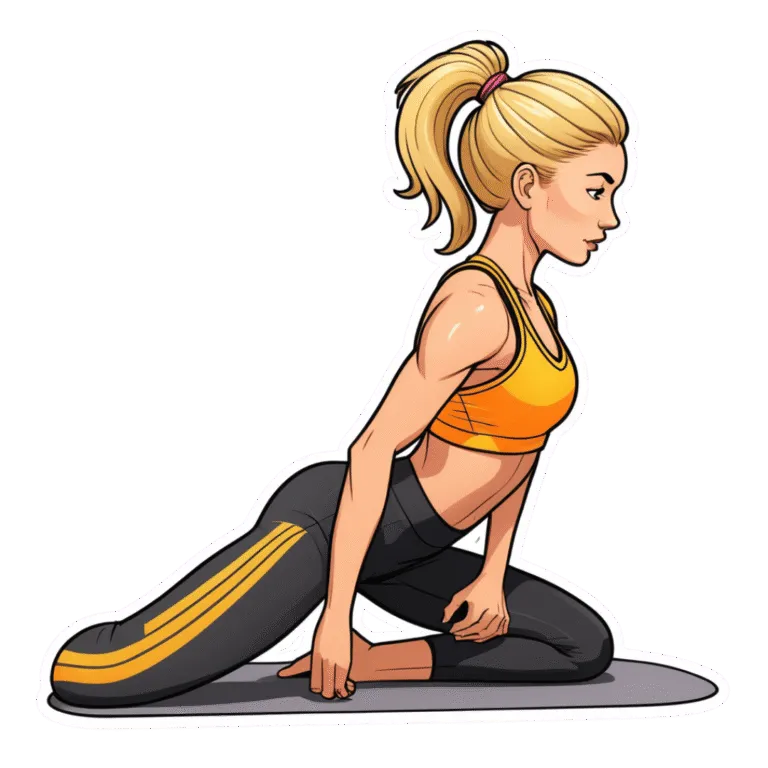
Knee Buckling? Here’s A Possible Reason Why (& Massage That Can Fix It)

10almonds is reader-supported. We may, at no cost to you, receive a portion of sales if you purchase a product through a link in this article.

Dr. Amy Konvalin, physical therapist, gives her insights:

It’s not about your knee

Or at least, it’s often not. Sometimes it is, sometimes it arguably is or isn’t (like the golgi tendon reflex misfiring in cases of hypermobility, which involves the Golgi tendon organ which is at least near the knee—see the “learn more” section for more on that). And sometimes it’s really nowhere near, for example:

It’s in your hips: when there has been no direct injury or trauma to your knee, dysfunction in the muscles of your hip or foot can contribute to, if not outright cause, knee problems. The hip is a particularly common source of knee buckling.

It’s often specifically about the gluteus medius, because increased tension or dysfunction in this muscle on the side of your hip can increase tension through the IT band and contribute to a sensation (or indeed, actual consequence) of your knee giving way, particularly when walking or climbing stairs.

Dr. Konvalin recommends not massaging the IT band itself (while myofascial massage is generally considered a worthwhile thing, in this case she argues it can worsen matters by aggravating it and causing the attached muscle to become more tense rather than less), and instead recommends massaging the gluteus medius directly.

  • How to find your gluteus medius: place your hand on your hipbone and slide it downward beneath the bony ridge. The area beneath that ridge contains your gluteus medius, which extends toward the prominent part of your thigh bone.
  • How to massage it: tender areas can be gently massaged with your hand, either over your clothes or with lotion directly on your skin. Tender spots can indicate areas of increased tension. You can also use a ball (e.g. tennis ball or similarly-sized made-for-purpose massage ball), to increase the pressure without increasing the feeling of friction.

She does recommend to work on each tender spot for no more than one minute. If you have several tender spots, each can be addressed separately. And yes, just do this “little and often”; you want a sustainable change, not the anatomical equivalent of trying to tenderize yourself with a meat-hammer.

For more on all of this and even a visual demonstration (Dr. Konvalin often avoids those even when they would be helpful), enjoy:

Click Here If The Embedded Video Doesn’t Load Automatically!

Want to learn more?

You might also like:

The Best Exercise to Stop Your Legs From Giving Out ← this is about stopping a Golgi tendon reflex from misfiring and causing you to fold like laundry when you were doing nothing more challenging than walking along

Take care!

Don’t Forget…

Did you arrive here from our newsletter? Don’t forget to return to the email to continue learning!

Learn to Age Gracefully

Join the 98k+ American women taking control of their health & aging with our 100% free (and fun!) daily emails:

  • Tretinoin For 300 Days: What To Expect

    10almonds is reader-supported. We may, at no cost to you, receive a portion of sales if you purchase a product through a link in this article.

    “Laura Try” tries things. This time, it’s tretinoin, a retinoid that’s more effective than retinol. Here’s what she found:

    Glowing up

    Some of Laura’s tips based on her experience:

    • Use it in the evening (since it increases short-term photosensitivity)
    • Protect skin from the sun (for the above reason—despite the fact that in the long-term, it reverses sun damage you may have accumulated prior to use)
    • Start on the weakest strength, and increase to a stronger strength gradually (0.05% is a very common dose)
    • Use a pea size amount for the whole face (do the “apply truly tiny dots to strategic locations before massaging into skin” method)
    • Use on completely dry skin (or you will waste it)
    • Avoid creases of the skin, around the nose and earlobes (creases can cause the product to accumulate in the line, and some areas of your face may be more sensitive to tretinoin’s effects than others)
    • When starting, apply every third night. After a few weeks go to every second night. Increase the frequency gradually until daily (this is what most people do—speedrun at your own risk)
    • Consider a gentle cleansing cream, rather than a face wash (to avoid drying out your face)
    • Avoid exfoliants and other complex products and ingredients (another reason why it’s good to do it at night; you are less likely to then want to put other things on your face immediately afterwards)

    For more on all of this plus a lot of visuals, enjoy:

    Click Here If The Embedded Video Doesn’t Load Automatically!

    Want to learn more?

    You might also like:

    Undo The Sun’s Damage To Your Skin ← this was our research review article about tretinoin

    Take care!

    Share This Post

  • Save Your Heart!

    10almonds is reader-supported. We may, at no cost to you, receive a portion of sales if you purchase a product through a link in this article.

    Heart disease doesn’t have to be a one-way street—it can often be reversed:

    • Including if it’s in the early stages, the sort you probably haven’t even noticed yet if you’re not paying close attention
    • Including if it’s in advanced stages; as a general rule of thumb, if it’s still beating, it can still get better if treated better

    But how?

    Lifestyle first

    Yes, sometimes drugs may be necessary. Yes, sometimes surgery may be necessary.

    But for most people most of the time? Lifestyle can go a very long way.

    See: Meta-Analysis of the Effects of Lifestyle Modifications on Coronary and Carotid Atherosclerotic Burden

    To accomplish this, the American Heart Association champions its “Life’s Essential 8” framework, which can be broken down as follows:

    • Eating better
      • In particular, diets with the strongest evidence include the Mediterranean diet, the DASH diet (Dietary Approaches to Stop Hypertension) which is basically a modified Mediterranean diet, and whole foods vegan, vegetarian, or pescatarian diets, which emphasize fruits, vegetables, whole grains, nuts, healthy fats like olive oil, while limiting processed foods, added sugars, and saturated fats.
    • Being more active
      • Especially getting the much talked-about 150 minutes per week of moderate exercise (of the kind your fitness tracker will count as such; brisk walking is great for this) or MET-adjusted other exercises (e.g. if you are running, chances are you’ll be in a higher heartrate zone, so each 1 minute there may count for 2 minutes of moderate exercise, for example).
    • Quitting smoking
      • Obviously this is only a thing if you smoke already, but if you do the quitting should be your top priority unless your doctor advises you otherwise (rare and strange if that happens, but occasionally something else may take priority).
    • Getting healthy sleep
      • Above all, sleep regularity is critical, as this has a huge impact (positive or negative, per how regular or irregular your sleep is) on heart health.
        • Learn more: How Regularity Of Sleep Can Be Even More Important Than Duration ← A recent, large (n=72,269) 8-year prospective* observational study of adults aged 40-79 found a strong association between irregular sleep and major cardiovascular events, to such an extent that it was worse than undersleeping.
          • *this means they started the study at a given point, and measured what happened for the next eight years—as opposed to a retrospective study, which would look at what had happened during the previous 8 years.
    • Managing weight
    • Managing cholesterol
      • Especially if you’re a man, though it’s at the very least still worth keeping an eye on it if you’re a woman.
        • A lot of people get confused by this topic, so if that’s you, hop on over to Demystifying Cholesterol and be confused no longer 🙂
    • Managing blood sugars
      • An underestimated one, as many people think of this as a completely separate matter and more to do with diabetes risk. But, “metabolic syndrome” is a thing, and these are all tied together.
    • Managing blood pressure
      • Just like plumbing is more likely to fail if the water pressure isn’t right (springing a leak if it’s too high, or just not getting water to where it needs to be if it’s too low), the same goes for our own internal plumbing and blood pressure.

    Bonus item, not in the AHA’s list but since it’s Valentine’s Day at the time of writing:

    How Relationships Affect The Heart (For Better Or For Worse)

    Want to learn more?

    Arm your library:

    Take care!

    Share This Post

  • The Web That Has No Weaver – by Ted Kaptchuk

    10almonds is reader-supported. We may, at no cost to you, receive a portion of sales if you purchase a product through a link in this article.

    At 10almonds we have a strong “stick with the science” policy, and that means peer-reviewed studies and (where such exists) scientific consensus.

    However, in the spirit of open-minded skepticism (i.e., acknowledging what we don’t necessarily know), it can be worth looking at alternatives to popular Western medicine. Indeed, many things have made their way from Traditional Chinese Medicine (or Ayurveda, or other systems) into Western medicine in any case.

    “The Web That Has No Weaver” sounds like quite a mystical title, but the content is presented in the cold light of day, with constant “in Western terms, this works by…” notes.

    The author walks a fine line of on the one hand, looking at where TCM and Western medicine may start and end up at the same place, by a different route; and on the other hand, noting that (in a very Daoist fashion), the route is where TCM places more of the focus, in contrast to Western medicine’s focus on the start and end.

    He makes the case for TCM being more holistic, and it is, though Western medicine has been catching up in this regard since this book’s publication more than 20 years ago.

    The style of the writing is very easy to follow, and is not esoteric in either mysticism or scientific jargon. There are diagrams and other illustrations, for ease of comprehension, and chapter endnotes make sure we didn’t miss important things.

    Bottom line: if you’re curious about Traditional Chinese Medicine, this book is the US’s most popular introduction to such, and as such, is quite a seminal text.

    Click here to check out The Web That Has No Weaver, and enjoy learning about something new!

    Share This Post

  • Darwin’s Bed Rest: Worthwhile Idea?

    10almonds is reader-supported. We may, at no cost to you, receive a portion of sales if you purchase a product through a link in this article.

    It’s Q&A Day at 10almonds!

    Have a question or a request? You can always hit “reply” to any of our emails, or use the feedback widget at the bottom!

    In cases where we’ve already covered something, we might link to what we wrote before, but will always be happy to revisit any of our topics again in the future too—there’s always more to say!

    As ever: if the question/request can be answered briefly, we’ll do it here in our Q&A Thursday edition. If not, we’ll make a main feature of it shortly afterwards!

    So, no question/request too big or small

    ❝I recall that Charles Darwin (of Evolution fame) used to spend a day a month in bed in order to maintain his physical and psychological equilibrium. Do you see merit in the idea?❞

    Well, it certainly sounds wonderful! Granted, it may depend on what you do in bed :p

    Descartes did a lot of his work from bed (and also a surprising amount of it while hiding in an oven, but that’s another story), which was probably not so good for the health.

    As for Darwin, his health was terrible in quite a lot of ways, so he may not be a great model.

    However! Certainly taking a break is well-established as an important and healthful practice:

    How To Rest More Efficiently (Yes, Really)

    ❝I don’t like to admit it but I am getting old. Recently, I had my first “fall” (ominous word!) I was walking across some wet decking and, before I knew what had happened, my feet were shooting forwards, and I crashed to the ground. Luckily I wasn’t seriously damaged. But I was wondering whether you can give us some advice about how best to fall. Maybe there are some good videos on the subject? I would like to be able to practice falling so that it doesn’t come as such a shock when it happens!❞

    This writer has totally done the same! You might like our recent main feature on the topic:

    Fall Special

    …if you’ll pardon the pun

    Enjoy!

    Don’t Forget…

    Did you arrive here from our newsletter? Don’t forget to return to the email to continue learning!

    Learn to Age Gracefully

    Join the 98k+ American women taking control of their health & aging with our 100% free (and fun!) daily emails:

  • High-Octane Brain – by Dr. Michelle Braun

    10almonds is reader-supported. We may, at no cost to you, receive a portion of sales if you purchase a product through a link in this article.

    True to the title, Dr. Braun jumps straight into action here, making everything as practical as possible as quickly as possible and giving the most attention to the science-based steps to take. Thereafter, and almost as an addendum, she gives examples of “brain role models” from various age groups, to show how these things can be implemented and benefitted-from in the real world.

    The greatest strength of this book is that it is the product of a lot of hard science made easy; this book has hundreds of scientific references (of which, many RCTs etc), and many contributions from other professionals in her field, to make one of the most evidence-based guidebooks around, and all presented in one place and in a manner that is perfectly readable to the layperson.

    The style, thus, is easy-reading, with references for those who want to jump into further reading but without that being required for applying the advice within.

    Bottom line: if you’d like to improve your brain with an evidence-based health regiment and minimal fluff, this is the book for you.

    Click here to check out High-Octane Brain, and level-up yours!

    Don’t Forget…

    Did you arrive here from our newsletter? Don’t forget to return to the email to continue learning!

    Learn to Age Gracefully

    Join the 98k+ American women taking control of their health & aging with our 100% free (and fun!) daily emails:

  • Artichoke vs Beetroot – Which is Healthier?

    10almonds is reader-supported. We may, at no cost to you, receive a portion of sales if you purchase a product through a link in this article.

    Our Verdict

    When comparing artichoke to beetroot, we picked the artichoke.

    Why?

    We’ll not be surprised if most readers picked beetroot, and if that’s you, then it’s good that you know beetroot has some very healthful properties! The thing is, while those properties are great and cannot be described as overhyped… It’s often the case that a food’s “boring” nutritional properties go underhyped.

    So, let’s hype it up for artichoke:

    In terms of macros, artichoke has nearly 2x the fiber, approximately the same carbs, and more than 2x the protein, winning easily in this category.

    In the category of vitamins, artichoke has more of vitamins B1, B2, B3, B5, B6, B7, C, E, and K, while beetroot has more of vitamins A and B9, giving artichoke a 9:2 victory in this round.

    Looking at minerals, artichoke has more calcium, copper, iron, magnesium, phosphorus, potassium, and zinc, while beetroot has more manganese and selenium, yielding artichoke another convincing win, 7:2 win this time.

    In other considerations, artichoke has a lot more polyphenols (especially flavonoids and phenolic acids), while beetroot has betalains, especially betanin, and plenty of benefits therefrom. So we’ll call this round a tie.

    Adding up the sections makes for a clear overall win for artichoke, but by all means enjoy either or both, as diversity is good!

    Want to learn more?

    You might like:

    Enjoy!

    Don’t Forget…

    Did you arrive here from our newsletter? Don’t forget to return to the email to continue learning!

    Learn to Age Gracefully

    Join the 98k+ American women taking control of their health & aging with our 100% free (and fun!) daily emails: