
I’m autistic and don’t speak. Here’s what I want you to know

10almonds is reader-supported. We may, at no cost to you, receive a portion of sales if you purchase a product through a link in this article.

My travels with autism started long before my diagnosis at the age of three years and three months.

My family noticed autistic features from around 15 months of age. I never looked at people and did not respond when called. I lined up toys instead of playing with them. When I wanted something, I took people’s hand to get it for me. I had frequent meltdowns in busy environments or when routines changed unexpectedly, but I couldn’t let people know why I was upset.

I was later diagnosed with autism. My family grieved to hear that I might never be able to lead an independent or full life.

But my mother wasted no time in organising supports. Soon, my days were filled with home-based intensive behavioural programs, speech therapy and other supports. But unfortunately, I never learned to speak.
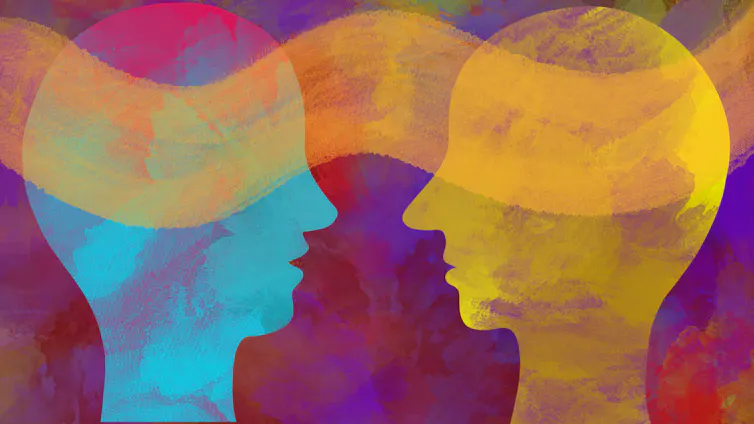
Kateryna Kovarzh/Getty

But I learned to communicate another way

A turning point came when I was nine. I began learning how to communicate with a type of augmentative and alternative communication known as supported typing. I type on a machine with a keyboard, called a Lightwriter, which speaks what I type. Another person touches my shoulder as I type. This touch helps me be aware of my body, and helps me focus on communicating my message.

I used supported typing at school and now at university, where I am a PhD candidate. I’m researching neurodiversity in autistic people with minimal, unreliable, or no speech, or those with complex communication and high support needs.

With supported typing, I am able to live life more fully, to give a TEDx talk, one of the first by a nonspeaker, and to write my autobiography. I used supported typing to write this article.

How common is it for an autistic person to not speak?

Autism affects how people communicate, interact and perceive the world. Autistic people show differences in social communication as well as narrow interests, such as Lego or trains.

In 2022, there were 290,900 autistic Australians. About one-third are nonspeaking.

This nonspeaking autistic community is socially vulnerable and frequently experience nonacceptance and exclusion. As a member of this community, I am driven to bust some myths.

Myth 1: we don’t use language

Autistic nonspeakers cannot use speech to communicate. But many of us are verbal, that is, we understand and use language.

I am a visual thinker, and I sense my world in pictures and images. Initially, speech was just sounds without meaning. Around six years of age, I realised words were used to represent things and to communicate. By linking people’s speech to their behaviour, I began to understand the symbolic nature of language, which helped me communicate.

Because of sensory and movement differences, autistic people with complex communication needs require support to communicate, do routine activities and participate socially.

For instance, physical touch to our hand, arm or shoulder provides feedback on our position, balance and movement to help us point to pictures, spell or type. Support workers also help us focus and remain calm so we can communicate.

Myth 2: we don’t understand your mind

Autistic people, especially those with complex communication needs, need extra time to decode, make sense of, and abstract meaning from experiences.

But with effort and time, many autistic nonspeakers can empathise and understand other people’s minds.

This can involve using social stories to understand mental and emotional states. These teach us about social situations and how to participate. They can be used to describe what to expect ahead of time. They can give us time to rehearse and we can draw on them during the situation in real life.

For example, when meeting someone for the first time, we may feel overwhelmed. We use a social story to know what to expect, to sit at a comfortable distance to introduce ourselves, to ask and respond to questions. The story helps us process new information, and suggests how to tell people when we are overloaded and need space to chill.

Giving us the time, space and permission to process social situations helps us navigate social life.

Myth 3: we rock, hum and sometimes scream or run off for no reason

Autistic people, especially those with complex communication needs, can feel unsafe in busy environments. For example, bright lights or noises from people talking and moving around cause sensory overload and distress. This leads to increased stress levels and a reduced ability to respond appropriately.

Autistic nonspeakers may use various strategies to manage the overload and lessen this sensory distress. This may include lying down, staring at blinking lights or revolving objects, humming to block out overwhelming sensations, as well as rocking, spinning or weaving our bodies to restore a sense of balance. These behaviours allow us to self-regulate.

However, when these strategies are insufficient, autistic nonspeakers may behave in unconventional ways such as screaming, running off or having meltdowns.

Such behaviours do not arise because we don’t understand how to act appropriately. They occur when we feel highly unsafe and anxious in demanding situations.

When a quiet space is available, we will be able to chill and regain feelings of safety and control, without resorting to concerning behaviours.

The next time

So the next time you meet an autistic person who doesn’t speak, please meet us halfway. Give us the time and space to process and think about how to reply.

Timothy HoYuan Chan, PhD Candidate, Sociology, Faculty of Education and Arts, Australian Catholic University

This article is republished from The Conversation under a Creative Commons license. Read the original article.

Don’t Forget…

Did you arrive here from our newsletter? Don’t forget to return to the email to continue learning!
Learn to Age Gracefully

Join the 98k+ American women taking control of their health & aging with our 100% free (and fun!) daily emails:

  • Why do we get snippets of songs stuck in our heads? And are earworms more common with OCD?

    10almonds is reader-supported. We may, at no cost to you, receive a portion of sales if you purchase a product through a link in this article.

    You’re reading a report and trying to concentrate. The room is silent. But despite your best efforts to focus, a little snatch of melody – an “earworm” – keeps circling inside your head.

    Research suggests most people get earworms regularly – and they’re more common among people who listen to a lot of music. One Finnish study found more than 90% of people report experiencing earworms at least weekly. About 60% of people experienced them daily.

    Why does your brain insist on inflicting snippets of tunes like Jingle Bells, Bohemian Rhapsody or Golden when you try to clear your mind or at random times during the day?

    And how are people with conditions such as obsessive compulsive disorder (OCD) affected?

    Westend61/Getty Images

    What turns a song into an earworm?

    A song is more likely to become an earworm when you’ve heard it often or recently.

    In a 2015 study, we played an unfamiliar song to participants either two or six times, and then contacted them at random times during the three days afterwards to ask if the songs were stuck in their heads.

    About one-third of participants reported experiencing an earworm at the time of contact. We also found that earworms of the songs in the experiment were more common if participants heard the song six times, and were most common in the day afterwards.

    What’s going on in our brain?

    Research shows brain function is broadly similar when people listen to music and when they experience musical imagery like earworms. The word imagery here refers to the imagined nature of the earworm – it’s not a sound that we are hearing out loud, it is instead within our minds.

    But part of the brain called the auditory association cortex (which does more complex brain tasks related to music listening) seems to be playing a bigger role with musical imagery than the primary auditory cortex (which does more of the basic tasks).

    Another interesting finding concerns people with congenital amusia, a condition which means they don’t hear music as effectively as everyone else. This might mean they’re not good at telling if something is out of tune, and struggle to remember melodies they just heard.

    Researchers found that while their brains might not be as good at analysing music, they still experienced earworms, though less frequently.

    What have earworms got to do with memory?

    What earworms seem to be doing when we experience them is getting into a part of our cognitive architecture called working memory. We use working memory when we have to remember something someone just told us, or when we do maths in our head.

    Australian researchers have found that people doing tasks that test their working memory aren’t as accurate at remembering things if they have a song stuck in their head. The earworm is crowding out other information in working memory.

    In another study, the same Australian researchers found that the more familiar people were with the songs, the more likely it was that the song stuck in their head was interfering with their working memory.

    So what are earworms for?

    While the earworms we don’t like can be really annoying and stand out, research suggests most earworms are a relatively pleasant experience.

    German researchers have argued earworms are essentially a sort of withdrawal response to not hearing music. Sometimes we want to listen to music but can’t, which might mean that your withdrawal symptom is an earworm.

    British researchers also found the earworms people experience reflect the reasons why those people listen to music. So if people often listen to music to rev themselves up, their earworms will often also be songs that would rev them up.

    What’s the experience of people with OCD?

    Earworms can sometimes be troubling for people with conditions such as obsessive compulsive disorder (OCD), who have unwanted thoughts come into their head. Earworms can be just another unwanted thought.

    However, research is mixed on whether people with OCD experience more earworms than other people as a result of their condition. Some research suggests that, while people with OCD are more troubled by earworms, they don’t usually experience them more often than anyone else.

    Other research does find they experience earworms more often. But it’s possible that people with OCD are just much more aware of their earworms, and such results can reflect that awareness.

    Researchers have suggested the best therapeutic approach for people with OCD troubled by earworms is in context of broader treatments such as exposure and response prevention. This aims to reduce the negative response patterns that occur in response to intrusive thoughts.

    How do I remove an unwanted earworm?

    Some some British researchers have found that chewing gum might be the answer to getting rid of unwanted earworms, as odd as that sounds.

    If earworms are going around our working memory, this actually makes sense – our memory is partly held in our “inner voice”, which involves using the throat to “subvocalise”.

    So if you engage your throat muscles by chewing on some gum, this may disrupt the looping earworms just enough for them to end. If your earworm is bothering you, it’s worth a try.

    Or try listening to something else, as people tend not to experience earworms when listening to other music. That can work for getting the song out of your head right now – but then you might get earworms of all the other songs.

    But there’s little evidence that listening to the whole song will get rid of an earworm. Research suggests that listening to the song increases the likelihood the song will then get stuck in your head.

    Timothy Byron, Lecturer in Psychology, University of Wollongong

    This article is republished from The Conversation under a Creative Commons license. Read the original article.

    Share This Post

  • Mango vs Starfruit – Which is Healthier?

    10almonds is reader-supported. We may, at no cost to you, receive a portion of sales if you purchase a product through a link in this article.

    Our Verdict

    When comparing mango to starfruit, we picked the mango.

    Why?

    Both have their merits!

    In terms of macros, mango has 2x the carbs, while starfruit has 2x the fiber; we call that a win for starfruit in this category.

    In the category of vitamins, however, mango has a lot more of vitamins A, B1, B2, B3, B6, B7, B9, C, E, and K, while starfruit has more vitamin B5, that is, the vitamin that’s in nearly all foods and in which it’s almost impossible to be deficient unless literally starving to death. In any case, an overwhelming win for mango in this round.

    Looking at minerals, mango has more calcium, iron, manganese, phosphorus, and potassium, while starfruit has more copper and zinc; another win for mangos.

    Adding up the sections makes for a clear overall win for mangos, but by all means enjoy either or both, as diversity is best!

    Want to learn more?

    You might like:

    What’s Your Plant Diversity Score?

    Enjoy!

    Share This Post

  • Here’s Looking At Ya!

    10almonds is reader-supported. We may, at no cost to you, receive a portion of sales if you purchase a product through a link in this article.

    This Main Feature Should Take You Two Minutes (and 18 Seconds) To Read*

    *Or at least, that’s what we’re told by this software that checks things for readability!

    There’s a problem nobody wants to talk about when it comes to speed-reading

    If you’re not very conscientious in your method, information does get lost. Especially, anything over 500 words per minute is almost certainly skimming and not true speed-reading.

    One of the reasons information gets lost is because of a weird and wonderful feature of our eyes and brain: saccades.

    Basically, our eyes can either collect visual information or they can move; they can’t do both at once. And as you may know, our eyes are almost always moving. So why aren’t we blind most of the time?

    We actually are.

    Did you know: your eyes take two upside-down 2D images and your brain presents you one 3D image the right way around instead? You probably did know that. So: it’s a bit like that.

    Your brain takes a series of snapshots from whenever your eyes weren’t moving, and mentally fills in the blanks for you, just like a studio animation. We have a “frame rate” of about 60 frames per second, by the way—that’s why many computer monitors use that frequency. Lower frequencies can result in a noticeable flicker, and higher frequencies are wasted on us mere mortals!

    Our eyes do some super-speedy movements called saccades (up to 500º per second! Happily no, our eyes don’t rotate 500º, but that’s the “per second” rate) and our brain fills in the gaps with its best guesses. The more you push it, the more it’ll guess wrong.

    We’re not making this up, by the way! See for yourself:

    Eye Movements In Reading And Information Processing: 20 Years Of Research

    Fortunately, it is possible to use your eyes in a way that reduces the brain’s need to guess. That also means it has more processing power left over to guess correctly when it does need to.

    Yes, There’s An App For That

    Actually there are a few! But we’re going to recommend Spreeder as a top-tier option, with very rapid improvement right from day one.

    It works by presenting the text with a single unmoving focal point. This is the opposite of traditional speed-reading methods that involve a rapidly moving pacer (such as your finger on the page, or a dot on the screen).

    This unmoving focal point (while the words move instead) greatly reduces the number of saccades needed, and so a lot less information is lost to optical illusions and guesswork.

    Try Spreeder (any platform) Here Now!

    If you find that easy to use and would like something with a few more features, you might like another app that works on the same principle: Spritz.

    It can take a bit more getting-used-to, but allows for greater integrations with all your favourite content in the long-run:

    Check Out Spritz: Android App / iOS App / Free Chrome Extension

    Lastly, if you don’t want any of those fancy apps and would just like to read more quickly and easily with less eye-strain, Beeline has you covered.

    For free, unless you want to unlock some premium features!

    How Beeline works is by adding a color gradient to text on websites and in documents. This makes it a lot easier for the eye to track without going off-piste, skipping a line, or re-reading the same bit again, etc.

    Try Out Beeline Reader (any platform) Here Now!

    Share This Post

  • The Dopamine Myth

    10almonds is reader-supported. We may, at no cost to you, receive a portion of sales if you purchase a product through a link in this article.

    The Dopamine Myth

    There’s a popular misconception that, since dopamine is heavily involved in addictions, it’s the cause.

    We see this most often in the context of non-chemical addictions, such as:

    • gambling
    • videogames
    • social media

    And yes, those things will promote dopamine production, and yes, that will feel good. But dopamine isn’t the problem.

    Myth: The Dopamine Detox

    There’s a trend we’ve mentioned before (it got a video segment a few Fridays back) about the idea of a “dopamine detox“, and how unscientific the idea is.

    For a start…

    • You cannot detox from dopamine, because dopamine is not a toxin
    • You cannot abstain from dopamine, because your brain regulates your dopamine levels to keep them correct*
    • If you could abstain from dopamine (and did), you would die, horribly.

    *unless you have a serious mental illness, for example:

    • forms of schizophrenia and/or psychosis that involve too much dopamine, or
    • forms of depression and/or neurodegenerative diseases such as Parkinson’s (and several kinds of dementia) in which you have too little dopamine
    • bipolar disorder in which dopamine levels can swing too far each way

    See also: Dopamine fasting: misunderstanding science spawns a maladaptive fad

    Myth: Dopamine is all about pleasure

    Dopamine is a pleasure-giving neurotransmitter, but it serves more purposes than that! It also plays a central role in many neurological processes, including:

    • Motivation
    • Learning and memory
    • Motor functions
    • Language faculties
    • Linear task processing

    Note for example how someone taking dopaminergic drugs (prescription or otherwise; could be anything from modafinil to cocaine) is not blissed out… They’re probably in a good mood, sure, but they’re focused, organized, quick-thinking, and so forth! This is not an ad for cocaine; cocaine is very bad for the health. But you see the features? So, what if we could have a little more dopamine… healthily?

    Dopamine—à la carte

    Let’s look at the examples we gave earlier of non-chemical addictions that are dopaminergic in nature:

    • gambling
    • videogames
    • social media

    They’re not actually that rewarding, are they?

    • Gamblers lose more than they win
    • Gamers cease to care about a game once they have won
    • Social media more often results in “doomscrolling”

    This is because what prompts the most dopamine is actually the anticipation of reward… not the thing itself, whose reward-pleasure is very fleeting. Nobody looks back at an hour of doomscrolling and thinks “well, that was fun; I’m glad I did that”.

    See the science: Liking, Wanting and the Incentive-Sensitization Theory of Addiction

    But what if we anticipated a reward from things that are not deleterious to health and productivity? Things that are neutral, or even good for us?

    Examples of this include:

    • Sex! (remember though, it’s not a race to the finish-line)
    • Good, nourishing food (bonus: some foods boost dopamine production nutritionally)
    • Exercise/sport (also prompts release of endorphins, win/win!)
    • Gamified learning apps (e.g. Duolingo)
    • Gamified health/productivity apps (anything with bells and whistles and things that go “ding” and measure streaks etc)

    Want to know more?

    That’s all we have time for today, but you might want to check out:

    10 Best Ways to Increase Dopamine Levels Naturally ← Science-based and well-sourced article!

    Don’t Forget…

    Did you arrive here from our newsletter? Don’t forget to return to the email to continue learning!

    Learn to Age Gracefully

    Join the 98k+ American women taking control of their health & aging with our 100% free (and fun!) daily emails:

  • Pine Nuts vs Macadamia Nuts – Which is Healthier?

    10almonds is reader-supported. We may, at no cost to you, receive a portion of sales if you purchase a product through a link in this article.

    Our Verdict

    When comparing pine nuts to macadamias, we picked the pine nuts.

    Why?

    In terms of macros, it’s subjective depending on what you want to prioritize; the two nuts are equal in carbs, but pine nuts have more protein and macadamias have more fiber. We’d generally prioritize the fiber, which so far would give macadamias a win in this category, but if you prefer the protein, then consider it pine nuts. Next, we must consider fats; macadamias have slightly more fat, and of which, proportionally more saturated fat, resulting in 3x the total saturated fat compared to pine nuts, gram for gram. With this in mind, we consider this category a tie or a marginal nominal win for pine nuts.

    In the category of vitamins, pine nuts have more of vitamins A, B2, B3, B9, E, K, and choline, while macadamias have more of vitamins B1, B5, B6, and C. A clear win for pine nuts this time, especially with pine nuts having more than 17x the vitamin E of macadamias.

    When it comes to minerals, pine nuts have more copper, iron, magnesium, manganese, phosphorus, potassium, and zinc, while macadamias have more calcium and selenium. Another easy win for pine nuts.

    In short, enjoy either or both (diversity is good), but pine nuts are the healthier by most metrics.

    Want to learn more?

    You might like to read:

    Why You Should Diversify Your Nuts

    Enjoy!

    Don’t Forget…

    Did you arrive here from our newsletter? Don’t forget to return to the email to continue learning!

    Learn to Age Gracefully

    Join the 98k+ American women taking control of their health & aging with our 100% free (and fun!) daily emails:

  • Eating Disorders: More Varied (And Prevalent) Than People Think

    10almonds is reader-supported. We may, at no cost to you, receive a portion of sales if you purchase a product through a link in this article.

    Disordered Eating Beyond The Stereotypes

    Around 10% of Americans* have (or have had) an eating disorder. That might not seem like a high percentage, but that’s one in ten; do you know 10 people? If so, it might be a topic that’s near to you.

    *Source: Social and economic cost of eating disorders in the United States of Americ

    Our hope is that even if you yourself have never had such a problem in your life, today’s article will help arm you with knowledge. You never know who in your life might need your support.

    Very misunderstood

    Eating disorders are so widely misunderstood in so many ways that we nearly made this a Friday Mythbusting edition—but we preface those with a poll that we hope to be at least somewhat polarizing or provide a spectrum of belief. In this case, meanwhile, there’s a whole cluster of myths that cannot be summed up in one question. So, here we are doing a Psychology Sunday edition instead.

    “Eating disorders aren’t that important”

    Eating disorders are the second most deadly category of mental illness, second only to opioid addiction.

    Anorexia specifically has the highest case mortality rate of any mental illness:

    Source: National Association of Anorexia Nervosa & Associated Disorders: Eating Disorder Statistics

    So please, if someone needs help with an eating disorder (including if it’s you), help them.

    “Eating disorders are for angsty rebellious teens”

    While there’s often an element of “this is the one thing I can control” to some eating disorders (including anorexia and bulimia), eating disorders very often present in early middle-age, very often amongst busy career-driven individuals using it as a coping mechanism to have a feeling of control in their hectic lives.

    13% of women over 50 report current core eating disorder symptoms, and that is probably underreported.

    Source: as above; scroll to near the bottom!

    “Eating disorders are a female thing”

    Nope. Officially, men represent around 25% of people diagnosed with eating disorders, but women are 5x more likely to get diagnosed, so you can do the math there. Women are also 1.5% more likely to receive treatment for it.

    By the time men do get diagnosed, they’ve often done a lot more damage to their bodies because they, as well as other people, have overlooked the possibility of their eating being disordered, due to the stereotype of it being a female thing.

    Source: as above again!

    “Eating disorders are about body image”

    They can be, but that’s far from the only kind!

    Some can be about control of diet, not just for the sake of controlling one’s body, but purely for the sake of controlling the diet itself.

    Still yet others can be not about body image or control, like “Avoidant/Restrictive Food Intake Disorder”, which in lay terms sometimes gets dismissed as “being a picky eater” or simply “losing one’s appetite”, but can be serious.

    For example, a common presentation of the latter might be a person who is racked with guilt and/or anxiety, and simply stops eating, because either they don’t feel they deserve it, or “how can I eat at a time like this, when…?” but the time is an ongoing thing so their impromptu fast is too.

    Still yet even more others might be about trying to regulate emotions by (in essence) self-medicating with food—not in the healthy “so eat some fruit and veg and nuts etc” sense, but in the “Binge-Eating Disorder” sense.

    And that latter accounts for a lot of adults.

    You can read more about these things here:

    Psychology Today | Types of Eating Disorder ← it’s pop-science, but it’s a good overview

    Take care! And if you have, or think you might have, an eating disorder, know that there are organizations that can and will offer help/support in a non-judgmental fashion. Here’s the ANAD’s eating disorder help resource page, for example.

    Don’t Forget…

    Did you arrive here from our newsletter? Don’t forget to return to the email to continue learning!

    Learn to Age Gracefully

    Join the 98k+ American women taking control of their health & aging with our 100% free (and fun!) daily emails: