
Exercise vs Neurodegeneration: What Matters The Most?

10almonds is reader-supported. We may, at no cost to you, receive a portion of sales if you purchase a product through a link in this article.

Spoiler: what matters the most is how it adds up over time. So the best time to start was decades ago, but the next best time to start is now 😉

Exercise is a critical tool in the fight against neurodegeneration. We talked about it in one of earliest articles here at 10almonds: How To Reduce Your Alzheimer’s Risk

A large part of the reason for this is that exercise is good for the heart, and as we often say, “what’s good for your heart is good for your brain”, and this is because the former feeds the latter, with oxygen and nutrients, and also clears away detritus like beta-amyloid (associated with Alzheimer’s) and alpha-synuclein (associated with Parkinson’s).

See also: The Neuroscientist In The Gym: The Exercise That Protects Your Brain

This exercise doesn’t even have to be incredibly vigorous! For a gentler approach, see for example: How To Walk Away From Alzheimer’s

Now, some of the brain benefits of exercise are immediate:

How Your Exercise Today Gives A Brain Boost Tomorrow

…and some are very measurable over a fairly short timeframe:

Daily Activity Levels & The Measurable Difference They Make To Brain Health

But… What about cumulative activity over time? Does what we did on a Tuesday afternoon 10 years ago matter to our brains today? Or to put the question going forwards: will what we do on a Tuesday afternoon today make a difference to our brain 10 years from now?

This question has now been answered; the answer is “yes“, and the reason for the answer is that every bit of exercise we do, no matter how small, does add up over time:

The study

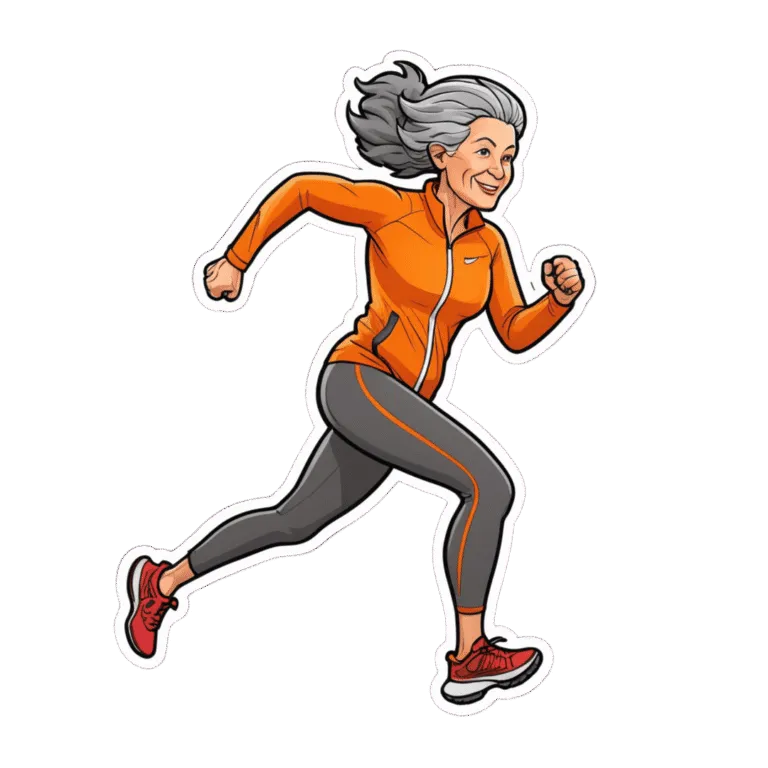
Researchers (Dr. Suhang Song et al.) investigated cumulative activity over time*, and found that people with higher cumulative physical activity showed slower declines in global cognition, memory, and executive function. The participants were 13,450 adults aged 50+ who were cognitively healthy at the start.

*how much time, you wonder? It was a longitudinal study, with an average participation length of 11 years (of course, participation lengths will differ if individuals die or otherwise withdraw from the study before the end). The upper end on participation was 16 years, as you’ll see in the study title.

What’s important about this study is that they found that being physically active over long periods (not just sporadically) was mostly strongly linked to maintaining better cognitive health. and that the more often and longer people stayed active, the stronger the protective effect became—which means that yes, those benefits grew over time.

As for how the exercise was measured: they calculated cumulative physical activity by combining the intensity, frequency, and duration of all activities each person did over time (using metabolic equivalent rates). This way, it was also possible to look at the total amounts of exercise as a single discrete variable, while taking into account that doing the laundry, for example, is not quite so vigorous as playing tennis.

One cannot really do a randomized controlled trial for this sort of thing (e.g. and the control group will merely believe they are doing vigorous exercise, but in fact it is placebo), and it was also not an interventional study, it rather reflected people’s natural tendencies to exercise more or less and/or in different ways, and one thing that was noticed was that even modest changes such as shifting from occasional to weekly vigorous or moderate activity were associated with a noticeably slower rate of decline.

You can read the paper in full, here: Long-term cumulative physical activity associated with less cognitive decline: Evidence from a 16-year cohort study

Want to learn more?

You might like this book that we reviewed a little while back:

Brain Health Action Plan: Simple, Science-Backed Lifestyle Changes that Optimize Cognitive Fitness and Reduce Alzheimer’s Risk – by Dr. Teryn Clarke

Take care!

Don’t Forget…

Did you arrive here from our newsletter? Don’t forget to return to the email to continue learning!
  • The Fiber Supplement That Helps vs Arthritis
    We’ve written before about arthritis management in general, so before we get into the main part today, let’s take a moment to drop some links for anyone who’d like a quick recap first: There are also lots of supplements that enjoy popular claims of helping vs arthritis; not all of them actually do, but here…

Learn to Age Gracefully

Join the 98k+ American women taking control of their health & aging with our 100% free (and fun!) daily emails:

  • Mind Gym – by Gary Mack and David Casstevens

    10almonds is reader-supported. We may, at no cost to you, receive a portion of sales if you purchase a product through a link in this article.

    While this book seems to be mostly popular amongst young American college athletes and those around them (coaches, parents, etc) its applicability is a lot wider than that.

    The thing is, as this book details, we don’t have to settle for less than optimal in our training—whatever “optimal” means for us, at any stage of life.

    The style is largely narrative, and conveys a lot of ideas through anecdotes. They are probably true, but whether they occured entirely as-written or have been polished or embellished is not so important, as to to give food for thought, and reflection on how we can hone what we’re doing to work the best for us.

    Nor is it just a long pep-talk, though it certainly has a motivational aspect. But rather, it covers also such things as the seven critical areas that we need to excel at if we want to be mentally robust, and—counterintuitively—the value of slowing down sometimes. The authors also talk about the importance of love, labor, and ongoing learning if we want a fulfilled life.

    Bottom line: if you are engaged with any sport or sport-like endeavor that you’d like to be better at, this book will sharpen your training and development.

    Click here to check out Mind Gym, and optimize yours!

    Share This Post

  • What Your Skin Says About Nutrient Deficiencies

    10almonds is reader-supported. We may, at no cost to you, receive a portion of sales if you purchase a product through a link in this article.

    Dr. Andrea Suarez, dermatologist, shows us:

    Watch out for…

    Fun fact: skin, hair, and nail cells divide rapidly, making them among the first tissues to reflect inadequate nutrition.

    These deficiencies mimic other common skin conditions: nutrient shortages can disrupt your skin barrier, immune function, cell turnover, and inflammation control, causing rashes that resemble dandruff, eczema, acne, or seborrheic dermatitis.

    So, what’s to blame?

    Deficiencies and their signs/symptoms include:

    • Vitamin B2 deficiency: can cause severely chapped lips, cracks at the corners of your mouth, angular cheilitis, a smooth red tongue, and a facial rash that resembles seborrheic dermatitis.
    • Vitamin B3 deficiency: can cause a severe sunburn-like rash, skin darkening and thickening, a dark band around the neck called Casal’s necklace, mouth pain, a smooth tongue, diarrhea, dementia, and can eventually be fatal if untreated (technically all vitamin deficiencies are fatal if not corrected, or else they wouldn’t be called vitamins, but this one speedruns it)
    • Vitamin B6 deficiency: can produce a seborrheic dermatitis-like facial rash, dandruff, and eczema-like skin changes, especially in people with alcohol misuse, inflammatory bowel disease, malabsorption disorders, kidney failure, or certain medication use.
    • Vitamin B9 deficiency: can contribute to pale skin, brittle nails, mouth sores, fatigue, and symptoms that overlap with B12 deficiency.
    • Vitamin B12 deficiency: can cause skin darkening, especially in skin folds and on your palms, dark streaks in your nails, a sore smooth tongue, loss of taste, angular cheilitis, and sometimes premature graying of your hair.
    • Iron deficiency: can lead to hair thinning, excessive shedding, brittle nails, spoon-shaped nails, pale or dry skin, and unexplained itching.

    For more on all of this plus visual illustrations, enjoy:

    Click Here If The Embedded Video Doesn’t Load Automatically!

    Want to learn more?

    As for why you might want to favor getting these from food if you can, then while the title says “vitamins”, the following book discusses an assortment of vitamins, minerals, and other nutrients; the “other nutrients” category including amino acids (branched chain and essential), prebiotics and probiotics, and triglycerides of various kinds:

    Eat Your Vitamins – by Mascha Davis, RDN ← see our review, here

    Take care!

    Share This Post

  • Ikigai – by Héctor García and Francesc Miralles

    10almonds is reader-supported. We may, at no cost to you, receive a portion of sales if you purchase a product through a link in this article.

    Ikigai is the Japanese term for what in English we often call “raison d’être”… in French, because English is like that.

    But in other words: ikigai is one’s purpose in life, one’s reason for living.

    The authors of this work spend some chapters extolling the virtues of finding one’s ikigai, and the health benefits that doing so can convey. It is, quite clearly, an important and relevant factor.

    The rest of the book goes beyond that, though, and takes a holistic look at why (and how) healthy longevity is enjoyed by:

    • Japanese people in general,
    • Okinawans in particular,
    • Residents of Okinawa’s “blue zone” village with the highest percentage of supercentenarians, most of all.

    Covering considerations from ikigai to diet to small daily habits to attitudes to life, we’re essentially looking at a blueprint for healthy longevity.

    For a book whose title and cover suggests a philosophy-heavy content, there’s a lot of science in here too, by the way! From microbiology to psychiatry to nutrition science to cancer research, this book covers all bases.

    In short: this book gives a lot of good science-based suggestions for adjustments we can make to our lives, without moving to an Okinawan village!

    Click Here To Check Out Ikigai on Amazon Today!

    Share This Post

  • Cortisol spikes are normal – so when is cortisol a real problem?

    10almonds is reader-supported. We may, at no cost to you, receive a portion of sales if you purchase a product through a link in this article.

    You may have noticed a plethora of reels and posts on social media claiming cortisol “spikes” are harmful. Some warn against drinking coffee on an empty stomach or even doing certain exercises lest they “spike” your cortisol levels.

    As an endocrinologist, I live and breathe hormones. I can reassure you cortisol spikes are not something healthy people need to fear.

    In fact, cortisol rhythms – which involve some ups and some downs – are an essential part of what keeps your body well.

    Remind me, what is cortisol?

    Cortisol is an essential hormone that regulates our metabolism, immune system and cognitive/emotional processes.

    Cortisol regulation is complex.

    While cortisol release comes from your adrenal glands that sit just above your kidneys, it is under direct control by another hormone released by the pituitary gland, or “master gland” at the base of our brain.

    Cortisol production follows a strong daily rhythm.

    There is a sharp rise in cortisol levels in the first hour after waking up, called the “cortisol awakening response”.

    This awakening response helps you feel alert. In fact, the higher this peak, the better you can cope with the physical and mental challenges for the day ahead.

    A blunted cortisol awakening response (meaning they are not as high as would be ideal) is associated with poorer health.

    Over the course of a day, cortisol levels fall gradually and are naturally very low in the evening, designed to bring on sleep.

    Overlying this background rhythm there are regular cortisol pulses throughout the day, when your body is faced with challenges such as a tough workout, a stressful deadline or an infection.

    These cortisol rises are protective. They help you stay focused, maintain your blood pressure and release more energy when needed.

    So, what about coffee on an empty stomach?

    Cortisol levels are affected by many factors including gender, age and genetics, as well as food, exercise, stress, light and illness.

    Understanding the effect of a simple cup of coffee in the morning depends on the intricate and complex nature of these dynamics.

    Importantly, there have been no randomised controlled studies comparing coffee consumption on an empty stomach to having it after food.

    Certainly, coffee has been linked to a rise in cortisol levels, of up to 30% in one study, and in another even when drunk with breakfast.

    However, particularly in regular coffee drinkers, the effect may be negligible.

    Interestingly, it might be more about the timing of coffee drinking rather than whether it is consumed with or without food.

    In the study of habitual coffee drinkers, morning caffeine intake was not shown to meaningfully disturb the cortisol rhythm, whereas drinking coffee later in the afternoon did seem to contribute to higher cortisol levels over the course of the day.

    This also may have relevance to when we exercise – some studies have shown that people exercising earlier in the day have a steeper cortisol decline after waking and lower evening levels. This might mean it is easier to get to sleep.

    Don’t worry about ‘spikes’

    Rather than being concerned about cortisol “spikes”, it is sustained elevations over the course of a day that are linked to adverse health outcomes.

    Chronic stress states (meaning persistent and extended period of exposure to one or more stressors, such as prolonged work stress or relationship difficulties) and long-term use of cortisol-like medications (such as the corticosteroid prednisone) might be problematic. They expose the body to high cortisol levels without the natural rise and fall over a 24-hour period.

    Rare conditions like Cushing’s syndrome (a consequence of tumours of the pituitary or adrenal gland in most people) cause chronically elevated cortisol levels.

    Although some smart watches can monitor your “stress” levels, this is done indirectly via measurement of heart rate variability – not by measurement of cortisol levels.

    Measuring high cortisol levels requires sophisticated testing that might involve urine, saliva, as well as a variety of blood tests; so don’t be too worried about cortisol based on what your watch is telling you.

    If you are concerned about cortisol, you should consult your doctor. If abnormalities arise, a referral to an endocrinologist may be needed.

    Ann McCormack, Conjoint Associate Professor in Endocrinology, UNSW Sydney

    This article is republished from The Conversation under a Creative Commons license. Read the original article.

    Don’t Forget…

    Did you arrive here from our newsletter? Don’t forget to return to the email to continue learning!

    Learn to Age Gracefully

    Join the 98k+ American women taking control of their health & aging with our 100% free (and fun!) daily emails:

  • Will there soon be a cure for HIV?

    10almonds is reader-supported. We may, at no cost to you, receive a portion of sales if you purchase a product through a link in this article.

    Human immunodeficiency virus, or HIV, is a chronic health condition that can be fatal without treatment. People with HIV can live healthy lives by taking antiretroviral therapy (ART), but this medication must be taken daily in order to work, and treatment can be costly. Fortunately, researchers believe a cure is possible.

     In July, a seventh person was reportedly cured of HIV following a 2015 stem cell transplant for acute myeloid leukemia. The patient stopped taking ART in 2018 and has remained in remission from HIV.

    Read on to learn more about HIV, the promise of stem cell transplants, and what other potential cures are on the horizon.

    What is HIV?

    HIV infects and destroys the immune system’s cells, making people more susceptible to infections. If left untreated, HIV will severely impair the immune system and progress to acquired immunodeficiency syndrome (AIDS). People living with untreated AIDS typically die within three years.

    People with HIV can take ART to help their immune systems recover and to reduce their viral load to an undetectable level, which slows the progression of the disease and prevents them passing the virus to others.

    How can stem cell transplants cure HIV?

    Several people have been cured of HIV after receiving stem cell transplants to treat leukemia or lymphoma. Stem cells are produced by the spongy tissue located in the center of some bones, and they can turn into new blood cells.

    A mutation on the CCR5 gene prevents HIV from infecting new cells and creates resistance to the virus, which is why some HIV-positive people have received stem cells from donors carrying this mutation. (One person was reportedly cured of HIV after receiving stem cells without the CCR5 mutation, but further research is needed to understand how this occurred.)

    Despite this promising news, experts warn that stem cell transplants can be fatal, so it’s unlikely this treatment will be available to treat people with HIV unless a stem cell transplant is needed to treat cancer. People with HIV are at an increased risk for blood cancers, such as Hodgkin lymphoma and non-Hodgkin lymphoma, which stem cell transplants can treat.

    Additionally, finding compatible donors with the CCR5 mutation who share genetic heritage with patients of color can be challenging, as donors with the mutation are typically white.

    What are other potential cures for HIV?

    In some rare cases, people who started ART shortly after infection and later stopped treatment have maintained undetectable levels of HIV in their bodies. There have also been some people whose bodies have been able to maintain low viral loads without any ART at all.

    Researchers are studying these cases in their search for a cure.

    Other treatment options researchers are exploring include:

    • Gene therapy: In addition to stem cell transplants, gene therapy for HIV involves removing genes from HIV particles in patients’ bodies to prevent the virus from infecting other cells.
    • Immunotherapy: This treatment is typically used in cancer patients to teach their immune systems how to fight off cancer. Research has shown that giving some HIV patients antibodies that target the virus helps them reach undetectable levels of HIV without ART.
    • mRNA technology: mRNA, a type of genetic material that helps produce proteins, has been used in vaccines to teach cells how to fight off viruses. Researchers are seeking a way to send mRNA to immune system cells that contain HIV.

    When will there be a cure for HIV?

    The United Nations and several countries have pledged to end HIV and AIDS by 2030, and a 2023 UNAIDS report affirmed that reaching this goal is possible. However, strategies to meet this goal include HIV prevention and improving access to existing treatment alongside the search for a cure, so we still don’t know when a cure might be available.

    How can I find out if I have HIV?

    You can get tested for HIV from your primary care provider or at your local health center. You can also purchase an at-home HIV test from a drugstore or online. If your at-home test result is positive, follow up with your health care provider to confirm the diagnosis and get treatment.

    For more information, talk to your health care provider.

    This article first appeared on Public Good News and is republished here under a Creative Commons license.

    Don’t Forget…

    Did you arrive here from our newsletter? Don’t forget to return to the email to continue learning!

    Learn to Age Gracefully

    Join the 98k+ American women taking control of their health & aging with our 100% free (and fun!) daily emails:

  • Why You Can’t Just “Get Over” Trauma

    10almonds is reader-supported. We may, at no cost to you, receive a portion of sales if you purchase a product through a link in this article.

    Time does not, in fact, heal all wounds. Sometimes they even compound themselves over time. Dr. Tracey Marks explains the damage that trauma does—the physiological presentation of “the axe forgets but the tree remembers”—and how to heal from that actual damage.

    The science of healing

    Trauma affects the mind and body (largely because the brain is, of course, both—and affects pretty much everything else), which can ripple out into all areas of life.

    On the physical level, brain areas affected by trauma include:

    • Amygdalae: becomes hyperactive, keeping a person in a heightened state of vigilance.
    • Hippocampi: can shrink, causing fragmented or missing memories.
    • Prefrontal cortex: reduces in activity, impairing decision-making and emotional regulation.

    Trauma also activates the body’s fight or flight response, releasing stress hormones like cortisol and adrenaline. These are great things to have a pinch, but having them elevated all the time is equivalent to only ever driving your car at top speed—the only question becomes whether you’ll crash and burn before you break down.

    However, there is hope! Neuroplasticity (the brain’s ability to rewire itself) can make trauma recovery possible through various interventions.

    Evidence-based therapies for trauma include:

    • Eye Movement Desensitization and Reprocessing (EMDR): this can help reprocess traumatic memories and reduce emotional intensity.
    • Trauma-focused Cognitive Behavioral Therapy (CBT): this can help change unhelpful thought patterns and includes exposure therapy.
    • Somatic therapies: these focus on the body and nervous system to release stored tension.

    In this latter category, embodiment is key to trauma recovery—this may sound “wishy-washy”, but the evidence shows that reconnecting with the body does help manage emotional stress responses. Mind-body practices like mindfulness, yoga, and breathwork help cultivate embodiment and reduce trauma-related stress.

    In short: you can’t just “get over” it, but with the right support and interventions, it’s possible to rewire the brain and body toward resilience and healing.

    For more on all of this from Dr. Marks, enjoy:

    Click Here If The Embedded Video Doesn’t Load Automatically!

    Want to learn more?

    You might also like to read:

    Take care!

    Don’t Forget…

    Did you arrive here from our newsletter? Don’t forget to return to the email to continue learning!

    Learn to Age Gracefully

    Join the 98k+ American women taking control of their health & aging with our 100% free (and fun!) daily emails: