Deep Brain Stimulation For Memory?
10almonds is reader-supported. We may, at no cost to you, receive a portion of sales if you purchase a product through a link in this article.

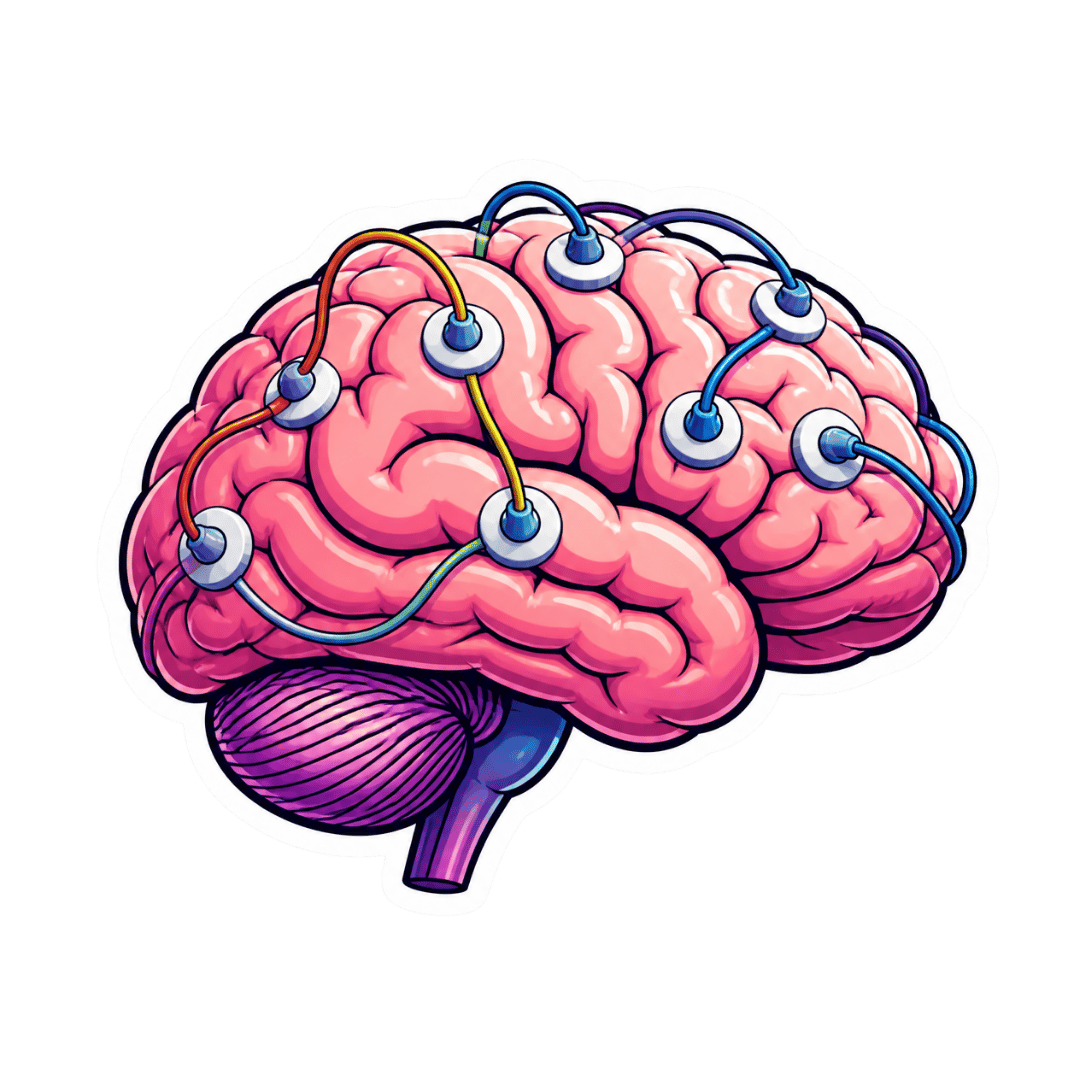
Deep brain stimulation (DBS) is increasingly well-evidenced as a therapy for treating an assortment of conditions; could improving memory be added to the list of benefits?
First, some background
Transcranial magnetic stimulation (TMS) is one of those treatments that sounds like it’s out of a 1950s sci-fi novel, and yet, it actually works (it’s very well-evidenced against treatment-resistant depression, amongst other things).
See for example:
- Epigenetic profiles of response to transcranial magnetic stimulation in treatment resistant depression
- Protocol for Repetitive Transcranial Magnetic Stimulation with Symptom Provocation to Treat Obsessive-compulsive Disorder
- Evidence Brief: Transcranial Magnetic Stimulation (TMS) for Chronic Pain, PTSD, TBI, Opioid Addiction, and Sexual Trauma
And nowadays there are some upgraded versions using the same idea with different techniques, for example:
Transcranial direct-current stimulation (tDCS): Does This New Machine Cure Depression?
…and:
Transcranial ultrasound stimulation (TUS): All In Your Head (Which Is Where It’s Supposed To Be)
Now, about deep brain stimulation and its latest potential application
DBS has been used for a lot of things, and the majority of scientific literature out there isn’t even for treatment of depression or such, but rather for treatment of more clearly-defined neurological disorders such as Parkinson’s and epilepsy, though yes, it’s been used to treat depression too, and more.
Some examples:
- Adaptive deep brain stimulation in Parkinson’s disease
- Deep brain stimulation for epilepsy: optimal targeting and clinical outcomes
- Deep Brain Stimulation Response Circuits in Obsessive-Compulsive Disorder
- Has Deep Brain Stimulation Shown Its Full Potential in Treatment-Resistant Depression? A Scoping Review ← the answer the researchers find is “no, not really, we’d like to see more studies done to establish the extent (and limitations) of its usefulness”
So, what’s this about memory?
A lot of older research was in mouse models of Rett syndrome, which such findings as in: Deep Brain Stimulation and Repetitive Training Restore Neuronal Activity and Improve Neurological Function in Rett Syndrome Models
…which is useful for the inexorable onwards march of scientific advancement, but unless we’re working in that field, it’s not that exciting to us if we’re not a mouse with Rett syndrome.
More recently however, we see such studies as this one involving the participation of humans with traumatic brain injury, which found, amongst other things:
❝All participants showed an increase in the average number of memories recalled with CL/DTTm DBS treatment, with a significant group improvement of 45.9% (one-tailed Wilcoxon signed-rank W = 0, P < 0.032) with a large effect size (r = 0.90)❞
But what about humans without any such injuries, and instead, simply age-related conditions such as mild cognitive impairment (MCI)?
More recently still, researchers (Dr. Monika Pupíková et al.) looked into exactly that, and found:
❝In patients with MCI-LB, cerebellar TMS plus striatal tTIS increased accuracy in distractor trials compared with the active control (control TMS plus control tTIS, P < .001; d = -0.77) and striatal tTIS alone (control TMS plus striatal tTIS, P = .004; d = -0.60). Greater accuracy gains were associated with lower putaminal connectivity (r = -0.66; P = .03). In patients with aMCI, cerebellar volumes showed associations with task performance in both distractor trials (cerebellar TMS plus striatal tTIS, R2 = 0.27; P = .02) and high-load trials (control TMS plus striatal tTIS, R2 = 0.24; P = .03), and larger volumes were associated with faster responses❞
In other words: it appears to have helped a significant amount in quite a lot of ways
Read in full: Multifocal Noninvasive Deep Brain Stimulation to Enhance Cognition in Mild Cognitive Impairment: A Crossover Trial
Want to give your memory a boost without fancy equipment?
Just for you, we’ve written about that:
How To Boost Your Memory Immediately (Without Supplements)
Enjoy!
Don’t Forget…
Did you arrive here from our newsletter? Don’t forget to return to the email to continue learning!
Learn to Age Gracefully
Join the 98k+ American women taking control of their health & aging with our 100% free (and fun!) daily emails: