
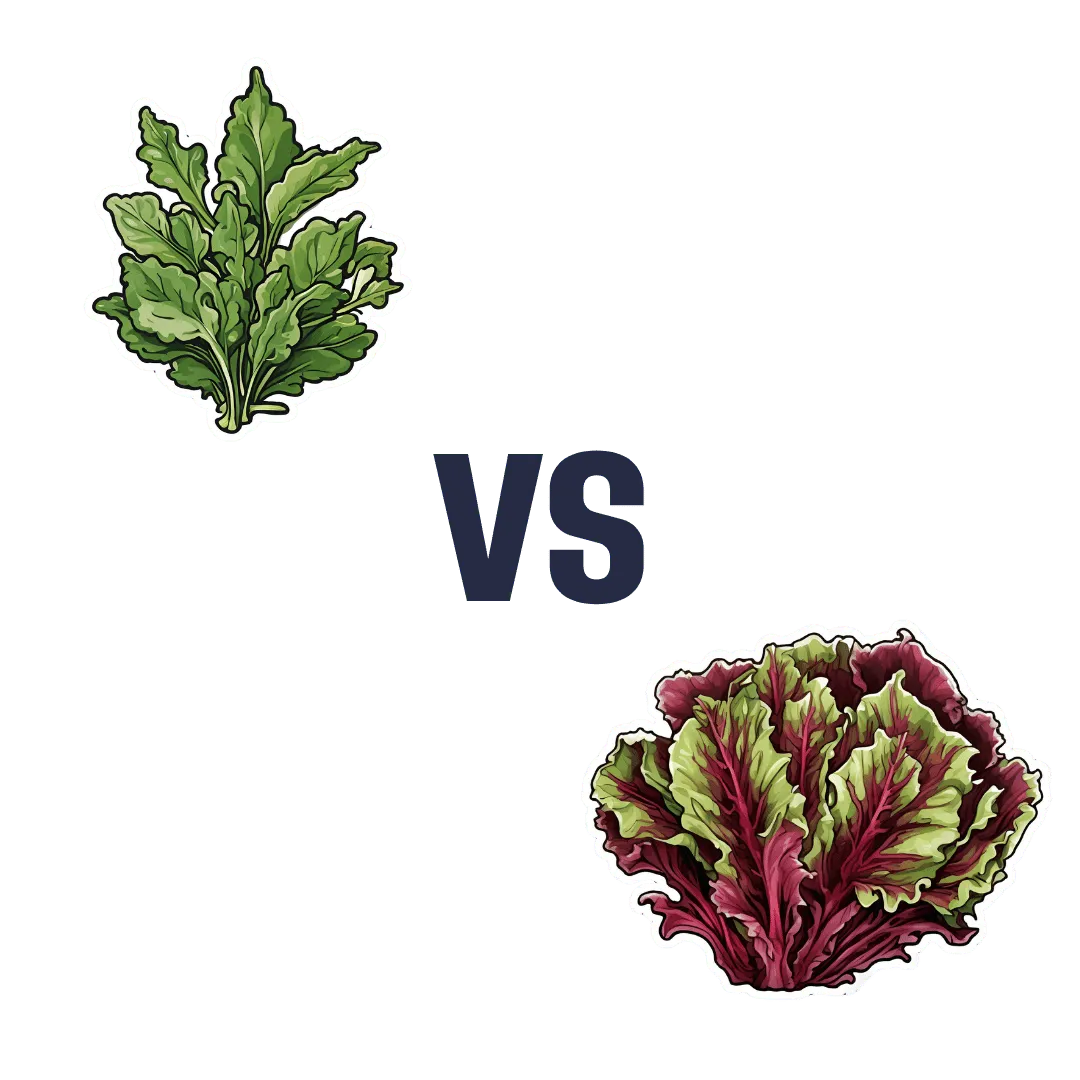
Dandelion Greens vs Red Lettuce – Which is Healthier?
10almonds is reader-supported. We may, at no cost to you, receive a portion of sales if you purchase a product through a link in this article.
Our Verdict
When comparing dandelion greens to red lettuce, we picked the dandelion greens.
Why?
It wasn’t close, despite the continuing search for a vaguely bitter salad leaf that might be able to compete!
In terms of macros, dandelion greens have more than 3.5x the fiber, as well as more carbs and protein, not that people are probably eating them for those things. In any case, a clear win for dandelions, being the most nutritionally dense in this category.
In the category of vitamins, dandelion greens have more of vitamins A, B1, B2, B3, B6, B7, C, E, K, and choline, while red lettuce has more of vitamins B5 and B9. Another easy win for dandelions, even before considering just how good they are at delivering vitamin K in particular (a 55g cup of dandelion leaves gives 3.5x the recommended daily amount of vitamin K).
Looking at minerals, dandelion greens have more calcium, copper, iron, magnesium, manganese, phosphorus, potassium, and zinc, while red lettuce has more selenium. One more very clear win for dandelions.
When it comes to polyphenols, both are good, but dandelion greens are next-level good with about 15x more in total, meaning another very convincing win for dandelions here.
Adding up the sections makes for an overwhelming win for dandelion greens; by all means enjoy either or both though; diversity is good!
Want to learn more?
You might like:
Dandelion: Time For Evidence On Its Benefits? ← for more than just its nutritional qualities
Enjoy!
Don’t Forget…
Did you arrive here from our newsletter? Don’t forget to return to the email to continue learning!
Recommended
Learn to Age Gracefully
Join the 98k+ American women taking control of their health & aging with our 100% free (and fun!) daily emails:
-
Do Tanning Beds Have Any Benefits?
10almonds is reader-supported. We may, at no cost to you, receive a portion of sales if you purchase a product through a link in this article.
There is one answer:
No
Or rather, the answer is “no” unless we want to take some liberties about what we want to consider a benefit. For example:
- If the temporary aesthetic of a tan is a benefit to you, then that’s a benefit (but we urge you to value your health over that)
- If the experience of going there is a benefit to you, then that’s a benefit (but we urge you to find a comparable experience that’s less harmful)
- If… You know what, we’re already out of things that could even be reasonably considered a benefit (but we trust you get the point)
But, health benefits? Beyond any mental health benefits that could be better acquired through other means? No.
The closest thing to a counterexample could be that some will say (correctly) that a tanning bed will clear up acne.
But that’s a problem, not a benefit. Not because you pressingly needed the acne bacteria alive, but because irradiating your skin in such a manner that laid waste to your skin microbiome had two negative effects:
- It killed the rest of your skin microbiome, too. Or at least most of it.
- That same UV radiation is not any better for you than it was for those microbes.
For more on that first item, see: Your Skin Microbiome & The Sun ← because your microbiome can actually help protect you against the sun’s rays, but even they can and will be destroyed by the intense ferocity that is the UV radiation of a tanning bed.
Recently, researchers (Dr. Annika Marty et al.) compared medical records from 3,000 tanning bed users with similarly aged non-users and sequenced skin biopsies using technology focused on melanocytes and found that people who use tanning beds have nearly a 3x higher risk of melanoma compared with non-users, after adjusting for age, sunburn history, and family history.
Based on this research and more (i.e., the many other papers cited in the paper we’ll link below), it’s clear that sunbeds cause mutations in melanocytes, with tanning bed users showing nearly twice as many mutations, making skin cells more susceptible to cancer.
You can read the paper in full, here: Molecular effects of indoor tanning
It’s also worth noting that World Health Organization’s International Agency for Research on Cancer classifies tanning beds in the highest cancer risk category, alongside smoking and asbestos, with melanoma causing nearly 60,000 deaths per year.
So, please don’t let that be you or your loved ones.
Want to learn more?
We’ve tackled some related issues before, diving into the science, including:
…and:
And if you already have sun-damaged skin…
Undo The Sun’s Damage To Your Skin
Take care!
Share This Post
-
WHO Overturns Dogma on Airborne Disease Spread. The CDC Might Not Act on It.
10almonds is reader-supported. We may, at no cost to you, receive a portion of sales if you purchase a product through a link in this article.
The World Health Organization has issued a report that transforms how the world understands respiratory infections like covid-19, influenza, and measles.
Motivated by grave missteps in the pandemic, the WHO convened about 50 experts in virology, epidemiology, aerosol science, and bioengineering, among other specialties, who spent two years poring through the evidence on how airborne viruses and bacteria spread.
However, the WHO report stops short of prescribing actions that governments, hospitals, and the public should take in response. It remains to be seen how the Centers for Disease Control and Prevention will act on this information in its own guidance for infection control in health care settings.
The WHO concluded that airborne transmission occurs as sick people exhale pathogens that remain suspended in the air, contained in tiny particles of saliva and mucus that are inhaled by others.
While it may seem obvious, and some researchers have pushed for this acknowledgment for more than a decade, an alternative dogma persisted — which kept health authorities from saying that covid was airborne for many months into the pandemic.
Specifically, they relied on a traditional notion that respiratory viruses spread mainly through droplets spewed out of an infected person’s nose or mouth. These droplets infect others by landing directly in their mouth, nose, or eyes — or they get carried into these orifices on droplet-contaminated fingers. Although these routes of transmission still happen, particularly among young children, experts have concluded that many respiratory infections spread as people simply breathe in virus-laden air.
“This is a complete U-turn,” said Julian Tang, a clinical virologist at the University of Leicester in the United Kingdom, who advised the WHO on the report. He also helped the agency create an online tool to assess the risk of airborne transmission indoors.
Peg Seminario, an occupational health and safety specialist in Bethesda, Maryland, welcomed the shift after years of resistance from health authorities. “The dogma that droplets are a major mode of transmission is the ‘flat Earth’ position now,” she said. “Hurray! We are finally recognizing that the world is round.”
The change puts fresh emphasis on the need to improve ventilation indoors and stockpile quality face masks before the next airborne disease explodes. Far from a remote possibility, measles is on the rise this year and the H5N1 bird flu is spreading among cattle in several states. Scientists worry that as the H5N1 virus spends more time in mammals, it could evolve to more easily infect people and spread among them through the air.
Traditional beliefs on droplet transmission help explain why the WHO and the CDC focused so acutely on hand-washing and surface-cleaning at the beginning of the pandemic. Such advice overwhelmed recommendations for N95 masks that filter out most virus-laden particles suspended in the air. Employers denied many health care workers access to N95s, insisting that only those routinely working within feet of covid patients needed them. More than 3,600 health care workers died in the first year of the pandemic, many due to a lack of protection.
However, a committee advising the CDC appears poised to brush aside the updated science when it comes to its pending guidance on health care facilities.
Lisa Brosseau, an aerosol expert and a consultant at the Center for Infectious Disease Research and Policy in Minnesota, warns of a repeat of 2020 if that happens.
“The rubber hits the road when you make decisions on how to protect people,” Brosseau said. “Aerosol scientists may see this report as a big win because they think everything will now follow from the science. But that’s not how this works and there are still major barriers.”
Money is one. If a respiratory disease spreads through inhalation, it means that people can lower their risk of infection indoors through sometimes costly methods to clean the air, such as mechanical ventilation and using air purifiers, and wearing an N95 mask. The CDC has so far been reluctant to press for such measures, as it updates foundational guidelines on curbing airborne infections in hospitals, nursing homes, prisons, and other facilities that provide health care. This year, a committee advising the CDC released a draft guidance that differs significantly from the WHO report.
Whereas the WHO report doesn’t characterize airborne viruses and bacteria as traveling short distances or long, the CDC draft maintains those traditional categories. It prescribes looser-fitting surgical masks rather than N95s for pathogens that “spread predominantly over short distances.” Surgical masks block far fewer airborne virus particles than N95s, which cost roughly 10 times as much.
Researchers and health care workers have been outraged about the committee’s draft, filing letters and petitions to the CDC. They say it gets the science wrong and endangers health. “A separation between short- and long-range distance is totally artificial,” Tang said.
Airborne viruses travel much like cigarette smoke, he explained. The scent will be strongest beside a smoker, but those farther away will inhale more and more smoke if they remain in the room, especially when there’s no ventilation.
Likewise, people open windows when they burn toast so that smoke dissipates before filling the kitchen and setting off an alarm. “You think viruses stop after 3 feet and drop to the ground?” Tang said of the classical notion of distance. “That is absurd.”
The CDC’s advisory committee is comprised primarily of infection control researchers at large hospital systems, while the WHO consulted a diverse group of scientists looking at many different types of studies. For example, one analysis examined the puff clouds expelled by singers, and musicians playing clarinets, French horns, saxophones, and trumpets. Another reviewed 16 investigations into covid outbreaks at restaurants, a gym, a food processing factory, and other venues, finding that insufficient ventilation probably made them worse than they would otherwise be.
In response to the outcry, the CDC returned the draft to its committee for review, asking it to reconsider its advice. Meetings from an expanded working group have since been held privately. But the National Nurses United union obtained notes of the conversations through a public records request to the agency. The records suggest a push for more lax protection. “It may be difficult as far as compliance is concerned to not have surgical masks as an option,” said one unidentified member, according to notes from the committee’s March 14 discussion. Another warned that “supply and compliance would be difficult.”
The nurses’ union, far from echoing such concerns, wrote on its website, “The Work Group has prioritized employer costs and profits (often under the umbrella of ‘feasibility’ and ‘flexibility’) over robust protections.” Jane Thomason, the union’s lead industrial hygienist, said the meeting records suggest the CDC group is working backward, molding its definitions of airborne transmission to fit the outcome it prefers.
Tang expects resistance to the WHO report. “Infection control people who have built their careers on this will object,” he said. “It takes a long time to change people’s way of thinking.”
The CDC declined to comment on how the WHO’s shift might influence its final policies on infection control in health facilities, which might not be completed this year. Creating policies to protect people from inhaling airborne viruses is complicated by the number of factors that influence how they spread indoors, such as ventilation, temperature, and the size of the space.
Adding to the complexity, policymakers must weigh the toll of various ailments, ranging from covid to colds to tuberculosis, against the burden of protection. And tolls often depend on context, such as whether an outbreak happens in a school or a cancer ward.
“What is the level of mortality that people will accept without precautions?” Tang said. “That’s another question.”
KFF Health News is a national newsroom that produces in-depth journalism about health issues and is one of the core operating programs at KFF—an independent source of health policy research, polling, and journalism. Learn more about KFF.
Subscribe to KFF Health News’ free Morning Briefing.
Share This Post
-
Strawberries vs Blackberries – Which is Healthier?
10almonds is reader-supported. We may, at no cost to you, receive a portion of sales if you purchase a product through a link in this article.
Our Verdict
When comparing strawberries to blackberries, we picked the blackberries.
Why?
Shocking nobody, both are very healthy options. However, blackberries do come out on top:
In terms of macros, the main thing that sets them apart is that blackberries have more than 2x the fiber. Other differences in macros are also in blackberries’ favor, but only very marginally, so we’ll not distract with those here. The fiber difference is distinctly significant, though.
In the category of vitamins, blackberries lead with more of vitamins A, B2, B3, B5, B9, E, and K, as well as more choline. Meanwhile, strawberries boast more of vitamins B1, B6, and C. So, a 8:2 advantage for blackberries (and some of the margins are very large, such as 9x more choline, 4x more vitamin E, and nearly 18x more vitamin A).
When it comes to minerals, things are not less clear: blackberries have considerably more calcium, copper, iron, magnesium, manganese, and zinc. The two fruits are equal in other minerals that they both contain, and strawberries don’t contain any mineral in greater amounts than blackberries do.
A discussion of these berries’ health benefits would be incomplete without at least mentioning polyphenols, but both of them are equally good sources of such, so there’s no distinction to set one above the other in this category.
As ever, enjoy both, though! Diversity is good.
Want to learn more?
You might like to read:
- Strawberries vs Cherries – Which is Healthier?
- Blackberries vs Blueberries – Which is Healthier?
- Strawberries vs Raspberries – Which is Healthier?
Take care!
Share This Post
Related Posts
-
Food Expiration Dates Don’t Mean What Most People Think They Mean
10almonds is reader-supported. We may, at no cost to you, receive a portion of sales if you purchase a product through a link in this article.
Have you ever wondered why rock salt that formed during the Precambrian era has a label on it saying that it expires next month? To take something more delicate, how about eggs that expire next Thursday; isn’t that oddly specific for something that is surely affected by many variables? What matters, and what doesn’t?
Covering their assets
The US in particular wastes huge amounts of food, with 37% of food waste coming from households. Confusion over date labels is a major contributor, accounting for 20% of household food waste. Many people misinterpret these labels, often discarding food that is still safe to eat—which is good for the companies selling the food, because then they get to sell you more.
Date labels were introduced in the 70s with the “open dating” system to indicate optimal freshness, not safety. These dates are often conservative, set by manufacturers to ensure food is consumed at its best quality and encourage repeat purchases. However, many foods remain safe well past their labeled dates, including shelf-stable items like pasta, rice, and canned goods, as well as frozen foods stored properly.
Some foods do pose safety risks, especially meat and dairy products, as well as many grain-based foods, all of which which can harbor harmful bacteria. Infant formula labels are strictly regulated for safety. However, most date labels are not linked to health risks, leading to unnecessary waste.
When it comes down to it, our senses of sight, smell, and taste are more reliable than dates on packaging. Some quick pointers and caveats:
- If it has changed color in some way that’s not associated with a healthily ripening fruit or vegetable, that’s probably bad
- If it is moldy, that’s probably bad (but the degree of badness varies from food to food; see the link beneath today’s video for more on that)
- If a container has developed droplets of water on the inside when it didn’t have those before, that’s probably bad (it means something is respiring, and is thus alive, that probably shouldn’t be)
- If it smells bad, that’s probably bad—however this is not a good safety test, because a bad smell may often mean you are inhaling mold spores, which are not good for your lungs.
- If it tastes different than that food usually does, that’s probably bad (especially if it became bitter, pungent, tangy, sour, or cheesy, and does nor normally taste that way).
Some places have trialled clearer labelling, for example a distinction between “expires” and merely “best before”, but public awareness about the distinction is low. Some places have trialled removing dates entirely, to oblige the consumer to use their own senses instead. This is good for the seller in a different way than household food waste is, because it means the seller will have less in-store waste (because they can still sell something that might previously have been labelled as expired).
For more on all of this, enjoy:
Click Here If The Embedded Video Doesn’t Load Automatically!
Want to learn more?
You might also like to read:
Take care!
Don’t Forget…
Did you arrive here from our newsletter? Don’t forget to return to the email to continue learning!
Learn to Age Gracefully
Join the 98k+ American women taking control of their health & aging with our 100% free (and fun!) daily emails:
-
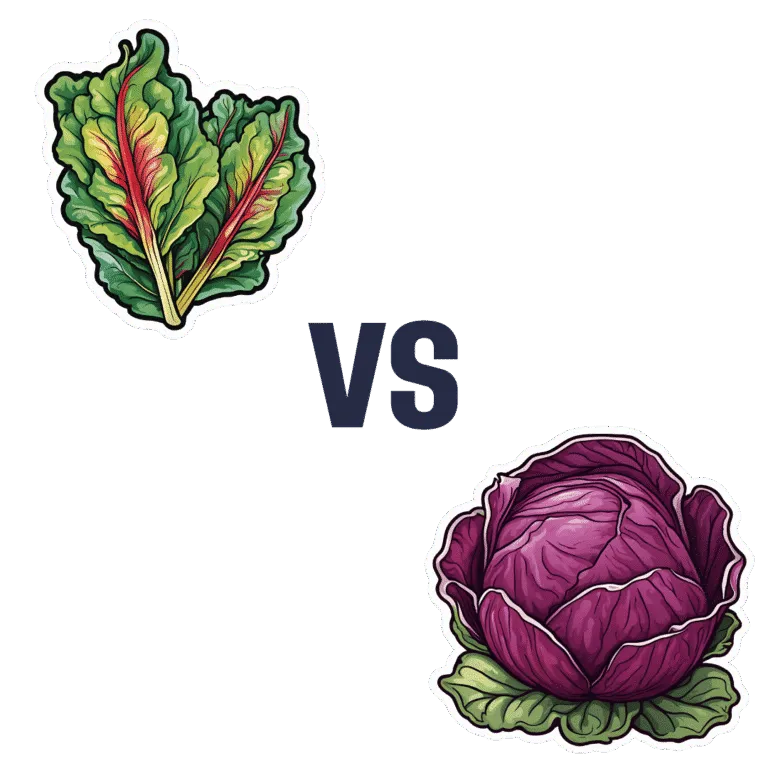
Carrots vs Red Cabbage – Which is Healthier?
10almonds is reader-supported. We may, at no cost to you, receive a portion of sales if you purchase a product through a link in this article.
Our Verdict
When comparing carrots to red cabbage, we picked the red cabbage.
Why?
It’s very close!
In terms of macros, these two vegetables are pretty much equal on all metrics. By official numbers, carrots have a tiny bit more fiber and red cabbage has a tiny bit more protein, but realistically, the difference are so small that they’re within the margin of variation (i.e. while we look at official average values, in reality one plant’s figures will differ very slightly from another’s; it could depend on what the soil was like or which plant got more sun, etc). So, a tie here.
In the category of vitamins, carrots have more of vitamins A, B3, B5, and E, while red cabbage has more of vitamins B2, B6, C, and K. So, both have their merits, and it’s once again a tie.
Looking at minerals, carrots have more copper, phosphorus, and potassium, while red cabbage has more calcium, iron, magnesium, manganese, and selenium. So, a marginal win for red cabbage here.
In other considerations, they’re about equal on polyphenols and other relevant phytonutrients not otherwise mentioned above.
Adding up the sections makes for a super-slender win for red cabbage, but it was close, and carrots are certainly great too. Enjoy either or both; diversity is best!
Want to learn more?
You might like:
What’s Your Plant Diversity Score?
Enjoy!
Don’t Forget…
Did you arrive here from our newsletter? Don’t forget to return to the email to continue learning!
Learn to Age Gracefully
Join the 98k+ American women taking control of their health & aging with our 100% free (and fun!) daily emails:
-
Does eating cheese before bed really give you nightmares? Here’s what the science says
10almonds is reader-supported. We may, at no cost to you, receive a portion of sales if you purchase a product through a link in this article.
Have you heard people say eating cheese before bed will cause you to have vivid dreams or nightmares?
It’s a relatively common idea. And this week, a new study has landed this suggestion back in the spotlight.
But is it true? Let’s unpack the evidence.
Phoenixns/Shutterstock, The Conversation, CC BY A gouda night’s sleep?
Canadian researchers recently investigated this idea in a sample of 1,082 undergraduate psychology students. The students completed a survey, which included questions about how they perceived their diet influenced their sleep and dreams.
Some 40% of participants reported certain foods impacted their sleep, with 25% of the whole sample claiming certain foods worsened their sleep, and 20% reporting certain foods improved their sleep.
Only 5.5% of respondents believed what they ate affected the nature of their dreams. But many of these people thought sweets or dairy products (such as cheese) made their dreams more strange or disturbing and worsened their sleep.
In contrast, participants reported fruits, vegetables and herbal teas led to better sleep.
This study used self-reporting, meaning the results rely on the participants recalling and reporting information about their sleep and dreams accurately. This could have affected the results.
It’s also possible participants were already familiar with the notion that cheese causes nightmares, especially given they were psychology students, many of whom may have studied sleep and dreaming.
This awareness could have made them more likely to notice or perceive their sleep was disrupted after eating dairy. In other words, the idea cheese leads to nightmares may have acted like a self-fulfilling prophecy and results may overestimate the actual likelihood of strange dreams.
Nonetheless, these findings show some people perceive a connection between what they eat and how they dream.
While there’s no evidence to prove cheese causes nightmares, there is evidence that does explain a link.
The science behind cheese and nightmares
Humans are diurnal creatures, meaning our body is primed to be asleep at night and awake during the day. Eating cheese before bed means we’re challenging the body with food at a time when it really doesn’t want to be eating.
At night, our physiological systems are not primed to digest food. For example, it takes longer for food to move through our digestive tract at night compared with during the day.
If we eat close to going to sleep, our body has to process and digest the food while we’re sleeping. This is a bit like running through mud – we can do it, but it’s slow and inefficient.
Cheese can be particularly challenging to digest at night because of high concentrations of fat and protein, which slows down our digestion.
If your body is processing and digesting food instead of focusing all its resources on sleep, this can affect your shut-eye. Research has shown eating close to bedtime reduces our sleep quality, particularly our time spent in rapid eye movement (REM) sleep, which is the stage of sleep associated with vivid dreams.
People will have an even harder time digesting cheese at night if they’re lactose intolerant, which might mean they experience even greater impacts on their sleep. This follows what the Canadian researchers found in their study, with lactose intolerant participants reporting poorer sleep quality and more nightmares.
It’s important to note we might actually have vivid dreams or nightmares every night – what could change is whether we’re aware of the dreams and can remember them when we wake up.
Poor sleep quality often means we wake up more during the night. If we wake up during REM sleep, research shows we’re more likely to report vivid dreams or nightmares that we mightn’t even remember if we hadn’t woken up during them.
This is very relevant for the cheese and nightmares question. Put simply, eating before bed impacts our sleep quality, so we’re more likely to wake up during our nightmares and remember them.
What we eat, particularly just before bed, can affect our sleep. Ivan Oboleninov/Pexels Can I still have brie before bedtime?
Don’t panic – I’m not here to tell you to give up your cheesy evenings. But what we eat before bed can make a real difference to how well we sleep, so timing matters.
General sleep hygiene guidelines suggest avoiding meals at least two hours before bed. So even if you’re eating a very cheese-heavy meal, you have a window of time before bed to digest the meal and drift off to a nice peaceful sleep.
How about other dairy products?
Cheese isn’t the only dairy product which may influence our sleep. Most of us have heard about the benefits of having a warm glass of milk before bed.
Milk can be easier to digest than cheese. In fact, milk is a good choice in the evening, as it contains tryptophan, an amino acid that helps promote sleep.
Nonetheless, we still don’t want to be challenging our body with too much dairy before bed. Participants in the Canadian study did report nightmares after dairy, and milk close to bed might have contributed to this.
While it’s wise to steer clear of food (especially cheese) in the two hours before lights out, there’s no need to avoid cheese altogether. Enjoy that cheesy pasta or cheese board, just give your body time to digest before heading off to sleep. If you’re having a late night cheese craving, opt for something small. Your sleep (and your dreams) will thank you.
Charlotte Gupta, Senior Postdoctoral Research Fellow, Appleton Institute, HealthWise Research Group, CQUniversity Australia
This article is republished from The Conversation under a Creative Commons license. Read the original article.
Don’t Forget…
Did you arrive here from our newsletter? Don’t forget to return to the email to continue learning!
Learn to Age Gracefully
Join the 98k+ American women taking control of their health & aging with our 100% free (and fun!) daily emails:


