
Cranberry juice really can help with UTIs – and reduce reliance on antibiotics

10almonds is reader-supported. We may, at no cost to you, receive a portion of sales if you purchase a product through a link in this article.

Cranberry juice has been used medicinally for centuries. Our new research indicates it should be a normal aspect of urinary tract infection (UTI) management today.

While some benefits of cranberry compounds for the prevention of UTIs have been suspected for some time, it hasn’t been clear whether the benefits from cranberry juice were simply from drinking more fluid, or something in the fruit itself.

For our study, published this week, we combined and collectively assessed 3,091 participants across more than 20 clinical trials.

Our analysis indicates that increasing liquids reduces the rate of UTIs compared with no treatment, but cranberry in liquid form is even better at reducing UTIs and antibiotic use.
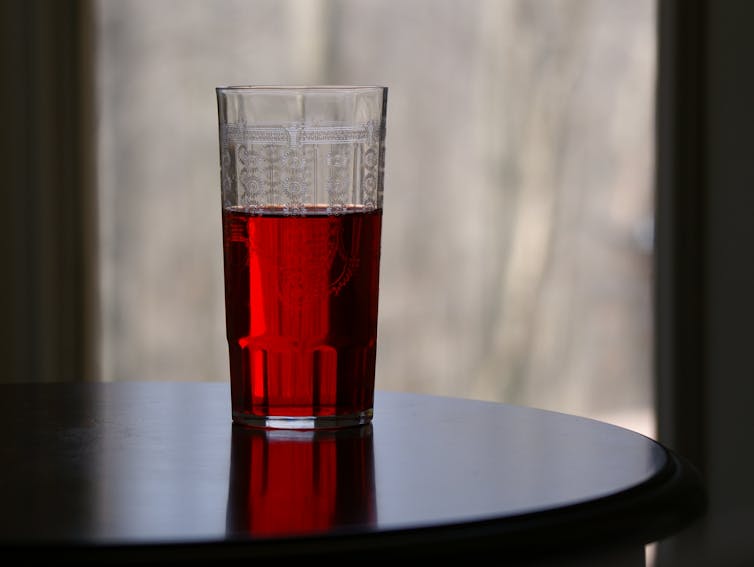
Julie Falk/Flickr, CC BY-NC-ND

Are UTIs really that bad?

Urinary tract infections affect more than 50% of women and 20% of men in their lifetime.

Most commonly, UTIs are caused from the bug called Escherichia coli (E.coli). This bug lives harmlessly in our intestines, but can cause infection in the urinary tract. This is why, particularly for women, it is recommended people wipe from front to back after using the toilet.

An untreated UTI can move up to the kidneys and cause even more serious illness.

Even when not managing infection, many people are anxious about contracting a UTI. Sexually active women, pregnant women and older women may all be at increased risk.

Why cranberries?

To cause a UTI, the bacteria need to attach to the wall of the urinary bladder. Increasing fluids helps to flush out bacteria before it attaches (or makes its way up into the bladder).

Some beneficial compounds in cranberry, such as proanthocyanidins (also called condensed tannins), prevent the bacteria from attaching to the wall itself.

While there are treatments, over 90% of the bugs that cause UTIs exhibit some form of microbial resistance. This suggests that they are rapidly changing and some cases of UTI might be left untreatable.

massive lake with red cranberries floating on surface for harvesting
The juice of cranberries has long been thought to have infection-fighting properties. duckeesue/Shutterstock

What we found

Our analysis showed a 54% lower rate of UTIs from cranberry juice consumption compared to no treatment. This means that significantly fewer participants who regularly consumed cranberry juice (most commonly around 200 millilitres each day) reported having a UTI during the periods assessed in the studies we analysed.

Cranberry juice was also linked to a 49% lower rate of antibiotic use than placebo liquid and a 59% lower rate than no treatment, based on analysis of indirect and direct effects across six studies. The use of cranberry compounds, whether in drinks or tablet form, also reduced the prevalence of symptoms associated with UTIs.

While some studies we included presented conflicts of interest (such as receiving funding from cranberry companies), we took this “high risk of bias” into account when analysing the data.

woman sips from large glass of red juice
The study found extra hydration helped but not to the same extent as cranberry juice. Pixelshot/Shutterstock

So, when can cranberry juice help?

We found three main benefits of cranberry juice for UTIs.

1. Reduced rates of infections

Increasing fluids (for example, drinking more water) reduced the prevalence of UTIs, and taking cranberry compounds (such as tablets) was also beneficial. But the most benefits were identified from increasing fluids and taking cranberry compounds at the same time, such as with cranberry juice.

2. Reduced use of antibiotics

The data shows cranberry juice lowers the need to use antibiotics by 59%. This was identified as fewer participants in randomised cranberry juice groups required antibiotics.

Increasing fluid intake also helped reduce antibiotic use (by 25%). But this was not as useful as increasing fluids at the same time as using cranberry compounds.

Cranberry compounds alone (such as tablets without associated increases in fluid intake) did not affect antibiotic use.

3. Reducing symptoms

Taking cranberry compounds (in any form, liquid or tablet) reduced the symptoms of UTIs, as measured in the overall data, by more than five times.

Take home advice

While cranberry juice cannot treat a UTI, it can certainly be part of UTI management.

If you suspect that you have a UTI, see your GP as soon as possible.

Christian Moro, Associate Professor of Science & Medicine, Bond University and Charlotte Phelps, Senior Teaching Fellow, Medical Program, Bond University

This article is republished from The Conversation under a Creative Commons license. Read the original article.

Don’t Forget…

Did you arrive here from our newsletter? Don’t forget to return to the email to continue learning!
Learn to Age Gracefully

Join the 98k+ American women taking control of their health & aging with our 100% free (and fun!) daily emails:

  • Gut Health and Anxiety

    10almonds is reader-supported. We may, at no cost to you, receive a portion of sales if you purchase a product through a link in this article.

    It’s Q&A Day at 10almonds!

    Have a question or a request? You can always hit “reply” to any of our emails, or use the feedback widget at the bottom!

    In cases where we’ve already covered something, we might link to what we wrote before, but will always be happy to revisit any of our topics again in the future too—there’s always more to say!

    As ever: if the question/request can be answered briefly, we’ll do it here in our Q&A Thursday edition. If not, we’ll make a main feature of it shortly afterwards!

    So, no question/request too big or small

    ❝I’d like to read articles on gut health and anxiety❞

    We hope you caught yesterday’s edition of 10almonds, which touched on both of those! Other past editions you might like include:

    We’ll be sure to include more going forward, too!

    Share This Post

  • The Many Faces Of Cosmetic Surgery

    10almonds is reader-supported. We may, at no cost to you, receive a portion of sales if you purchase a product through a link in this article.

    Cosmetic Surgery: What’s The Truth?

    In Tuesday’s newsletter, we asked you your opinion on elective cosmetic surgeries, and got the above-depicted, below-described, set of responses:

    • About 48% said “Everyone should be able to get what they want, assuming informed consent”
    • About 28% said “It can ease discomfort to bring features more in line with normalcy”
    • 15% said “They should be available in the case of extreme disfigurement only”
    • 10% said “No elective cosmetic surgery should ever be performed; needless danger”

    Well, there was a clear gradient of responses there! Not so polarizing as we might have expected, but still enough dissent for discussion

    So what does the science say?

    The risks of cosmetic surgery outweigh the benefits: True or False?

    False, subjectively (but this is important).

    You may be wondering: how is science subjective?

    And the answer is: the science is not subjective, but people’s cost:worth calculations are. What’s worth it to one person absolutely may not be worth it to another. Which means: for those for whom it wouldn’t be worth it, they are usually the people who will not choose the elective surgery.

    Let’s look at some numbers (specifically, regret rates for various surgeries, elective/cosmetic or otherwise):

    • Regret rate for elective cosmetic surgery in general: 20%
    • Regret rate for knee replacement (i.e., not cosmetic): 17.1%
    • Regret rate for hip replacement (i.e., not cosmetic): 4.8%
    • Regret rate for gender-affirming surgeries (for transgender patients): 1%

    So we can see, elective surgeries have an 80–99% satisfaction rate, depending on what they are. In comparison, the two joint replacements we mentioned have a 82.9–95.2% satisfaction rate. Not too dissimilar, taken in aggregate!

    In other words: if a person has studied the risks and benefits of a surgery and decides to go ahead, they’re probably going to be happy with the results, and for them, the benefits will have outweighed the risks.

    Sources for the above numbers, by the way:

    But it’s just a vanity; therapy is what’s needed instead: True or False?

    False, generally. True, sometimes. Whatever the reasons for why someone feels the way they do about their appearance—whether their face got burned in a fire or they just have triple-J cups that they’d like reduced, it’s generally something they’ve already done a lot of thinking about. Nevertheless, it does also sometimes happen that it’s a case of someone hoping it’ll be the magical solution, when in reality something else is also needed.

    How to know the difference? One factor is whether the surgery is “type change” or “restorative”, and both have their pros and cons.

    • In “type change” (e.g. rhinoplasty), more psychological adjustment is needed, but when it’s all over, the person has a new nose and, statistically speaking, is usually happy with it.
    • In “restorative” (e.g. facelift), less psychological adjustment is needed (as it’s just a return to a previous state), so a person will usually be happy quickly, but ultimately it is merely “kicking the can down the road” if the underlying problem is “fear of aging”, for example. In such a case, likely talking therapy would be beneficial—whether in place of, or alongside, cosmetic surgery.

    Here’s an interesting paper on that; the sample sizes are small, but the discussion about the ideas at hand is a worthwhile read:

    Does cosmetic surgery improve psychosocial wellbeing?

    Some people will never be happy no matter how many surgeries they get: True or False?

    True! We’re going to refer to the above paper again for this one. In particular, here’s what it said about one group for whom surgeries will not usually be helpful:

    ❝There is a particular subgroup of people who appear to respond poorly to cosmetic procedures. These are people with the psychiatric disorder known as “body dysmorphic disorder” (BDD). BDD is characterised by a preoccupation with an objectively absent or minimal deformity that causes clinically significant distress or impairment in social, occupational, or other areas of functioning.

    For several reasons, it is important to recognise BDD in cosmetic surgery settings:

    Firstly, it appears that cosmetic procedures are rarely beneficial for these people. Most patients with BDD who have had a cosmetic procedure report that it was unsatisfactory and did not diminish concerns about their appearance.

    Secondly, BDD is a treatable disorder. Serotonin-reuptake inhibitors and cognitive behaviour therapy have been shown to be effective in about two-thirds of patients with BDD❞

    ~ Dr. David Castle et al. (lightly edited for brevity)

    Which is a big difference compared to, for example, someone having triple-J breasts that need reducing, or the wrong genitals for their gender, or a face whose features are distinct outliers.

    Whether that’s a reason people with BDD shouldn’t be able to get it is an ethical question rather than a scientific one, so we’ll not try to address that with science.

    After all, many people (in general) will try to fix their woes with a haircut, a tattoo, or even a new sportscar, and those might sometimes be bad decisions, but they are still the person’s decision to make.

    And even so, there can be protectionist laws/regulations that may provide a speed-bump, for example:

    Thinking about cosmetic surgery? New standards will force providers to tell you the risks and consider if you’re actually suitable

    Take care!

    Share This Post

  • Older people’s risk of abuse is rising. Can an ad campaign protect them?

    10almonds is reader-supported. We may, at no cost to you, receive a portion of sales if you purchase a product through a link in this article.

    Elder abuse is an emerging public health and safety issue for communities of high-income countries.

    The most recent data from Australia’s National Elder Abuse Prevalence Study, which surveyed 7,000 older people living in the community, found one in six self-reported being a victim of some form of abuse. But this did not include older people living in residential aged care or those with cognitive impairment, such as dementia – so is likely an underestimate.

    This week the Australian government announced a multi-million dollar advertising campaign it hopes will address this serious and abhorrent abuse.

    But is investing in community awareness of elder abuse the best use of scarce resources?

    Nuttapong punna/Shutterstock

    What is elder abuse?

    The World Health Organization (WHO) defines elder abuse as

    […] a single, or repeated act, or lack of appropriate action, occurring within any relationship where there is an expectation of trust which causes harm or distress to an older person.

    Australia usually defines older people as those over 65. The exact age varies between countries depending on the overall health status of a nation and its vulnerable population groups. The WHO definitions of an older adult for sub-Saharan Africa, for example, is over 50. And there are communities with poorer health status and shorter lifespans within country borders, including our First Nations people.

    Elder abuse can take on many different forms including physical, sexual, psychological, emotional, or financial abuse and neglect.

    Living longer and wealthier

    The number of older people in our society is greater than it has ever been. Around 17% Australians are aged 65 and over. By 2071, older Australians will make up between 25% and 27% of the total population.

    People are living longer, accumulating substantial wealth and are vulnerable to abuse due to cognitive, physical or functional limitations.

    Longer lifespans increase the time of possible exposure to abuse. Australian men aged 65 can expect to live another 20.2 years, while women aged 65 are likely to live another 22.8 years. (Life expectancy for First Nations men and women remains significantly shorter.)

    Australian men are now 143 times more likely to reach the age of 100 than they were in 1901. Women are 82 times more likely.

    Older people hold a large proportion of our nation’s wealth, making them vulnerable to financial abuse. Recent research by the Australian Council of Social Service and UNSW Sydney reveals older households (with people over 65) are 25% wealthier than the average middle-aged household and almost four times as wealthy as the average under-35 household.

    Finally, older people have higher levels of impairment in their thinking, reasoning and physical function. Cognitive impairment, especially dementia, increases from one in 67 Australians under 60 to almost one in two people aged over 90.

    Over half of Australians aged 65 years and over have disability. A particularly vulnerable group are the 258,374 older Australians who receive government-funded home care.

    Who perpetrates elder abuse?

    Sadly, most of the perpetrators of elder abuse are known to their victims. They are usually a member of the family, such as a life partner, child or grandchild.

    Elder abuse causes significant illness and even early death. Financial abuse (across all ages) costs the community billions of dollars. Specific data for financial elder abuse is limited but indicates massive costs to individual survivors and the community.

    Despite this, the level of awareness of elder abuse is likely to be much lower than for family violence or child abuse. This is partly due to the comparatively recent concept of elder abuse, with global awareness campaigns only developed over the past two decades.

    Is an advertising campaign the answer?

    The federal government has allocated A$4.8 million to an advertising campaign on television, online and in health-care clinics to reach the broader community. For context, last year the government spent $131.4 million on all media campaigns, including $32.6 million on the COVID vaccination program, $2 million on Japanese encephalitis and $3.2 million on hearing health awareness.

    The campaign will likely benefit a small number of people who may be victims and have the capacity to report their perpetrators to authorities. It will generate some heartbreaking anecdotes. But it is unlikely to achieve broad community or systemic change.

    There is little research evidence to show media campaigns alter the behaviour of perpetrators of elder abuse. And suggesting the campaign raises awareness of the issue for older people who are survivors of abuse sounds more like blaming victims than empowering them.

    We don’t know how the government will judge the success of the campaign, so taxpayers won’t know whether a reasonable return on this investment was achieved. There may also be opportunity costs associated with the initiative – that is, lost opportunities for other actions and strategies. It could be more effective and efficient to target high-risk subgroups or to allocate funding to policy, practice reform or research that has direct tangible benefits for survivors. https://www.youtube.com/embed/DeK2kaqplTI?wmode=transparent&start=0 The Australian Human Rights Commission’s campaign from last year.

    But the campaign can’t hurt, right?

    Actually, the dangers that could come with an advertising campaign are two-fold.

    First it may well oversimplify a highly complex issue. Identifying and managing elder abuse requires an understanding of the person’s vulnerabilities, their decision-making capacity and ability to consent, the will and preferences of victim and the role of perpetrator in the older person’s life. Abuse happens in the context of family and social networks. And reporting abuse can have consequences for the victim’s quality of life and care.

    Consider the complexities of a case where an older person declines to have her grandson reported to police for stealing her money and medication because of her fear of becoming socially isolated. She might even feel responsible for the behaviour having raised the grandson and not want him to have a criminal record.

    Secondly, a public campaign can create the illusion government and our institutions have the matter “in hand”. This might slow the opportunity for real change.

    Ideally, the campaign will strengthen the argument for better policies, reporting procedures, policing, prosecution and judgements that are aligned. But these ends will also need investment in more research to build better communities that take good care of older people.

    Joseph Ibrahim, Professor, Aged Care Medical Research Australian Centre for Evidence Based Aged Care, La Trobe University

    This article is republished from The Conversation under a Creative Commons license. Read the original article.

    Share This Post

  • Heavy Metal Detox In A Pill?

    10almonds is reader-supported. We may, at no cost to you, receive a portion of sales if you purchase a product through a link in this article.

    We have previous discussed assorted approaches to “detoxing”:

    Detox: What’s Real, What’s Not, What’s Useful, What’s Dangerous?

    Today we’re going to be looking at one we didn’t cover there, which is zeolite.

    What is zeolite?

    Zeolite is a mineral that occurs naturally and can also be synthesized, and it’s famous for absorbing other stuff from around it. Because of this property, it’s used in many things, including:

    • Petrochemical catalysis
    • Water treatment
    • Nuclear waste reprocessing
    • Cat litter
    • Supplements (for detox purposes)

    That’s, uh… An interesting list, isn’t it? So, we were curious as to whether this mineral that’s also used in fish tank filters is, in fact, overpriced gravel being sold to the gullible as a health supplement.

    We had to do some digging on this one

    Our journey didn’t start well, with this very dubious-looking paper being cited by a company selling zeolite supplements:

    MasterPeace™ Zeolite Z™ Pilot Study Found to be Safe and Effective in Removing Nano and Micro Toxic Forever Chemicals, Heavy Metals, Micro Plastics and Graphene and Aluminum Found in the Human Body Cells and Fluids

    This immediately prompted two questions:

    1. Who is eating graphene?!* That stuff does not occur in nature (or at least; it hasn’t ever been found; the universe is a big place so it might exist elsewhere), has only relatively recently been synthesized, is very difficult to produce, is two-dimensional while being hard as diamonds, and exists only in truly tiny lab-made quantities worldwide. It would be orders of magnitude easier to find and eat uranium.
    2. Is this a reputable journal? Which question was easier to answer than the former one, and the answer is “no”; we hadn’t heard of this journal (ACTA Scientific), and neither it seems had most of the Internet, but we did find it on a list of predatory journals, here.

    *The citation given in the above paper should by rights answer the question of who is eating graphene, since by rights they must have demonstrated it somehow, but it just doesn’t. Instead, it links to what it claims is a paper titled “Oxygenated Zeolite (Clinoptilite) Efficiently Removes Aluminum & Graphene Oxide”, but is in reality just someone’s blog post with a screenshot of an actual paper entitled “Novel, oxygenated clinoptilolite material efficiently removes aluminium from aluminium chloride-intoxicated rats in vivo”). Looking up this real paper in its real journal, it does not mention graphene.

    All this to say: sometimes, unscrupulous people will just plain lie to you, which is why peer review is important, as is sourcing data from reputable journals. Which is what we do for you so that you don’t have to 🙂

    It does, actually, work though (for heavy metal detox)

    Notwithstanding the aforementioned bunk, we found this from a more reputable publisher:

    ❝In this study, we have presented clinical evidence supporting the use of an activated clinoptilolite (zeolite) suspension to safely and effectively increase the urinary excretion of potentially toxic heavy metals in healthy volunteers without negatively impacting the electrolyte profiles of the participants.

    Significant increases in the urinary excretion of aluminum, antimony, arsenic, bismuth, cadmium, lead, mercury, nickel and tin were observed in the subjects participating in the two study groups as compared to placebo controls.❞

    Source: Clinical evidence supporting the use of an activated clinoptilolite suspension as an agent to increase urinary excretion of toxic heavy metals

    Also good for the gut and against inflammation

    Specifically, it’s good for gut barrier integrity, i.e., against “leaky gut syndrome”:

    ❝Twelve weeks of zeolite supplementation exerted beneficial effects on intestinal wall integrity as indicated via decreased concentrations of the tight junction modulator zonulin.

    This was accompanied by mild anti-inflammatory effects in this cohort of aerobically trained subjects.❞

    Source: Effects of zeolite supplementation on parameters of intestinal barrier integrity, inflammation, redoxbiology and performance in aerobically trained subjects

    May also be good against neurodegenerative diseases

    If it is (which is plausible), it’ll probably because of removing heavy metals and improving gut barrier integrity—in other words, the things we just looked at in the two reputable peer-reviewed studies we examined above.

    But the science is young for this one; here’s the current state of things:

    Zeolite and Neurodegenerative Diseases

    Is it safe?

    Safety reviews have found it to be safe, for example:

    Critical Review on Zeolite Clinoptilolite Safety and Medical Applications in vivo

    However, if you are taking regular medications, we recommend checking with your pharmacist or doctor to ensure that zeolite will not also remove those medications from your system!

    Want to try some?

    We don’t sell it, but here for your convenience is an example product on Amazon 😎

    Enjoy!

    Don’t Forget…

    Did you arrive here from our newsletter? Don’t forget to return to the email to continue learning!

    Learn to Age Gracefully

    Join the 98k+ American women taking control of their health & aging with our 100% free (and fun!) daily emails:

  • Hummus vs Guacamole – Which is Healthier?

    10almonds is reader-supported. We may, at no cost to you, receive a portion of sales if you purchase a product through a link in this article.

    Our Verdict

    When comparing hummus to guacamole, we picked the guacamole.

    Why?

    First up, let’s assume that the standards are comparable, for example that both have been made with simple whole foods. The hummus is mostly chickpeas with tahini and a little olive oil and some seasoning; the guacamole is mostly avocado with a little lime juice and some seasoning.

    In terms of macronutrients, hummus has slightly more protein and fiber, 2x the carbohydrates (but they are healthy carbs), and usually slightly less fat (but the fats are healthy in both cases).

    In terms of micronutrients, the hummus is rich in iron and B vitamins, and the guacamole is rich in potassium, magnesium, vitamins C, E, and K.

    So far, it’s pretty much tied. What else is there to consider?

    We picked the guacamole because some of its nutrients (especially the potassium, magnesium, and vitamin K) are more common deficiencies in most people’s diets than iron and B vitamins. So, on average, it’s probably the one with the nutrients that you need more of at any given time.

    So, it was very very close, and it came down to the above as the deciding factor.

    However!

    • If you like one and not the other? Eat that one; it’s good.
    • If you like both but feel like eating one of them in particular? Eat that one; your body is probably needing those nutrients more right now.
    • If you are catering for a group of people? Serve both!
    • If you are catering for just yourself and would enjoy both? Serve both! There’s nobody to stop you!

    Want to read more?

    You might like: Avocado Oil vs Olive Oil – Which is Healthier?

    Enjoy!

    Don’t Forget…

    Did you arrive here from our newsletter? Don’t forget to return to the email to continue learning!

    Learn to Age Gracefully

    Join the 98k+ American women taking control of their health & aging with our 100% free (and fun!) daily emails:

  • Your Brain Is Always Listening – by Dr. Daniel Amen

    10almonds is reader-supported. We may, at no cost to you, receive a portion of sales if you purchase a product through a link in this article.

    There are a lot of books on Cognitive Behavioral Therapy (CBT), so what makes this one different?

    While many CBT books have a focus (as this one also does) on controlling Automatic Negative Thoughts (ANTs), this one stands out in two ways:

    Firstly: Dr. Amen, a medical doctor and psychiatrist, looks not just as the thoughts and feelings side of things… but also the neurological underpinnings. This makes a difference because it gives a much more tangible handle on some of the problems that we might face.

    We wouldn’t tell someone with Type 1 Diabetes that they are “just blaming their pancreas” for blood sugar woes. So what’s with the notion of “this person is just blaming their brain”? Why would be harder on ourselves (or others) for having amygdalae that are a little out of whack, or a sluggish prefrontal cortex, or an overactive anterior cingulate gyrus?

    So, Dr. Amen’s understanding and insights help us look at how we can give those bits of brain what they need to perk them up or calm them down.

    Secondly, rather than picture-perfect easily-solved neat-and-tidy made-up scenarios as illustrations, he uses real (messy, human) case studies.

    This means that we get to see how the methods advised work in the case of, for example, a business executive who has a trauma response to public speaking, because at the age of 12 he had to stand in court and argue for why his father should not receive the death penalty.

    Bottom line: if these methods can ease situations like that, maybe we can apply them usefully in our own lives, too.

    Click here to check out Your Brain Is Always Listening, and take control of yours!

    Don’t Forget…

    Did you arrive here from our newsletter? Don’t forget to return to the email to continue learning!

    Learn to Age Gracefully

    Join the 98k+ American women taking control of their health & aging with our 100% free (and fun!) daily emails: