

Coffee & Your Gut

10almonds is reader-supported. We may, at no cost to you, receive a portion of sales if you purchase a product through a link in this article.

Coffee, in moderation, is generally considered a healthful drink—speaking for the drink itself, at least! Because the same cannot be said for added sugar, various sorts of creamers, or iced caramelatte mocha frappucino dessert-style drinks:

The Bitter Truth About Coffee (or is it?)

Caffeine, too, broadly has more pros than cons (again, in moderation):

Caffeine: Cognitive Enhancer Or Brain-Wrecker?

Some people will be concerned about coffee and the heart. Assuming you don’t have a caffeine sensitivity (or you do but you drink decaf), it is heart-neutral in moderation, though there are some ways of preparing it that are better than others:

Make Your Coffee Heart-Healthier!

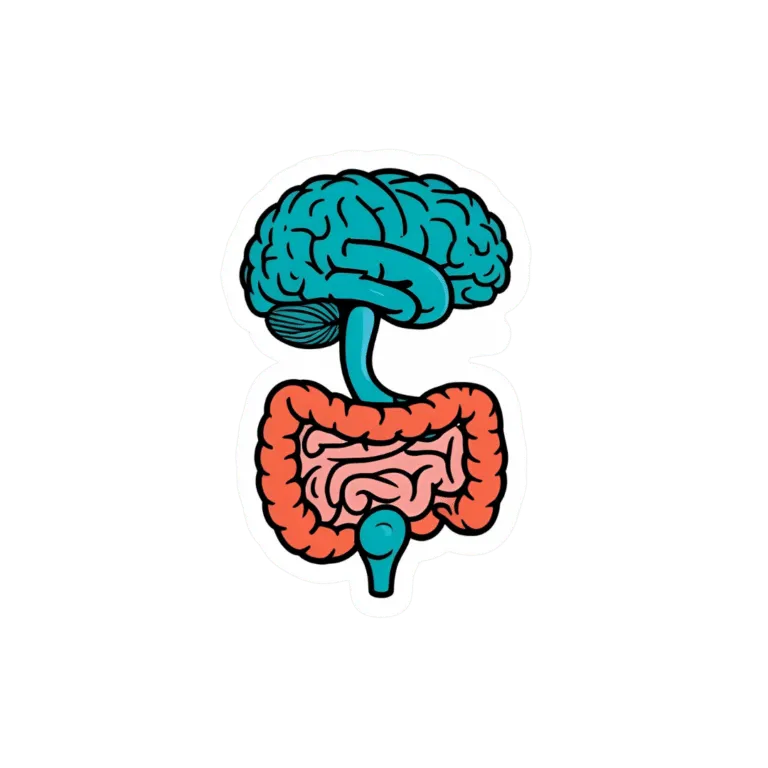
So, what about coffee and the gut?

The bacteria who enjoy a good coffee

Amongst our trillions of tiny friends, allies, associates, and enemies-on-the-inside, which ones like coffee, and what kind of coffee do they prefer?

A big (n=35,214) international multicohort analysis examined the associations between coffee consumption and very many different gut microbial species, and found:

115 species were positively associated with coffee consumption, mostly of the kind considered “friendly”, including ones often included in probiotic supplements, such as various Bifidobacterium and Lactobacillus species.

The kind that was most strongly associated with coffee consumption, however, was Lawsonibacter asaccharolyticus, a helpful little beast who converts chlorogenic acid (one of the main polyphenols in coffee) into caffeic acid, quinic acid, and various other metabolites that we can use.

More specifically: moderate coffee-drinkers, defined as drinking 1–3 cups per day, enjoyed a 300–400% increase in L. asaccharolyticus, while high coffee-drinkers (no, not that kind of high), defined as drinking 4 or more cups of coffee per day, enjoyed a 400–800% increase, compared to “never/rarely” coffee-drinkers (defined as drinking 2 or fewer cups per month).

Click here to see more data from the study, in a helpful infographic

Things that did not affect the outcome:

  • The coffee-making method—it seems the bacteria are not fussy in this regard, as espresso or brewed, and even instant, yielded the same gut microbiome benefits
  • The caffeine content—as both caffeinated and decaffeinated yielded the same gut microbiome benefits

You can read the paper itself in full for here:

Coffee consumption is associated with intestinal Lawsonibacter asaccharolyticus abundance and prevalence across multiple cohorts

Want to enjoy coffee, but not keen on the effects of caffeine or the taste of decaffeinated?

Taking l-theanine alongside coffee flattens the curve of caffeine metabolism, and means one can get the benefits without unwanted jitteriness:

The Magic Of L-Theanine

Enjoy!

Don’t Forget…

Did you arrive here from our newsletter? Don’t forget to return to the email to continue learning!
Learn to Age Gracefully

Join the 98k+ American women taking control of their health & aging with our 100% free (and fun!) daily emails:

  • International Day of Women and Girls in Science

    10almonds is reader-supported. We may, at no cost to you, receive a portion of sales if you purchase a product through a link in this article.

    Today is the International Day of Women and Girls in Science, so we’ve got a bunch of content for the ladies out there. Let’s start with the statement Sima Bahous (the Executive Director of UN Women) made:

    ❝This year, the sixty-seventh session of the Commission on the Status of Women (CSW67) will consider as its priority theme “Innovation and technological change, and education in the digital age for achieving gender equality and the empowerment of all women and girls”.

    This is an unprecedented opportunity for the Commission to develop a definitive agenda for progress towards women’s full and equal participation and representation in STEM. Its implementation will require bold, coordinated, multi-stakeholder action.❞

    Read Her Full Statement Here!

    Here at 10almonds, we are just one newsletter, and maybe we can’t change the world (…yet), but we’re all for this!

    We’re certainly all in favour of education in the digital age, and more of our subscribers are women and girls than not (highest of fives from your writer today, also a woman—and I do bring most of the sciency content).

    Medical News Today asks “Why Are Women Less Likely To Survive Cardiac Arrest Than Men?”

    You can read the full article here, but the short version is:

    • People (bystanders and EMS professionals alike!) are less likely to intervene to give CPR when the patient is a woman (we appreciate that “your hands on an unknown woman’s chest” is a social taboo, but there’s a time and a place!)
    • People trained to give CPR (volunteers or professionals!) are often less confident about how to do so with female anatomy—training is almost entirely on “male” dummies.

    A quick take-away from this is: to give effective CPR, you need to be giving two-inch compressions!

    On a side note, do you want to learn how to correctly do chest compressions on female anatomy? This short (1:55) video could save a woman’s life!

    As a science-based health and productivity newsletter, we make no apologies if occasional issues sometimes have a slant to women’s health! Heaven help us, the bias in science at large is certainly the opposite:

    The list of examples is far too long for us to include here, but two that spring immediately to mind are:

    Maybe if women in STEM weren’t on the receiving end of rampant systemic misogyny, we’d have more women in science, and some answers by now!

    ❗️NOT-SO-FUN FACT:

    Women make up only 28% of the workforce in science, technology, engineering and math (STEM), and men vastly outnumber women majoring in most STEM fields in college. The gender gaps are particularly high in some of the fastest-growing and highest-paid jobs of the future, like computer science and engineering.

    Source: AAUW

    The US census suggests change is happening, but is a very long way from equality!

    WHAT OUR SUBSCRIBERS SAY:

    ❝Women are slowly gaining more of a place in academia, and slowly making more of a difference when they get there, and start doing research that reflects ourselves. But I still think that it’s a struggle to get there, and it’s a struggle to be heard and be respected.

    It’s a matter of pride, it’s a matter of proving yourself, being in STEM, and [women in STEM] still report being extremely disrespected, not taken seriously all, despite being very very good.

    It’s worth noting as well, that we’ve had women in STEM for a while and there are so many things we appreciate nowadays that they were a part of, but they were never given credit for—it’s still a problem today and something we need to more actively fight.❞

    Isabella F. Lima, Occupational Psychologist

    Are you a woman in STEM, and have a story to tell? We’d love to hear it! Just reply to this email 🙂

    Share This Post

  • Eat More, Live Well – by Dr. Megan Rossi

    10almonds is reader-supported. We may, at no cost to you, receive a portion of sales if you purchase a product through a link in this article.

    Often, eating healthily can feel restrictive. Don’t eat this, skip that, eliminate the other. Where is the joy?

    Dr. Megan Rossi brings a scientific angle on positive dieting, that is to say, looking at what to add, rather than what to subtract. Now, the idea isn’t to have sugar-laden chocolate cake with berries on top and call it a net positive because of the berries, though. Rather, Dr. Rossi lays out how to include as many diverse vegetables and fruits as possible, with tasty recipes so that we’re too busy with those to crave junk food.

    Speaking of recipes, there are 80, and they are easy to follow. She describes them as “plant-based”, and by this what she really means is “plant-centric” or such; she does include the use of some animal products.

    This is important to note, because general convention is to use “plant-based” to mean functionally vegan, but being about the food rather than the ideology; a relevant distinction in both society and science. In the case of this book, it’s neither, but it is very healthy.

    Bottom line: if you’d like to introduce more healthy diversity to your diet, rather than eating the same three fruits and five vegetables, but you’re not sure how, this book will get you where you need to be.

    Click here to check out Eat More, Live Well, and diversify your diet!

    Share This Post

  • Self-Defense – by Dr. Daniel Davis

    10almonds is reader-supported. We may, at no cost to you, receive a portion of sales if you purchase a product through a link in this article.

    The author, a professor of immunology, sets out to bust some immune health myths in a time when those myths are spreading even faster (and sometimes with more mutations along the way) than the latest flu or COVID variants.

    Writing from a position of stable academia rather than the latest flashy platform, he covers many topics including the roles of vitamins (especially: what vitamins C and D can and can’t do for you), the gut microbiome, weight and adiposity, exercise (especially: the right kinds, and where the “sweet spot” is when it comes to amount, because yes, exercise is good in general, but too much of certain kinds can harm immune health), stress management, sleep, and aging (i.e. how immune health changes as we age).

    You’ll notice that vaccines are conspicuous by their absence in that list; while these are touched on from time to time, the focus here is on immune health overall, which vaccines only meaningfully affect in one way: giving our immune systems advance knowledge of pathogens to come. So the position of this book on that is “yes, obviously get your vaccines, but that doesn’t take much explaining, and doesn’t merit an entire chapter just to say it”.

    Dr. Davis does also indulge, at the end of the book, in something that a lot of other research scientists do too, which is: discussion of what’s in the pipeline in terms of research and development (in this case, in the field of immunology).

    The style is polished pop-science in long-form prose; written for a lay audience, and/but with the steady tone of academia; no hype and little to nothing in the way of personal touches. So, we get very little jargon (which makes for easy reading), but it’s also a little dry (which makes it very put-downable, in the sense of being the opposite of a “couldn’t put it down” book). There is a respectable bibliography, plus

    Share This Post

  • An Underrated Tool Against Alzheimer’s

    10almonds is reader-supported. We may, at no cost to you, receive a portion of sales if you purchase a product through a link in this article.

    Dementia in general, and Alzheimer’s in particular, affects a lot of people, and probably even more than the stats show, because some (estimated to be: about half) will go undiagnosed and thus unreported:

    Alzheimer’s: The Bad News And The Good

    At 10almonds, we often talk about brain health, whether from a nutrition standpoint or other lifestyle factors. For nutrition, by the way, check out:

    Brain Food? The Eyes Have It!

    Today we’ll be looking at some new science for an underrated tool:

    Bilingualism as protective factor

    It’s well-known that bilingualism offers brain benefits, but most people would be hard-pressed to name what, specifically, those brain benefits are.

    As doctors Kristina Coulter and Natalie Phillips found in a recent study, one of the measurable benefits may be a defense against generalized (i.e. not necessarily language-related) memory loss Alzheimer’s disease.

    Specifically,

    ❝We used surface-based morphometry methods to measure cortical thickness and volume of language-related and AD-related brain regions. We did not observe evidence of brain reserve in language-related regions.

    However, reduced hippocampal volume was observed for monolingual, but not bilingual, older adults with AD. Thus, bilingualism is hypothesized to contribute to reserve in the form of brain maintenance in the context of AD.❞

    Read in full: Bilinguals show evidence of brain maintenance in Alzheimer’s disease

    This is important, because while language is processed in various parts of the brain beyond the scope of this article, the hippocampi* are where memory is stored.

    *usually mentioned in the singular as “hippocampus”, but you have one on each side, unless some terrible accident or incident befell you.

    What this means in practical terms: these results suggest that being bilingual means we will retain more of our capacity for memory, even if we get Alzheimer’s disease, than people who are monolingual.

    Furthermore, while we’re talking practicality:

    ❝…our subsample may be characterized as mostly late bilinguals (i.e., learning an L2 after age 5), having moderate self-reported L2 ability, and relatively few participants reporting daily L2 use (33 out of 119)❞

    (L2 = second language)

    This is important, because it means you don’t have to have grown up speaking multiple languages, you don’t even have to speak it well, and you don’t have to be using your second language(s) on a daily basis, to enjoy benefits. Merely having them in your head appears to be sufficient to trigger the brain to go “oh, we need to boost and maintain the hippocampal volume”.

    We would hypothesize that using second language(s) regularly and/or speaking second language(s) well offers additional protection, and the data would support this if it weren’t for the fact that the sample sizes for daily and high-level speakers are a bit small to draw conclusions.

    But the important part is: simply knowing another language, including if you literally just learned it later in life, is already protective of hippocampal volume in the context of Alzheimer’s disease.

    Here’s a pop-science article about the study, that goes into it in more detail than we have room to here:

    Bilingualism linked to greater brain resilience in older adults

    Want to learn a new language?

    Here are some options where you can get going right away:

    Duolingo | Babbel | Lernu

    If you are thinking “sounds good, but learning a language is too much work”, then that is why we included that third option there. It’s specifically for one language, and that language is Esperanto, arguably the world’s easiest language and specifically designed to be super quick and easy to get good at. Also, it’s free!

    Do, kial ne lerni novan lingvon rapide kaj facile? 😉

    Want to know more?

    For ways to reduce your overall Alzheimer’s risk according to science, check out:

    Reduce Your Alzheimer’s Risk

    Take care!

    Don’t Forget…

    Did you arrive here from our newsletter? Don’t forget to return to the email to continue learning!

    Learn to Age Gracefully

    Join the 98k+ American women taking control of their health & aging with our 100% free (and fun!) daily emails:

  • Holistic Approach To Resculpting A Face Affected By Hypothyroidism, PCOS, Or Menopause

    10almonds is reader-supported. We may, at no cost to you, receive a portion of sales if you purchase a product through a link in this article.

    Mila Magnani has PCOS and hypothyroidism, but the principles are the same for menopause because both menopause and PCOS are a case of a hormone imbalance resulting in androgenic effects, so there’s a large amount of overlap.

    Obviously, a portion of the difference in the thumbnail is a matter of angle and make-up, but as you can see in the video itself, there’s also a lot of genuine change underneath, too:

    Stress-free method

    Firstly, she bids us get lab tests and work with a knowledgeable doctor to address potential thyroid, hormonal, or nutrient imbalances. Perhaps we already know at least part of what is causing our problems, but even if so, it doesn’t hurt to take steps to rule the others out. Imagine spending ages unsuccessfully battling PCOS or menopause, only to discover it was a thyroid issue, and you were fighting the wrong battle!

    Magnani used a natural route to manage her PCOS and hypothyroidism, while acknowledging that medication is fine too; it’s usually cheaper and more convenient—and there’s a lot more standardization for medications than there is for supplements, which makes it a lot easier to navigate, find what works, and keep getting the exact same thing once it does work.

    Other things she recommends include:

    • Lymphatic drainage: addressing the lymphatic system to reduce puffiness. Techniques include lymphatic drainage massage, stretching, rebounding (trampoline), and dry brushing. She emphasizes that for facial de-puffing, it’s important to treat the whole upper body, not just the face.
    • Low-impact exercise: she switched from high-intensity workouts to low-impact exercises like nature walking and gentle stretching to reduce stress and improve health.
    • Nervous system regulation: she worked on nervous system regulation by means of journaling, breathwork, and stimulating the vagus nerve, which improved sleep and reduced stress and anxiety. These things, of course, have knock-on benefits for almost every part of health.
    • Diet: she adopted a low-glycemic diet, reduced salt intake, and cooked at home to avoid water retention caused by high sodium in restaurant meals.
    • Natural diuretics: she uses teas like hibiscus and chamomile to reduce puffiness after consuming high-sodium foods.
    • Sauna and sweating: consider a sauna mat or hot baths to detox and reduce swelling; that’s what she uses in lieu of a convenient sauna.

    You may be wondering how quickly you can expect results: it took 3–6 months of daily effort to see significant changes, and she now maintains the routine less frequently (every 2–3 days, instead of daily).

    For more on all this, enjoy:

    Click Here If The Embedded Video Doesn’t Load Automatically!

    Want to learn more?

    You might also like to read:

    Take care!

    Don’t Forget…

    Did you arrive here from our newsletter? Don’t forget to return to the email to continue learning!

    Learn to Age Gracefully

    Join the 98k+ American women taking control of their health & aging with our 100% free (and fun!) daily emails:

  • The Emperor’s New Klotho, Or Something More?

    10almonds is reader-supported. We may, at no cost to you, receive a portion of sales if you purchase a product through a link in this article.

    Unzipping The Genes Of Aging?

    Klotho is an enzyme encoded in humans’ genes—specifically, in the KL gene.

    It’s found throughout all living parts of the human body (and can even circulate about in its hormonal form, or come to rest in its membranaceous form), and its subgroups are especially found:

    • α-klotho: in the brain
    • β-klotho: in the liver
    • γ-klotho: in the kidneys

    Great! Why do we care?

    Klotho, its varieties and variants, its presence or absence, are very important in aging.

    Almost every biological manifestation of aging in humans has some klotho-related indicator; usually the decrease or mutation of some kind of klotho.

    Which way around the cause and effect go has been the subject of much debate and research: do we get old because we don’t have enough klotho, or do we make less klotho because we’re getting old?

    Of course, everything has to be tested per variant and per system, so that can take a while (punctuated by research scientists begging for more grants to do the next one). Given that it’s about aging, testing in humans would take an incredibly long while, so most studies so far have been rodent studies.

    The general gist of the results of rodent studies is “reduced klotho hastens aging; increased klotho slows it”.

    (this can be known by artificially increasing or decreasing the level of klotho expression, again something easier in mice as it is harder to arrange transgenic humans for the studies)

    Here’s one example of many, of that vast set of rodent studies:

    Suppression of Aging in Mice by the Hormone Klotho

    Relevance for Alzheimer’s, and a science-based advice

    A few years ago (2020), an Alzheimer’s study was undertaken; they noted that the famous apolipoprotein E4 (apoE4) allele is the strongest genetic risk factor for Alzheimer’s, and that klotho may be another. FGF21 (secreted by the liver, mostly during fasting) binds to its own receptor (FGFR1) and its co-receptor β-klotho. Since this is a known neuroprotective factor, they wondered whether klotho itself may interact with β-amyloid (Aβ), and found:

    ❝Aβ can enhance the ability of klotho to draw FGF21 to regions of incipient neurodegeneration in AD❞

    ~ Dr. Lehrer & Dr. Rheinstein

    In other words: β-amyloid, the substance whose accumulation is associated with neurodegeneration in Alzheimer’s disease, is a mediator in klotho bringing a known neuroprotective factor, FGF21, to the areas of neurodegeneration

    In fewer words: klotho calls the firefighters to the scene of the fire

    Read more: Alignment of Alzheimer’s disease amyloid β-peptide and klotho

    The advice based on this? Consider practicing intermittent fasting, if that is viable for you, as it will give your liver more FGF21-secreting time, and the more FGF21, the more firefighters arrive when klotho sounds the alarm.

    See also: Intermittent Fasting: What’s the truth?

    …and while you’re at it:

    Does intermittent fasting have benefits for our brain?

    A more recent (2023) study with a slightly different (but connected) purpose, found results consistent with this:

    Longevity factor klotho enhances cognition in aged nonhuman primates

    …and, for that matter this (2023) study that found:

    Associations between klotho and telomere biology in high stress caregivers

    …which looks promising, but we’d like to see it repeated with a sounder method (they sorted caregiving into “high-stress” and “low-stress” depending on whether a child was diagnosed with ASD or not, which is by no means a reliable way of sorting this). They did ask for reported subjective stress levels, but to be more objective, we’d like to see clinical markers of stress (e.g. cortisol levels, blood pressure, heart rate changes, etc).

    A very recent (April 2024) study found that it has implications for more aspects of aging—and this time, in humans (but using a population-based cohort study, rather than lab conditions):

    The prognostic value of serum α-klotho in age-related diseases among the US population: A prospective population-based cohort study

    Can I get it as a supplement?

    Not with today’s technology and today’s paucity of clinical trials, you can’t. Maybe in the future!

    However… The presence of senescent (old, badly copied, stumbling and staggering onwards when they should have been killed and eaten and recycled already) cells actively reduces klotho levels, which means that taking supplements that are senolytic (i.e., that kill those senescent cells) can increase serum klotho levels:

    Orally-active, clinically-translatable senolytics restore α-Klotho in mice and humans

    Ok, what can I take for that?

    We wrote about a senolytic supplement that you might enjoy, recently:

    Fisetin: The Anti-Aging Assassin

    Want to know more?

    If you have the time, Dr. Peter Attia interviews Dr. Dena Dubal (researcher in several of the above studies) here:

    Click Here If The Embedded Video Doesn’t Load Automatically

    Enjoy!

    Don’t Forget…

    Did you arrive here from our newsletter? Don’t forget to return to the email to continue learning!

    Learn to Age Gracefully

    Join the 98k+ American women taking control of their health & aging with our 100% free (and fun!) daily emails: