Are You Eating This Protein That Helps Fight Kidney Disease?
10almonds is reader-supported. We may, at no cost to you, receive a portion of sales if you purchase a product through a link in this article.

How healthy are your kidneys? Most people don’t know, unless a problem has already been identified.
There are clinical tests that can be done (they’ll just need a urine sample from you; ask your doctor about it), but there’s some screening that can be done at home already:
Are Your Kidneys Healthy? Take This One-Minute Quiz To Find out
👆 this is about medical indicators; there are also non-medical factors that affect risk, including:
- Where someone lives
- Where they work
- The foods they eat
- How much exercise they do
- If they are able to get the medical care they need
For more information on this, see: Keeping Your Kidneys Healthy (Especially After 60) ← there’s a lot more to it than just hydration!
So, what about that “the foods they eat” item?
Soy can be an important factor
Reseachers (Dr. Toshiaki Ohkuma et al.) examined 4,922 adults to investigate associations between soy consumption and kidney health. Dietary intake was assessed through questionnaires, and kidney health was evaluated using estimated glomerular filtration rate (eGFR) and urinary albumin-to-creatinine ratio (uACR).
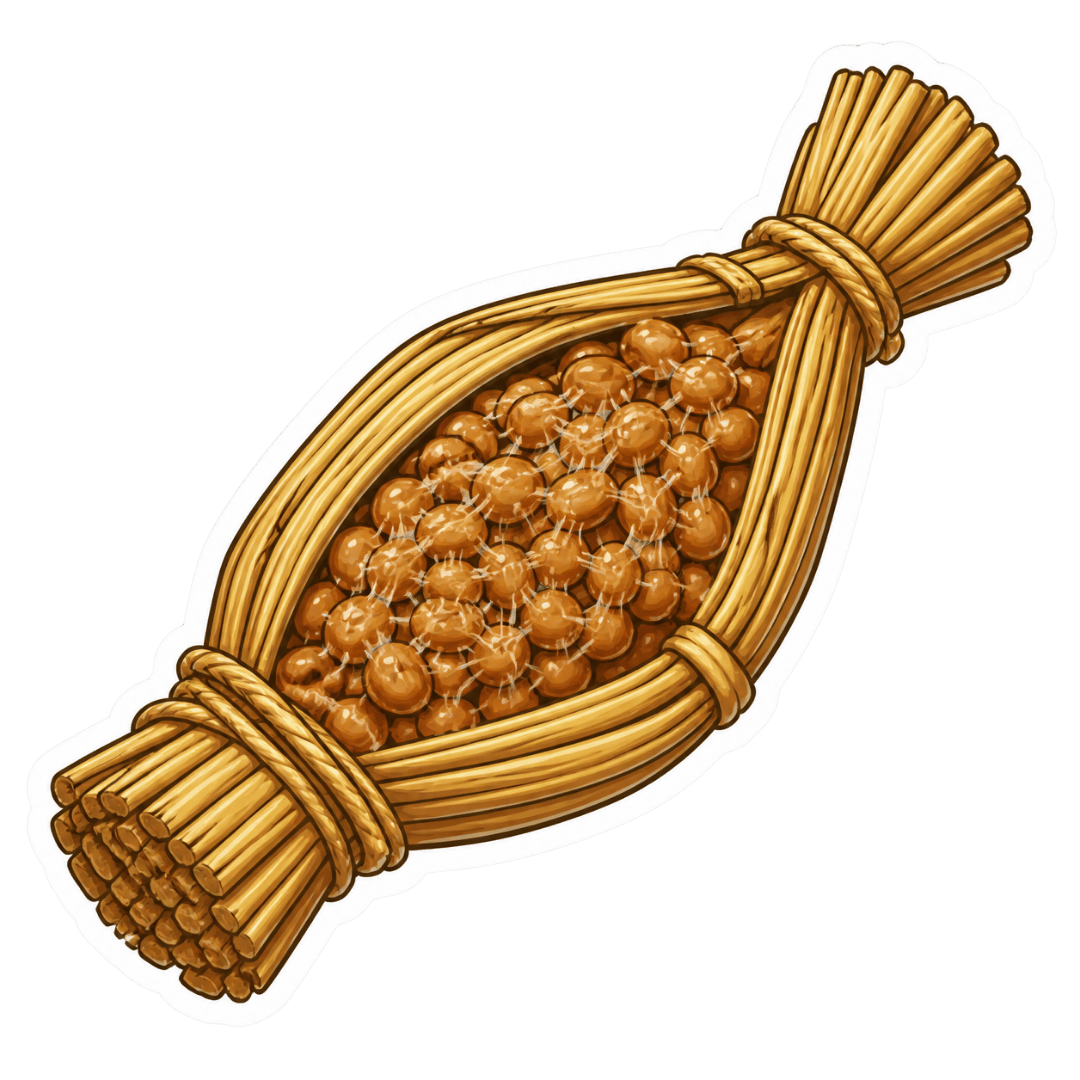
In few words: more frequent consumption of nattō, tofu, and miso soup (all three of which are different ways of eating fermented soy) was associated with a lower prevalence of reduced kidney function. These associations generally remained after adjustment for lifestyle and dietary factors, although the tofu association was no longer statistically significant after additional dietary adjustments, suggesting that nattō and miso are the strongest options.
As for how it works, a clue is found in the fact that more specifically a higher intake of soy isoflavones, including genistein and daidzein, was associated with lower odds of reduced kidney function.
You can read this paper in full, here: Soy foods, isoflavone intake, and diabetic kidney disease: The Fukuoka Diabetes Registry
On which note yes, the participants were specifically adults with type 2 diabetes, thus being at higher risk of kidney disease by default.
It is unknown whether adults without diabetes would benefit more or less than those with it, but one thing seems certain and that’s that, it can’t do any harm.
Unless you have a soy allergy in which case yes, it can do harm.
What about hormones?
This is a common concern especially amongst Americans, so let’s quickly address it. Many people cite the phytoestrogens in soy as a reason that women should consume it, and men should not. That’s half-correct:
- For women, the phytoestrogens in soy cannot be used as estrogen directly (not compatible with human estrogen), but it can be broken down and the parts used to make new, compatible, human estrogen (assuming you have working ovaries, to produce that estrogen).
- For men, the phytoestrogens in soy cannot be used as estrogen directly (not compatible with human estrogen), but it can be broken down and the parts used to make new, compatible, human testosterone (assuming you have working testes, to produce that testosterone).
This means, gentlemen-readers, that no, soy will not have any feminizing effect on you (unless you have ovaries instead of testes, in which case yes, it can boost your natural estrogen production).
See for example this research review with 439 sources of its own: Soy and Health Update: Evaluation of the Clinical and Epidemiologic Literature
You may be wondering why the “ingredients” of estrogen can be used to make testosterone. It’s because on a molecular level, they’re almost identical:
❝Both estradiol and testosterone have the “steroid nucleus” and a hydroxyl group in their structures.
Apart from estradiol, testosterone has a double bond and a ketone.❞
estradiol = the most useful kind of estrogen that we humans use
For the more visually-inclined, you can see the molecules diagrammed next to each other here, and play spot-the-difference!
Want to learn more about different dietary approaches?
For a more general overview of which dietary approach to pick for your personal health goals, check out:
Which Diet? Top Diets Ranked By Experts ← a panel of 69 doctors and nutritionists examine the evidence for 38 diets, and score them in 21 categories (e.g. best for weight loss, best for heart, best against diabetes, best for the liver, etc).
Choose wisely!
Don’t Forget…
Did you arrive here from our newsletter? Don’t forget to return to the email to continue learning!
Learn to Age Gracefully
Join the 98k+ American women taking control of their health & aging with our 100% free (and fun!) daily emails: