
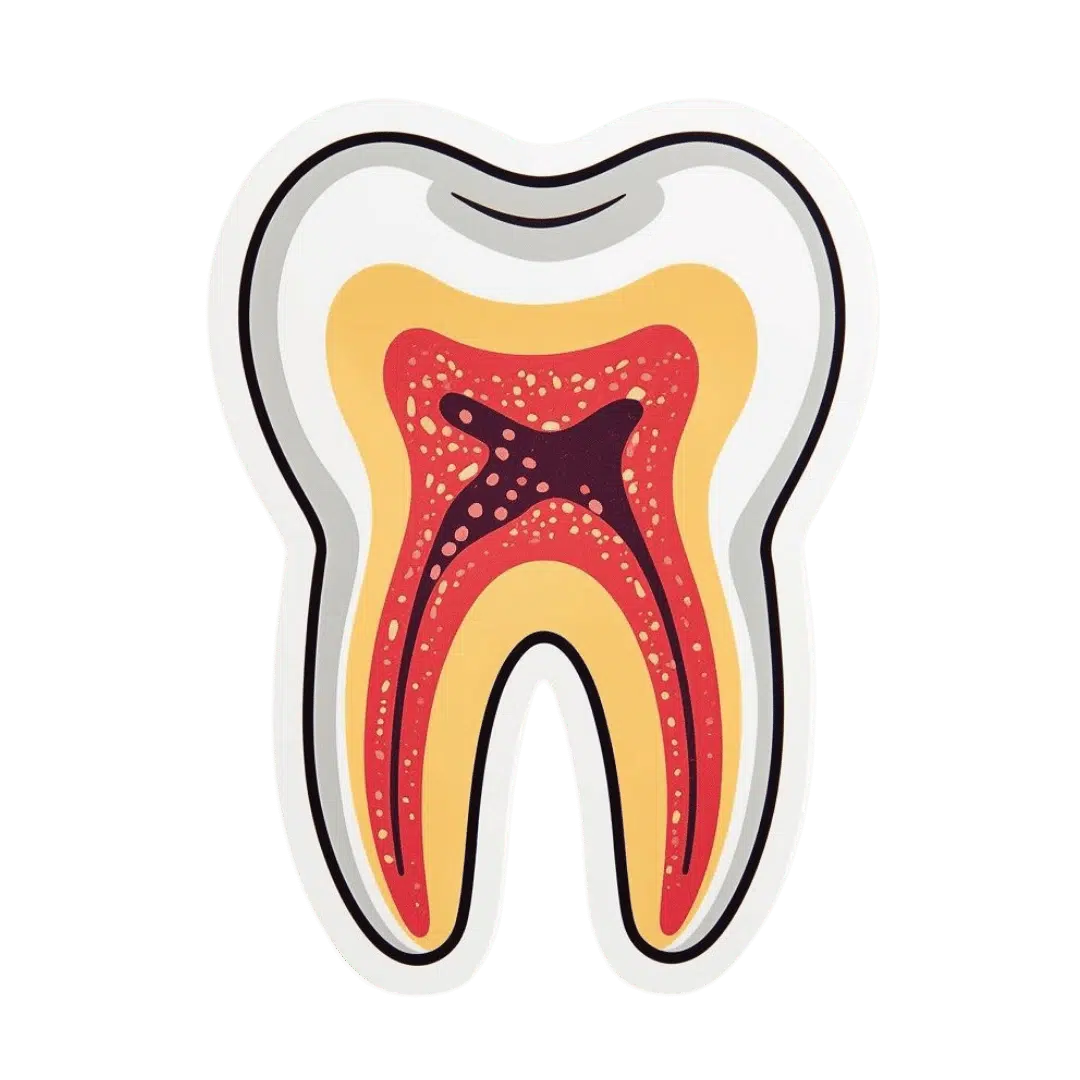
Antibiotics Won’t Cure Your Tooth Infection
10almonds is reader-supported. We may, at no cost to you, receive a portion of sales if you purchase a product through a link in this article.

Dr. Michelle Jorgensen explains why, and what will actually get the job done instead:
Getting to the root of the problem…
,,,without leaping to “root canal” as the answer! Actually it’s often part of bigger/later problems.
First let’s talk abscesses:
- What an abscessed tooth is: an abscess forms when the nerve inside a tooth dies, bacteria spread out of the root tip, inflame the periodontal ligament, bone, and gums, and cause persistent pain, swelling, and tenderness to biting.
- Why antibiotics don’t cure it: antibiotics can temporarily reduce surrounding bacteria and inflammation (thus, they calm the tissues and reduce swelling, which makes chewing more comfortable again, for at least a little while), but they can’t remove the dead nerve tissue inside the tooth that caused the problem, nor get in there sufficiently to kill everything unwanted inside and keep it that way.
Which is a problem, because as long as dead tissue remains inside the tooth, bacteria will recolonize it, so pain and infection often return months later, if not weeks later.
Now, sometimes, antibiotics are needed! In fact, they can be essential if there’s facial swelling, fever, heat, redness, or spread towards the eye, brain, throat, or airway, because these signs and symptoms can indicate a potentially life-threatening infection. On which note, Dr. Jorgensen advises that difficulty breathing, swallowing, or visible facial swelling means you should go to the ER immediately, where IV antibiotics may be used because they act faster than oral ones.
But since antibiotics still won’t actually cure an abscess, the standard definitive treatment requires removing the source of dead tissue, either by a root canal or by extracting the tooth.
The latter sounds more drastic than the former, but the former can actually cause more problems, as we mentioned near the start.
This is because root canals can fail, especially in teeth already heavily infected, and they remove the nerve’s warning system, so future infections may be quieter but more dangerous.
In contrast, removing the tooth and replacing it with a dental implant might not be most people’s idea of fun either, but it eliminates infected tissue completely and reduces the risk of reinfection.
So, sorry if you were hoping for “this essential oil remedy will do the trick”; unfortunately, this isn’t one of those.
However! Prevention is of course better than cure, and some essential-oil based remedies will actually help for that one; see the “learn more” section below!
Meanwhile, for more on all the above, enjoy:
Click Here If The Embedded Video Doesn’t Load Automatically!
Want to learn more?
You might also like:
The Complete Mouth Care System ← the recommendation here involves eucalyptus essential oil, menthol essential oil, and thymol essential oil, but there’s more to it than that, so before you rush to stock up on those, please do read the article!
And, for that matter: Dangers Of Root Canals And Crowns, & What To Do Instead ← what Dr. Jorgensen recommends instead of root canals where possible is biomimetic dentistry, which is also more prosaically called “conservative restorative dentistry”, i.e. it tries to conserve as much as possible, replace lost material on a like-for-like basis, and generally end up with a result that’s as close to natural as possible.
Take care!
Don’t Forget…
Did you arrive here from our newsletter? Don’t forget to return to the email to continue learning!
Recommended
Learn to Age Gracefully
Join the 98k+ American women taking control of their health & aging with our 100% free (and fun!) daily emails: