
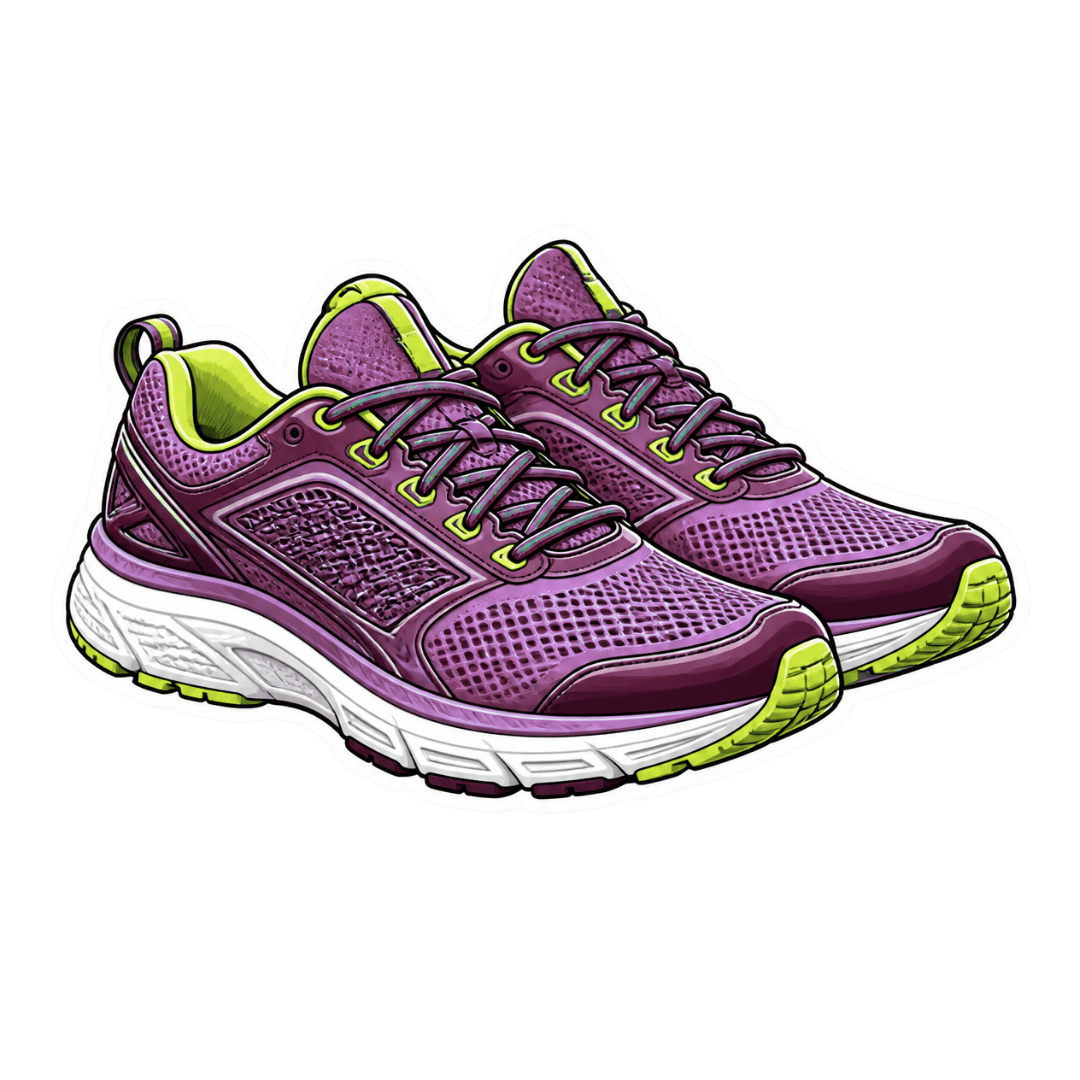
You’re Probably Wearing The Wrong Shoes For Your Feet (Here’s How To Choose The Right Ones)
10almonds is reader-supported. We may, at no cost to you, receive a portion of sales if you purchase a product through a link in this article.

Will Harlow, the over-50s specialist physio, puts our shoes through their paces:
The foundation of good foot health
The first and most important advice is: don’t assume a more expensive shoe with softer cushioning and more advertised support is automatically better. Instead, it can be better to check how the shoe bends, twists, fits, and feels when walking.
Here’s how to test it, step by step:
- Toebox bend: hold the shoe at both ends and gently bend it to see where it flexes. Your foot naturally bends where your toes meet the rest of your foot, so a shoe that bends in that area may suit you if your feet are mobile. Meanwhile, stiffer shoes with rocker soles may be more suitable if your forefoot has limited movement because they help you roll forwards when walking. This isn’t a pass-or-fail test, as the best flexibility depends on your own foot mobility and intended activity.
- Twist test: gently twist the shoe to assess its flexibility through the middle. Shoes that twist very easily may provide insufficient stability when walking or turning, particularly on longer walks or uneven ground; stiffer shoes may offer greater security and ankle protection, while flexible shoes may be more comfortable for everyday activities around the house or garden. So with this in mind, choose according to your intended use, rather than going one way or another without considering your actual lifestyle.
- Heel-toe rock: fasten the shoes as you normally would, then rock forwards from your heel towards your toes and back again. Check whether your heel stays comfortably in place or slips as you move. If it slips, adjust the fastening first, then try a different size or shoe shape if necessary. The back of the shoe shouldn’t dig into your heel either. Aim for a secure, comfortable fit rather than excessive tightness, of course!
- Toebox fit: while standing with your weight on your feet, locate your longest toe, which isn’t necessarily your big toe. Allow about one centimeter between the tip of your longest toe and the end of the shoe, and check the width and depth to ensure your toes have enough room to move without being squeezed together or pressed down. If the shoe is too narrow, try a wider fit or a different shape rather, than simply buying a longer size, which often won’t even solve the issue, while it creates a different problem! And absolutely don’t rely on the shoe “breaking in”, because wearing it more rarely fixes a poor fit (rumors to contrary are great propaganda for shoe companies, but not great for people with feet).
- Walk and turn: walk as far as the shop allows, gradually reaching your normal walking pace rather than taking just a few slow steps. Turn around and walk back, to check whether your heel slips or your foot moves inside the shoe. It’s good also to pay attention to whether your toes still have room and whether anything rubs or presses against your feet. And if you’re comparing two pairs, try the second immediately after the first so you can compare how they feel when walking!
For more on all of this plus visual demonstrations, enjoy:
Click Here If The Embedded Video Doesn’t Load Automatically!
Want to learn more?
For a much more comprehensive understanding of foot health, you might also like:
The Foot Book – by Dr. Todd Brennan & Dr. Leslie Johnston
Take care!
Don’t Forget…
Did you arrive here from our newsletter? Don’t forget to return to the email to continue learning!
Learn to Age Gracefully
Join the 98k+ American women taking control of their health & aging with our 100% free (and fun!) daily emails: