Why Does This Animal Just Not Age?
10almonds is reader-supported. We may, at no cost to you, receive a portion of sales if you purchase a product through a link in this article.

Some animals are biologically immortal, and this is one of them:
The fountain of youth
First things first: yes, they look like plants, but really, so do a lot of animals.
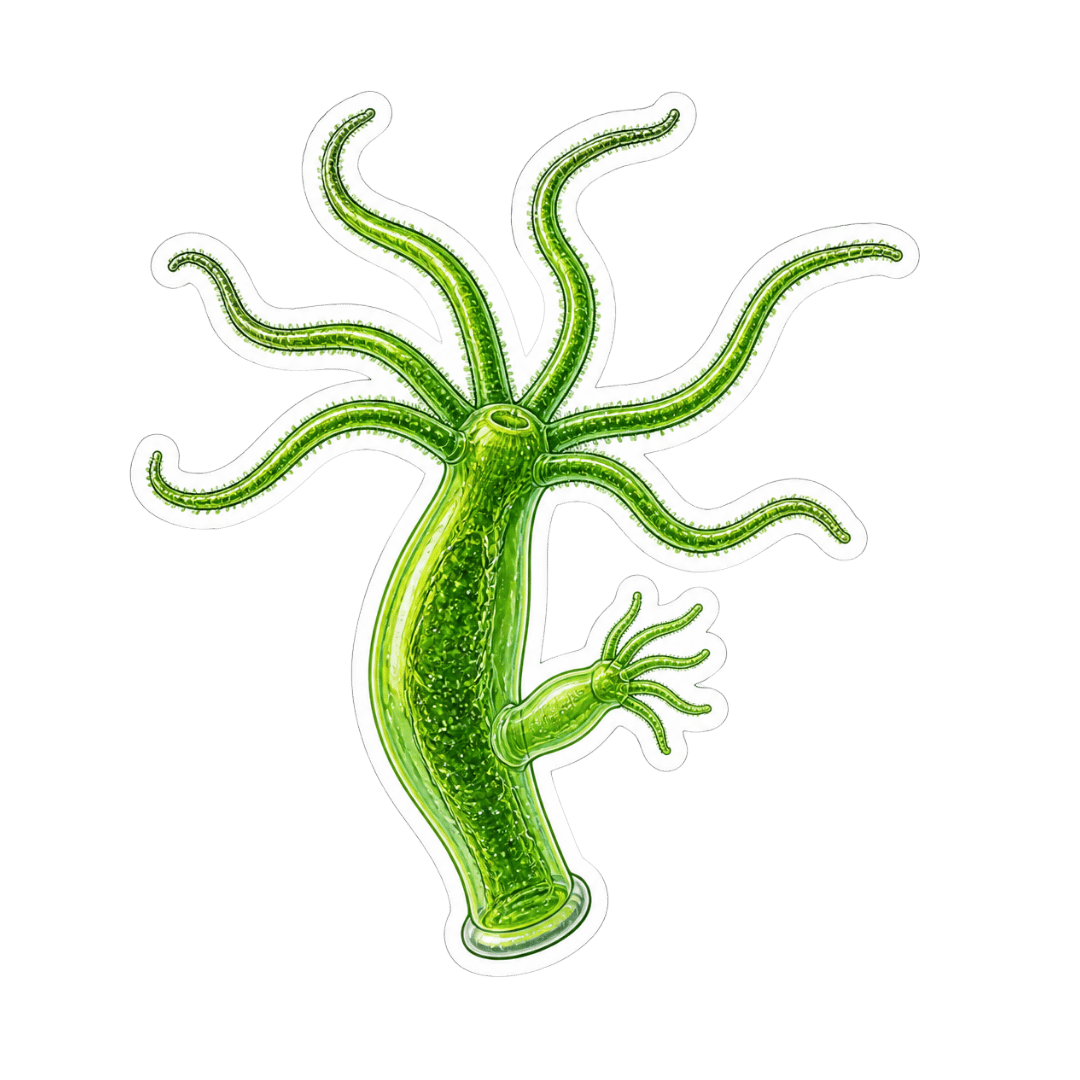
We assure you however that hydras are small freshwater animals belonging to the phylum Cnidaria, with simple tubular bodies a bit like very tiny leech, a foot at one end, and a mouth surrounded by tentacles at the other; they can move around, but prefer to spend most of their time attached to surfaces using a glue-like substance secreted from their feet.
They are carnivorous: hydras catch prey using tentacles covered in stinging cells that fire pressurized, harpoon-like structures to immobilize small animals.
They reproduce sexually, but also (and more commonly) reproduce asexually by budding. And furthermore, much like their mythological namesake, hydras can regrow lost body parts and even rebuild their entire bodies after being broken down into individual cells, which first gather into a sphere before reorganizing into internal and external layers that develop into a complete hydra within days.
Most excitingly, hydras maintain constant levels of stem cells capable of dividing and developing into any body cell type, allowing them to replace damaged tissues and divide indefinitely; approximately every 20 days, all their cells have been replaced—fresh, new, and young.
If you’re thinking “ok, but isn’t that a bit Ship of Theseus?”, i.e. if all the cells have been replaced, is it really the same animal, then we invite you to also apply the same question to yourself, as while your cellular turnover is a lot slower, your cells have been replaced many times over the course of your life, too (yes, even your brain cells).
This continuous cellular renewal prevents the accumulation of age-related cellular damage, allowing hydras to regenerate and reproduce without biological aging; although they can still be killed, they can in principle live forever if they avoid fatal threats.
As for what this means for us: the regeneration process provides insights into embryonic development because some of the stages and proteins involved are shared across animals, although other animals cannot routinely regenerate their entire bodies this way.
Click Here If The Embedded Video Doesn’t Load Automatically!
Want to learn more?
You might also like:
Age & Aging: What Can (And Can’t) We Do About It?
Take care!
Don’t Forget…
Did you arrive here from our newsletter? Don’t forget to return to the email to continue learning!
Recommended

Learn to Age Gracefully
Join the 98k+ American women taking control of their health & aging with our 100% free (and fun!) daily emails: