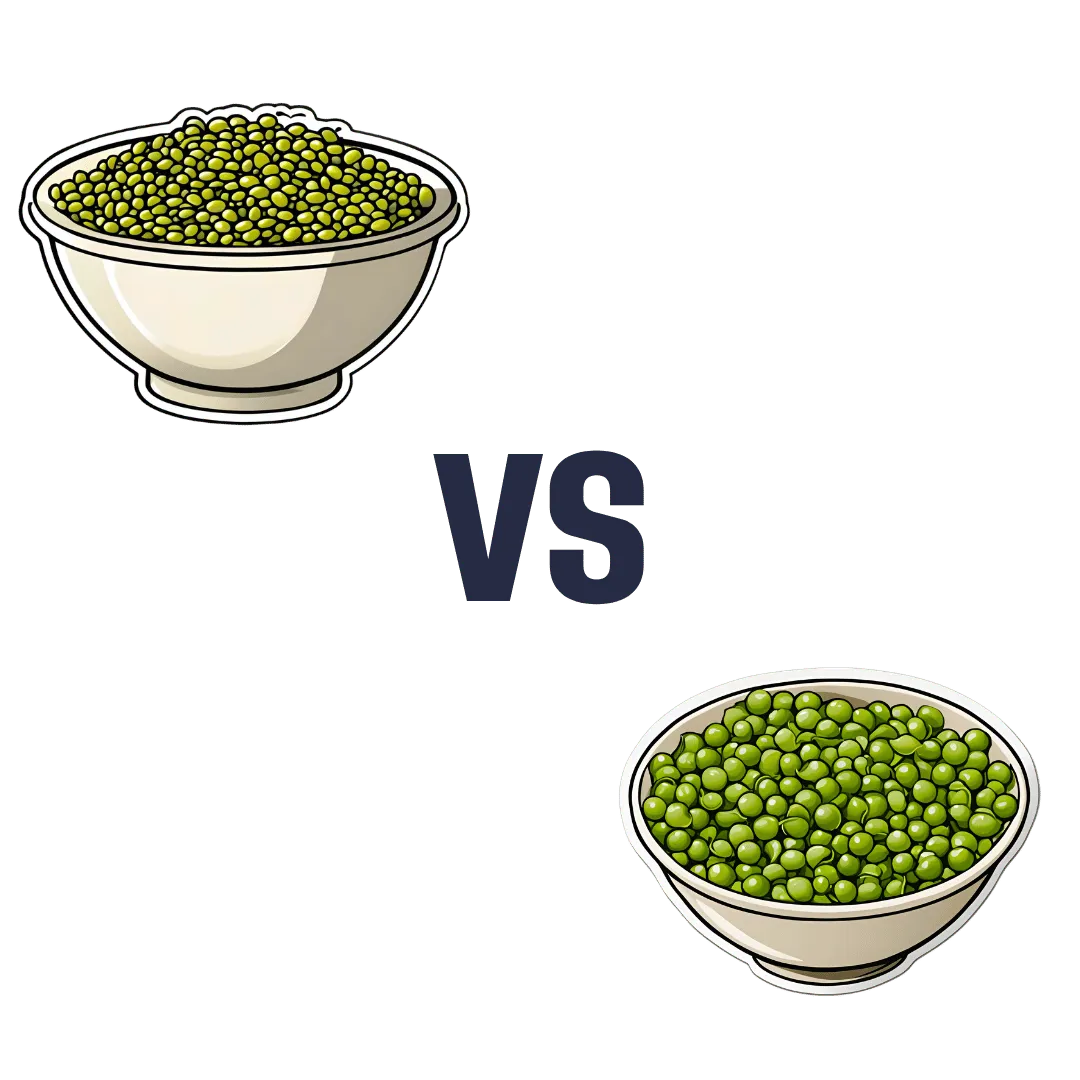
Mung Beans vs Peas – Which is Healthier?
10almonds is reader-supported. We may, at no cost to you, receive a portion of sales if you purchase a product through a link in this article.

Our Verdict
When comparing mung beans to peas, we picked the mung beans.
Why?
The peas are good, but the mung beans are better, as is often the case when we see “beans” in the name of something.
Not always the case, of course! Jelly beans aren’t the very most nutritious, for example. But as a good general rule of thumb, it works.
In terms of macros, the mung beans have more protein, carbs, and fiber, making them the clear winner in this category.
In the category of vitamins, mung beans have more of vitamins B5, B7 B9, E, while peas have more of vitamins A, B1, B2, B6, C, and K, making a marginal win for peas here.
When it comes to minerals, mung beans have more calcium, copper, iron, magnesium, manganese, phosphorus, potassium, selenium, and zinc, while peas are not higher in any mineral. An overwhelming win for mung beans in this round.
Adding up the sections makes for a clear overall win for mung beans, but by all means enjoy either or both; peas are good too!
Want to learn more?
You might like:
Plant vs Animal Protein: Head to Head ← the short version is that there are advantages and disadvantages to each, but on balance, plants pack a nutritious punch with fewer drawbacks—diversity remains key though, for a maximum spread of macro- and micronutrients.
Enjoy!
Don’t Forget…
Did you arrive here from our newsletter? Don’t forget to return to the email to continue learning!
Recommended
Learn to Age Gracefully
Join the 98k+ American women taking control of their health & aging with our 100% free (and fun!) daily emails: