
Tight Hamstrings? It’s Usually Your Hips, Not Your Hamstrings
10almonds is reader-supported. We may, at no cost to you, receive a portion of sales if you purchase a product through a link in this article.

Mobility coach Alisa Zuravskaja guides us into greater flexibility, comfort, and stability:
It’s in your hips
Often, when it feels like your hamstrings are not stretchy enough, what’s actually happening is they’re just compensating for underactive hip flexors, and have got in the habit of “we must remain at least partially tensed at all times or our human will full down”, which isn’t a helpful habit for them to have when trying to a hamstring stretch.
Notably, prolonged sitting reduces glute activation, causing your hamstrings to assist with hip extension, contributing to the above problem. Sitting can also tighten your hip flexors directly, pulling your pelvis into an anterior tilt that places your hamstrings under constant tension too.
For this reason, stretching your hamstrings won’t really help with those things. So what will?
Phase 1 – reset pelvic position and reduce muscle-guarding:
- 90° breathing exercise: lie on your back with one leg supported on a chair at 90° (or both legs if needed). Keep your lower back flat against the floor, breathe deeply through your nose, and fully exhale while allowing your lower back to sink into the floor. Repeat for 5–8 breaths.
- Kneeling hip flexor stretch: from a half-kneeling position, tuck your pelvis under, squeeze the glute of your rear leg, and maintain the contraction while breathing into the stretch, for 1–2 minutes on each side.
Phase 2 – restore hip mobility:
- 90/90 hip mobility: sit with your legs in front of you, and rotate both knees from side to side under control, while keeping your spine tall. Progress by lifting your hands off the floor once you can maintain good posture.
- Hip CARs (controlled articular rotations): standing or kneeling, slowly move one hip through its largest controlled circular range, while keeping your pelvis and lower back stable. Do 3–5 circles in each direction on each leg.
Phase 3 – strengthen through the new range:
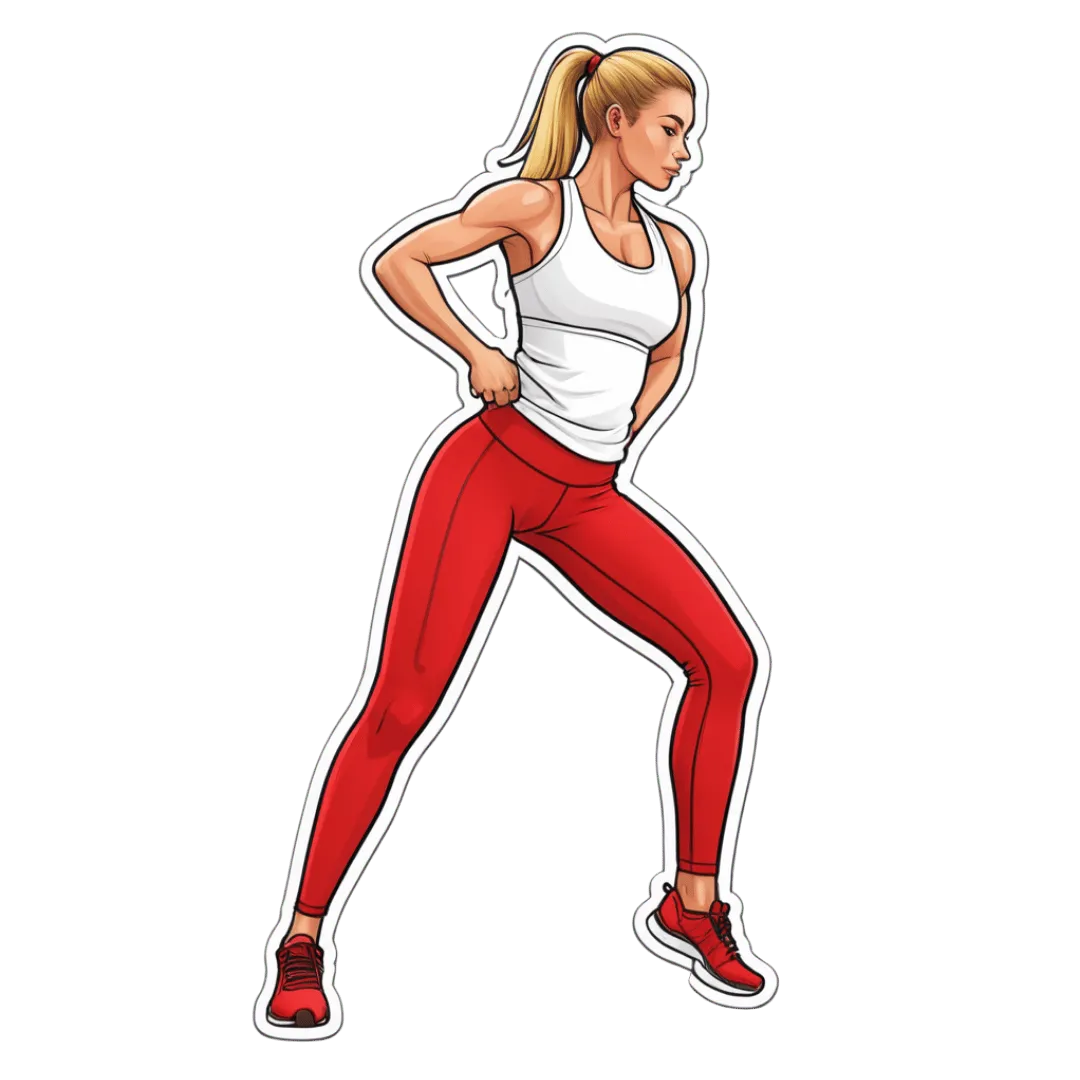
- Lateral lunge: step into a wide stance, shift your weight to one side, push your hips back, and keep your opposite leg straight. Maintain a tall spine, and keep your knee tracking over your toes to strengthen your glute medius and hip stabilizers.
- Cossack squat progression: once comfortable with lateral lunges, you can progress to deeper Cossack squats to further strengthen your adductors and glute medius through a larger range of motion.
- Single-leg Romanian deadlift: balance on one leg, hinge forwards from your hip while extending your other leg behind you, then return by driving through your hip. Use a wall or yoga block for balance if needed. Focus on letting your glutes lead the movement while your hamstrings just help minimally.
For more on all of this plus visual demonstrations, enjoy:
Click Here If The Embedded Video Doesn’t Load Automatically!
Want to learn more?
You might also like:
Tight Hamstrings? Here’s A Test To Know If It’s Actually Your Sciatic Nerve ← the other common thing it can be
Take care!
Don’t Forget…
Did you arrive here from our newsletter? Don’t forget to return to the email to continue learning!
Learn to Age Gracefully
Join the 98k+ American women taking control of their health & aging with our 100% free (and fun!) daily emails: