
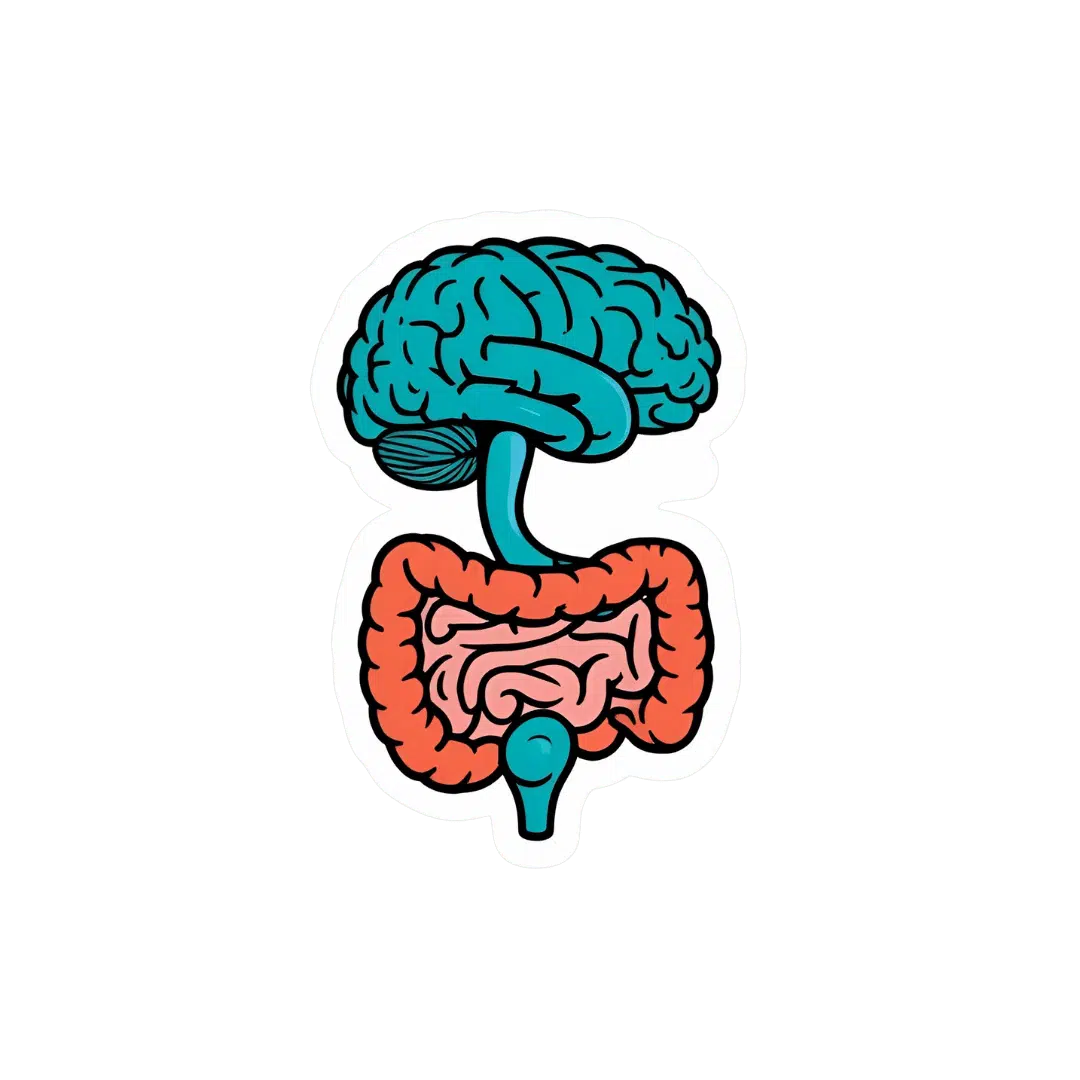
The Alzheimer’s Gut-Brain Connection—Caught On X-Ray!
10almonds is reader-supported. We may, at no cost to you, receive a portion of sales if you purchase a product through a link in this article.

We’ve written before about Alzheimer’s disease (a lot), and if you’re just joining us, then a great place to start is here:
How To Reduce Your Alzheimer’s Risk
We’ve also written about gut health (a lot), and if you’re just joining us, then a great place to start is here:
Make Friends With Your Gut! (Here’s Why & How)
And as a hat trick, yes, we’ve also written (admittedly not as much) about the gut-brain connection; here’s a primer:
The Brain-Gut Highway: A Two-Way Street
Because of how gut microbes influence brain function, behavior, and cognition, scientists wondered whether one’s microbiome might play a role in Alzheimer’s development. Recently, scientists from Italy’s Institute of Nanotechnology, working with the European Synchrotron Radiation Facility (ESRF), found some concrete answers:
How gut health affects Alzheimer’s
When the gut loses its healthy balance of bacteria, harmful bacteria (and fungi, like C. albicans, also popularly called by its first name, “Candida”) take the wheel. This problem (called “dysbiosis”) allows harmful microbes to produce toxic substances, leading to inflammation and weakening the protective barriers between the gut and brain.
In some cases, like the aforementioned C. albicans, they’ll even put roots through your gut wall (and interact with your nervous system, and they are a common reason for sugar and alcohol cravings—your CNS has literally been hacked by a fungal colony that wants sugar (including the sugar that occurs when alcohol is broken down—and that’s without considering the fact that alcohol also kills several of C. albicans competitors that rank amongst the “good bacteria”). Suffice it to say, the holes it puts in your gut wall aren’t great for the health either.
In any case, once the gut barrier is breached, it’s been hypothesized that harmful bacteria may even travel to the brain, triggering Alzheimer’s.
How the x-rays helped
To better understand gut changes in Alzheimer’s, scientists used a technique called nano- and micro- x-ray phase-contrast tomography (XPCT) at the aforementioned ESRF. That very fancy string of words refers to a commensurately powerful imaging method, which allows researchers to see detailed structures inside the gut without damaging tissue, or even adding contrast agents (like those unpleasant drinks that are sometimes required to be taken before soft-tissue x-rays).
The study examined gut samples from mice with Alzheimer’s (so yes, this does need to be repeated with humans, but in this case there’s no obvious reason why it shouldn’t be the same).
The scans revealed important changes in gut structures, including:
- The tiny finger-like villi and corresponding crypts in the gut lining
- Important cells* that help with digestion and protection
- Neurons involved in gut function
*e.g. Paneth cells, goblet cells, telocytes, and erythrocytes, all of whom would take more explanation than we have room for here, but suffice it to say they’re important to both digestion and correct mucus production (bearing in mind, mucus membranes are one of the main physical barriers to harmful bacteria—as humans, our conscious interactions with mucus are usually only the nuisance that occurs when we get a cold or something, but rest assured, mucus keeps us alive).
In short, all these findings suggest (we’d say “show”, but technically cause and effect have not been proven) gut health indeed plays a crucial role in Alzheimer’s disease pathogenesis and pathology (i.e., how the disease begins and progresses, respectively).
Why it matters
To quote Dr. Alessia Cedola,
❝This technique represents a real breakthrough for the thorough analysis of the gut, and it could be pivotal in early detection and prognosis of the disease.
By gaining a deeper understanding of these processes, we hope to identify new therapeutic targets and develop innovative treatments for this devastating disease.❞
In short: the technology can be used as a super-early diagnostic tool, and ultimately, improve prevention (by encouraging people to focus on gut health) as well as, hopefully, leading to new treatments, too.
Want to see it?
Here’s the paper itself, where there are also abundant very clear images:
Are you on top of your gut health already?
If not, do refer back to that first link we dropped about gut health, up top!
If you are already sure you’re looking after your gut and want to do something else to avoid Alzheimer’s coming to call, you might want to consider:
How To Clean Your Brain (Glymphatic Health Primer) ← your glymphatic system, something many people neglect, is the brain’s cleanup crew, and removes things like the beta-amyloid proteins that are implicated in Alzheimer’s pathogenesis. So, it’s worth knowing how to keep it in working order!
Take care!
Don’t Forget…
Did you arrive here from our newsletter? Don’t forget to return to the email to continue learning!

Learn to Age Gracefully
Join the 98k+ American women taking control of their health & aging with our 100% free (and fun!) daily emails: