
Why Do Humans Have A Third Eyelid?
10almonds is reader-supported. We may, at no cost to you, receive a portion of sales if you purchase a product through a link in this article.

Well, technically third and fourth, on account of having one of these on each side:
The shutters on the window to our soul
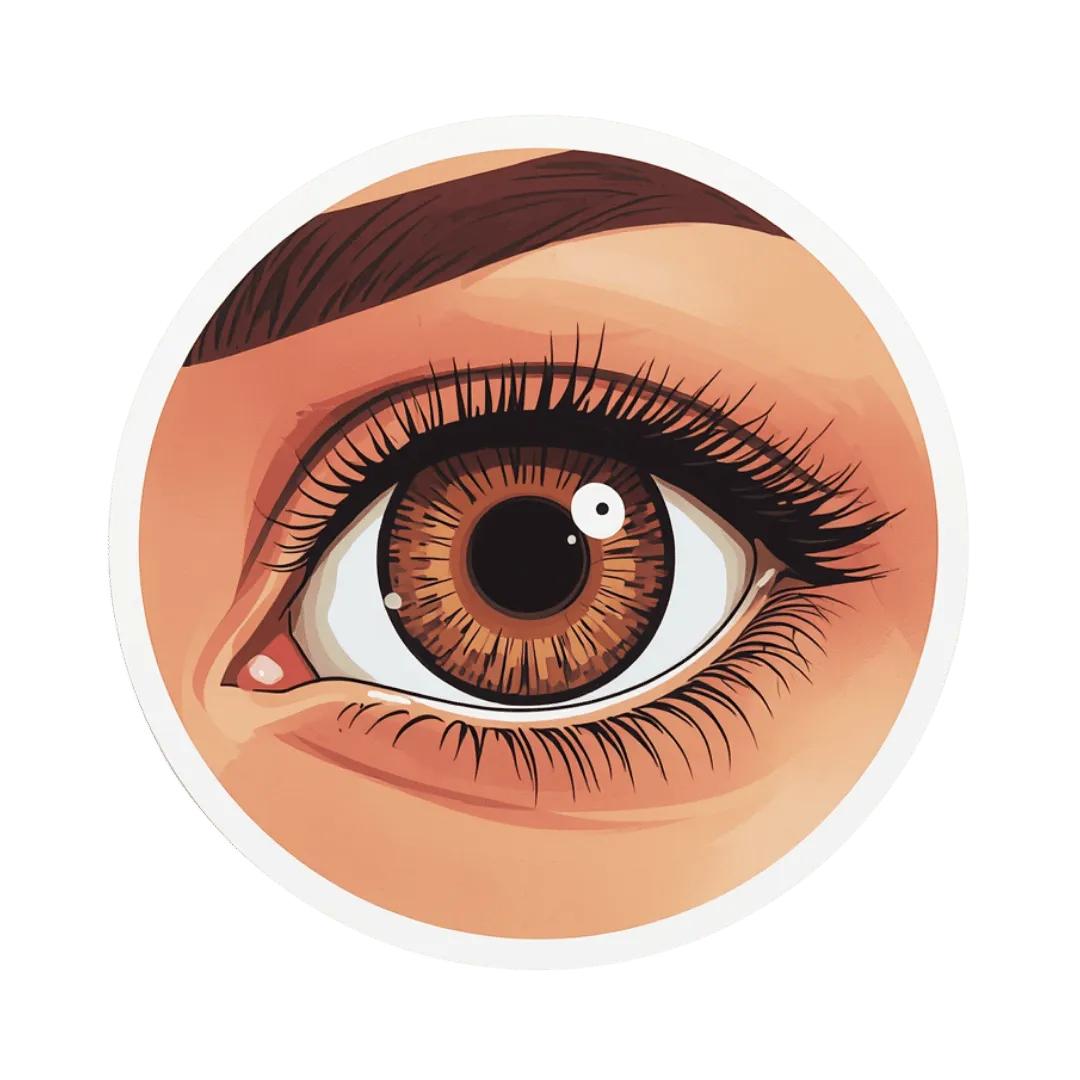
The small pink fold in the inner corner of your eye is the plica semilunaris, a remnant of a “third” eyelid. In birds and some mammals, a third eyelid acts like a windshield wiper to protect and clean the eye, but in humans this structure is vestigial and no longer performs that function.
That’s because the primary eyelids do an adequate job already, and while it may not always feel adequate when something gets stuck in your eye, evolution is really only affected by what impacts (positively or negatively) the ability to procreate and raise children who live long enough to do the same, as it turns out “having to blink a bit more and rub and poke one’s eyes occasionally” doesn’t have a statistically significant impact on us becoming parents.
Other examples of vestigial structure in humans include include:
- Tailbone: as ancient primates adapted from tree-dwelling to walking on land, long tails became less useful and eventually disappeared over millions of years. Human embryos still briefly develop tails that are later absorbed, while the remaining coccyx persists because it serves as an attachment point for muscles and ligaments.
- Palmaris longus: around 85% of people still have this vestigial wrist muscle. You can often spot its tendon by touching your pinkie to your thumb while resting your hand on a flat surface. The muscle likely helped ancestors climb and swing through trees, but became unnecessary as life shifted to the ground.
- Appendix (ish): the appendix is believed to once have helped digest plant material when our ancestors had a larger intestinal system (which at the time was needed due to us not yet having developed cooking). Although the appendix doesn’t seem to do much and can become dangerously inflamed, it has not disappeared from humans, as it doesn’t kill enough people early enough to affect birthrate or surviving to reproductive age.
- However, this one’s not completely useless to us, as it serves as a reservoir for beneficial gut bacteria, which can come in particularly handy in the case of the main part of the gut microbiome getting wiped out by diarrhea. You may be wondering “does this reservoir help when the colon has a mass extinction event due to antibiotics?” and the short answer is we don’t have the research to answer definitively, but it’s likely it helps in that case to a much smaller amount, since it was a physiological attack rather than a physical washout that the appendix gets to avoid by being a quiet backwater.
- However, this one’s not completely useless to us, as it serves as a reservoir for beneficial gut bacteria, which can come in particularly handy in the case of the main part of the gut microbiome getting wiped out by diarrhea. You may be wondering “does this reservoir help when the colon has a mass extinction event due to antibiotics?” and the short answer is we don’t have the research to answer definitively, but it’s likely it helps in that case to a much smaller amount, since it was a physiological attack rather than a physical washout that the appendix gets to avoid by being a quiet backwater.
For more on all of this, enjoy:
Click Here If The Embedded Video Doesn’t Load Automatically!
Want to learn more?
You might also like:
What Your Eyes Say About Your Health (If You Have A Mirror, You Can Do This Now!)
Take care!
Don’t Forget…
Did you arrive here from our newsletter? Don’t forget to return to the email to continue learning!

Learn to Age Gracefully
Join the 98k+ American women taking control of their health & aging with our 100% free (and fun!) daily emails: