What Happens If You Accidentally Eat Moldy Food?
10almonds is reader-supported. We may, at no cost to you, receive a portion of sales if you purchase a product through a link in this article.

Is it really so bad?
It can be!
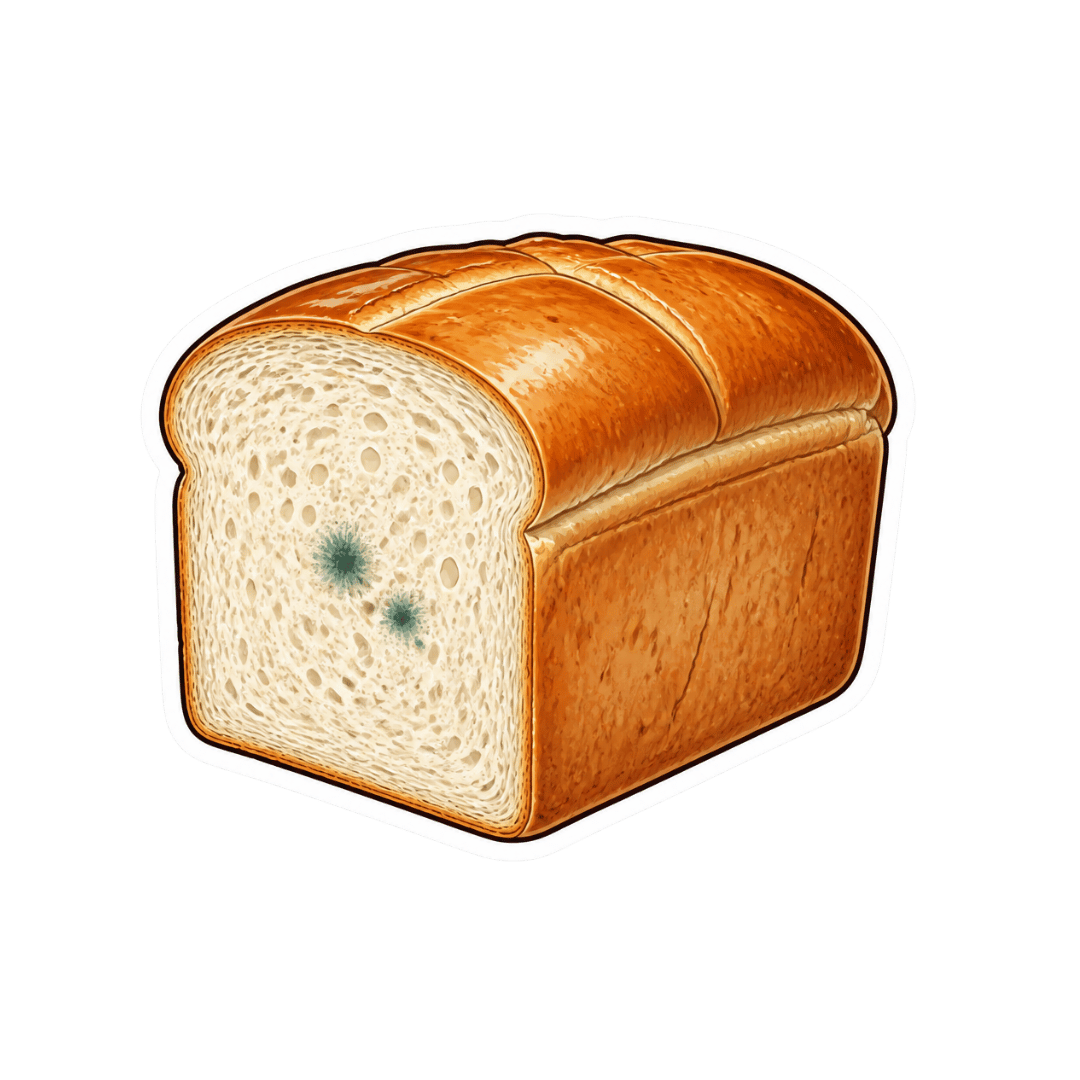
Some molds produce toxic compounds (called mycotoxins) to compete with other organisms, including carcinogenic aflatoxins produced by certain molds growing on barley, wheat, corn, and peanuts, for which many countries routinely test food supplies.
Aside from those, accidentally consuming small amounts of ordinary spoilage mold rarely causes serious illness, although allergic reactions, vomiting, and diarrhea are possible, while an evolutionary aversion to unpleasant flavors helps humans avoid potentially dangerous toxins.
And to answer the question currently posed in the video thumbnail (unless they change it later, which will make this text seem odd), no you often can’t just cut it off, because mold develops an initially invisible root-like network called mycelium that penetrates food, meaning removing visible mold doesn’t necessarily eliminate the underlying contamination.
Nor will heat/cold necessarily help: high temperatures can kill mold without necessarily destroying its spores (thus, you won’t have killed it in a way that matters), while refrigeration generally slows mold growth, but some species survive even freezing temperatures, let alone the many that thrive in damp refrigerator compartments.
For more on all of this, enjoy:
Click Here If The Embedded Video Doesn’t Load Automatically!
Want to learn more?
You might also like:
Take care!
Don’t Forget…
Did you arrive here from our newsletter? Don’t forget to return to the email to continue learning!
Recommended

Learn to Age Gracefully
Join the 98k+ American women taking control of their health & aging with our 100% free (and fun!) daily emails:
