Top 8 Habits Of The Top 1% Healthiest Over-50s
10almonds is reader-supported. We may, at no cost to you, receive a portion of sales if you purchase a product through a link in this article.
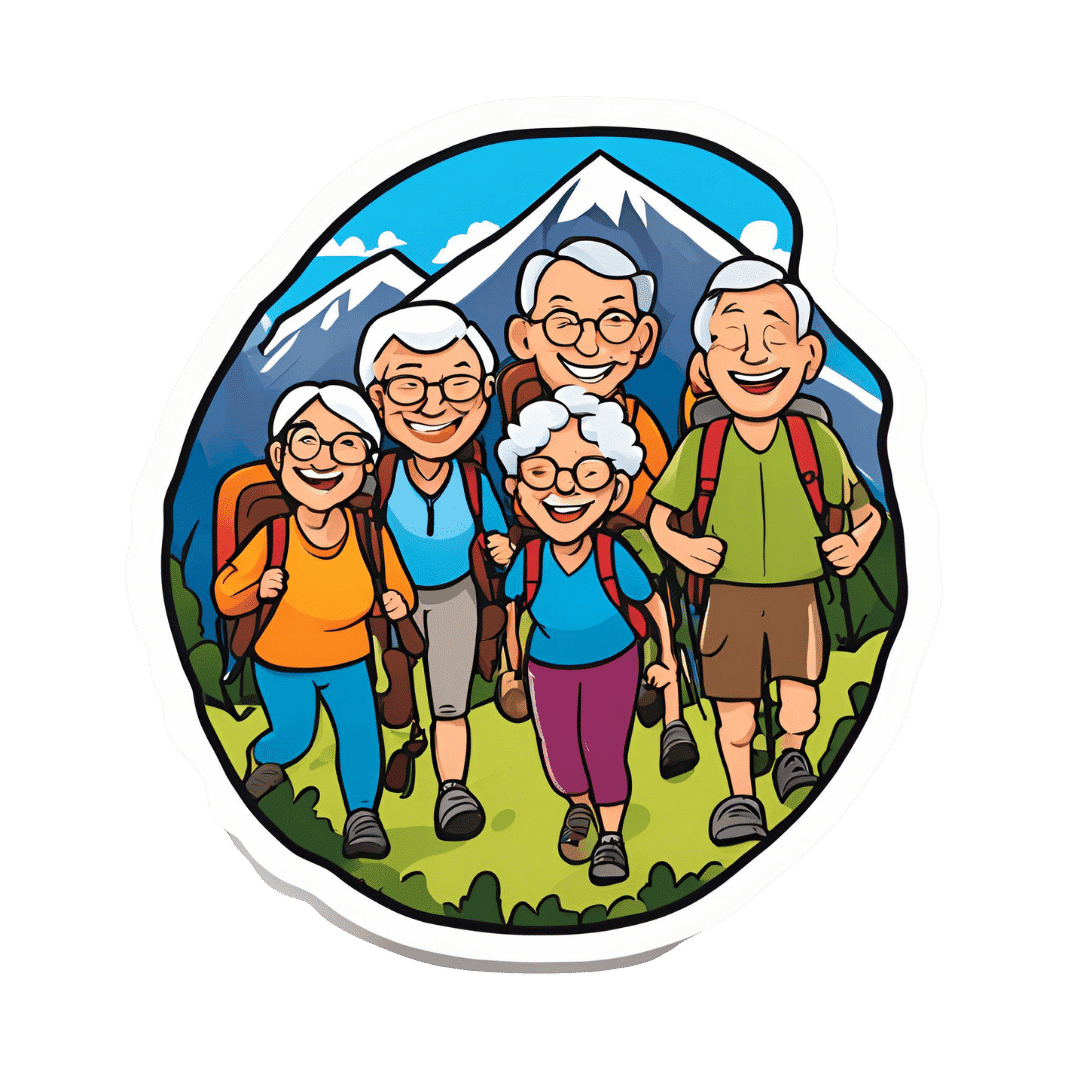
Will Harlow, over-50s specialist physio, compiled some stats from over a thousand over-50s clients:
Checklist
The findings:
- Consistency: the healthiest individuals practised some kind(s) of health habit daily. Consistency was emphasized as more important than perfection.
- Resistance training: 75% of the sample engaged in resistance training for better mobility, strength, and mental health. Not all used gyms; some used household objects like bags of books or resistance bands.
- Walking: everyone walked at least 6,000 steps per day, often briskly. Walking speed, not just step count, made a significant difference
- Purpose: most participants (bearing in mind that 80% of the total sample were retired) engaged in purposeful activities like volunteering, joining groups, or writing. Having a sense of purpose correlated with longer and healthier lives.
- Flexible dieting: participants paid attention to their eating without strictly following specific diets. Portion size discipline and consistency (eating well 90% of the time) were key.
- Mobility: they worked on joint stiffness with regular mobility and stretching routines. And, importantly, they do not accept stiffness as inevitable.
- Social engagement: they maintained at-least-weekly social contact (e.g. clubs, family meetups, outings). Social isolation, in contrast, was linked to severe health risks like dementia and early death.
- Positivity: participants maintained a positive attitude despite hardships, focussing on the things they could control. Broader scientific consensus supports the premise that a positive outlook improves health and longevity.
10almonds note: we’re curious as to how causality was established in some of these, since (for example) it could easily be that someone who is in better health will more readily walk more quickly, meaning that a higher walking speed was not necessarily such a causative factor in good health, but rather a result thereof. Of course, there may also be a degree of two-way causality, but still, we like good science and there seem to be some leaps of logic here that have otherwise gone unacknowledged.
This does not take away from the fact that those eight things are most certainly good things to be doing for one’s health, all the same.
For more on each of these, enjoy:
Click Here If The Embedded Video Doesn’t Load Automatically!
Want to learn more?
You might also like:
Take care!
Don’t Forget…
Did you arrive here from our newsletter? Don’t forget to return to the email to continue learning!
Recommended

Learn to Age Gracefully
Join the 98k+ American women taking control of their health & aging with our 100% free (and fun!) daily emails:
-
Wildfires ignite infection risks, by weakening the body’s immune defences and spreading bugs in smoke
10almonds is reader-supported. We may, at no cost to you, receive a portion of sales if you purchase a product through a link in this article.
Over the past several days, the world has watched on in shock as wildfires have devastated large parts of Los Angeles.
Beyond the obvious destruction – to landscapes, homes, businesses and more – fires at this scale have far-reaching effects on communities. A number of these concern human health.
We know fire can harm directly, causing injuries and death. Tragically, the death toll in LA is now at least 24.
But wildfires, or bushfires, can also have indirect consequences for human health. In particular, they can promote the incidence and spread of a range of infections.
Effects on the immune system
Most people appreciate that fires can cause burns and smoke inhalation, both of which can be life-threatening in their own right.
What’s perhaps less well known is that both burns and smoke inhalation can cause acute and chronic changes in the immune system. This can leave those affected vulnerable to infections at the time of the injury, and for years to come.
Burns induce profound changes in the immune system. Some parts go into overdrive, becoming too reactive and leading to hyper-inflammation. In the immediate aftermath of serious burns, this can contribute to sepsis and organ failure.
Other parts of the immune system appear to be suppressed. Our ability to recognise and fight off bugs can be compromised after sustaining burns. Research shows people who have experienced serious burns have an increased risk of influenza, pneumonia and other types of respiratory infections for at least the first five years after injury compared to people who haven’t experienced burns.
Wildfire smoke is a complex mixture containing particulate matter, volatile organic compounds, ozone, toxic gases, and microbes. When people inhale smoke during wildfires, each of these elements can play a role in increasing inflammation in the airways, which can lead to increased susceptibility to respiratory infections and asthma.
Research published after Australia’s Black Summer of 2019–20 found a higher risk of COVID infections in areas of New South Wales where bushfires had occurred weeks earlier.
We need more research to understand the magnitude of these increased risks, how long they persist after exposure, and the mechanisms. But these effects are thought to be due to sustained changes to the immune response.
Microbes travel in smoky air
Another opportunity for infection arises from the fire-induced movement of microbes from niches they usually occupy in soils and plants in natural areas, into densely populated urban areas.
Recent evidence from forest fires in Utah shows microbes, such as bacteria and fungal spores, can be transported in smoke. These microbes are associated with particles from the source, such as burned vegetation and soil.
There are thousands of different species of microbes in smoke, many of which are not common in background, non-smoky air.
Only a small number of studies on this have been published so far, but researchers have shown the majority of microbes in smoke are still alive and remain alive in smoke long enough to colonise the places where they eventually land.
How far specific microbes can be transported remains an open question, but fungi associated with smoke particles have been detected hundreds of miles downwind from wildfires, even weeks after the fire.
So does this cause human infections?
A subset of these airborne microbes are known to cause infections in humans.
Scientists are probing records of human fungal infections in relation to wildfire smoke exposure. In particular, they’re looking at soil-borne infectious agents such as the fungi Coccidioides immitis and Coccidioides posadasii which thrive in dry soils that can be picked up in dust and smoke plumes.
These fungi cause valley fever, a lung infection with symptoms that can resemble the flu, across arid western parts of the United States.
A study of wildland firefighters in California showed high rates of valley fever infections, which spurred occupational health warnings including recommended use of respirators when in endemic regions.
A California-based study of the wider population showed a 20% increase in hospital admissions for valley fever following any amount of exposure to wildfire smoke.
However, another found only limited evidence of excess cases after smoke exposure in wildfire-adjacent populations in California’s San Joaquin Valley.
These contrasting results show more research is needed to evaluate the infectious potential of wildfire smoke from this and other fungal and bacterial causes.
Staying safe
Much remains to be learned about the links between wildfires and infections, and the multiple pathways by which wildfires can increase the risk of certain infections.
There’s also a risk people gathering together after a disaster like this, such as in potentially overcrowded shelters, can increase the transmission of infections. We’ve seen this happen after previous natural disasters.
Despite the gaps in our knowledge, public health responses to wildfires should encompass infection prevention (such as through the provision of effective masks) and surveillance to enable early detection and effective management of any outbreaks.
Christine Carson, Senior Research Fellow, School of Medicine, The University of Western Australia and Leda Kobziar, Professor of Wildland Fire Science, University of Idaho
This article is republished from The Conversation under a Creative Commons license. Read the original article.
Share This Post
-
Smart Sex – by Dr. Emily Morse
10almonds is reader-supported. We may, at no cost to you, receive a portion of sales if you purchase a product through a link in this article.
First, what this isn’t: this isn’t a mere book of sex positions and party tricks, nor is it a book of Cosmo-style “drive your man wild by using hot sauce as lube” advice.
What it offers instead, is a refreshingly mature take on sex, free from the “teehee” titillations and blushes that many books of the genre go for.
Dr. Emily Morse outlines five pillars of sex:
- Embodiment
- Health
- Collaboration
- Self-knowledge
- Self-acceptance
…and talks about each of them in detail, and how we can bring them together. And, of course, how we or our partner(s) could accidentally sabotage ourselves or each other, and the conversations we can (and should!) have, to work past that.
She also, critically, and this is a big source of value in the book, looks at “pleasure thieves”: stress, trauma, and shame. The advice for overcoming these is not “don’t worry; be happy” but rather is actual practical steps one can take.
The style throughout is direct and unpatronizing. Since the advice within pertains to everyone who has and/or wants an active sex life, very little is divided by gender etc.
There is some attention given to anatomy and physiology, complete with clear diagrams. Honestly, most people could benefit from these, because most people’s knowledge of the relevant anatomy stopped with a very basic high school text book diagram that missed a lot out.
Bottom line: this book spends more time on what’s between your ears than what’s between your legs, and yet is very comprehensive in all areas. Everyone has something to gain from this one.
Share This Post
-
Stop Tinnitus, & Improve Your Hearing By 130%
10almonds is reader-supported. We may, at no cost to you, receive a portion of sales if you purchase a product through a link in this article.
Caveat: this will depend on the cause of your tinnitus, but there’s a quick diagnostic test first, and it’s for the most common kind 🙂
Step by step
To address noise in the ears (tinnitus) and improve hearing, start by identifying whether the issue is treatable. The diagnostic tests are:
- First, turn your head to the side, tilt it forward and backward, and observe changes in the noise. If the intensity changes, then the noise can be managed.
- Additionally, open and close your mouth, clenching and unclenching your teeth, and note any variations; this is about muscular tension affecting hearing.
- Finally, tilt your head downward—if the noise increases, it may mean it is a venous outflow disorder—there’s a fix for this, too.
Effective exercises focus on releasing tension and improving blood flow:
- Begin with the neck’s scalene muscles, located behind the sternocleidomastoid muscle.
- Massage these areas by moving your hands up and down and varying head positions slightly forward and backward.
- Repeat on both sides to enhance blood circulation and reduce auditory interference. Next, target the chewing muscles.
- Massage painful areas of the jaw and temporalis muscle in circular motions, working along and across the muscle fibers.
- Divide the temporalis muscle into sections and address each thoroughly to relieve tension and improve hearing.
- Mobilize the outer auditory passage by gently pulling the ear in all directions—starting with the earlobe, middle part, and upper ear.
- Focus on the cartilage above the lobe, moving it up and down to restore mobility and improve blood flow.
These exercises should fix the most common kind of tinnitus, and improve hearing—you’ll know quickly whether it works for you or not. Regular practice is required for sustained results, though.
For more on all this, plus visual demonstrations (e.g. how to find that temporalis muscle, etc), enjoy:
Click Here If The Embedded Video Doesn’t Load Automatically!
Want to learn more?
You might also like to read:
Tinnitus: Quieting The Unwanted Orchestra In Your Ears ← our main feature on this topic, with more things to try if this didn’t help!
Take care!
Share This Post
Related Posts
-
Citicoline: Better Than Dietary Choline?
10almonds is reader-supported. We may, at no cost to you, receive a portion of sales if you purchase a product through a link in this article.
Citicoline: Better Than Dietary Choline?
Citicoline, also known as cytidine diphosphate-choline (or CDP-Choline, to its friends, or cytidine 5′-diphosphocholine if it wants to get fancy) is a dietary supplement that the stomach can metabolize easily for all the brain’s choline needs. What are those needs?
Choline is an essential nutrient. We technically can synthesize it, but only in minute amounts, far less than we need. Choline is a key part of the neurotransmitter acetylcholine, as well as having other functions in other parts of the body.
As for citicoline specifically… it appears to do the job better than dietary sources of choline:
❝Intriguing data, showing that on a molar mass basis citicoline is significantly less toxic than choline, are also analyzed.
It is hypothesized that, compared to choline moiety in other dietary sources such as phosphatidylcholine, choline in citicoline is less prone to conversion to trimethylamine (TMA) and its putative atherogenic N-oxide (TMAO).
Epidemiological studies have suggested that choline supplementation may improve cognitive performance, and for this application citicoline may be safer and more efficacious.❞
Source: Citicoline: A Superior Form of Choline?
Great! What does it do?
What doesn’t it do? When it comes to cognitive function, anyway, citicoline covers a lot of bases.
Short version: it improves just about every way a brain’s healthy functions can be clinically measured. From cognitive improvements in all manner of tests (far beyond just “improves memory” etc; also focus, alertness, verbal fluency, logic, computation, and more), to purely neurological things like curing tinnitus (!), alleviating mobility disorders, and undoing alcohol-related damage.
One of the reasons it’s so wide in its applications, is that it has a knock-on effect to other systems in the brain, including the dopaminergic system.
Long version: Citicoline: pharmacological and clinical review, 2022 update
(if you don’t want to sit down for a long read, we recommend skimming to the charts and figures, which are very elucidating even alone)
Spotlight study in memory
For a quick-reading example of how it helps memory specifically:
Keeping dementia at bay
For many older people looking to improve memory, it’s less a matter of wanting to perform impressive feats of memory, and more a matter of wanting to keep a sharp memory throughout our later years.
Dr. Maria Bonvicini et al. looked into this:
❝We selected seven studies including patients with mild cognitive impairment, Alzheimer’s disease or post-stroke dementia
All the studies showed a positive effect of citicoline on cognitive functions. Six studies could be included in the meta-analysis.
Overall, citicoline improved cognitive status, with pooled standardized mean differences ranging from 0.56 (95% CI: 0.37-0.75) to 1.57 (95% CI: 0.77-2.37) in different sensitivity analyses❞
The researchers concluded “yes”, and yet, called for more studies, and of higher quality. In many such studies, the heterogeneity of the subjects (often, residents of nursing homes) can be as much a problem (unclear whether the results will be applicable to other people in different situations) as it is a strength (fewer confounding variables).
Another team looked at 47 pre-existing reviews, and concluded:
❝The review found that citicoline has been proven to be a useful compound in preventing dementia progression.
Citicoline has a wide range of effects and could be an essential substance in the treatment of many neurological diseases.
Its positive impact on learning and cognitive functions among the healthy population is also worth noting.❞
Source: Application of Citicoline in Neurological Disorders: A Systematic Review
The dopamine bonus
Remember how we said that citicoline has a knock-on effect on other systems, including the dopaminergic system? This means that it’s been studied (and found meritorious) for alleviating symptoms of Parkinson’s disease:
❝Patients with Parkinson’s disease who were taking citicoline had significant improvement in rigidity, akinesia, tremor, handwriting, and speech.
Citicoline allowed effective reduction of levodopa by up to 50%.
Significant improvement in cognitive status evaluation was also noted with citicoline adjunctive therapy.❞
Source: Citicoline as Adjuvant Therapy in Parkinson’s Disease: A Systematic Review
Where to get it?
We don’t sell it, but here’s an example product on Amazon, for your convenience
Enjoy!
Don’t Forget…
Did you arrive here from our newsletter? Don’t forget to return to the email to continue learning!
Learn to Age Gracefully
Join the 98k+ American women taking control of their health & aging with our 100% free (and fun!) daily emails:
-
Breathing For Pain Relief & Core Strength (How To Reconnect Your Breath & Body)
10almonds is reader-supported. We may, at no cost to you, receive a portion of sales if you purchase a product through a link in this article.
Dr. Amy Konvalin explains how to do it and why it works:
Take a deep breath…
A lot of people people overuse neck and shoulder “accessory” muscles due to stress, posture, and habits like mouth breathing, which leads to tension and increasingly shallow breathing. In contrast, using your diaphragm improves movement, reduces pain, supports your core, and helps calm your nervous system via the vagus nerve.
So, let’s do this in stages:
- First, diaphragmatic breathing: lie on your back to start, as this reduces strain and prevents dizziness while learning the pattern. Breathe in through your nose and let your belly rise, then breathe out through your mouth slowly but purposefully, like blowing out a candle. Let your belly expand on the inhale and fall on the exhale, using your hands for feedback if you need to.
- Next, abdominal control: allow your abdominals to relax and lengthen on the inhale, then gently contract them on the exhale to push air out. Your strongest abdominal engagement should happen at the end of the exhale when your belly is flat. Don’t flatten or move your lower back yet, and don’t lift your glutes yet either; keep your spine in a neutral position throughout.
- Next, integrating with movement: once breathing and abdominal control improve, add leg movement (for example a bridge) to train breathing during activity. Exhale, contract your abdominals, then lift your hips using your glutes, keeping control of your breathing. Breathe in as you lower yourself back down, and continue controlled breathing while moving, but do prioritize breathing quality over movement.
- Finally, back-body breathing: the diaphragm also expands your back ribs, so full breathing includes movement in both the front (belly) and back (rib cage). You can use a hands-and-knees position with a neutral spine, to better feel your back ribs expand. Start the inhale with belly expansion, then take a little more air to expand your back ribs, before exhaling with abdominal contraction. Dr. Konvalin notes that the rib motion is subtle, and so urges us to focus on the sensation rather than expecting large visible movement.
The idea of all of this is to retrain your body so diaphragmatic breathing happens all day, reducing tension and improving overall function.
For more on all of this, enjoy:
Click Here If The Embedded Video Doesn’t Load Automatically!
Want to learn more?
You might like this book we reviewed a little while back:
The Oxygen Advantage – by Patrick McKeown
Take care!
Don’t Forget…
Did you arrive here from our newsletter? Don’t forget to return to the email to continue learning!
Learn to Age Gracefully
Join the 98k+ American women taking control of their health & aging with our 100% free (and fun!) daily emails:
-
What’s Better Than Walking, After 60
10almonds is reader-supported. We may, at no cost to you, receive a portion of sales if you purchase a product through a link in this article.
And before, really:
Step it up
Walking is great—it helps your heart health and maintains fitness as well as boosting your mood. So please do keep walking, if you are able!
However, it doesn’t build meaningful strength, improve reactive balance, or provide enough load to strengthen your bones.
But, who needs those things?
- Why strength matters: low-load activity like walking doesn’t stimulate muscle (re)growth or bone adaptation, which become increasingly important in later life.
- Why balance matters: walking is (usually!) predictable, but real-life falls happen during unexpected movements, so you need to train coordination and reaction.
- Why bone loading matters: bones require impact or resistance to maintain density, and walking alone doesn’t provide a strong enough signal to encourage this.
So, with that in mind, here are three exercises to address these things:
- Squat and press: hold weights at your chest, sit back into a squat, then drive up and press overhead to build full-body strength while stabilizing your core and improving functional movement.
- Obstacle step: step in a controlled pattern over crossed towels on the floor, changing direction and lead foot, to improve your balance, coordination, and agility.
- Heel drops: rise onto your toes, then drop your heels down with control to create safe impact that stimulates bone growth, especially at your hips.
He recommends to combine strength work (2–3 days), balance practice (2–3 days), and bone-loading impact (5–7 days) alongside your regular walking routine—because yes, walking is still good too and brings its own benefits!
For more on all of this plus visual demonstrations, enjoy:
Click Here If The Embedded Video Doesn’t Load Automatically!
Want to learn more?
You might also like:
Walking: Have We Had It Backwards?
Take care!
Don’t Forget…
Did you arrive here from our newsletter? Don’t forget to return to the email to continue learning!
Learn to Age Gracefully
Join the 98k+ American women taking control of their health & aging with our 100% free (and fun!) daily emails:


