
The Secret Easy Tips to Loosen Your Hips In 10 Minutes

10almonds is reader-supported. We may, at no cost to you, receive a portion of sales if you purchase a product through a link in this article.

Stiff hips can often cause discomfort, and ultimately back pain because of how one thing relies on the other as its seat. However, there are ways to improve it without taking years to get to where you want to be:

One bit at a time

Warm up and massage:

  • Massage the front and back of the thighs to loosen tight muscles.
  • Use your body weight for effective massaging.
  • Relax and breathe slowly while massaging.

Vary your stretches:

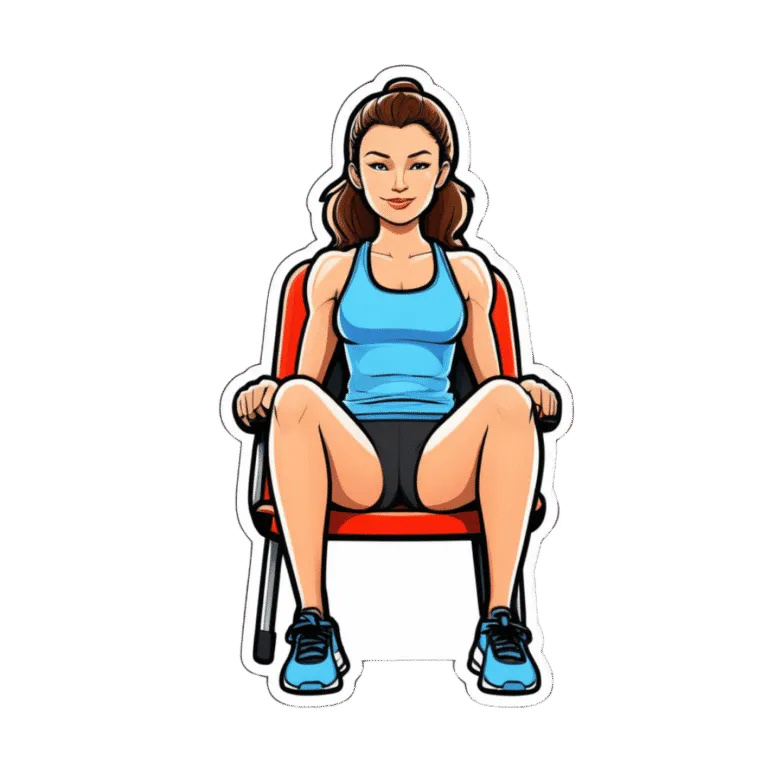
  • Perform a seated butterfly stretch, but avoid overexertion.
  • Move knees gently within a comfortable range of motion.
  • Perform stretches like placing one foot on the opposite knee or holding legs to open hips.
  • Stretch the hips while lying on the floor with bent knees.

And now for the “magic move”: lie on your stomach, bend one knee, and gently rock to loosen hip stiffness.

Generally speaking, for most stretches one can usually stretch further on one side at once, than both at the same time. So, leverage this in your flexibility training, to get each side of your body accustomed to going that bit further. Then, when your body is comfortable with that, put it together.

For more on all of this plus visual demonstrations, enjoy:

Click Here If The Embedded Video Doesn’t Load Automatically!

Want to learn more?

You might also like:

How Tight Are Your Hips? Test (And Fix!) With This

Take care!

Don’t Forget…

Did you arrive here from our newsletter? Don’t forget to return to the email to continue learning!
Learn to Age Gracefully

Join the 98k+ American women taking control of their health & aging with our 100% free (and fun!) daily emails:

  • Low-Dose Aspirin & Anemia

    10almonds is reader-supported. We may, at no cost to you, receive a portion of sales if you purchase a product through a link in this article.

    We recently wrote about…

    How To Survive A Heart Attack When You’re Alone

    …and one of the items was “if you have aspirin readily available, then after calling an ambulance is the time to take it—but don’t exert yourself trying to find some”.

    But what of aspirin as a preventative?

    Many people take low-dose aspirin daily as a way to reduce the risk of atherothrombosis specifically (and thus, indirectly, they hope to reduce the risk of heart attacks).

    The science of how helpful this is both clear and complicated—that is to say, the stats are not ambiguous*, but there are complicating factors of which many people are unaware.

    *it will reduce the overall risk of cardiovascular events, but will not affect CVD mortality; in other words, it may improve your recovery from minor cardiac events, but is not likely to save you from major ones.

    And also, it has unwanted side effects that can constitute a more relevant threat for many people. We’ll share more on that at the end of today’s article, but first…

    A newly identified threat from daily aspirin use

    A large (n=313,508) study of older adults (median age 73) were sorted into those who used low-dose aspirin as a preventative, and those who did not.

    The primary outcome was incidence of anemia sufficient to require treatment, and the secondary outcome was major bleeding. And, at least 1 in 5 of those who experienced anemia also experienced bleeding.

    The bleeding issue was not “newly identified” and will not surprise many people; after all, the very reason that aspirin is taken as a CVD preventative is for its anti-clotting property of allowing blood to flow more freely.

    The anemia, however, has been getting increasing scientific scrutiny lately, after long going unnoticed in the wild. Given that anemia also gives the symptom “dizziness”, this is also a significant threat for increasing the incidence of falls in the older population, too, which can of course lead to serious complications and ultimately death.

    Here’s the paper itself:

    Low-Dose Aspirin and Risk of Anaemia in Older Adults: Insights from a Danish Register-based Cohort Study

    Want to know more?

    As promised, here’s what we wrote previously about some of aspirin’s other risks:

    Aspirin, CVD Risk, & Potential Counter-Risks

    Take care!

    Share This Post

  • How To Build a Body That Lasts – by Adam Richardson

    10almonds is reader-supported. We may, at no cost to you, receive a portion of sales if you purchase a product through a link in this article.

    This book is written on a premise, and that premise is: “your age doesn’t define your mobility; your mobility defines your age”.

    To this end, we are treated to 328 pages of why and how to improve our mobility (mostly how; just enough on the “why” to keep the motivation flowing).

    Importantly, Richardson doesn’t expect that every reader is a regular gym-bunny or about to become one, doesn’t expect you to have several times your bodyweight in iron to life at home, and doesn’t expect that you’ll be doing the vertical splits against a wall any time soon.

    Rather, he expects that we’d like to not dislocate a shoulder while putting the groceries away, would like to not slip a disk while being greeted by the neighbor’s dog, and would like to not need a 7-step plan for putting our socks on.

    What follows is a guide to “on the good end of normal” mobility that is sustainable for life. The idea is that you might not be winning Olympic gymnastics gold medals in your 90s, but you will be able to get in and out of a car door as comfortably as you did when you were 20, for example.

    Bottom line: if you want to be a superathlete, then you might need something more than this book; if you want to be on the healthy end of average when it comes to mobility, and maintain that for the rest of your life, then this is the book for you.

    Click here to check out How To Build A Body That Lasts, and build a body that lasts!

    Share This Post

  • Beginner Stretches: 6 Easy Alternatives That Actually Work

    10almonds is reader-supported. We may, at no cost to you, receive a portion of sales if you purchase a product through a link in this article.

    Sometimes, it can seem that all the stretches that “everyone” does are actually kinda hard to get into.

    Here’s a better way to get where you want to be:

    Easing into it

    Six ways to stretch the same muscles as popular stretches, much more easily and just as effectively:

    1. Forward fold: avoid rounding your back and bouncing to touch the floor; instead, lie on your back, use a strap or towel, pull your leg towards you, holding for 30 seconds
    2. Hip flexor couch stretch: skip the advanced couch stretch that can strain your knee, and instead do a kneeling or standing hip flexor stretch, focusing on tucking your pelvis in for an equally effective but safer stretch
    3. Overhead shoulder stretch: avoid the classic ineffective version; instead, put your arms on a chair and lean forwards or use the child’s pose to stretch both shoulders, thoracic spine, hamstrings, and glutes at once
    4. Standing quad stretch: instead of standing versions where hips shift and pelvis misaligns, lie on your stomach with a strap around your foot to keep your hips and pelvis aligned, and safely stretch your quads from there
    5. Pigeon stretch: skip the advanced hip opener that may cause hip pain; instead, do a lying figure-4 stretch to target your hips and glutes with less intensity, pressing your elbow to your knee for a deeper stretch if you like
    6. Butterfly stretch: avoid bouncing your knees up and down which doesn’t stretch adductors effectively; instead try the frog stretch (hips relax under gravity) or a lying butterfly stretch (feet together, knees drop with gravity, cushions optional) for safer and deeper hip flexibility

    For more on each of these plus visual demonstrations, enjoy:

    Click Here If The Embedded Video Doesn’t Load Automatically!

    Want to learn more?

    You might also like:

    How To Do A Forward Fold For The First Time

    Take care!

    Share This Post

  • Age Proof – by Dr. Rose Anne Kenny

    10almonds is reader-supported. We may, at no cost to you, receive a portion of sales if you purchase a product through a link in this article.

    We don’t generally include an author bio, but in this case it’s worth noting that Dr. Kenny, the Chair of Medical Gerontology at Trinity College Dublin, with over 300 staff under her, has 704 peer-reviewed publications to her name, and enough awards and honors and achievements to more than fill a page on her university’s website.

    In short, she knows her stuff.

    A lot of the material in this book will not be completely new to regular 10almonds readers; there’s a lot about Blue Zones supercentenarians, the usual qualities associated with healthy longevity in those places (diet, lifestyle, etc), as well as genetic factors and epigenetic, and so forth.

    Some items are… Not new, but not so commonly focused on in such works; for example, Dr. Kenny devotes a chapter to sleep, a chapter to laughter, a chapter to hormesis, and a chapter to sexual activity, amongst others.

    Another thing she delivers that a lot of books of this kind don’t is that she has a collection of “Test Yourself” appendices, so that you can establish where you are relative to various benchmarks of aging.

    Dr. Kenny also references her own work especially with TILDA (The Irish Longitudinal Study on Aging) that she has directed for many years, which has a vast amount of data and many important findings, which adds another extra strength to this book often not found in others.

    The style is surprisingly personal, making it an enjoyable read as well as an educational one, and yet with a lot of hard science throughout—explained well for the layperson though, and thoroughly referenced with an extensive bibliography.

    Bottom line: if you’d like to be (and continue to be!) “young for your years”, then this is an excellent book to get (and/or keep) you on the right track.

    Click here to check out Age Proof, and be age-proof!

    Don’t Forget…

    Did you arrive here from our newsletter? Don’t forget to return to the email to continue learning!

    Learn to Age Gracefully

    Join the 98k+ American women taking control of their health & aging with our 100% free (and fun!) daily emails:

  • Breast Cancer and Birth Control: A Huge New Study Shows How Science Can Be Distorted

    10almonds is reader-supported. We may, at no cost to you, receive a portion of sales if you purchase a product through a link in this article.

    As misinformation about women’s health spreads faster than ever, doctors say new research on the risks of hormonal birth control underscores the challenge of communicating nuance in the social media age.

    The massive study, which was conducted in Sweden and tracked more than 2 million teenage girls and women under age 50 for more than a decade, found that hormonal contraception remains safe overall, but also found small differences in breast cancer risk based on the hormones used in the formulation. In addition, the researchers observed a small, short-term rise in breast cancer diagnoses among current or recent users. Those findings are consistent with prior large studies, including a 2017 Danish registry analysis and a 2023 meta-analysis.

    It was published online Oct. 30 in JAMA Oncology.

    Doctors say these study results won’t change how they advise patients and that women should not stop using their birth control.

    Still, TikTok is flooded with factually incomplete warnings that contraceptives cause cancer and are as dangerous as smoking. Reproductive health advocates warn that studies like this can easily be taken out of context online and be reduced to a single alarming number.

    Case in point: The study reported that women who had used hormonal birth control had about a 24% higher rate of breast cancer than women who hadn’t. But because breast cancer is still uncommon in younger women, that works out to an increase from roughly 54 to 67 breast cancer cases per 100,000 women per year — about 13 extra cases per 100,000 women, or about one extra case per 7,800 users of hormonal contraceptives per year.

    Co-authors Åsa Johansson and Fatemeh Hadizadeh, epidemiologists at Uppsala University, said the rise is modest and short-term, with risk highest during current use and fading within five to 10 years after stopping.

    Rachel Fey — interim co-CEO of Power to Decide, a group whose mission is to provide accurate information on sexual health and contraceptive methods — said that kind of nuance is exactly what tends to disappear on social media. “I get really angry at this because it’s designed to scare people like me away from birth control, which has made my life so much better in so many ways,” she said. “It’s really frustrating … especially when it’s given without context. And then in this era of social media, it can just take off without anybody who knows what they’re talking about providing that context.”

    The researchers also found the risk was slightly higher with certain progestins such as desogestrel — found in combined oral contraceptives like Cyred EQ, Reclipsen, Azurette, and Pimtrea — but did not increase with others, such as medroxyprogesterone acetate injections, sold under the brand name Depo‑Provera.

    A photo from the shoulders down of a woman holding her a birth control pill pack in her left hand and a mobile phone in her right.
    (Moment/Getty Images)

    How To Interpret the Findings

    Some experts say the results should be viewed with care because the study counted both invasive breast cancers and early, noninvasive lesions known as in situ tumors, growths that may never become life-threatening. Including these precancerous cases could make the overall risk of clinically significant disease appear higher than it is.

    “A substantial proportion of the ‘cases’ would never have progressed to invasive breast cancer,” said Lina S. Mørch, a senior researcher and team leader at the Danish Cancer Institute. Mørch was not associated with the Swedish study. She added that experts should wait for more data separating early-stage and advanced cancers before making new rules or warnings about specific hormones.

    The Doctor-Patient Conversation

    Even as scientists debate how to interpret the finer points of the data, physicians emphasize that for most patients, the study reinforces what they already discuss in the exam room: that hormonal birth control is broadly safe, and decisions should be tailored to each woman’s needs and values.

    Katharine White, chief of Obstetrics and Gynecology at Boston Medical Center, said this study won’t change how she talks to her patients.

    “When counseling patients about their contraceptive options, I focus on their past experiences with birth control, their medical history, and what’s important to them about their birth control method and pregnancy planning (if applicable),” White wrote in an email. “Side effects and risks of methods are already a key part of my counseling about both hormonal and non-hormonal methods.”

    Other doctors noted there are other contraceptive options.

    Eleanor Bimla Schwarz, chief of General Internal Medicine at Zuckerberg San Francisco General Hospital, said, “For those who prefer hormone-free contraception, the copper IUD offers safe, convenient, highly effective contraception for over a decade after placement, and is rapidly reversible when pregnancy is desired,” referring to a type of long-acting intrauterine device.

    Mary Rosser, director of Integrated Women’s Health at Columbia University Irving Medical Center, said this was a large, high-quality study that looked at many types of hormones over many years. But she added that doctors shouldn’t change their advice yet.

    Johansson and Hadizadeh stressed that the results should guide shared decision-making, not cause alarm. “It may be reasonable to consider formulations associated with lower observed risk in our data,” they said. They noted that products containing medroxyprogesterone acetate, drospirenone, or levonorgestrel were linked to lower risk, while long-term use of desogestrel-only contraceptives might be best avoided when other options fit.

    Keeping the Risk in Perspective

    Hormonal birth control provides many health benefits beyond pregnancy prevention. It can lighten heavy periods, ease pain from endometriosis, and lower the risk of ovarian and uterine cancers for years after stopping. Mørch noted that even small risks are worth discussing but said decisions should be guided by women’s “values and preferences.”

    White said it’s important to see the big picture. “The risk of an unintended pregnancy is 85% for people who do not use contraception—so any risks of birth control need to be weighed against the risk of an unexpected pregnancy,” she wrote.

    KFF Health News is a national newsroom that produces in-depth journalism about health issues and is one of the core operating programs at KFF—an independent source of health policy research, polling, and journalism. Learn more about KFF.

    This article first appeared on KFF Health News and is republished here under a Creative Commons Attribution-NonCommercial-NoDerivatives 4.0 International License.

    Don’t Forget…

    Did you arrive here from our newsletter? Don’t forget to return to the email to continue learning!

    Learn to Age Gracefully

    Join the 98k+ American women taking control of their health & aging with our 100% free (and fun!) daily emails:

  • How Processed Is The Food You Buy, Really?

    10almonds is reader-supported. We may, at no cost to you, receive a portion of sales if you purchase a product through a link in this article.

    Ultraprocessed foods are a) ubiquitous in industrialized nations b) generally not fabulous for the health. See for example:

    Abstaining from ultraprocessed food can also be difficult psychologically, because they are generally engineered specifically to trigger certain physiological responses, often with their combination of sweet and/or salty flavors with simple carbohydrates that will zip straight into one’s veins and feel immediately rewarding, even if there is a health price to pay later.

    And worse, being habituated to ultraprocessed food can make unprocessed or minimally-processed food seem less appealing:

    What causes food cravings? And what can we do about them?

    Fortunately, we can reverse this, and once we get habituated to unprocessed or minimally-processed food, the ultraprocessed will start to seem like not-food to us. You will wonder: how did I ever eat that crap?

    Now, one other thing to bear in mind:

    There is a scale of “badness”

    You might recall this article:

    Not all ultra-processed foods are bad for your health, whatever you might have heard

    For example, Reese’s confectionary and Huel nutrition powder are both ultra-processed, but one is definitely better than the other.

    See also: Are plant-based burgers really bad for your heart? Here’s what’s behind the scary headlines

    Some comparisons are obvious; others, not so much. So, how to tell the difference?

    The “True Food” Scale

    A large study analyzed ingredient lists, nutrition facts, and prices of over 50,000 food items from Target, Whole Foods, and Walmart. Using a rigorous statistical method, they assigned processing scores and compiled data into a giant database, with results published publicly.

    You can find the study here:

    Prevalence of processed foods in major US grocery stores

    That in and of itself doesn’t tell a lot that’s useful to the consumer, because the paper itself does not have all of the data from all 50,000 food items, just the aggregate results, trends, implications for public health, and suggestions for public health policy.

    However, what does tell a lot, is the public face of the database itself, which you can browse for free, and look up your regular shopping items, if you are wondering “are these textured soy pieces basically a step away from soy beans, or a frankenfood that will murder me in my sleep?”

    How it works: it examines each food, its listed ingredients, and what is known about the processedness of such ingredients. It also draws a distinction between ingredients and additives, rendering the entire process of the production of the food into an “ingredient tree”, showing what was added to what along the way. Minimally-processed foods will have barely an ingredient sapling, while ultraprocessed foods will have an ingredient tree whose branches can barely be counted, they are so numerous. It’s not just about the number of ingredients though; it’s about the processes that each underwent.

    How it represents this data: you can look at the food in the database, and it’ll tell you the ingredients and nutritional facts (which you probably knew already; it’s written on the packaging), and then show you how processed it is, and then ranking that against all other foods in the database of the same kind.

    So for example, if you are looking at a pizza (have you ever noticed how some are marketed with bright flashy colors, and others in natural tones to suggest minimal processing? This is marketing, not reliable information! Sometimes the product that looks healthier, isn’t!), then it’ll give it a score reflecting how it ranks compared to all other pizze in the database. This number is out of a hundred, and it reflects the percentile into which it falls.

    So for example, if the score your pizza gets is 47, then that means that if you looked at it next to 99 others, on average your pizza would would rank better than 46 of them and worse than 53 of them.

    In other words, the lower the score, the less processed it is on the whole.

    Here’s a side-by-side example of two cakes, one of which got a score of 3, and the other got a score of 61:

    Mini No Sugar Added Cheesecake vs EDWARDS Desserts Original Whipped Cheesecake

    And here is the main menu of the database, in which you can use the search function to look up the food you want to check, or else browse by category:

    The TrueFood Database: Search or Browse (it’s free!)

    Enjoy!

    Want to know more?

    You might like this book that we reviewed a little while back:

    Ultra-Processed People: The Science Behind Food That Isn’t Food – by Dr. Chris van Tulleken

    Enjoy!

    Don’t Forget…

    Did you arrive here from our newsletter? Don’t forget to return to the email to continue learning!

    Learn to Age Gracefully

    Join the 98k+ American women taking control of their health & aging with our 100% free (and fun!) daily emails: