
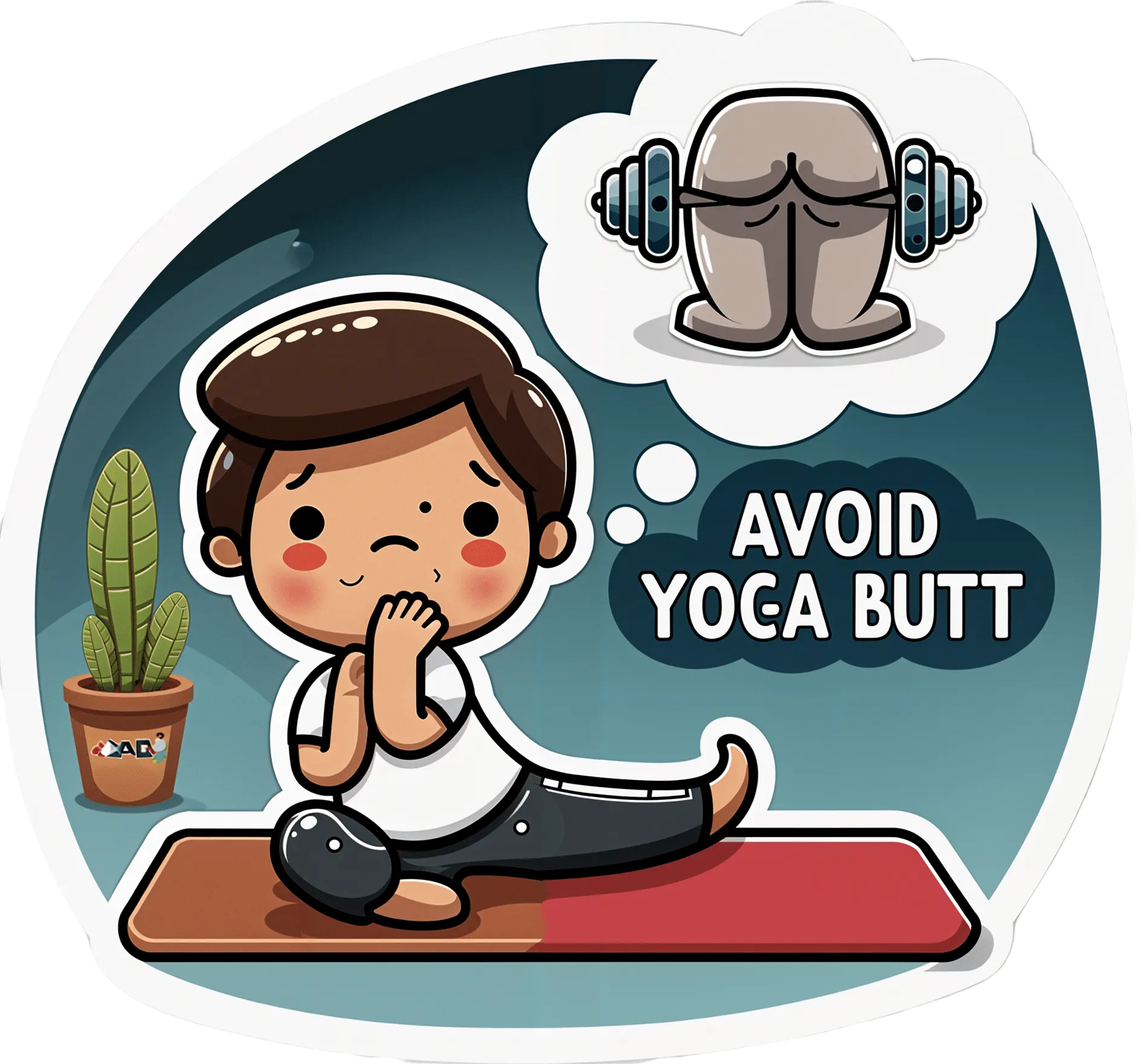
The Hidden Risk of Stretching: Avoiding Hamstring Injuries in Yoga
10almonds is reader-supported. We may, at no cost to you, receive a portion of sales if you purchase a product through a link in this article.
What is Yoga Butt
Have you ever experienced a mysterious pain while stretching, or perhaps during yoga? You might be dealing with “yoga butt,” a common—although rarely discussed—injury. In the below video, the Lovely Liv from Livinleggings shares her journey of discovering, and overcoming, “yoga butt”.
Dealing With Yoga Butt
Yoga butt, or proximal hamstring tendinopathy, occurs when the hamstrings are overstretched without adequate strengthening. Many yoga poses help stretch the hamstrings, but often don’t focus on strengthening said hamstrings; this imbalance is what can lead to damage over time.
To help prevent Yoga butt, it’s essential to balance stretching with strengthening. You can look into incorporating hamstring-strengthening exercises like Romanian deadlifts, hamstring curls, and modified yoga poses into your routine.
(If you’re new to strengthening exercises, we recommend reading Women’s Strength Training Anatomy Workouts or Strength Training for Seniors).
Watch the full video to learn more and hopefully protect yourself from long-term injuries:
Let us know your thoughts, and whether you have any other topics you’d like us to cover.
Don’t Forget…
Did you arrive here from our newsletter? Don’t forget to return to the email to continue learning!
Recommended

Learn to Age Gracefully
Join the 98k+ American women taking control of their health & aging with our 100% free (and fun!) daily emails:
-
What Happens Every Day When You Quit Sugar For 30 Days
10almonds is reader-supported. We may, at no cost to you, receive a portion of sales if you purchase a product through a link in this article.
We all know that sugar isn’t exactly a health food, but it can be hard to quit. How long can cravings be expected to last, and when can we expect to see benefits? Today’s video covers the timeline in a realistic yet inspiring fashion:
What to expect on…
Day 1: expect cravings and withdrawal symptoms including headaches, fatigue, mood swings, and irritability—as well as tiredness, without the crutch of sugar.
Days 2 & 3: more of the same, plus likely objections from the gut, since your Candida albicans content will not be enjoying being starved of its main food source.
Days 4–7: reduction of the above symptoms, better energy levels, improved sleep, and likely the gut will be adapting or have adapted.
Days 8–14: beginning of weight loss, clearer skin, improved complexion; taste buds adapt too, making foods taste sweeter. Continued improvement in energy and focus, as well.
Days 15–21: more of the same improvements, plus the immune system will start getting stronger around now. But watch out, because there may still be some cravings from time to time.
Days 22–30: all of the above positive things, few or no cravings now, and enhanced metabolic health as a whole.
For more specificity on each of these stages, enjoy:
Click Here If The Embedded Video Doesn’t Load Automatically!
Want to learn more?
You might also like to read:
The Not-So-Sweet Science Of Sugar Addiction
Take care!
Share This Post
-
Should I test for flu at home if I have the sniffles?
10almonds is reader-supported. We may, at no cost to you, receive a portion of sales if you purchase a product through a link in this article.
You are “coming down with something”. Maybe you have a scratchy throat and body aches. You have an old, combination flu/COVID rapid antigen test in the cupboard.
Should you use it to see if you have the flu? Will it detect the “super-K” flu you’ve heard about? Or is it worth seeing a doctor for a test instead?
Here’s what to know about testing for flu at home.
Polina Tankilevitch/Pexels Remind me, how do we test for flu?
There are two main ways to test for flu.
The reverse transcriptase-polymerase chain reaction test is known as RT-PCR or, more commonly, just PCR. This is what your GP orders after taking a swab of your nose and back of the throat. This test detects viral genetic material.
But rapid antigen tests or RATs are the type you do at home. These detect particular viral proteins (antigens) in your saliva or nasal secretions.
The Therapeutic Goods Administration lists RATs currently approved in Australia to detect respiratory viruses.
You can check your test against the list. This includes tests that detect various combinations of influenza (types A and B), respiratory syncytial virus (RSV), adenovirus (listed as ADV) and COVID.
Which test is best?
Both types of tests have their pros and cons. So here are some things to consider.
Speed
RATs are quick and you can do them at home. Once the sample is in the device, you will generally have your result in 15–20 minutes. You won’t need to make and attend a GP appointment. An at-home test means you are also not inflicting your germs on the GP, staff or other patients in the waiting room.
A PCR test takes longer. First you have to wait for a GP appointment. Then, you may have to wait several days for the results.
Cost
The cost of both tests can differ. A combination flu/COVID RAT can cost a few dollars, less per test if you buy in packs of five or more.
You would not usually be charged for a PCR test in Australia. However, if your doctor does not bulk bill, you will have to pay an out-of-pocket fee for the medical appointment itself.
Accuracy and the super-K variant
PCR tests are more accurate than RATs, and can detect a viral infection when your viral load (the amount of virus present) is much lower that what a RAT can detect. This is because the PCR process copies a section of the viral genome many times to make it more easily detectable.
So a negative RAT is no guarantee you don’t have the flu. If your symptoms continue and you are concerned, a PCR will provide a more accurate answer.
But can RATs detect new variants of the flu virus? Fortunately, RATs detect “highly conserved” proteins. These are proteins that tend to be stable between different variants. A new variant should not interfere with the sensitivity of the RAT – its ability to correctly detect the flu.
So it’s likely that a flu RAT can detect the new H3N2 subclade K influenza variant, dubbed “super-K”, although no data have been published on this yet.
What if I’m at high risk?
People 65 or older, young children, pregnant women, and people taking immunosuppressive medications (such as, transplant recipients, or those having chemotherapy for cancer) are at greater risk of having more serious illness if they catch the flu.
In these higher-stakes situations, it might be better to see a GP as they can prescribe anti-flu drugs as a precaution.
These drugs may reduce the severity and duration of illness, and the risk of complications and hospitalisation associated with the flu.
If you decide to see your GP, let the surgery know you have symptoms. You may need to do an online consultation or wear a mask in the waiting room.
Are old RATs OK?
Before using a RAT that has been sitting in your cupboard, ensure it is within its use-by date and has been stored appropriately. If you have refrigerated the test, leave it at room temperature for about 30 minutes before using, otherwise it won’t work properly.
I’ve written previously about other do’s and don’ts of using RATs, including how to avoid sampling snot and how best to dispose of the test.
To detect flu it’s best to test within three to four days of symptoms starting. At this point the viral load will be highest and the test will be most accurate.
In a nutshell
If you have symptoms of a respiratory illness, and you want to see what you have, using a RAT is a good idea. That’s as long as the test has not expired, has been stored correctly and you are not in a high-risk group.
If it’s likely flu could be more serious for you (or someone you may be in contact with), a GP appointment may allow you to access anti-viral medications to reduce your risk of severe illness, and a PCR test would offer a more accurate diagnosis.
Thea van de Mortel, Professor Emerita, Nursing, School of Nursing and Midwifery, Griffith University
This article is republished from The Conversation under a Creative Commons license. Read the original article.
Share This Post
-
Farmed Fish vs Wild Caught
10almonds is reader-supported. We may, at no cost to you, receive a portion of sales if you purchase a product through a link in this article.
It’s Q&A Day at 10almonds!
Have a question or a request? You can always hit “reply” to any of our emails, or use the feedback widget at the bottom!
In cases where we’ve already covered something, we might link to what we wrote before, but will always be happy to revisit any of our topics again in the future too—there’s always more to say!
As ever: if the question/request can be answered briefly, we’ll do it here in our Q&A Thursday edition. If not, we’ll make a main feature of it shortly afterwards!
So, no question/request too big or small 😎
❝Is it good to eat farm raised fish?❞
We’ll answer this as a purely health-related question (and thus not considering economy, ecology, ethics, or taste).
It’s certainly not as good as wild-caught fish, for several reasons, some more serious than others:
Farmed fish can have quite a different nutritional profile to wild-caught fish, and also contain more contaminants, including heavy metals.
For example, farmed fish tend to have much higher fat content for the same amount of protein, but lower levels of minerals and other nutrients. Here are two side-by-side:
Wild-caught salmon | Farmed salmon
See also:
Quantitative analysis of the benefits and risks of consuming farmed and wild salmon
Additionally, because fish in fish farms tend to be very susceptible to diseases (because of the artificially cramped and overcrowded environment), fish farms tend to make heavy use of antibiotics, which can cause all sorts of problems down the line:
So definitely, “let the buyer beware”!
Share This Post
Related Posts
-
Strong Women Eat Well – by Dr. Miriam Nelson
10almonds is reader-supported. We may, at no cost to you, receive a portion of sales if you purchase a product through a link in this article.
We previously reviewed Dr. Nelson’s excellent “Strong Women Stay Young”, which focused on the science of an exercise program (which is provided in the book) and its results. This time, it’s about the nutritional side of things.
After the introductory material of the kind you’d expect (about the current state of affairs in terms of Americans not eating well), space is devoted to “the new national guidelines: a solid base for optimal nutrition”. This does date the book somewhat (it was written in 2001), as it predates the China Study, not to mention the decades of advances in nutritional science since.
Nevertheless, after presenting the (now largely abandoned) food guidance pyramid, she does note that there are a dozen more food guidance pyramids around, tailored to different dietary approaches and different demographics. With this in mind, she recommends the food pyramid more as a template, a way of describing how we plan to eat and then ensuring we don’t go off-piste, rather than necessarily as the One True Eating Plan that the initial exposition of it may have otherwise conveyed.
Thereafter, we get chapters devoted to each of the various food groups (e.g. grains, fruit, vegetables, etc), and the science around them as best it stood at the time, as well as advice on integrating these into one’s dietary pattern.
Finally, she does also give recipes, but they’re not the real meat of the book, so to speak; they’re more an illustration of what can be. This cannot be reasonably described as a recipe book, so much as a book that includes some recipes.
Bottom line: if you’re looking for a book of cutting edge nutritional science, this isn’t it. If, however, you’re looking to rethink how you go about deciding what to eat, then this book can help with that.
Click here to check out Strong Women Eat Well, and eat well!
Don’t Forget…
Did you arrive here from our newsletter? Don’t forget to return to the email to continue learning!
Learn to Age Gracefully
Join the 98k+ American women taking control of their health & aging with our 100% free (and fun!) daily emails:
-
Currants vs Grapes – Which is Healthier?
10almonds is reader-supported. We may, at no cost to you, receive a portion of sales if you purchase a product through a link in this article.
Our Verdict
When comparing currants to grapes, we picked the currants.
Why?
First, a note on nomenclature: when we say “currants”, we are talking about actual currants, of the Ribes genus, and in this case (as per the image) red ones. We are not talking about “currants” that are secretly tiny grapes that also get called currants in the US. So, there are important botanical differences here, beyond how they have been cultivated; they are literally entirely different plants.
So, about those differences…
In terms of macros, currants have nearly 5x the fiber, while grapes are slightly higher in carbs. So there’s an easy choice here in terms of fiber and on the glycemic index front; currants win easily.
In the category of vitamins, currants have more of vitamins B5, B9, C, and choline, while grapes have more of vitamins A, B1, B2, B3, B6, E, and K. So, a win for grapes in this round.
When it comes to minerals, currants have more calcium, copper, iron, magnesium, phosphorus, potassium, selenium, and zinc, while grapes have more manganese. A win, therefore, for currants again this time.
In terms of polyphenols, currants have a lot more in terms of total polyphenols, including (as a matter of interest) approximately 5x the resveratrol content compared to grapes—and that’s compared to black grapes, which are the “best” kind of grapes for such. Grapes really aren’t a very good source of resveratrol; people just really like the idea of red wine being a health food, so it has been talked up a lot and got a popular reputation despite its extreme paucity of nutritional value.
In any case, adding up the sections makes for a clear overall win for currants, but by all means enjoy either or both; diversity is good!
Want to learn more?
You might like:
21 Most Beneficial Polyphenols & What Foods Have Them
Enjoy!
Don’t Forget…
Did you arrive here from our newsletter? Don’t forget to return to the email to continue learning!
Learn to Age Gracefully
Join the 98k+ American women taking control of their health & aging with our 100% free (and fun!) daily emails:
-
These Women Had Their Breasts Removed To Thwart Cancer. Then Came the Pain.
10almonds is reader-supported. We may, at no cost to you, receive a portion of sales if you purchase a product through a link in this article.
Three weeks after Sophia Bassan’s mastectomy, she felt a stabbing pain beneath her right armpit. In the following months, painful shocks radiated through her chest and back. Her body became so sensitive that at times she couldn’t wear a shirt or lift a fork to her mouth.
Bassan slept sitting up because it hurt to lie down, and she would flinch at the slightest touch.
“I remember thinking I was losing my mind,” said Bassan, 43. “One time I was in so much pain that I had to take off my top, and then my cat’s tail brushed against my back. I screamed.”
Mastectomies are lifesaving surgeries that remove a patient’s breasts to treat breast cancer, which affects 1 in 8 American women over their lifetimes, according to the American Cancer Society. Some women also undergo mastectomies as a preventive measure after a genetic test shows they have an increased risk for breast cancer.
In the months following surgery, many women are afflicted by post-mastectomy pain syndrome, or PMPS, which spans from uncomfortable to disabling and can last years.
Yet PMPS is inconsistently diagnosed and treated, leaving women like Bassan in agony as they hunt for relief and struggle to find doctors who take their pain seriously, according to a KFF Health News review of peer-reviewed research studies and interviews with pain specialists, surgeons, patients, and patient advocates.
Another problem is that PMPS is poorly defined, which contributes to the wide range of estimates for how common it is, reaching as high as more than 50% of mastectomy patients, according to studies. Even the low-end estimates, around 10%, would amount to tens of thousands of women.
PMPS care could improve if lawmakers pass the Advancing Women’s Health Coverage Act, which was introduced in October to ensure insurance coverage after breast cancer treatment, including preventive mastectomies. The bill, which does not mention PMPS by name, covers complications including chronic pain. More research would help, but pain research has long been fractured across several medical specialties and, more recently, has been undermined by the administration of President Donald Trump, who last year proposed deep cuts to research funding at the National Institutes of Health. After Congress rejected those cuts earlier this year, the White House slowed the release of NIH grant money, hindering ongoing and future scientific research.
“I’ve known women who’ve had chronic pain — itching, burning, stabbing pain — for years after mastectomies,” said Kathy Steligo, an author of multiple books on breast cancer who said she has spoken with hundreds of patients. “Of all the problems, that is probably the one least talked about by surgeons.”
Four mastectomy patients interviewed by KFF Health News told similar stories. In separate interviews, patients said their presurgery consultations did not raise the possibility of post-mastectomy pain syndrome, although each said they had signed forms that may have disclosed the chance of this complication. All said that they felt blindsided by the chronic pain, and some said their doctors dismissed their symptoms.
“Women don’t know about this, and when they have complications, the doctors act like it is so rare, like they’re so baffled,” Bassan said. “But this is statistically predictable.”
Jennifer Drubin Clark, 42, struggled with pain after her mastectomy in 2018, and it worsened after reconstructive breast surgery in 2019.
But her surgeon seemed to focus only on the appearance of her breast implants, she said.
“I couldn’t play the piano. I wanted to blow-dry my hair, but I couldn’t hold my arm above my head for more than two seconds. I couldn’t hold my kids,” Clark said. “Everything made me cry.”
After a mastectomy, Sophia Bassan developed painful shocks that radiated through her chest and back. She is one of thousands of women afflicted by post-mastectomy pain syndrome, or PMPS. (Amy Maxmen/KFF Health News) Pain Often Dismissed
Breast cancer survival rates have steadily increased since the 1980s thanks to improved cancer screening, genetic testing, better treatments, and a rise in mastectomy surgeries.
Post-mastectomy pain syndrome is a consequence of that success, according to recent research papers from anesthesiologists at Baylor University in Texas and surgeons in Chicago and New York. Both papers called for an increased focus on PMPS so that breast cancer patients can not only live longer but live well.
“In the past, when concern was predominantly on patient survival, this pain was often considered acceptable,” plastic surgeons Jonathan Bank and Maureen Beederman wrote in a 2021 paper, adding that mastectomies and other breast surgeries “should be considered truly successful only if patients are pain-free.”
Treatment for post-mastectomy pain has a long way to go, said anesthesiologist Sean Mackey, who leads the pain medicine division at Stanford University. Mackey said this “undertreated” condition has no consistent definition for diagnosis, no standardized screening, and no treatment approved by the Food and Drug Administration.
Even the name is a misnomer, Mackey said, since the same pain can arise among women who’ve had other procedures, including lumpectomies and lymph node surgeries.
“The condition was historically dismissed,” Mackey said. “Basically women were told: ‘You’re lucky to be alive. Some pain is expected. Suck it up and deal with it.’”
“That attitude has been slow to change,” he said.
With no clear treatment for PMPS, Bassan and others have experimented with options such as nerve stimulation machines. “Doctors act like it is so rare, like they’re so baffled,” Bassan says of PMPS. “But this is statistically predictable.” (Amy Maxmen/KFF Health News) Bank, a New York surgeon who founded a clinic focused on post-mastectomy pain, said the pain is believed to be triggered by nerves that are severed during surgery and then left that way.
The nerves can be sutured back together to minimize pain, Bank said, but most breast surgeons haven’t been trained to do this. So it is not surprising, he said, that some patients say their surgeons were dismissive of their pain after mastectomies.
“When doctors don’t have an answer or don’t know the solution, the easiest thing to do is say there is no problem,” Bank said.
PMPS has been documented among cancer patients since the 1970s. Although the condition does not have an official definition, many researchers describe it as frequent pain in the chest, shoulder, arm, or armpit lasting at least three months after surgery.
Mastectomies intended to prevent breast cancer have become more common among women with elevated risks, including genetic mutations and a family history of the disease.
Bassan’s grandmother died of breast cancer when she was 40. After her father died of cancer in 2023, a genetic test showed that she was at risk. Grieving and afraid, Bassan sought a preventive mastectomy without hesitation, she said.
Bassan said she was also inspired by actor Angelina Jolie, who disclosed her own preventive mastectomy in a 2013 column in The New York Times. Her account had such a significant impact on rates of genetic testing and preventive mastectomies that medical researchers have studied what they call the “Angelina Jolie effect.”
“I was really swayed by that,” Bassan said. “She made it sound, in a way, quite effortless.”
Bassan stands beside a painting of her grandmother, who died of breast cancer at 40. With a family history of breast cancer and a genetic test showing she was at risk, Bassan decided to undergo a preventive mastectomy. (Amy Maxmen/KFF Health News) The aftermath of Bassan’s surgery was far worse than she expected. Using a computer for hours triggered paralyzing pain, so she lost her job and has been out of work for more than a year. Prescription pills dulled the pain but left her in a fog, she said. Desperate, she consulted with multiple doctors until one suggested a nerve stimulation machine, which provided fleeting relief.
About nine months after her mastectomy, a breast reconstruction surgery lessened Bassan’s pain, although she said it still returns in occasional waves. Even though her surgeries were covered by insurance, Bassan estimated her pain has cost her more than $200,000 in lost wages and drained savings.
“I did not expect to pay this price to have this surgery,” Bassan said. “I don’t know if it was worth it.”
Other women have no real choice.
No ‘Gold Standard’ Solution
Jeni Golomb, 48, was diagnosed with stage 2 cancer in both breasts in 2023 and had a double mastectomy as soon as she could.
Doctors made boilerplate disclosures of possible complications, Golomb said, but she never heard the words “post-mastectomy pain syndrome” until after she had it.
Golomb now manages her chronic pain by taking 1,500 milligrams a day of gabapentin, an anti-seizure drug that can also be used to treat nerve pain. Golomb said she expects to take the drug for years. If she misses a dose, her pain comes roaring back.
“It was the worst pain I ever felt,” Golomb said. “I labored to 10 centimeters, unmedicated, with one of my children, and that was not as bad as this. It was excruciating.”
Gabapentin has proved effective at helping some mastectomy patients with stubborn pain, while others have responded to electrodes implanted in their spinal column, according to the Baylor study, published in 2024.
But that study also said there is “no current gold standard” for how to treat post-mastectomy pain and a scarcity of high-level evidence for what treatments are effective.
Baylor anesthesiologist Krishna Shah, who co-authored the report, said many patients eventually find a helpful treatment, but it often takes “a bit of trial and error” to identify what works for each.
And sometimes they never find it.
Susan Dishell, 67, said that after her 2017 mastectomy for breast cancer and reconstruction surgery, she struggled for five years with pain in both shoulders, plus a burning sensation that her medical records identified as nerve pain.
Another surgery swapped out her breast implants to erase her shoulder pain in 2022, Dishell said, but doctors warned her then that her other pain was unlikely to improve.
Since then, she has tried prescription drugs, steroid injections, CBD oil, acupuncture, physical therapy, and chiropractor treatments.
None of it worked, she said, so she stopped trying.
“I have not slept through the night since I’ve had this,” Dishell said. “But it’s OK. It’s not the most terrible price to pay to not have breast cancer.”
KFF Health News is a national newsroom that produces in-depth journalism about health issues and is one of the core operating programs at KFF—an independent source of health policy research, polling, and journalism. Learn more about KFF.
This article first appeared on KFF Health News and is republished here under a Creative Commons Attribution-NonCommercial-NoDerivatives 4.0 International License.
Don’t Forget…
Did you arrive here from our newsletter? Don’t forget to return to the email to continue learning!
Learn to Age Gracefully
Join the 98k+ American women taking control of their health & aging with our 100% free (and fun!) daily emails:


